Nintendo Consoles

Nintendo Consoles
Showing posts with label good fucking shit. Show all posts

Sunday, February 14, 2016

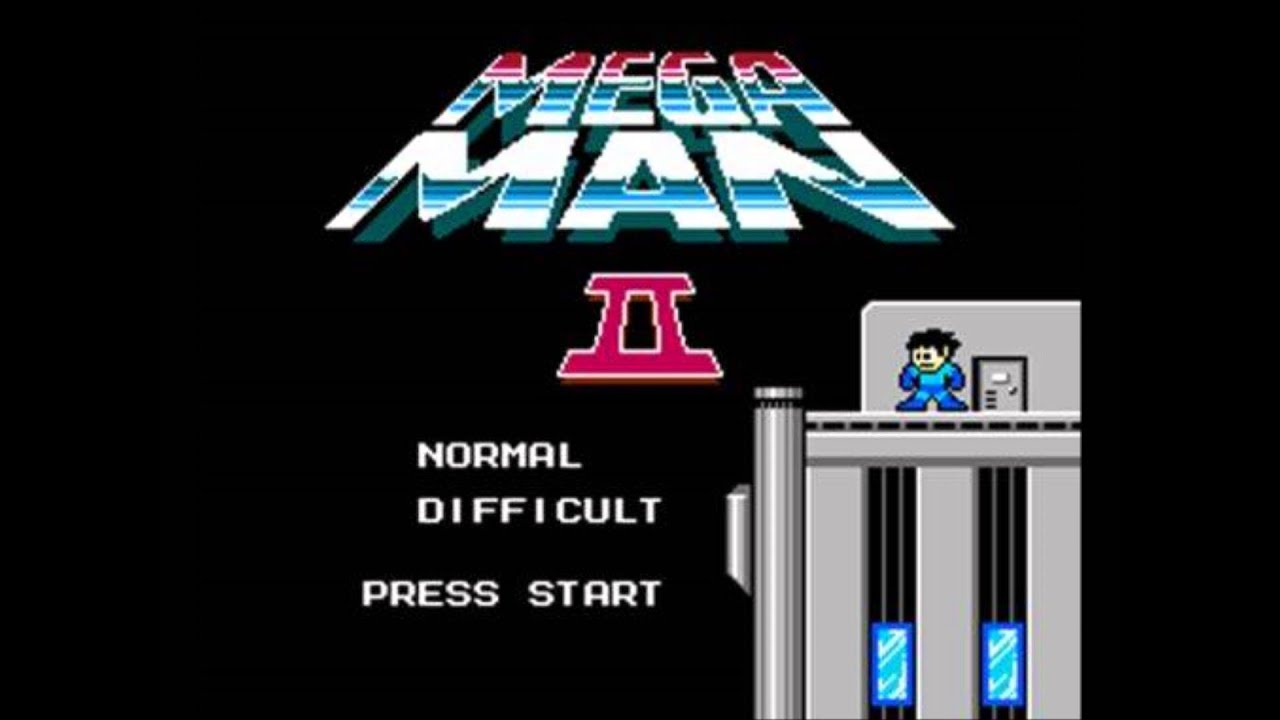
Mega Man II

As a member of the Long Island Retro Video Game community, I constantly find myself surrounded by older gamers discussing the glory of their older games. Many of these veteran gamers I know grew up on the Nintendo Entertainment System the same way I grew up on the Gamecube. I have spent a lot of time discussing why Gamecube games are still a fun option for the gamer with nothing else to play, but what about the titles my fellow retro gamers grew up on? What about the classics?

Mega Man II originally released for the Nintendo Entertainment System on December 24, 1988 (24th? REALLY? Hahahahahahahahaha). This game is considered not only to be one of the best games sold on the console, but one of the best action games of all time.
Already we have a problem.

This game came out almost 30 years ago and I still hear people praising it for its quality. I encourage thee to realize, when discussing games, that there is an enormous difference between a title that is perfect, a title that is perfect considering its age, and a title that actually stands the test of time. Having never played Mega Man II before, I decided to investigate; is this game actually good, or does nostalgia play too big of a factor when discussing Mega Man II?


Mega Man II - NES/ Nintendo 3DS

Okay no need to dance around this: Mega Man II is fantastic. It totally stands the test of time. Which is awesome! Because that means that the opinion of older gamers is still valuable to us young-punk gamers who think we know everything about what makes a good game.

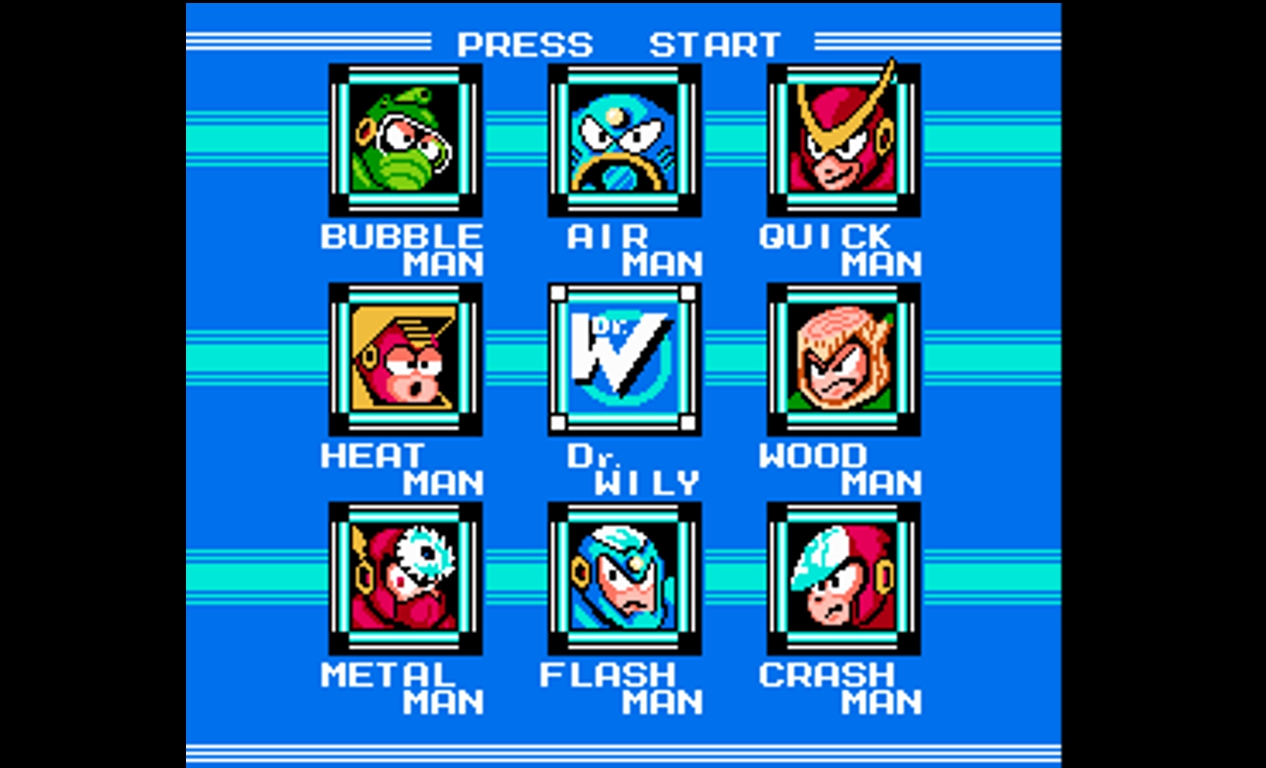
The magic of Mega Man II comes in the form of variety. MMII is broken up into 10 levels, each with a different tactical and aesthetic theme. Not only do each of the 10 levels feature different colors, enemies, and music, but they each demand totally different playing strategies. At the end of each of the 5-8 minute (if you die as often as I do) levels, is a boss fight. None of the bosses are too hard, though they certainly provide a fair challenge. Once each boss is defeated, Mega Man gains a new ability, usually a new offensive or tactical weapon. Essentially, the more bosses you defeat, the stronger you become.


The most remarkable aspect of this collection of levels is that the player is free to attempt each one in any order they desire. That being said, there are definitely recommended level sequences. You see, each boss you defeat earns you a specific new ability, and some levels are MUCH easier to complete after having been awarded certain specific abilities. So while the player is always free to choose which level they'd like to attempt next, they are also free to determine which weapons they need in order to progress through the game as easily as possible. To some extent, this results in a bit of trial-and-error playing, but it also encourages creativity that runs parallel to the nurturing of your Mega Man skillz.

This side-scrolling shooter/platformer is hard. But not too hard. It's also unfair. But not too unfair. Games of this time period had to be kept small due to hardware limitations, but they also had to have lasting appeal since there were fewer developers to pump out new games every week. An old game had to be kept small, but still last. How do you do that? Make it hard, but not so hard that it will keep people from playing it. Man, what a nightmarish challenge it must have been to get everything just right. Very few games balanced the equation perfectly, but Mega Man II did.

By the end of the 1-2 hour game, not only will Mega Man himself be equipped with a large assortment of different moves and weapons, but you, as the player, will have gained the cleverness needed to use them all when appropriate. The gradual acquisition of each new moves eases players into and out of a gaming experience for which they are required to master each of the title's nuances. Walking away from any game after having mastered the controls feels exhilarating, which is why it is extra sweet that Mega Man II seems to have been designed with this satisfaction in mind. In the end, Mega Man II comes so highly recommended because it leaves the player with the feeling of mastery, fluency, and unrivaled satisfaction.


Tuesday, December 2, 2014

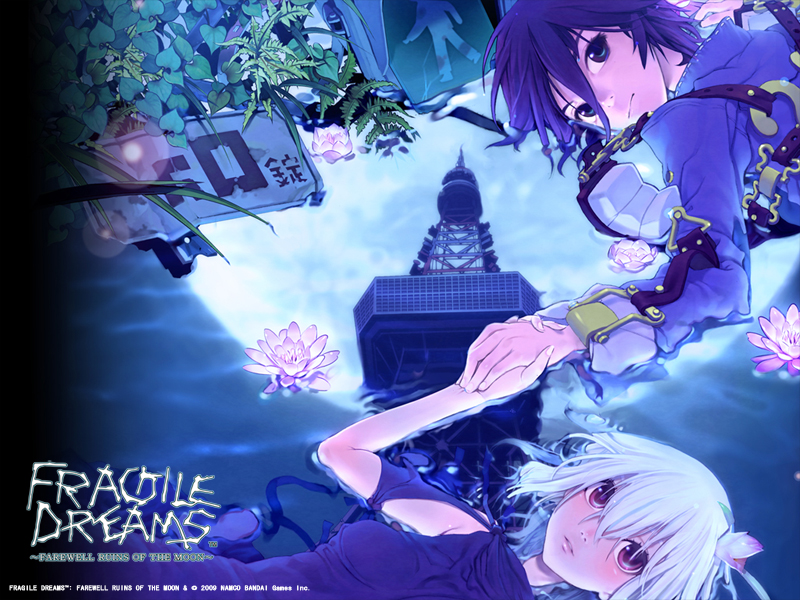
Fragile Dreams: Farewell Ruins of the Moon

Apparently, some kind of undocumented planetary alignment is upon us, because lately I have played some video gameS that I actually rather loved. Yes, after a string of games that I decided (or decided for you) were sub par came and went, I stumbled upon a few older titles for the Nintendo Wii that I quite enjoyed. Today's game is my favorite kind of hidden gem as it is a game completely forsaken by the internet, and it allowed me to prove once again to myself that I, James, am the only person I can trust to be right about anything. So without further narcissism, I give thee Fragile Dreams: Farewell Ruins of the Moon.

Fragile Dreams: Farewell Ruins of the Moon - Nintendo Wii
     First off, has anybody ever fucking heard of this game? I sure as hell hadn't before I found it featured in this youtube video https://www.youtube.com/watch?v=zhl6Tn3Kf1c. Fragile Dreams is a...game. You see, I found Fragile Dreams to be a game containing elements from most genres of video games albeit with an extremely ambiguous core around which each element orbited. At its heart, I suppose it is an exploration game, but it was linear, which means you didn't really explore anything more than what was in front of you. There was combat, but no more than what was necessary. Fragile Dreams was entirely story driven in such a way that I actually referred to it as a "drama game" for about an hour and a half before remembering that I am an aspiring critic and I have to be careful about using my knowledge in such fields to say stupid garbage like that. Ultimately, Fragile Dreams boils down to a linear exploration experience with elements of survival horror, JRPG, stealth RPG, and action games. It is also very artsy with great graphics and music, and every single thing that is on the disc contributes to the game's carefully designed story driving the entire game.

Good Things
       Fragile Dreams: Farewell Ruins of the Moon was another short game, clocking in at around 11
hours. I like shorter games because the longer a game is, the greater chance it has to become boring or fuck something up. Short games decrease their risk of becoming boring because they seldom overstay their welcome. It's like how the cool guy at the party stays cool because you only see HIM for a little bit before he leaves to have sex with twins or something, as opposed to the women who get to the party an hour before it starts and leave once they sense that everyone has been sick of them for 9 hours, if you'll excuse my misogyny. Fragile Dreams is a great example of a game whose story ends at the same time the original ideas do. 
      Now I guess I should talk about this story for a second, since it's the only reason to play this game. The first thing that happens when you start Fragile Dreams is you get told that the grandfather of Seto, the protagonist, just died. Like, JUST died. You also learn that Seto's grandfather was the only human that Seto has ever seen or known in his life. You then control Seto, wandering around his home for a bit before you find a note left by Seto's grandfather in which he tells Seto to seek this red tower in order to potentially find more "survivors". About two seconds after leaving his home, Seto accidentally startles a girl who upon being startled, falls, and blacks out long enough for Seto to approach her and touch her cheek to make sure she is still breathing (or something). The girl awakens upon being touched, and flees. Seto is then in shock because he has lived something like 14 years and has never seen another human being before. Fascinated by her, Seto spends the rest of the game seeking the girl instead of the red tower, although as you can imagine, the red tower eventually returns. Along the way, Seto meets a number of non-human characters, mostly androids, robots, or ghosts of humans who perished in the disaster that killed mostly everything and the game ends at the red tower with an explanation to and conclusion of the mystery of how the world got to its post-apocalyptic state.
   
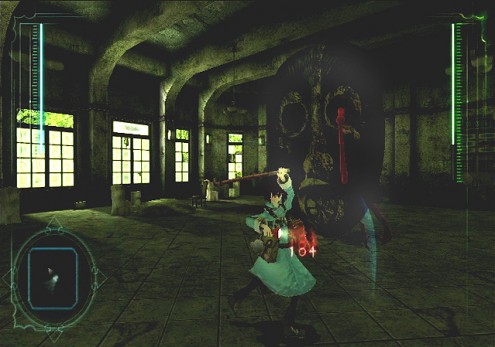
Gameplay involves you walking from one location to the next while the story justifies your doing so. Seto wields both a flashlight and weapons to be found laying around. Of course though, this world has been destroyed which means the only things laying around for you to wield are sticks, pipes, and brooms of various varieties. Good news though: swings of your weapon are executed by pressing the A button instead of by swinging the Wii Remote. Weapons can break if the A button is spammed though, so timing your combos properly is essential, and although it seems annoying and arbitrary at first, you come to love it once you accept that you can't do anything to change it. Of course, with broken weapons comes an inventory system, which is the same as that found in Resident Evil 4.
     The flashlight illuminates the dark path that lays before you while also stunning enemies. Flashlight, intuitively, is controlled by pointing the Wii Remote to the location you wish to illuminate. Using different types of flashlights will make hidden messages scrawled on the walls of the subways, hotels, and sewage pipes you navigate appear, and most of them when accompanied by the low piano scores played in the game, are pretty unnerving.
      Killing enemies will increase your max strength in a basic level-up system, and a crawling system is implemented to get past certain enemies or obstacles, making stealth always a conceivable option in case you decide to become curious about what life would be like if you were an enormous pussy.
      Fragile Dreams also makes great use of the Wii technology without using the motion controls. The speaker in the Wii Remote can be used to receive information from other characters by pressing the Wii Remote up to your ear at any point while playing, and creepy laughter of little girls gets pumped through the controller's speaker when ever you're near a hidden enemy.
      Really, you're in this game for the characters. The gameplay is fun, as it is pretty freaky and upsetting sometimes, stimulating an emotional response from me, but the story and fondness for the characters is what will keep you coming back. The story also has great pace; as soon as one character leaves you, another comes to its place almost immediately. Also, the voice acting is stellar.
   
Short-Comings
     Most complaints about Fragile Dreams: Farewell Ruins of the Moon regard the fact that the developers clearly cared more about the story than they did about the gameplay. According to professional reviewing companies, the story, while beautiful, overwhelmingly overpowers the bland gameplay. In response, I offer my opinion that the fight choreography in Toby McGuire's Spider-Man 2 overwhelmingly overpowers the personality of Mary Jane. Some aspects of some games are better off being pushed to the background in order to emphasize the game's strengths. In this case, the game's story shines more than it's gameplay does, so if you have a problem with a strong story being supported by average gameplay, then this game will not blow your mind the way it blew mine.

Conclusion
      Fragile Dreams: Farewell Ruins of the Moon is a game for gamers who like a good story. This is a hardcore game simply because it is a hidden gem, even though it is an easy game. It tells a great 11 hour story, so I recommend this game to anyone who is interested in that. I don't recommend this game as much to people who NEED rich gameplay in order to be engaged, because you won't find it here.

Tuesday, April 1, 2014

Metroid Primate

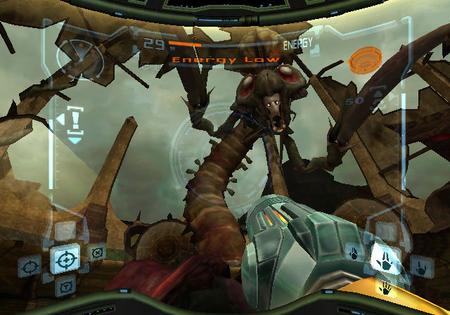
The distance between my WiiU and me has put me back in the mood to go on some kind of grand adventure. I was super into Darksiders II on the WiiU and as a result of me leaving my WiiU at home, I am left to my Gamecube while I am here, at school. Now normally, this wouldn't be any issue at all since Nintendo is known for it's large adventure games with great characters and gameplay. With a longing for something bigger than I am, I decided to resume my Metroid Prime experience. Unfortunately, I found that this game was much more of what the doctor diagnosed, as opposed to what the doctor ordered.


Metroid Prime

Metroid Prime is the Metroid franchise's debut into the 3D world, much like how The Legend of Zelda: Ocarina of Time paved the first 3D path for the hero of time on the Nintendo 64. Many fans were horrified of the idea of Metroid transitioning from 2D to 3D. "What if they fucked it up?", they asked. "I hope they don't do it wrong!" they exclaimed. Well unfortunately, the fans were wise to be so concerned. Metroid Prime is simply a lazily made game with embarrassingly bad graphics, power-ups and abilities copied from other series, and a soundtrack that is only memorable because of how annoying it is.


Let's start with the environment, since it is this aspect of the game that we as the player have the misfortune of having to deal with more than anything else. This game was released in 2003. At that point, Nintendo had only been making video games for about 18 years, so I am willing to be merciful when I judge a game made with only a few years of experience under their belts, but it seems obvious that Nintendo's claims of compensating for bad graphics with better gameplay started way before the days of the Nintendo Wii, only the gameplay here too was shoddy. The graphics in this game are shockingly mediocre at best. There are times when the graphics do have some strong points, for example, the design for the space pirate enemies are admittedly somewhat realistic, but generally, the environments are bland, monochromatic wisps of negligible design that serve not as a compliment to the game, but as a reminder only of what could have been had Nintendo spent some more time considering level designs. I give it a B-

Next we have control scheme and soundtrack, appropriately written about simultaneously because they are both frustrating and poorly done. In the past, Nintendo has had success making attempts at being innovative and breaking molds - just take a look at the Nintendo 64 controller. When it comes to controls though, Metroid Prime was a collection of new ideas that should have never made it to the final product. Shooting, for example, is done unconventionally with the A button as opposed to the industrially-standardized R button. This transition took weeks for me to get used to before I finally had to reconfigure the controls manually and reassign the shoot command to the R button, like how everyone in the whole world is used to. Thank you Nintendo for trying something new, but please, don't fix what isn't broken. And speaking of broken, the soundtrack to this game! I honestly think that the speakers on my TV are broken when I play this game. To me, it seems that the soundtrack is half-missing from the disc! What comes off as some pretentious attempt to add a soundtrack that compliments the environment really only leaves a bad taste in my mouth. Some people praise the soundtrack for this game, but they're elitists who claim to have grown out of music that requires drums or guitar. Excuse me for thinking that a piano and ambient-exclusive soundtrack gets boring after playing the 60 hour game for the first 15 minutes. Perhaps a soundtrack that compliments the environment would have worked better if there was any real environment to compliment. Nintendo, if you're going to base every bit of your game off of the surroundings, then please make sure that you remember to include the surroundings in your game. C+

And finally we end this nightmare of a game with a brief discussion of how every single power-up in this game is stolen from another franchise. Understanding the way that other games execute their ideas is essential to developing your own game, but the similarities must be subtle unless they are obviously references, like how Dragon Ball Z's 7 Dragon Balls is a blatant reference to Sonic The Hedgehog's 7 Chaos Emeralds. Let's take a look at some specific examples:
Charge Shot = Mega Man
First Person Camera = James Bond 007: Golden Eye
Morph Ball = Sonic The Hedgehog
Spider Ball = Spider-Man 2
Double Jump = Dragon Buster
Ice Beam = Rayman Arena
Missiles = Galaga
Energy Tanks = Legend of Zelda
Grapple Beam = Indiana Jones
The Life-Sucking Metroids = Stand By Me (film)
Female Protagonist = Alien
Wave Beam = Wave Race 64
Arm Cannon = Planet Terror

Overall, this game was too easy, too long, and too annoying to actually play through. Admittedly, I only played through about 20-25 minutes of the game before deciding that it was not for me. Maybe I am missing something, but if you ask me, this game is simply a no-go. Happy April Fool's Day.

Friday, December 6, 2013

The Grand Return

So after a short hiatus from this blog, I have decided to resume my writing for a little while. Yesterday, I entered my school's lounge to watch one of my classmates play an old favorite of mine on the 72 inch TV. I watched this kid tear up the streets of City Escape and dive through Aquatic Mine and when he finally introduced himself, he and I started talking a bit about the Gamecube. Our conversation ended with me mentioning that I have 75 Gamecube games in my dorm room. He responded "Wow, you are a Gamecube MASTER if you have 75 games." Well that little fat dick was right! This one goes out to him.

What I noticed about his Sonic Adventure 2 experience was that it was unfolding via Steam - without a Gamecube controller. How could anyone resist playing a video game without the Gamecube controller if they have the option to?? The Gamecube controller is my favorite controller out of any controller I've ever used, and I've used a lot. My friends at home have invited me to share my opinions of the Gamecube controller with them, but I always feel bad because I knew my full opinion would be so long, that it would take up an entire blog post. So in honor of that kid in the lounge, and in honor of the new consoles and their controllers, whose generation pushes the Gamecube and its controller one generation further into the chasms of time, here we fucking go.

The Nintendo Gamecube Controller

How is it that despite the Gamecube controller celebrating it's 12th birthday this year, people still insist on using it to play games that are 5, 4, 2 years old? What is it about this controller, about its unusual button layout, its strange colors, and tiny D-pad that make it so loveable- make it rival with the XBOX 360's or PS3's beloved controllers? Well let's check it out.

Mkay so first to tackle the things that everybody knows: The Gamecube controller features one of the first wing-grip designs, was one of the first controllers to feature 2 thumbsticks and a D-pad, had 6 digital buttons (including the START button), and two shoulder buttons that each sported a hybrid of digital/analog technology. There are two things about the Gamecube controller that are unconventional, and I just mentioned one of them. Two features, two attributes of the Gamecube controller that brought it to the top of my list of favorite video game controllers. These two features that I am about to discuss make the Gamecube controller appear to some gamers as silly or even dumb and luckily for you guys, you have me to tell those people to fuck off.

The Gamecube controller doesn't have any new face-buttons, in fact, it has even less than the controller of the console that came before it, Nintendo 64, and the same amount as the controller that came before THAT, the Super Nintendo Entertainment System. It seems that the Gamecube controller didn't have any new amount of buttons, but it did sport a different, unparalleled layout. The Gamecube controller is the only controller ever made (I've ever seen or have been made aware of) that features one very large central button with 3 other smaller buttons arranged around it. As you can see in this diagram, the A button is the large center button, the B button is a smaller, circular button to the lower left of the A button, and the X and Y buttons are sort of cashew-shaped buttons above and to the right of the A button. Okay, fuck, everybody knows this. But does everybody know why? I mean, it makes sense: if there is one button that in the history of gaming has been traditionally used more often than any other button, why not make it bigger? Give it special treatment, because it is a special button. Fine. The A button is big because it is used most often.

So what about the B, X, and Y buttons? From here on out, this is my own theory for why the buttons are arranged the way they are. So if you are going to have a large A button, it would make sense that the other buttons are going to be sized with respect to how often the player is going to press the other buttons compared to the A button. With the Gamecube controller, there is no question that Nintendo was prepared to design their games to feature the A button as a means to activate the game's primary command. Let's look at Metroid Prime. Which action, out of Jump, Shoot, Fire Missiles, and Roll in a ball, each of the actions that can be triggered by pressing each face-button, do you do most often? The answer is Shoot. And which button is Shoot? A - the biggest button on the controller. Now. Which action do you secondarily, or the second most often? Jump. Jump is the B button. So now we see that secondary actions are mapped to the B button, but why B? What is so special about the B button when it seems that the X and Y buttons could just as easily be given the secondary role? Check this out, I actually have the controller in front of me right now. Assume that your thumb is going to naturally rest over the A button simply because it is the most comfortable position for the thumb to rest in. Now hold the A button down. Without removing your thumb from the A button, try
to tap the B, X, and Y buttons a bunch of times each. The button that is most comfortable to hit without removing your thumb from the A button is B, followed by Y, followed by X. Why? Look at the face-buttons from their sides. If you look closely, you'll see that the top of the A button is slightly rounded like a small hill while B, X, and Y have flat tops. Now look at the lowest point of the "hill" top of the A button. If, in your head, you drew an imaginary line continuing along the slope of the A button at the same angle and stopped your line as soon as it hit another face-button, you will notice something kind of crazy. The line you draw that hits the X and Y buttons strike those buttons on their side, not on their tops. The line you draw that hits the B button, strikes the B button on its face, not its side. So what does this mean? Well the lines I had you guys draw in your head are actually the paths your thumb travels in order to press B, X, and Y without releasing A, like I had you do before. If you are rolling your thumb along each of these lines, the lines that lead from A to either B, X, or Y, you will hit X and Y on their side and B on the top. Obviously, it is most comfortable to hit a button on its top, explaining why B the most comfortable button to hit without releasing A when it is being held down. It is also important to know that in order to maximize the comfort of "rolling" from A to B, the B button is set slightly deeper into the controller compared to X or Y, ensuring that you strike the B button on its face every single time you go to hit it.
 

I said that the Y button is second most comfortable to hit without releasing A. Why? Why not X?
Okay. Pangaea the shit out of these face-buttons and what happens? The X and Y buttons fit around the A button like a puzzle. The B button does not, but its circular shape makes it easier to fit onto the face of the controller, so that takes precedence over what I am about to explain about the X and Y buttons. Let's take the X and Y button separately. In your head, draw a line that connects the right side of the Y button to the right side of the A button. Then do the same thing for the left sides and color the 2 buttons and the space between them. You'll wind up with a mental picture that looks something like this image.

Look at your thumb. It's the same shape. What face-button command do you do THIRD most often in Metroid Prime? Fire Missiles. Y button. Second most comfortable to hit without releasing A. I know.

If you do the same thing with the X button, you get a slightly different shape that doesn't really look too much like anything. The best thing I could come up with is the following: The X button has the same shape as the right-most third of your thumb. If we cut your thumb vertically into thirds, the X button is about the same shape as the third furthest to the right.  When you line up the X button with the X-button-shaped part of your thumb perfectly, you still have a whole bunch of thumb left over which sits directly above the A button. Push down, and you've got yourself your third most comfortable position for your thumb to rest in. What is your 4th most used face-button action in Metroid Prime? Morph Ball. X button.

So why make a controller whose face-buttons are all able to be pressed while holding A? Think about this: you have 4 actions that the face-buttons allow you to do. But what if you need to do 2 of them at the same time? Jump and shoot? Lock-on and Shoot? Accelerate and use items? Jump and Change weapons? These are all examples of typical actions that we need to perform at the same time or else we would be killed or lose the race or whatever SO when you position the buttons in a way that allows them each to be pressed comfortably without having to stop performing the main action triggered by A button, then you have a controller that allows you to perform multiple actions at the same time. But if this is the case, why don't other controllers use this layout? I mean, Gamecube is not the only home of games where it is necessary to perform 2 actions at once, so how is this done without the Gamecube controller's button layout? The answer is triggers. Triggers are pressed with the pointer or middle finger - not the thumb. 2 fingers to tackle 2 different buttons instead of the thumb to tackle 2 at once. That's why in Halo 3, Shoot, the first most important command is mapped to a trigger and Jump, the second most important is mapped to a face-button. With 1 finger to shoot and 1 to jump, jumping and shooting at the same time is easy. The Gamecube controller accomplishes the same exact thing in Metroid Prime, but without the trigger. In fact, the addition of the triggers on the Gamecube controller allow Samus in Metroid Prime to perform 3 actions simultaneously - Jump, Shoot with B and A respectively, and Lock-on with L. Impressive, no?

But what about those triggers? (This is the second function unique to the Gamecube controller) Push them down half way, and they glide the same way the XBOX 360 controller's do. Push them down all the way and they click. This is that digital/analog hybrid technology I mentioned earlier. Analog signals are used when triggers are pushed down on the XBOX 360. Gamecube uses the same technology, until the triggers are pushed down all the way and "click". This click, knocks an activator inside the controller that initiates a digital signal, also used by the face-buttons. This duality allows one button to perform up to 2 different functions. Light shield vs Heavy shield in Super Smash Bros. Melee or Run + Squirt vs. Stand still + Squirt in Super Mario Sunshine, maximizing the number of different commands available to the player without overwhelming the player with too many buttons.

And that's it! Gamecube controllers are awesome and that is why.