Nintendo Consoles

Nintendo Consoles
Showing posts with label boobs. Show all posts

Thursday, March 24, 2016

Pokemon Shuffle - Shuffle the Monsters

Pokemon Shuffle- Nintendo 3DS

Pokemon Shuffle, released on February 18, 2015, is a free-to-play download-only title on the Nintendo 3DS; right in this first sentence is everything you need to know before you download it: it's free, it's a Pokemon-themed game, and it is for the 3DS. There's really no excuse not to own it.

Of course, Pokemon Shuffle is not a traditional Pokemon RPG, rather it is a puzzle game similar to and arguably as addicting as Candy Crush (as long as Pokemon appeal to you more than candy does). 

Pokemon Shuffle is broken up into puzzle-levels themed after different Pokemon. The Pokemon you are "battling" in each level appears on the top screen of your 3DS, while a grid of adorable Pokemon-face images will appear on the bottom screen. Your task is to rearrange the Pokemon faces in the grid to make rows of at least 3, if not 4 or 5, matching images. Once each row is forged, it disappears, damage is inflicted on the opposing Pokemon, and the disappeared Pokemon images are replaced with new ones. Each level is completed once the Pokemon you are battling has its HP reduced to zero.

What sets Shuffle apart from similar titles, such as Bejeweled or the aforementioned Candy Crush, is how the traditional rules of Pokemon are re-imagined and integrated into the Poke-puzzle interpretation of the classic JRPG. Though this game is played by creating rows of matching Pokemon images, the goal is still to inflict damage on the opposing Pokemon, just like how it is in the RPGs. While there are no familiar Pokemon moves to be executed in Pokemon Shuffle, type match-ups do play a huge roll in defeating each Pocket Monster. 

The Pokemon that actually appear on the puzzle grid are yours to choose right from the beginning of the game. After each Pokemon you encounter is defeated, you get a chance to capture it- if you complete a level without using up all of your available moves, your chance of catching the opposing Pokemon will increase significantly. Once you capture a Pokemon, you are permitted to select that Pokemon to use in later battles. Matching Pokemon with a type-advantage over the Pokemon you are trying to defeat will do double-damage onto your opponent the same way it does in the Pokemon RPGs. 

However for all that makes Pokemon Shuffle unique, there are some pretty frustrating cons that come as a result of the game being free-to-play. For example, you only get a certain number of attempts to play each level before you are forced to wait an arbitrary real-world 30 minutes, after which you are allowed to resume playing. You have the option to pay real-world currency for the time limit to be removed, but the game really isn't addicting enough to convince me to pay for additional tries. Moreover, power-ups that make completing levels easier can be purchased with coins earned by completing puzzles. Then, you are awarded with 500 coins every time you "Check In" to see the latest Pokemon Shuffle offers by connecting to the internet, but you can only check in once per day- these are the only two ways of getting coins, thus getting power-ups. This has put me in frustrating positions where my lack of power-ups and my inability to earn coins other than by checking in for several days in a row renders me unable to get past more challenging levels. Of course, there is an option to pay real-world money for power-ups.

Despite these few minor drawbacks, Pokemon Shuffle is perfectly suited for the 3DS. Everything from its art-style to its price (once again, free) is begging for you to download it and give it a shot. At its best, Pokemon Shuffle is a charming puzzle game easily accessible to fans of both Pokemon and puzzle games; at its worst, it will easily grant you the means to kill time if you've simply nothing else to play. 

Pokemon Shuffle

Pokemon Shuffle- Nintendo 3DS

Pokemon Shuffle, released on February 18, 2015, is a free-to-play download-only title on the Nintendo 3DS; right in this first sentence is everything you need to know before you download it: it's free, it's a Pokemon-themed game, and it is for the 3DS. There's really no excuse not to own it.

Of course, Pokemon Shuffle is not a traditional Pokemon RPG, rather it is a puzzle game similar to and arguably as addicting as Candy Crush (as long as Pokemon appeal to you more than candy does). 

Pokemon Shuffle is broken up into puzzle-levels themed after different Pokemon. The Pokemon you are "battling" in each level appears on the top screen of your 3DS, while a grid of adorable Pokemon-face images will appear on the bottom screen. Your task is to rearrange the Pokemon faces in the grid to make rows of at least 3, if not 4 or 5, matching images. Once each row is forged, it disappears, damage is inflicted on the opposing Pokemon, and the disappeared Pokemon images are replaced with new ones. Each level is completed once the Pokemon you are battling has its HP reduced to zero.

What sets Shuffle apart from similar titles, such as Bejeweled or the aforementioned Candy Crush, is how the traditional rules of Pokemon are re-imagined and integrated into the Poke-puzzle interpretation of the classic JRPG. Though this game is played by creating rows of matching Pokemon images, the goal is still to inflict damage on the opposing Pokemon, just like how it is in the RPGs. While there are no familiar Pokemon moves to be executed in Pokemon Shuffle, type match-ups do play a huge roll in defeating each Pocket Monster. 

The Pokemon that actually appear on the puzzle grid are yours to choose right from the beginning of the game. After each Pokemon you encounter is defeated, you get a chance to capture it- if you complete a level without using up all of your available moves, your chance of catching the opposing Pokemon will increase significantly. Once you capture a Pokemon, you are permitted to select that Pokemon to use in later battles. Matching Pokemon with a type-advantage over the Pokemon you are trying to defeat will do double-damage onto your opponent the same way it does in the Pokemon RPGs. 

However for all that makes Pokemon Shuffle unique, there are some pretty frustrating cons that come as a result of the game being free-to-play. For example, you only get a certain number of attempts to play each level before you are forced to wait an arbitrary real-world 30 minutes, after which you are allowed to resume playing. You have the option to pay real-world currency for the time limit to be removed, but the game really isn't addicting enough to convince me to pay for additional tries. Moreover, power-ups that make completing levels easier can be purchased with coins earned by completing puzzles. Then, you are awarded with 500 coins every time you "Check In" to see the latest Pokemon Shuffle offers by connecting to the internet, but you can only check in once per day- these are the only two ways of getting coins, thus getting power-ups. This has put me in frustrating positions where my lack of power-ups and my inability to earn coins other than by checking in for several days in a row renders me unable to get past more challenging levels. Of course, there is an option to pay real-world money for power-ups.

Despite these few minor drawbacks, Pokemon Shuffle is perfectly suited for the 3DS. Everything from its art-style to its price (once again, free) is begging for you to download it and give it a shot. At its best, Pokemon Shuffle is a charming puzzle game easily accessible to fans of both Pokemon and puzzle games; at its worst, it will easily grant you the means to kill time if you've simply nothing else to play. 

Tuesday, March 15, 2016

Paper Boy

Although the trend has spent the last couple of years fading, waiting to be replaced by which ever big idea comes next, the endless runner genre of games dominated the mobile gaming market for quite some time. We first saw Temple Run in the year 2011, which then had to make room and share market space with spin-offs and copycats such as Subway Surfers, and Sonic Dash, but this genre is actually quite a bit older than many of those aforementioned games. Let's take a look at a retro endless runner.

Paper Boy - Arcade/ NES/ others 

Paper Boy is an endless runner made before endless runners were even around. Originally published by Atari for the arcades, it was later ported to many home consoles and P.C.s, including the NES in 1985. Paper Boy is an action game/ endless runner where you play as a boy throwing newspapers to white houses from his bicycle while dodging an array of hilarious obstacles taking the form of anything from an oncoming car, to break-dancers, to the Grim Reaper. It's often not considered to be among the best or most memorable NES games of the time, but it certainly is good for a laugh if not a few hours of cursing out tornadoes bent on ruining this newspaper company's delivery service. 

The paper boy, on his bicycle, is forced forward by default, leaving the player to influence his acceleration, steering, and of course throwing of newspapers. Completing the first level (called Monday) can be a fair challenge to those more accustomed to modern endless runners, but losing a life is usually so funny that one may not mind the initial struggle. If one keeps at it, allowing the humorous obstacles to ease the pain of constant death, then they more than likely may find themselves enjoying Paper Boy, despite its initial difficulty. 

Gameplay employs a pretty simple concept featuring only two rules: throw the newspapers onto the front lawns or into the mailboxes of the white houses, and don't die. Obstacles are added gradually throughout the course of the levels (each of which named after a day of the week), easing you into the experience and giving you a taste of how exciting it is to successfully launch a newspaper from the street or side walk into a mailbox, while simultaneously giving you a taste of the black asphalt beneath your tires as you ride through what has to be the world's most dangerous and unfortunate, possibly cursed, neighborhood. 

In the end, Paper Boy is a short experience with a long legacy. As one of the original endless runners, young gamers today may have no choice but to appreciate that which Paper Boy contributed to a genre that wouldn't be fully realized for another 20 years. All you guys in high school whom I watched kill time during English class by playing Temple Run 2, you may have Paper Boy to thank for your shameful course grades. 


Sunday, February 14, 2016

Mega Man II

As a member of the Long Island Retro Video Game community, I constantly find myself surrounded by older gamers discussing the glory of their older games. Many of these veteran gamers I know grew up on the Nintendo Entertainment System the same way I grew up on the Gamecube. I have spent a lot of time discussing why Gamecube games are still a fun option for the gamer with nothing else to play, but what about the titles my fellow retro gamers grew up on? What about the classics?

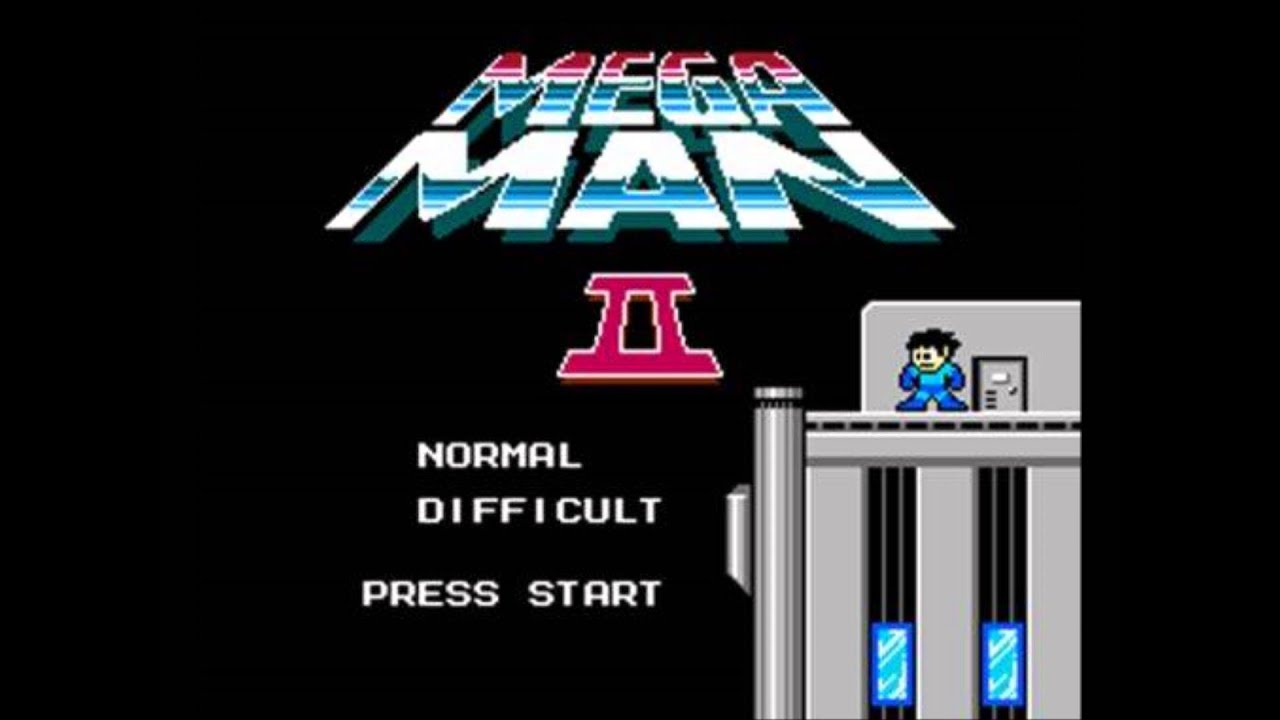
Mega Man II originally released for the Nintendo Entertainment System on December 24, 1988 (24th? REALLY? Hahahahahahahahaha). This game is considered not only to be one of the best games sold on the console, but one of the best action games of all time.
Already we have a problem.

This game came out almost 30 years ago and I still hear people praising it for its quality. I encourage thee to realize, when discussing games, that there is an enormous difference between a title that is perfect, a title that is perfect considering its age, and a title that actually stands the test of time. Having never played Mega Man II before, I decided to investigate; is this game actually good, or does nostalgia play too big of a factor when discussing Mega Man II?


Mega Man II - NES/ Nintendo 3DS

Okay no need to dance around this: Mega Man II is fantastic. It totally stands the test of time. Which is awesome! Because that means that the opinion of older gamers is still valuable to us young-punk gamers who think we know everything about what makes a good game.

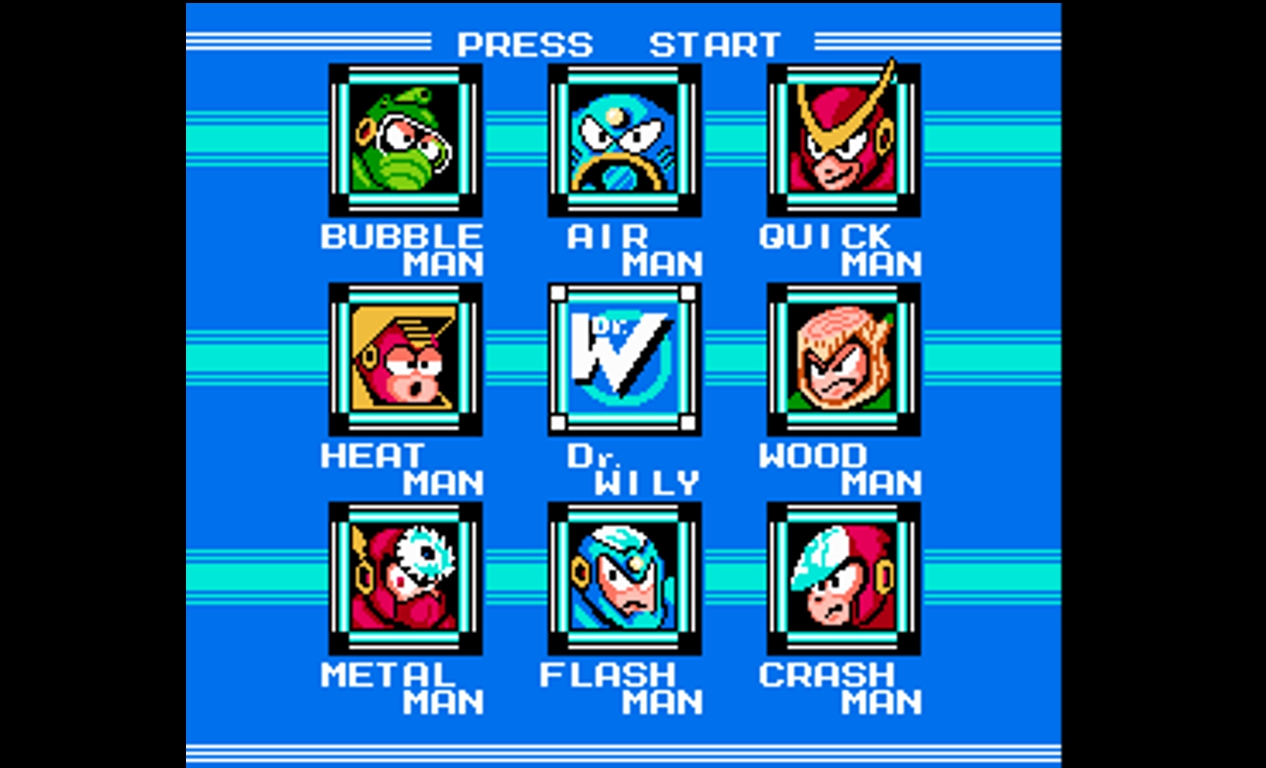
The magic of Mega Man II comes in the form of variety. MMII is broken up into 10 levels, each with a different tactical and aesthetic theme. Not only do each of the 10 levels feature different colors, enemies, and music, but they each demand totally different playing strategies. At the end of each of the 5-8 minute (if you die as often as I do) levels, is a boss fight. None of the bosses are too hard, though they certainly provide a fair challenge. Once each boss is defeated, Mega Man gains a new ability, usually a new offensive or tactical weapon. Essentially, the more bosses you defeat, the stronger you become.


The most remarkable aspect of this collection of levels is that the player is free to attempt each one in any order they desire. That being said, there are definitely recommended level sequences. You see, each boss you defeat earns you a specific new ability, and some levels are MUCH easier to complete after having been awarded certain specific abilities. So while the player is always free to choose which level they'd like to attempt next, they are also free to determine which weapons they need in order to progress through the game as easily as possible. To some extent, this results in a bit of trial-and-error playing, but it also encourages creativity that runs parallel to the nurturing of your Mega Man skillz.

This side-scrolling shooter/platformer is hard. But not too hard. It's also unfair. But not too unfair. Games of this time period had to be kept small due to hardware limitations, but they also had to have lasting appeal since there were fewer developers to pump out new games every week. An old game had to be kept small, but still last. How do you do that? Make it hard, but not so hard that it will keep people from playing it. Man, what a nightmarish challenge it must have been to get everything just right. Very few games balanced the equation perfectly, but Mega Man II did.

By the end of the 1-2 hour game, not only will Mega Man himself be equipped with a large assortment of different moves and weapons, but you, as the player, will have gained the cleverness needed to use them all when appropriate. The gradual acquisition of each new moves eases players into and out of a gaming experience for which they are required to master each of the title's nuances. Walking away from any game after having mastered the controls feels exhilarating, which is why it is extra sweet that Mega Man II seems to have been designed with this satisfaction in mind. In the end, Mega Man II comes so highly recommended because it leaves the player with the feeling of mastery, fluency, and unrivaled satisfaction.


Monday, December 28, 2015

A Retrospective: Guitar Hero

I ventured a bit around Long Island today with a couple of my friends to our favorite video game
stores. One of our destinations was a retro video game shop called Video Game Trading Post, and it is incredible. It is just the tiniest bit out of the way of my usual hangout spots, but they have an extremely impressive quantity of quality games, as well as several walls filled from floor to ceiling with hilarious amounts of rubbish. It was while browsing the towers of garbage games and shovelware did I find a title about whose existence I had either once completely neglected or have since completely forgotten: Guitar Hero 5.

So I bought Guitar Hero 5 for the Playstation 2, but it was also released for the Wii. So there you go- we are still talking about Nintendo consoles if you're willing to use a bit of imagination for this post.

I played Guitar Hero 5 Career Mode for a bit, perhaps for a couple of tiers, then I went over to Quick Play mode and played a set of songs (all of which were unlocked without me finishing the Career Mode), and then I turned it off. Did I have fun? No, not really. But of course, the question is "why"?

Guitar Hero used to be incredible. It took the video game world by storm a good 10 years ago, but it was a fast-fading trend, and even it's attempted "revival" this year wasn't enough to rekindle interest in the rhythm-based franchise. The reason it stopped being fun is actually pretty obvious, especially for someone who has been with Guitar Hero since the near-beginning, but before we can answer that question, we first must identify exactly when Guitar Hero stopped being fun, look at the game that began the decline of Guitar Hero, and identify just how it influenced the future of the series' installments.


So here we go:
The game that began to ruin the Guitar Hero franchise was Guitar Hero 3.

Despite the currently (or once-currently) mass appeal of Guitar Hero 2, Guitar Hero 1 and Rocks the 80's were pretty niche for their time, and not very popular. In fact, Guitar Hero 1 and Rocks the 80's were hardcore games. They were challenging, and felt like the developers approached their creation from a gamer's perspective as opposed to strictly one of a music-lover. The games had solid difficulty curves, didn't insult the players by cheating them out of the experience they expected, and certainly offered gamers something new. Guitar Hero 2 was a sequel the way sequels are supposed to be, featuring proudly its improvements to the original game, hosting not only a larger quantity of songs, but a greater quality of songs when compared to that and those of the original title. Still, the difficulty curve was like that of a traditional video game: beginning easy and ending difficult, with each victory having felt earned, as opposed to grinded out. It is important to note that Guitar Hero 3 DID retain the same feeling, pacing, and tone that appealed primarily to gamers seen from Guitar Hero 1 to Rocks the 80's, but while it was Guitar Hero 2 that made the series popular, it was Guitar Hero 3 that made the series famous, and once you become famous, everything starts to die.

Each iteration of the Guitar Hero series following Guitar Hero 3 felt like games that were created not for art, not for experimentation, not even for the gamer, but exclusively for the studio to get more money. The design elements that made Guitar Hero feel like a traditional video game were completely removed from all Guitar Hero games following GH3. Up until GH3, the Guitar Hero franchise was responsible for delivering to me not only really fun gameplay, appealing to the gamer within me, but really good songs and music, appealing to normal person (deep) within me. There was a balance created by a development studio who knew that Guitar Hero was a video game first, and that gameplay could not be compromised if the title was expected to be fun. Guitar Hero 5's content is weak, man. There are a few good songs, but nothing about the game makes me want to play more. The personality and charm of the cartoonish graphics, awful covers, and sense of humor seen in the first games has given way to that which appeals to the masses: blink-182 songs in the line-up, long hammer-on sections that look difficult but are actually insultingly easy, lifeless venues, GOOD SONGS WITH BORING NOTE CHARTS, no context, no reason to even play the Career Mode since every song is just given to you from the start of the game.

Guitar Hero 5 reminds me of parents who just give their children what they want without asking if what the kid wants is actually good for them. Want more Guitar Hero? There you go: Guitar Hero 5. And yeah, fans who asked for a new Guitar Hero got what they asked for, but how does it feel? Does GH5 feel new, or earned, or valuable, or does it just feel like more of what you already have? Does it feel redundant and insulting, making you realize that while there exists an endless ocean of quality video games spanning 30+ years across multiple generations of artistic and technological experimentation, you've spent another $50 dollars on something you basically already own, albeit an inferior version? Do you feel like a chump who has sold your soul to a company that doesn't care about you unless you have money?

Guitar Hero 1 - 3 felt like an experiment gone wonderfully right; it started a little shaky, definitely strange but certainly suggesting potential. Guitar Hero 2 improved everything that had to be so. Rocks the 80's was essentially a DLC pack, but the songs were fun to play and fun to hear, as well as respectful of a gamer's-type difficulty curve and pacing, and Guitar Hero 3 was the series perfected with the best soundtrack, graphics, and gameplay the series has ever seen. But Guitar Hero 3 was too good. Guitar Hero 3 was the game that made the developers realize that they no longer had to respect their fans because the fans no longer respected themselves. Once it became clear that everyone everywhere was going to buy Guitar Hero no matter what, the developers didn't feel it was necessary for them to try anymore. In other words, once the fans stop putting pressure on the developers to make a better game, developers stop putting pressure on themselves to make a better game, and when that happens, you get Guitar Hero 5: the last few drops of water wrung out from a now-damp towel that once contained viscous, french-vanilla creams of originality, creativity, and video game art supremacy.


Monday, October 13, 2014

Another Essay: Incentive

I've noticed that it has become more difficult for video games to capture my attention lately. I blame growing up. But actually, I blame only myself and my personal need for video games to offer me something profound. In fact, I think the only reason anyone would ever play a video game is to gain something spiritually satisfying. Yes, we play video games for fun, but the question I intend to answer is the following: what makes certain video games fun for some people and not fun for other people? Why do we personally choose to play the games we choose to play? I've been dwelling on both the question and its answer for a long time, and I believe the answer is "incentive".

       INCENTIVE FOR THE PLAYER                                     INCENTIVE FOR THE AVATAR

These are the two categories under which every single video game ever created falls.
So let's discuss each form of incentive separately:

       Incentive for the player - "If you play this game, you will gain skill".
We know that there are some video games out there that require skill, practice, and repetition. We know there are games that are designed to force the player to improve their skills in order to overcome challenges. We know there are games that require us to become better at its end than we were at its beginning. If you, as a gamer, are drawn to these types of games, then you prefer games where the incentive is for the player. A game where the incentive is for the player is a game designed with the progression and fluency of the "player" in mind. These games can be identified as having minimal or no story, a multiplayer mode(s), a scoring/ranking system, or a competitive push.
Still don't get it?
Super Smash Bros, Mario Kart, Tetris, Super Mario Bros, Mortal Kombat, Guitar Hero, Bejeweled, Flappy Bird, and Angry Birds are all games where the incentive is "if you play this game, you will become better at it/ you will become better than your friends/ you will achieve a higher score than other players/ you will be the best player". The magic behind these games is that when they're being developed, game developers can devote more time to the game's ability to entertain instead of the game's cinematic appeal. The games mentioned above are all examples that are simple in concept, but are played aggressively and religiously. The best games where the incentive is for the player has players playing for dozens, sometimes even hundreds of hours as they each compete and practice and train in order to become the "best". The end goal of these games is determined by the player, not the game. Do you want to be the best Tetris player? If you do, that's awesome, but remember, no one told you that you had to - you set that goal on your own. The problem with these games though is that if the gameplay doesn't compel people to play, then nothing else will. No one will bother competing at a game liked by 0 people- a game that simply isn't fun. Why would anyone want to waste their time becoming good at a game about which no one cares?

      Incentive for the avatar- "If you play this game, your avatar will gain skill".
Then there are some games where we fall in love with a character, or grow to loathe an enemy, or decide that we want what our avatar wants. If you are drawn to these games, then you prefer games where the incentive is for the avatar. The avatar is the character you play as on the screen, and these games involve the gamer pushing the character around from place to place witnessing what he/she witnesses and feeling what he/she feels. These games can be identified as having a deep story, deep characters, motives, and choices with an emphasis on progression or working from a beginning to an end. It is important to note that it may not be necessary for the player to gain any skill at all while playing these types of games. To elaborate, I am borrowing the term "avatar strength" from youtuber Egoraptor, which he describes as a technique used by game developers in order to create the illusion of progression- a game that becomes easier not because the player is becoming more competent, but because his avatar is becoming more capable (stronger, faster, etc.). For example, imagine you're playing a game where your character wields a sword that can kill a given enemy in 4 hits. You then reach a certain point in the game where the sword gets upgraded as a part of the story, and now you can kill that same enemy in 2 hits. YOU did not become better at the game, but your avatar did. Because you played the game, the avatar gained skill. The magic behind these games is that you get the chance to relate to a character in a world to which you would never ordinarily be exposed, you get to watch a story unfold, you get to feel empathy and patience and attachment to characters for a short while, which are all profound feelings! The problem with these games though, is that if the developers fail to create an avatar worth caring about, then the game probably won't be very good. I recently played Tales of the Abyss, a game where the incentive to play was exclusively for the avatar Luke whose purpose in the game was to fulfill his destiny as the chosen hero. Luke, though, was an asshole, refused to develop as a character, and was an absolute displeasure for me to have spent 12 hours with. Why the fuck would I want Luke to gain anything? I didn't care about my avatar, so I didn't like the game. Tales of Symphonia, Assassin's Creed, Resident Evil, and the Paper Mario games, however, are all games in this category that established more likable characters, and were more popular because of it.

Now for the surprise category: the games that consider both types of incentive, games that emphasize the progression of the story AND the acquisition of skill to the player. Examples? Some of the best games out there: The Halo games, Legend of Zelda games, The Last of Us, Resident Evil 4, the Metroid games, Pokemon, and the Final Fantasy games. These are all examples of games where the skills acquired by the player contribute just as much to the gaming experience as the game's characters do. I care about Link in The Legend of Zelda: Twilight Princess because he is a good guy, looking after the children of his village while harboring affection for the mayor's daughter. At the same time, though, I feel personally empowered as the player when I find the double claw shot item and am able to spend hours zipping around Hyrule as a character who at that point becomes essentially Spider-Man with a sword. Both Link and I experience the same thrill by riding Epona the horse through the open fields of Hyrule, and we both feel the same grief when our partner Midna has to return to the Twilight Realm at the game's end (SPOILER HAHAHA). The perfect video games consider incentive for both the player and the avatar.

So why did I write this essay? I don't know. To arrogantly exhibit my comprehension of the video game world? I suppose. But really, I hope that someone finds this essay and it makes them realize that the formula for what definitely makes the perfect video game will become cracked soon enough as long as we keep asking the right questions. At the very least, I hope it gets you guys to consider what you love most about your favorite video games and learn to appreciate them for things you never saw before. And maybe, just maybe, reading this essay has helped you guys realize your own gaming preferences and in the future will now have a better understanding of what you look for in a video game. Time for me to get back to Smash Bros. Thank you!


Sunday, September 14, 2014

Why I Don't Like Open World Games

A year ago, I watched my friends foam at the mouth as they murdered thousands of innocent, hard-working, married pedestrians on the streets of "Grand Theft Auto Anything Goes Who Cares It's Just A Video Game City 5: About 3 Games Too Many". Conversation eventually led to the declaration by one of my friends that no person ever has been disappointed to hear that a game was to be made "open-world". I secretly disagreed with him but couldn't figure out why. Turns out the only thing that would render me sedimentary enough to sit down and develop my thoughts on the topic would be eating two colossal pieces of cheesecake from The Cheesecake Factory back-to-back, then sitting down to finally catch up on the internet's newest series "Selena Gomez Has More Nude Pictures: About 3 Galleries Too Many".

I don't like open world games because I think they are hardly ever done right. Open world games only ever do 1 thing in a variety of different ways: provide the illusion of choice- essentially a lie that the game is giving you "choices" when really, it is not. Let's examine each variation of the deception separately:

The first variation of the illusion of choice gives players the following two options:
A) Complete missions necessary to beat the story
B) Complete missions NOT necessary to beat the story

So let's begin. You are given a game with an open world. Right off the bat this means one of two things: You will be given permission to do things you are not required to OR it is a bad game.
You are free to abandon what the game demands you to do, granting you permission to do almost whatever you want. Let's assume though that what you want is to complete the story. Open-worldedness is a liberating freedom, but how much this freedom contributes to the game has yet to be determined (as far as this article goes). Think about this: Let's say that the developers of a game take their time to write out a story with great characters, twists, growth, and plot BUT they give you side missions that are completely optional. Why? Why give players the option to NOT play content that you spent valuable time creating? This is the same as having them tell you that you only need to play 60% (or whatever percent of the game is required) of the missions to experience 100% of the game. VALIDATION YOU ASK FOR: If you complete Legend of Zelda: Ocarina of Time but you don't get the Biggoron's Sword (an optional mission), can anyone tell you fairly that you HAVEN'T played OoT? No. Giving players optional missions is the same thing as me telling you that I have written an incredible book and it's fine if you skip 40% of the pages, as long as you get to the end. Having optional missions, even creating parts of the world that don't NEED to be seen, is the developer's way of admitting that they know not every player will want to play everything on the disc, instead of insisting that every player should. I wouldn't be very convinced by Nintendo that some Super Mario game is worth playing if they gave me the option to not play half of it. The way I look at it, open worlds are the developers admitting that at least some of the game is not worth playing. And also, if you have an open world game WITHOUT optional missions, then why have an open world at all?

The second variation of the illusion of choice is giving the player the next duo of options:
A) Explore the World
B) Don't Explore the World

Now this is a good one that basically boils down to a simple question - Do you HAVE to explore the world in order to beat the game? We have to discuss incentive for a second - Question 2: WHY would I want to explore a world? Well there are a lot of reasons! Let's start with a good one - In order to find optional weapons. Optional weapons or items are usually things that make the game either easier or funny. They, however, seldom make the game more fun. Think about this: If a weapon existed in the game that made the game generally more fun, why would the developers make that weapon optional? Wouldn't developers want something that makes the game more fun to be experienced by everyone playing it? But I digress (not really). Optional weapons are things that make the game either easier or funny but do you need them? Can you complete the game without them? If you CAN complete the game without them, then it would seem that developers wasted time designing items that some people will never see, and (**this is important**) if you CAN'T, or it would be extremely difficult to, complete the game without them, then they aren't optional! The whole idea behind the illusion of "choice" is that you really never have one, and if you never have any real choice, then what the fuck is the point of an open-world?

The second incentive to explore a world is to find Side-quests. These are popular in RPGs and I can already hear my friends yelling at me, justifying the inclusion of side-quests in RPGs. Often, in RPGs, you need to complete optional side-quests in order to gain experience to level-up your character so that you can more easily defeat certain bosses. But that's the thing- if you NEED to complete optional side-quests in order to make progress, then they aren't optional! You are once again being tricked into thinking that you have a choice, when really, you don't. The residents of open-worlds are always the providers of optional side-quests, but if you MUST complete the side-quests in order to increase the strength of your character in order to progress, then all the open-world does is trick you into thinking that you've accepted a task you didn't have to, when really, you did, and the only real option you have is to accept the mission, or use an avatar that cannot ever win ever. All I ask is that the game doesn't lie to me! Don't tell me I have a choice not to do a certain side-quest if I am going to undoubtedly regret it later! Game devs could alternatively distribute appropriate amounts of EXP during the main story so that side-quests become redundant and obsolesced, or just include the side-quests as part of the main story, eliminating the "option" entirely. Now I can certainly think of linear games with optional side-quests, Sonic Unleashed and Lost Kingdoms II come to mind, but the optional missions in those games are once again hardly optional, and now that I think about it, I don't remember the game ever telling me that they were. There is something to be noted about the difference between additional levels that help you progress and side-quests that compensate for what the main story could not provide.

Finally, we have to discuss The Legend of Zelda. Do I mean to suggest the Legend of Zelda should be linear, and relieved of its open world? Well...let's think about this. The game Dark Siders II was essentially an angry, M-rated LoZ game. Exactly the same way Legend of Zelda is, it has a nonlinear (open) world, but a linear story, so all you ever did in the impressively enormous open world was move from point A to B to C to D, etc. until you beat the game. There was about as much incentive to explore as there was in a Legend of Zelda game (not much), so I ask the following: If you're spending an entire game moving in a straight line through an open world, then WHAT THE FUCK IS THE POINT OF THE OPEN WORLD?? Having an open world is certainly more impressive to look at and experience, but it's all for nothing if it doesn't add anything to the game. As a side-note, this issue is actually addressed 100% perfectly by a game called The Last Story on the Wii. I'll talk about it some other time.

It would seem that I've spent this entire article writing objectively, assuming that everyone plays games for the same reason I do, but remember, this article is about why I, James, don't like open-world games. Now there are some that I like, even love. Pokemon works because the game functions around the idea of exploring a world, and the game just literally wouldn't work without it. Zelda: Twilight Princess is another that just works well, mostly because despite it being an open world, it is small and doesn't overwhelm the player. I am brutally aware that giving the player an option, even if it is a sham, creates a more personal connection between the player and his/her avatar, resulting in a greater sense of immersion, which is the very state that powers the video game industry itself. Open world games can be fun just because they create a greater sense of control, but it should be noted that the only aspect of a game controlled by the player in an open-world game is the pacing of progress, NOT what is required of them. A Sonic the Hedgehog game (not open world) can only be played by either making progress or losing. Open world games are unique in that they can be played without making progress or losing. They allow the player to complete the missions (over which they, once again, have no control) whenever they want. But honestly, I think you get it. Open-world games don't do it for me, except for Spider-Man 2, which is essentially the only reason why I bothered to use the words "mostly, often, and seldom" in this article, as opposed to "always, never, and never", which would have forced me to title this article "An Abundance of Words That Make Me Sound Ignorant: About 3 Adjectives Too Many".

Friday, April 4, 2014

For No Reason At All

Sometimes, you just like a game for no reason. No reason at all. This usually happens when the game is mediocre at best, because let's face it, if the game was good, you'd have a reason to like it. Games that you like for no reason usually just have something about them that appeals to you and only you. For example, Yu-Gi-Oh! Eternal Duelist Soul is one of my favorite games for no reason at all. I love Yu-Gi-Oh!, and so you'd think that I would prefer the latest Yu-Gi-Oh! game over an old one, on account of it having the greatest variety in cards, but no - this one is special to me. For some reason, I just think that it is awesome. So what does this mean for the blog? Well, I can't really write about my opinions of a game if I can't justify them, so here is a list of games that I like for no reason with a brief description of why I might like the game. Of course, these are all Gamecube games:

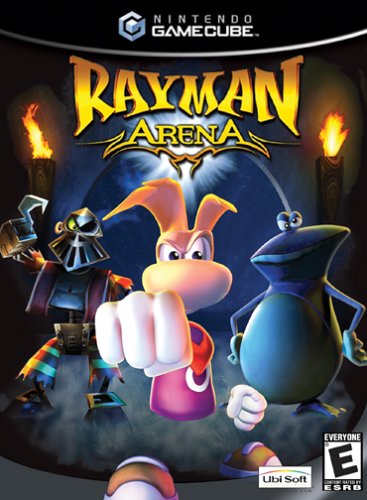
Rayman Arena - This wacky game involves Rayman and his pals either fighting or racing. The fighting mode in this game takes place in a 3D arena similar to like, Custom Robo or Gotcha Force. The goal is to defeat your opponent using power-ups to deplete your opinion's health as many times as possible before time runs out. This really isn't as fun to me, though, as the racing mode is. This racing mode feels a lot like Sonic The Hedgehog meets Crash Bandicoot where you try to complete 3 laps around the large, fully 3D "track" before your opponent does. The environments of the tracks vary greatly from lava factories to dusky beaches, while the platforming and sense of speed just feels good. Allow me to point out that this racing is done on-foot. This is a great multiplayer game, but it is also just a silly game to check out on your own.


Extreme G3 - This game is hard. I actually can't even beat the first circuit of this futuristic racing game. The goal of this game, like all racing games, is to complete however many laps and cross the finish like before your opponents do. However, this motorcycle futuristic racer involves just as much combat as it does speed. Each bike can be upgraded and fitted with guns, bombs, and many other weapons for you to use to take out your opponent and possibly destroy his bike before he can finish the race. This game is hard, but really satisfying.


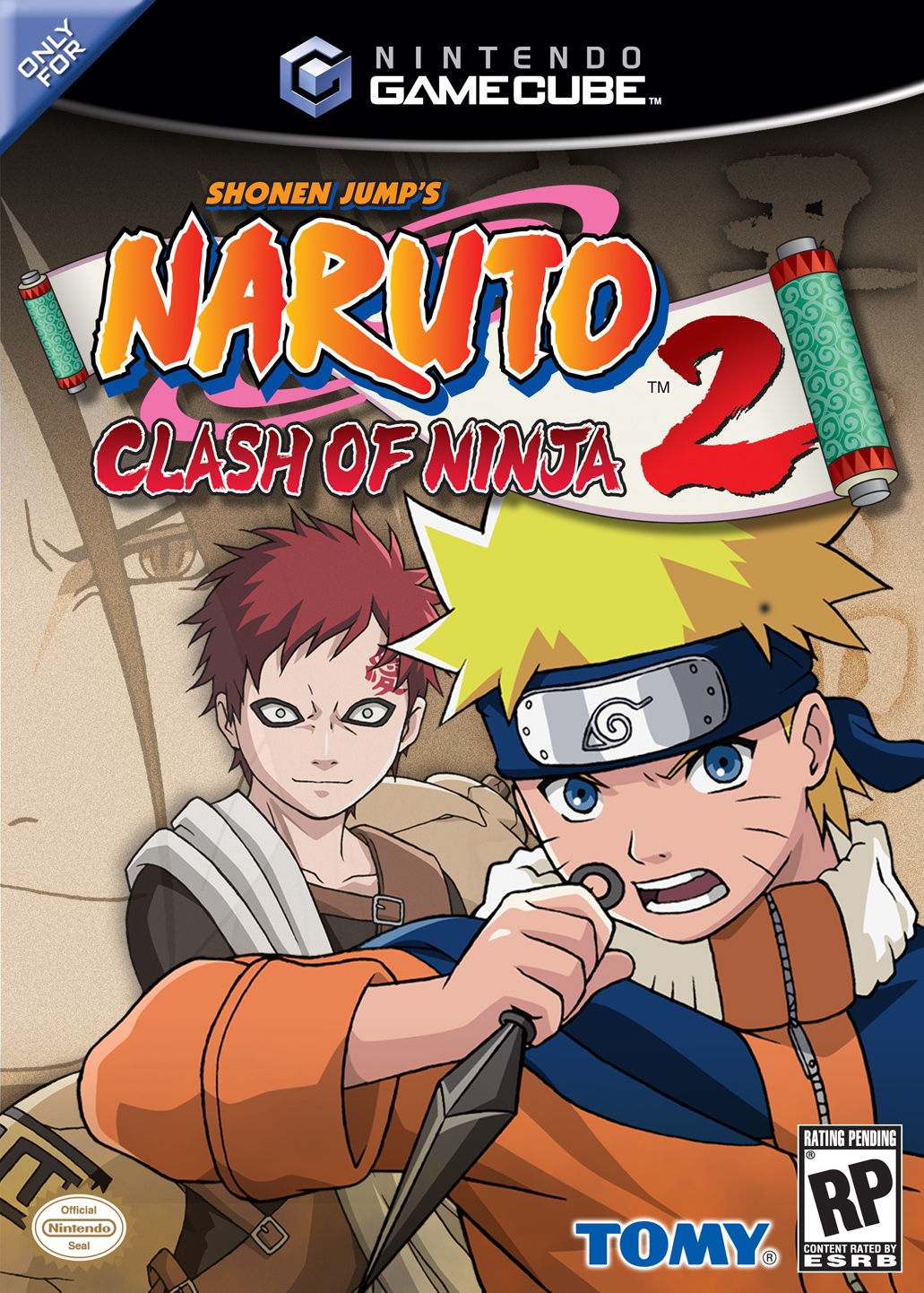
Naruto Clash of Ninja 2 - This is just a Naruto fighting game. I have this fixation on good sound effects as I have found that they can really add to the satisfaction that comes with punching someone in the face. Sometimes a good "thud" can be just as sensually stimulating as the image of watching a fist collide with a face, or in this case, kunai colliding with shuriken. The audio in this game is amazing. Naruto Clash of Ninja 2 is a fighting game that takes you through the story of Naruto the anime series up until a certain point. You can chose whether or not to care about the story, but the fighting just feels good. The controls and camera are good and the arenas are fully 3D with a lock-on as opposed to the 2D feel that fighters such as Tekken or Mortal Kombat can have. It isn't really complicated enough for hardcore fighter fans to be satisfied by, but it is accessible and easy to pick up if you're looking for something simple, yet rewarding.

Ultimate Spider-Man - Oh boy, I love Spider-Man games. Somehow, they are just so consistently good. This game has you playing as the web-slinger himself as you swing through the city taking out bad guys by exploring the open world while adhering to the story of Peter Parker who's best friend had turned into the other playable character in this game: Venom. This game has you switching back and forth between Spider-Man and Venom as the day turns to night, and night turns to day. Now, time does not progress on it's own, you do have to essentially just sequentially beat every mission the game throws at you in order to move forward in the game, but it doesn't take away from the fun. This game isn't long, nor is it's size as impressive as that of Spider-Man 2 the video game, but it is a certainly a fun game with a lot of
humor recommended if you're looking for something short and sweet.


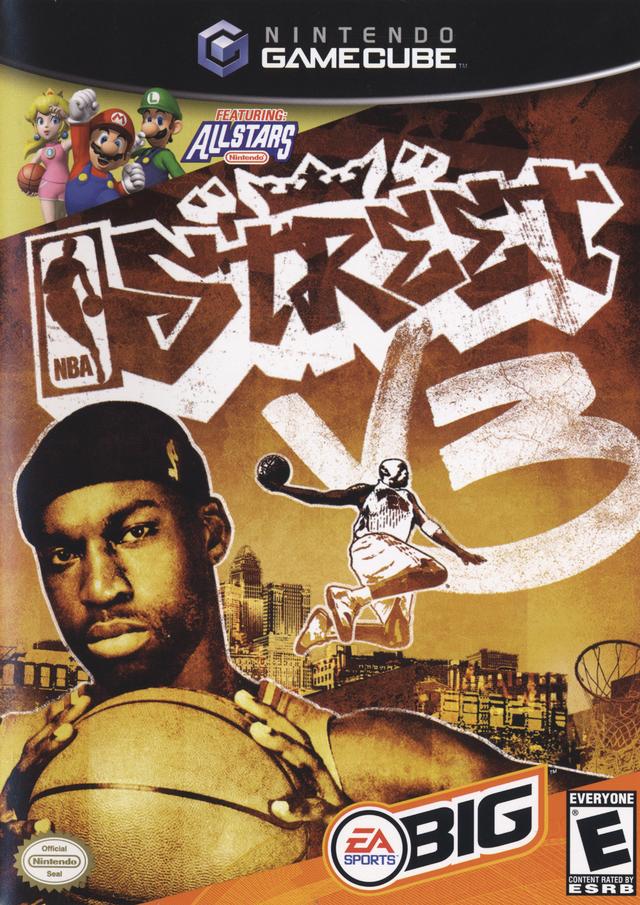
Street V3 - Street V3 is a street basketball game that features young versions of basketball legends and teams. These young pros challenge guest stars Mario, Luigi, and Peach in a 3 on 3, from the streets to the hoop basketball game. This game plays like any modern basketball game, perhaps with it's age showing a little bit. The controls are not any better or worse than "fine", while actually playing the game is just fun. It's fun to sink 3-pointers or slam the ball through the hoop via slam-dunk. This is one hell of a multiplayer game, too. I remember a night where me and a few of my friends who know nothing about basketball played this game for hours just taunting each other as if we were in the streets, ourselves. The single player in this game is solid, though it can become repetitive after a little bit. If you're looking for a tight single-player experience, pace yourself when it comes to Street V3;       multiplayer is where this game shines.

Wednesday, March 26, 2014

What's Good With That Game - Paper Mario Thousand Year Door

In celebration of what feels like the end of a thousand year break from this blog, I shall resume my work with a game whose story also has to do with a thousand years!

Despite having pestered my friend all summer about returning my copy of Paper Mario Thousand Year Door to me, it wasn't until just a few weeks ago did I finally get to really devote some time to sitting down and playing it. Just a reminder, What's Good With That Game is an arch of this blog where I write about a game that I have only played a small bit of (less than half) so we can witness how my initial feelings towards the game either change or remain the same as the game goes on. As of this point, I have just completed chapter 3 out of what I am guessing is 7 or 8 chapters. I have about 11 hours clocked on my file "dicks" and I am still having a blast playing it. So, as Mario does, allow me to jump into it.

Paper Mario Thousand Year Door


The Paper Mario series has been one that combines a side-scrolling open world with strong influences from RPG and platforming games. Gameplay and progression is rather Zelda-like, as you typically spend a bunch of time in several different locations, get some new items or a new ability, and use that ability, along with abilities obtained earlier in the game, to solve puzzles, hit switches, find keys, defeat bosses, and save days. The game is divided up into chapters to provide clear separations between sections of the game like a story book, and the fighting system is a really refreshing and rather hands-on turn based RPG. So with this in mind, we ask the same questions as always:

Why did I pick up this game?
What do I think of it so far?
What do I anticipate?

I got a WiiU and 3DS for Christmas (divorced parents FTW). I've been playing a lot of Sonic Lost World for both systems along with Sonic Unleashed which I have been playing with my suite mate at school. I've also been playing Donkey Kong Country Returns, Monster Hunter 3 Ultimate, Super Mario 3D World and Cave Story 3D. A lot of these games are just platformers or adventure games with little depth. Although I love each of these games so much, I did long to play something more story-driven, and since I keep my WiiU at home so my brother can still enjoy Darksiders 2 and Pikmin 3, I have not much more than my trusty Gamecube and a bunch of unopened games from the summer to play. One of those games was Paper Mario Thousand Year Door. Recommended to me by my friend SchistOnUranus, whose opinion I consider very highly, I decided to give this one a go, expecting that if anyone was going to provide me with an experience that was going to make me feel like the hero I longed to be, it would be Nintendo. I looked forward to a story-driven adventure game, and I've been beginning to think that I am getting so much more.

For me, Paper Mario Thousand Year Door had a slow start. I walked around the main town, Roguesport, for a bit, solved some puzzles, fought a dragon, typical ZeldaMarioMetroid stuff. The game essentially has 2 different ideas fueling the entire experience: oldschool Zelda Dungeons and Final Fantasy turn-based RPG fighting. Now I was aware of this going into the game, but I had trouble determining which area was going to offer me the most consistent level of fun. I expected the open-world and exploring to be the part that I enjoyed more, as opposed to the fighting which I thought would be shallow. Because of this, I began my Paper Mario experience running around a pretty large world that admittedly had little to explore while skipping over a majority of the avoidable fighting, but I was wrong to do so. It wasn't until I started to fight more and increase the levels of Mario and his pals did I realize that fighting was much less of a hassle, and was a lot more fun than I had originally thought. You are pretty weak in the beginning of the game, and there isn't much you can do about it, but the more you fight, the better you get, and when each fight changes from a world that stresses you the fuck out to a world that involves you stomping on Dragon's heads and pounding Goombas with hammers, it really starts to establish itself as the better half of the game. The chapter I just completed, Chapter 3, had a lot of emphasis on fighting and even though I consider turn-based games to be slow, I was thoroughly entertained during all of chapter 3, so much so that I do dare say I am excited for chapter 4.

I am usually pretty skeptical about games I play nowadays. I am just so afraid of spending my time playing a game I don't enjoy that I look for reasons to put games down instead of looking for reasons to continue playing them. However, the more I think about Paper Mario Thousand Year Door, the more trouble I have deciding why I would stop playing it. It is a great difficulty level, does not require a walkthrough, minimizes grinding of both fighting EXP and coins, and has a good story that is simple, yet effective. My only complaint so far is that sometimes there is WAY too much fucking talking. I find my self spamming the A button during most of the text as of recently. Sometimes, I just want to play, and when I do, just shut your fucking mouth.

In the end, I look for games that I will pause because I want to take a break, not because I am stuck, lost, or lacking the necessary skills. Honestly, eventually I do plan to get back to that list of my top ten favorite Gamecube games and when I do, this may be a contender. Paper Mario Thousand Year Door is a perfect difficulty and is just fun to play, and honestly, games that can be described in such a way can be tough to find today, so if you're looking for one, both SchistOnUranus and I are recommending this guy to y'all.

Note: From what I have seen of the game, South Park Stick of Truth is a Paper Mario game in disguise. If you like one, you'll probably like the other.

Thursday, December 12, 2013

Sequels

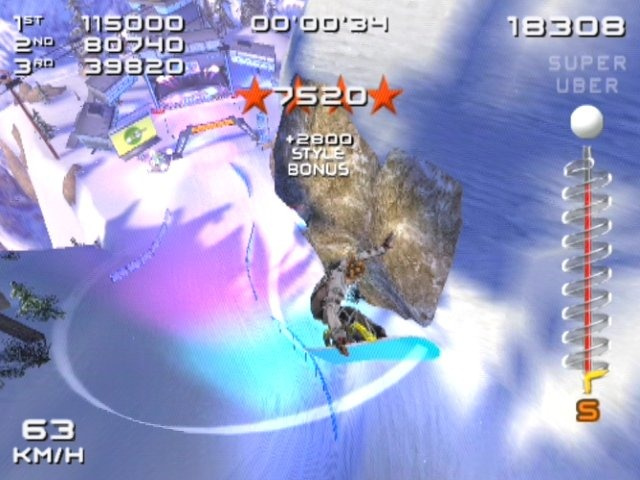
I've been listening to a band called Autopilot Off recently. They fucking rock and they entered my life the same way some of my all time favorite bands did in the past. Goldfinger, System of a Down, Less Than Jake, Bodyjar, Cauterize, Crush 40, and Autopilot Off were all introduced to me via the video game. When ever I think about certain bands, such as the bands I listed above, sometimes I get brought back to the game that exposed me to that music. In which game did I really learn about Autopilot Off? SSX 3.

So I turned on SSX 3 again for the first time since the middle of the summer today because I wanted to listen to some Autopilot Off and maybe because it just snowed the other day and it was appropriate. After a whole bunch of racing and freestyle runs, I started thinking something rather treasonous:

SSX Tricky or SSX 3?

I think SSX 3 is a better game than SSX Tricky. There. I won't be clever and wait until the end of the whole fucking post before I come out and say it. I love both SSX Tricky and SSX 3, but I prefer SSX 3 over the former. The main question that I ask myself is the following: Why is it that SSX Tricky is the game that I find more people talking about when I feel that SSX 3 is a better game? Unfortunately, I don't have the energy to actually determine the answer to that question, but what I can do is compare the two games so you guys can decide for yourselves. SSX Tricky or SSX 3?

So here we go. The SSX series is a series of snowboarding racing games made by EA Big. There are several installments in the series, including 3 for the Nintendo Gamecube and at least 1 for the Wii (I don't claim to be an expert on Wii....yet). Based on the conversations I have with my friends both at home and at college (so you can tell I am getting a really wide range of people here), it would seem that SSX Tricky is the more popular game. For that reason, it must be the better game! SSX Tricky is an AMAZING game that kept my younger self entertained for weeks and weeks and weeks at a time, but I am not certain if it matches up with SSX 3, personally. I suppose I'll start off by discussing the features both games have in common.

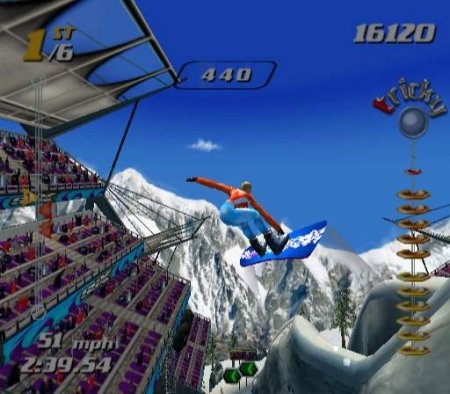
SSX Tricky and SSX 3 both offer 2 main types of single and multiplayer player modes: Race and Showoff/Freestyle (Showoff  in Tricky and Freestyle in 3. They're the same thing.) Race mode has you blasting down huge snowy mountains as fast as you can in an attempt to get from the beginning of the course to the end of the course in less time than it takes your opponent. That's how a race works. Showoff/Freestyle is a mode where you basically have the entire course as your own personal skatepark. You start at the top of whatever course you want, and try to score as many points as you can by doing all sorts of different crazy tricks before you cross the finish line. Each game has several different courses to board on. Each game has an upgrading system where you will get to choose which of your rider's stats you wish to increase, and the abundance of these opportunities increases depending on how brutally you kick your opponent's ass during the race. There are many different boards with all different stats for you to unlock AND there are different clothing options for each character that are purely cosmetic.

So both games have the same basic formula. And I'm not kidding, like, they are pretty much the same idea. Same equation and formula. No risk taken from Tricky to 3. This presents us with a unique opportunity where we can just literally compare the two games track by track, move by move. It's not like comparing Super Smash Bros. Melee's Adventure Mode to Brawl's Subspace Emissary, where they are completely different but are forced to be compared. SSX Tricky and SSX 3 have so much in common that it is incredibly easy and natural feeling to compare the two. It is a case like Minute Maid lemonade vs. Country Time lemonade where we can just say "This is better because I like it more." So. Obviously the games aren't EXACTLY the same, they just function the same. They look different, feel different, and play differently despite their concepts being akin. So we only have a couple of different things to compare, and a side by side comparison would be most efficient.

Let's start with the characters. Pretty much the same characters give or take a few newbies added to SSX 3 from SSX Tricky. Personally, I feel that the updated graphics that come with a game being newer does wonders for the SSX 3 character roster. It looks better since it is the same art style, and because it is newer. Visual appeal goes to SSX 3. Also, IM SORRY, but as much as everyone loved the announcer (Rozell?) in Tricky, SSX 3 has a real soundtrack complete with the auto-synching feature. Which means like, if in these rock songs, normally, there is a quiet section, then that quiet section is going to be played while you're in a dark cave. Then once you come shooting out of that cave, the chorus of that song is going to slam through the TV speakers, and the best part of the song is going to be pumping through while you're high in the air about to land and shit all over your opponents. Like how music is in a cheesy summer-movie made in the 90s? That's what SSX 3 does. Sound goes to SSX 3 as well.

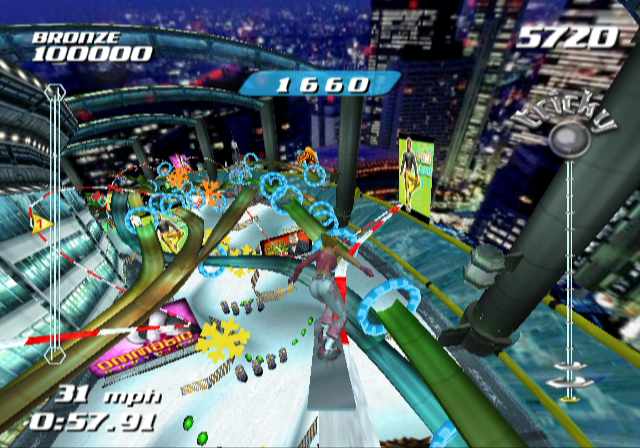
Courses. Perhaps the tracks in SSX Tricky are more memorable. Maybe this is the result of nostalgia or because I've spent more hours total playing Tricky when compared to 3. I do feel that there was less emphasis on the course designs in 3. They don't feel lazy, in fact, they really are awesome. But, like, for example, the name of each course in SSX Tricky is blown thrown the TV speakers every time you select one. In SSX 3, they are not. And because in SSX 3, you can technically access a majority of the courses from an open-world-ish hub, you may play many courses without even knowing their names. Perhaps what I am trying to avoid saying is that even though the courses in SSX 3 are really damn fun, they do all kind of look the same - just a bunch of snow and a bunch of ramps. Fun, but I mean, Tricky has Tokyo Megaplex on its side....courses go to Tricky.

Finally, with a 1 to 1 score, we have how the game feels. Tricky does an amazing job of incorporating the element of doing tricks with the controls that can feel button-mashy but work, into a game that is not necessarily always about doing tricks. Maybe you'll want to tone the showoff inside of you down while you're ripping through tougher courses in SSX Tricky. This is because in Tricky, accidentally performing tricks you never wanted to do happens often and can REALLY fuck you up. It is very easy to accidentally stop performing your front flips (for example) while you're upside down. So like, you're blasting through a course, and a surprise ramp pops up from out of no where. Because you didn't see the ramp until it was too late, you're still holding up on the control stick, because holding up on the control stick makes you accelerate when you're on the ground. BUT in the air, holding up makes you flip, kinda. So before you know it, you're upside down, you're in the air, and you're about to eat shit and once you do, it's over. Time to press Restart. SSX 3 completely fixed this problem. In SSX 3, you automatically complete your flips every time they are executed. It's like the bottom of your board is magnetized to the snow. It makes doing double front flips on flat ground possible, but who cares how unrealistic that is? If you're going to spam tricks all day during the race, you're going to lose anyway. The point is that SSX 3 has solved the one problem SSX Tricky had with its trick system- you pretty much automatically land them every time. You still have to avoid hitting trees and stuff, but there is no bullshit when doing the tricks; each one can be performed with confidence. With the installation of SSX 3, the SSX series has finally worked out every kink in the system that links doing tricks to going fast, and for that, SSX 3 takes the best-feeling trophy.

Looks like SSX 3 wins 2 to 1. Of course, this is all just my opinion. I cannot discredit the volunteer opinions of my friends - SSX Tricky MUST be an awesome game since so many people always want to play it when they see that it is in my library. I couldn't resist getting the sequel because I was curious, but perhaps some of you may join my side one day. SSX 3 I do believe is only 5 or so dollars on Amazon. Enjoy, and don't forget that whether it is in a game or in real life, yellow snow is piss. Don't eat it.

Saturday, September 7, 2013

I Put This Down, Then Picked It Up Again

I put this down, then picked it up again
because it's good enough for one more round.
I put this down, then picked it up again
thought it would be better this time around.
I put this down!

Nothing like a Tubthumping reference to start a new line of posts.

Anyway, I Put This Down will be yet another short archetype of posts. Each IPTD post will be a brief discussion of my thoughts of a game that I played for a bit, but didn't finish immediately. The pattern for these games will be the following: I bought it, played it, put it down, forgot about it, picked it up again. The discussion will take place after I pick it up and start playing it again. Who knows what will happen the second time around?

Prince of Persia: Sands of Time

The Prince of Persia titles have exhibited a new form of platforming/adventure games ever since their original
conceptualization. In these games, you play as the Prince of Persia himself who has decided that the best way to save Persia from the rule of an evil king is to run around a bit, jump off a few walls, and kill some bad guys. Fair enough. These games are praised for their ability to combine parkour-like skillsets with puzzle-solving, and dungeon-crawling mechanics. In addition to all of the moves that I wish I could do in real-life, the prince also uncovers a dagger whose hilt stores the sands of time. Releasing the sands of time from the dagger reverses the flow of time. This ability can be used during gameplay in a way that is exactly like re-winding an old VHS tape (speaking of old reality...). Pressing R will not only employ the power of the most ridiculous but still awesome backwards WOOSHing sound effects, but will bring the prince back in time for up to about 5 seconds real-time. So that's what we have for us today - a parkour prince and a dagger that can reverse the flow of time.

Of course, I am writing as if I intend to belittle the game - I don't. Prince of Persia: Sands of Time really is a fun game. The controls, outdated as they are, are solid, and although the camera makes me want to die, the ability to reverse the flow of time in order to undo your mistakes is compensation enough. So the 3 big questions are the following:
Why did I put this game down?
Why did I pick it up again?
What do I think of it the second time around?

I did just admit that I thought this game was fun, because I do - I wouldn't lie to you guys. But I put this game down a long, long time ago because I thought it fell into a trap that Mirror's Edge introduced me to, but wound up existing for a long time before that. You see, Prince of Persia: Sands of Time is really 3 different styles of gameplay arranged separately on 1 disc. This game is exactly 33% parkour, 33% puzzle-solving, 33% hack-and-slash combat, and 1% synergy (this proto-discovery was realized by my friend Dylan = credit where credit is due). What is unique to the P.O.P. series is the parkour-extreme-platforming so I bought this game (my first Prince of Persia game) thinking that it was going to be about 90% parkour and 10% wishing I was still doing parkour. The trap that this game falls into most likely stems from the developers thinking that the parkour parts were awesome, but the princes' skillset weren't large enough to create a game of 100% parkour without it starting to feel repetitive after about 2 hours. So what they did was create additional gameplay styles that included combat, by throwing in some beat 'em up sections which consisted of the slaying of multiple waves of enemies until everyone except you is dead. Fine. But what happens with these "solutions" sometimes is that the very remedy used to cure repetitive gameplay becomes repetitive. So let me be more specific to this title:
Problem: The game would be boring and repetitive as shit if ALL you did was parkour.
Solution: Add more game mechanics, like fighting and puzzle-solving, in order to prevent the parkour from getting stale.
New Problem: Fighting and Puzzle-Solving get stale and supersaturate the game to the point where I miss the parkour. #ijustlearnedhowtobold

So I really really loved the parkour parts of the game, but the combat sections were sloppy, and the puzzle-solving sections were challenging, but not fun, and were really more annoying than anything, as they hindered my ability to throw myself off of buildings and stuff. I put Prince of Persia: Sands of Time down because I couldn't handle how not fun the puzzle-sections were. All I wanted to do was some wall-runs and some jumping off of stuff, but apparently Sonic The Hedgehog is still my best bet for that desire.

Probably 18 months passed and I decided to see what would happen if I popped that disc back into the cube again. Perhaps, I thought, my new found video-game wisdom would aid in my future appreciation of what is usually considered to be, like, the 5th best Gamecube game ever. Resuming my old file, I immediately became stuck in a parkour portion that only a youtube video walk-through could help me out of, and then was INSTANTLY thrown into the most annoying puzzle-section I had yet to behold. I cleared it after about a half hour of fucking falling like an idiot, and pretty much just said "fuck it" after that. Prince of Persia has yet to see the world outside of its since then. Being several hours into it, I feel like I have played it enough in order to decide that I have seen what I needed to see.

On a side note, I understand that the game took a different approach to the video game soundtrack by...well...not having one, but it didn't work. If I am going to literally be watching myself fuck up, and be forced to watch myself fuck up in reverse slow-mo, then imma need some tunes to keep me going. And that's all I have to say about that.

Verdict:
I put this down, then picked it up again, and threw it back to the ground
where it stayed down.
http://www.youtube.com/watch?v=2H5uWRjFsGc

Sunday, July 28, 2013

To Hold You Over

I can't believe I forgot to mention this.
http://www.gametrailers.com/shows/pop-fiction/videos-clips
http://www.gametrailers.com/shows/pop-fiction

Gametrailers.com features a show called Pop Fiction. I've tried to tell my friends about it but I remembered today that I could also use the good ol' reality to advertise. Pop Fiction, the way I describe it, is essentially Myth Busters, but for video games. The show's team of gamers investigates rumors or secrets within video games to find the truth about their existence. Gametrailers also has a much younger sub-series called Pop Facts. Pop Facts is basically the same thing, but the episodes are much shorter. I HIGHLY recommend these shows. A new episode of Pop Fiction is released monthly, and Pop Facts are released weekly. Enjoy!

Wednesday, July 17, 2013

Recap

Okay guys like I said in my last post, we are officially half way through my list of top ten favorite Gamecube games. I must admit, there is a problem with how I am going about this list. The fact that I recently just purchased a bunch of Gamecube games that are new to me in addition to the games I plan on obtaining in the near future is very much making me reconsider my list. Perhaps I will post a revised list later in the year, once I have completed each of my new games entirely. Just to establish some relatability, here are the games that I just got recently and the games I will try to pick up by the end of the summer:
Mary Kate and Ashley 16 Licensed to Drive                                              -Plan on Getting-
Starfox Adventures                                                                                   Super Monkey Ball 2
Legend of Zelda: The Windwaker                                                                   Metroid Prime
Legend of Zelda: Collector's Disc                                                           Metroid Prime 2: Echoes
Tales of Symphonia                                                                                            Pikmin 2
Luigi's Mansion

So far I've spent my posts discussing extensively the pros of each of the titles on my list, but I haven't touched the cons. There are reasons why I like certain games more than others, but I've neglected to reveal those reasons until now. This will be brief, but interesting. We will start at number 10:

1080: Avalanche - The game wasn't short, because there was actually a lot to do once you really
started looking at all of the unlockables. All different boards and such were unlocked by playing game modes that are typically overlooked in video games (time trial), but really, a lot of the unlockables don't affect gameplay enough for you to have a real desire to get them. There are definitely some cool prizes in the game, but by the time you get them, there is pretty much nothing left for you to do in the game. For this reason, despite how fun the game is, you do eventually lose motivation to really go the extra mile as far as 100percenting the game. Moreover, this game is WAY more fun when you race your friends, but no one plays this game...so good luck...

Mario Kart: Double Dash - I understand that number 9 might be a little low for this game, but really,
I feel pretty good about this. Despite how fun this game is, actually playing single player is a little but of a drag, but 100% necessary. Unlocking every character and track is kind of boring because it involves you playing the same track 4+ times (once on every difficulty). This game is fun for the MULTIPLAYER. But the multiplayer is only fun once you have your friend take one for the team, and unlock everything via single player.

 
Spiderman 2 - This game is awesome, but it is repetitive. Although swinging around and fighting people is SO fun, it really is all you do. It shares the same problem with the Prince of Persia titles in my opinion: they are fun, but too much of a good thing is never good. It simply looses it's flavor after a little while of chewing

Super Mario Sunshine - Definitely another awesome game, but ultimately, it is not Super Mario 64.
The game is also inconsistent in that some levels are really easy, and other levels are TV-smashingly difficult. It can be a little short and some levels can be a little not-as-fun as they could be. There really are no major faults with this game, but the little things add up. I mean, it's still my 7th favorite Gamecube game, so don't think I am trying to hate on this game; it is really good, but not number 1.

Lost Kingdoms 2 - Ehh this one is tough. Sometimes you face a game with no big problems, no major flaws, but simply is just not your favorite game ever. Honestly, this game needs a little bit of a better soundtrack. There are certainly moments when the soundtrack hits you in the best of ways, but usually it is pretty bland. I never go on an epic quest without some epic tunes, but apparently Activision does not agree with me. The graphics were also pretty laughable and even though the actual story was good, the characters didn't draw me into it. The gameplay was really REALLY fun and refreshing, but I think the story could have been emphasized more by some good voice acting and cut scenes. It is something I never thought I cared about until just now...

Soul Calibur 2- This fighting game is perfect. But that is just it- it's a fighting game. The gameplay is
repetitive at times simply because fighting games don't rely on story and characters and cut scenes to help you through the games. If you get bored during an adventure game, you can usually last a couple more hours or so by paying attention to the music or graphics or something, but fighting games are typically 100% fighting, 0% everything else. So if you get bored of fighting, then you change your game, because there is just nothing else to them.

So I hope that cleared some shit up for y'all. Please tell me if I've inspired any of you to bust out your old Gamecubes because I'd be honored to hear about it. Also, feel free to ask me about any game at all. I will review any game I have played and I love talking about games so if you ever wanna talk, find a way to let me know. Stay tuned, because I plan on posting a list of ALL of my 56 Gamecube games soon.

Thursday, July 11, 2013

Top Ten Favorite Gamecube Games: Number 6

As promised, I did say at the beginning of this series that my list was going to be the result of intense research and Gamecube experience. As you have seen already, my list is a good mix of classics and curveballs, but this next game just hits a homerun like no other game does. Though it may not be my number 1 game of all time, it is definitely the first game I would recommend to anyone looking to play something that would make you think "how the hell has no one ever heard of this before?!" And that game is Lost Kingdoms 2.

6) Lost Kingdoms 2
Never heard of it...

Ill try to be concise- In Lost Kingdoms 2, you play as an attractive young rebel named Tara. Tara is part of a nomadic group of freedom fighters who basically just drift. Tara is in possession of a runestone. A runestone is a mystical device that allows it's user to bring the images of monsters printed on magical decks of cards to life. Once these creatures are brought to life, they only obey the owner of the runestone by which they were summoned. Each creature has a different ability and capability to defend Tara from the threats of wild monsters or other runestone holders. In Lost Kingdoms 1, the type of runestone that Tara has could be found more commonly, but by the time that Lost Kingdoms 2 occurs (approximately 100 years after LK1), "original" runestones, like Tara's, were almost extinct. The runestones found most commonly in LK2 are man-made and are admittedly pretty shitty, as they are unable to control monsters flawlessly. So what happens when you have a beautiful young lady in possession of a weapon that almost everyone wants? You have a damn good video game on your hands, that's what.

Okay gameplay. This game features a hubmap. What is that? It is basically a menu where you are shown a map of the world you are playing through and at any point during the game, you can select to play through the next level in the story, or a level that you have already completed. Basically it means that once you complete level 4, you can either play the newly unlocked level 5, or you can replay level 4, 3, 2, or 1. Why would you want to do that? Because it may be that items you acquire in level 5 may help you beat level 1 easier. This type of gaming is called "non-linear gameplay". It is when you are encouraged to backtrack through previously completed levels in search of items that you may have missed the first time around. It really can make or break a game, but Lost Kingdoms 2 puts very little pressure on you to backtrack through long and difficult levels, so you never feel like you HAVE to search every inch of the level, because honestly, in this game, if you miss a treasure chest or two, it will never hinder your ability to play.

Anyway, with this hub map in mind, I will explain the adventure/RPG elements of the game.
Essentially, the entire point of the game is to navigate each level entirely. Each level is shaped like a small open world with relatively simple puzzles that you must solve in order to continue on. However, during your navigation, you are very often attacked by large collections of wild monsters who stand between you and your to-be-solved puzzles or between you and the end of the level. So how do you fight them? With monsters of your own! Tara's weapon of choice in Lost Kingdoms 2 is a collection of up to 30 monsters that she can use to solve puzzles, navigate levels, and fight other monsters. These monsters are contained within a deck of cards. Tara has the power to release monsters sealed within her deck of cards in order to defend herself against really almost anything. This is the appeal of the game. What makes this game different from other adventure games- your weapon, the deck.

So I said that Tara wields a deck of cards during the game. Did I mention that you get to build her deck yourself? That's right, in order to play this game successfully, YOU, the player, need to assemble a deck of 30 cards. You get to choose from hundreds of different cards, all with different strengths and attributes and effects during battle. This customizability to a fan of adventure games is equivalent to you being able to choose not only your sword in a game, but it's length, width, weight, grip, color, material, bust size, favorite food, flavor, and favorite Super Smash Bros. character.
Customizability is something that a lot of adventure games really lack, and the way Lost Kingdoms 2 counters this issue within the genre is by giving you a weapon that REQUIRES customization. You make the deck your own as you become familiar and in love with the cards that YOU chose to use. You can also make up to 10 different decks, and change from deck to deck between levels. Getting bored of using the same cards? Switch them up for an entirely different style of playing! As each card is used during the level, it gains experience. Collecting experience for cards grants you several different opportunities. The first thing you can do with an "experienced" card, is make a copy of it. Do you really love 1 card specifically? Well how much do you think you're going to love TWO of them? Moreover, you can exchange experience collected on a card in order to upgrade that card to an even stronger card. Love your Baby Dragon card? Well with enough experience, that Baby Dragon can be upgraded to a fully realized Zombie Dragon! The upgrading system is also completely optional, although it is encouraged. Just like any other game, you will be demanded to keep your weapons strong enough to handle the enemies being thrown at you. Your weak monsters that may have cut it in the beginning of the game won't necessarily be as effective towards the end, but as you use your cards, they can either be replaced by buying better cards at the Card Shop, or upgraded to stronger cards for free. As you may have realized, the ability to customize your very weapon makes for completely unique gaming experiences. The near limitless ability to customize your shit establishes the guarantee that no two play-throughs will ever be the same.

I love side quests. I think they separate those who play a game from those who are hardcore fans of the game. Have you ever heard of a Legend of Zelda fan "casually" get the Biggeron's Sword? NO! Lost Kingdoms has 6 different hidden levels. These levels are uncovered by completing optional tasks throughout the main, required levels. For example, defeating a hidden boss in the Forest level, without being asked to, will unlock the Sacred Battle Arena. The completion of these hidden levels either unlocks new and powerful cards for you to harness, or dark opportunities for you to enhance your gaming experience. You see, I don't want to give anything anyway, but if you complete the difficult level known as "Sacred Battle Arena 1" and "Sacred Battle Arena 2", then you will be given the (literally) once in a life-time chance to upload every card you've collected in Lost Kingdoms 1 into Lost Kingdoms 2. A game-to-game copying and gaining of cards EXCLUSIVE to the original game? Incredible. Just damn incredible, and MUCH cooler than getting an "Achievement" on the XBOX 360.

In order to beat it completely, this game took me about 16 hours of playing. Not bad, especially
nowadays. The length of the game combines with the game's difficulty level in order to assure that no hardcore gamer is able to just blast through this title in 2 hours. You see, Tara can only summon monsters if she has a sufficient supply of magic power stored up. If your magic meter has 8 magic in it, and you summon a monster that requires 6 magic, then you have 2 magic left over for your next monster. However, if you have 6 magic and you summon a monster that requires 10, then your magic reserves will be depleted, and the rest will come out of your health. Magic stones restore your supply of magic, but they are usually only found of you strike another enemy (Imagine Coin Battle in Super Smash Bros. Melee). So in order to collect magic stones to refill your magic meter, you must use a combination of monsters that require small amounts of magic and monsters who require large amounts of magic. Typically, the stronger the monster, the more magic it requires, so it is up to you to build a deck that always has an ample supply of magic at hand because if you run out of magic, each monster you summon will take a chunk out of your health. This feature sets the difficulty level of this game at about a 3.5/5.

TL,DR- Lost Kingdoms 2 is a refreshing spin on the classic adventure game. You will spend hours customizing your "weapon" and even more time using it to explore levels and fight other monsters. It's fun and takes strategy, and even a little bit of time in order to beat this game. It has very high replay value, and I will recommend it until the day I die.