Nintendo Consoles

Nintendo Consoles
Showing posts with label Double Dash. Show all posts

Sunday, January 24, 2016

Madagascar...DUH.

Movie tie-in games are legendary for providing gamers with mediocre non-canon, filler, or just plain garbage. Children's games are known to be occasionally fun, but usually go unconsidered. Low expectations can often precede impressive surprises, but what happens when you have a movie tie-in that takes the form of a children's game? Usually mediocrity. But is this the case with one of the many games I have owned for years but up until recently never had the interest to play?

Madagascar - Nintendo Gamecube

Yes, this is totally the case. Madagascar is really mediocre. I mean, duh, right? It's a "kid's game". But I wanted to play this game after noticing that I had no idea what made kid's games bad. I don't remember disliking kid's games as a child, yet I no longer play them as an adult. Why? Let's find out.

(for real) Madagascar - Nintendo Gamecube

Madagascar the video game, based on the Dreamworks movie of the same name, is an action-platformer that combines many different types of gameplay into one coherent title with a strong emphasis on plot and surprisingly little to no repetition. The main game is broken up into levels that take anywhere from 10 to 20 minutes to complete. The levels are easy, and there are only enough to make up what comes out as a 4-5 hour game, but each level introduces one or more additional mechanics that keep gameplay fresh, yet never stop it from becoming boring. Each level has you playing as one or more members of the cast of the Madagascar movie, and the dialogue (as well as the entire game, for that matter) does not assume that the player is already familiar with the source material.

The constant switching of characters contributes largely to keep the gameplay fresh. Each of the 5 characters you play as have enough of the same moves in common, such as jump or attack, to ensure a smooth transition from character to character, but have enough unique moves to justify the transition in the first place. Levels are designed around the moveset of each character used to complete them: Alex with his double-jump ability is featured in many of the levels that focus on platforming, Gloria with her large collection of attacks is featured in levels that emphasize combat, etc.

The problem is that while the gameplay is varied, it is simple and unrewarding. The issue with these kids games is that while they are not particularly offensive on their own  (aside from some hilariously bad graphics and unpolished optional mini-games) there is nothing satisfying about playing them.

Of course the argument would be made that no kids game could satisfy the needs of an experienced adult gamer, but I would be very quick to disagree. That which is known as a "skill-cap" is the amount of time or practice that must be devoted to a video game in order to master it as thoroughly as possible. If a game has a high skill cap, then it can be said that the game requires a lot of practice and/or time to master it, while a game with a low skill-cap may require virtually no practice in order to achieve mastery status. Satisfaction in video gaming comes with having achieved mastery despite a high skill-cap. Some games have a high skill cap despite being easy to play- this would be an example of "easy to play, hard to master", a phrase that adequately describes many titles. Many kids games are "easy to play, hard to master", but Madagascar is not one of them, and thereby scratches no itch.

Kid's games can be fun under particular conditions. I am familiar with many kid's games that become more fun as knowledge of their nuances is gained, but Madagascar is not an example of such a title. Though not particularly lazy in any one department, it does not pose enough of a challenge, nor does it possess a high enough skill cap, to yield a satisfying victory.

Friday, November 6, 2015

Custom Robo

It's been a long time since I last reviewed a hidden gem on the Gamecube. To be honest, it has been a long time since I last started a new Gamecube game. A friend is letting me hold onto a few of his games for a while though, so I figured a few weeks ago was a perfect time to dust off the ol' cube and get back to what brought me here in the first place.

Custom Robo - Nintendo Gamecube

      It's not too often that we see an IP with five entrees slip under the radar to the extent that Custom Robo has. Spanning all the way back to 1999 on the Nintendo 64, the Custom Robo series was initially one that was kept exclusive to Japan, with its first three entrees, Custom Robo, Custom Robo v2, and Custom Robo GX never to see an international release. Eventually, North America got its first taste of the Custom Robo series in the year 2004 on the Nintendo Gamecube. For a retro game, Custom Robo has a pretty considerable price tag, sitting at around $25 on eBay at time of writing, but is Custom Robo still worth a 3-Way or Vertical shot, or has it rusted over time?

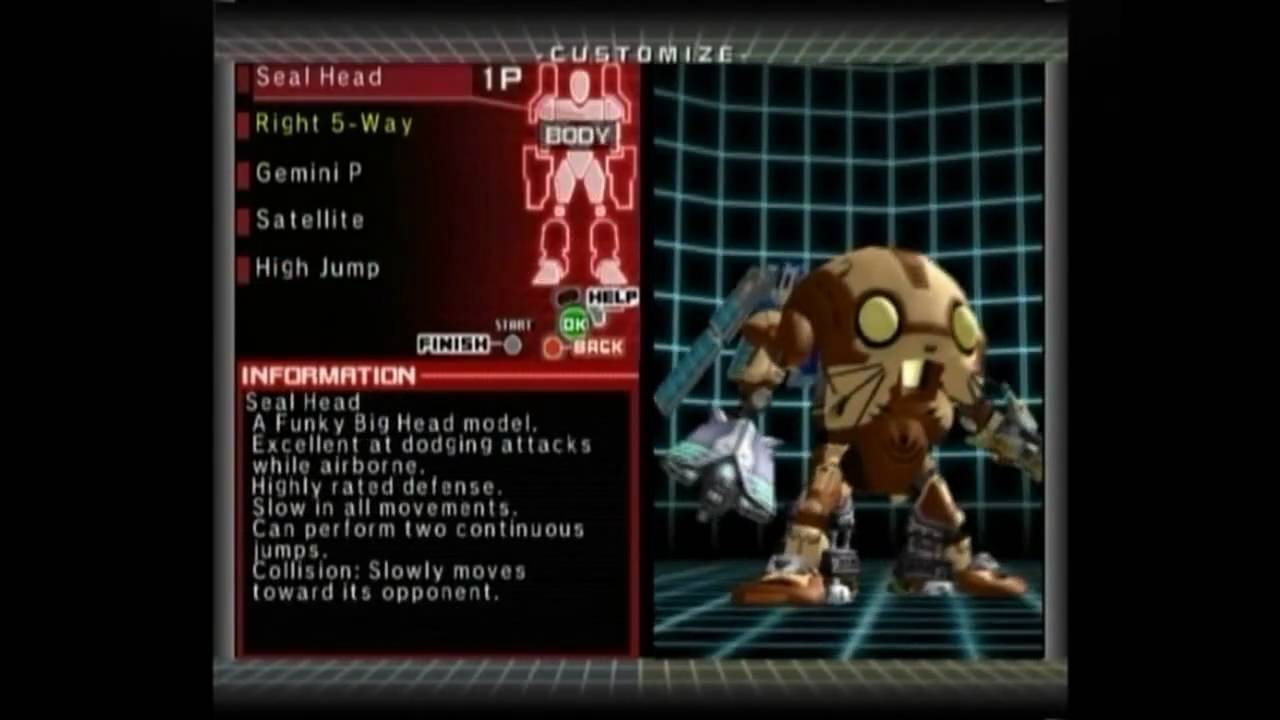
   At its forefront, Custom Robo is an action RPG. Most of the gameplay takes place in 3D battle arenas where either two or four Custom Robos will fight in order to reduce their opponent's health from 1000 to 0. The way to gain the advantage over your opponent is by taking the Robo that you are given in the beginning of the plot and upgrading it using parts you are awarded by completing certain tasks as you progress through the initial 10 hour campaign. Things start off pretty simple while you have few parts to select or swap-out, but quickly become much more interesting as you are awarded many different parts frequently. Each Custom Robo is made up of a combination of 5 parts: gun, bomb, pod, legs, and model. Most of the parts are so vastly different from each other that even the most subtle changes to your build can produce drastically different results in the battle arena. I experimented with a few different builds to find one that fit my playing style, and in the process played briefly with a Custom Robo that did heavy damage and jumped really high but lacked mobility and was armed with a 3-Way shooting gun and heat seeking missiles, and another Robo that was extremely agile and powerful while in the air but lacked fire power on the ground, equipped with triple-pods designed to meander around the battle field, before I finally built the perfect Robo for me: a Robo with the ability to warp while in the air, armed with a gun that shoots both forward and up, pods that could be fired three at a time, and bombs that cleared walls.

   
  Being able to quickly master the layout of each arena is another noteworthy albeit much less important skill to have when fighting. According to the lore, each battle arena is generated by natural abilities had by each Custom Robo master, and whenever you fight a new opponent, you play in their arena. Each arena stays roughly the same size, and the differences between each one can be a bit underwhelming, but the diversity in color scheme and music, as well as noticing how the layout of each arena reflects the personality of the character generating it makes what could have been an afterthought on behalf of the developers one of the most charming aspects of the game.

    The story is much less intricate than the building and fighting of Custom Robos, though it is not without its plot-twists, fun characters, and genuinely humorous dialogue. After selecting the name of your character, you wake up in your home and are immediately encouraged by your land-lady to pursue a job as a mercenary working for an organization called the Steel Hearts. You get the job after proving your natural talents with a Custom Robo by fighting off enemies from a rival gang called Z Syndicate who failed in an attempt to rob a nearby laboratory of a rare Custom Robo model. Without wishing to give anything more than the first 5 minutes of the game away, you eventually learn what/who it was that the Z Syndicate is after, as well as who runs the Z Syndicate. Overall, the story, while cute and necessary in order for some of the hilarious dialogue to hold meaning, does little more than serve the gameplay.

 
  After all of that, there is a second story mode that is unlocked after completing the first. The second story mode throws you and your fellow Steel Heart members into a tournament meant to have the citizens of the town regain the trust of the police after it was lost as a result of the events in story number 1. While I found the entirety of the first story to be extremely easy albeit fun, the second story provides a much greater challenge. As opposed to the fights in the first story won by selecting the same build and using the same strategies every round, I found myself having to use different parts and tactics in order to account for the game's increased difficulty level. In story number 1, I felt discouraged from using different parts after I found a build that worked perfectly for me, but the increased difficulty provided by the second story was exactly what I needed in order to explore the game's depths to further extent, and I wasn't disappointed.

     At the end of it all, the gameplay is divided into two parts: 1 where you walk your character to which ever location on the map triggers the next plot point, and 1 where you actually fight. Throughout all of Custom Robo, there are no puzzles, no exploring, and no level-up system besides the acquisition of new parts. While the fighting is addicting, I did become concerned that the lack of variety in gameplay would result in the game feeling samey. However, since the game is so short, with my completing of the first story taking a shade under 10 hours, it ends before you get tired, and while I will always appreciate a game for not over-staying it's welcome, it would have been nice to see more variety.

    Custom Robo is uncompromising in its gameplay; it is an action RPG about building robots and using them to fight other robots. Its arcade-like and campy tone is refreshing and has aged well. Despite some gameplay repetition and a generally weak story, Custom Robo offers an impressive level of depth when it comes to selecting your build, and features an addicting battle system that will be sure to keep you coming back even after your last opponent has fallen.


Tuesday, December 2, 2014

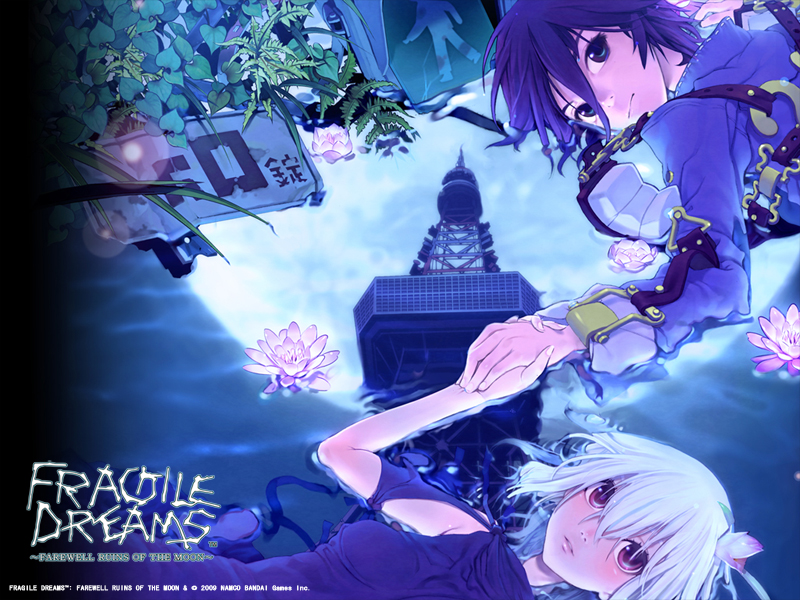
Fragile Dreams: Farewell Ruins of the Moon

Apparently, some kind of undocumented planetary alignment is upon us, because lately I have played some video gameS that I actually rather loved. Yes, after a string of games that I decided (or decided for you) were sub par came and went, I stumbled upon a few older titles for the Nintendo Wii that I quite enjoyed. Today's game is my favorite kind of hidden gem as it is a game completely forsaken by the internet, and it allowed me to prove once again to myself that I, James, am the only person I can trust to be right about anything. So without further narcissism, I give thee Fragile Dreams: Farewell Ruins of the Moon.

Fragile Dreams: Farewell Ruins of the Moon - Nintendo Wii
     First off, has anybody ever fucking heard of this game? I sure as hell hadn't before I found it featured in this youtube video https://www.youtube.com/watch?v=zhl6Tn3Kf1c. Fragile Dreams is a...game. You see, I found Fragile Dreams to be a game containing elements from most genres of video games albeit with an extremely ambiguous core around which each element orbited. At its heart, I suppose it is an exploration game, but it was linear, which means you didn't really explore anything more than what was in front of you. There was combat, but no more than what was necessary. Fragile Dreams was entirely story driven in such a way that I actually referred to it as a "drama game" for about an hour and a half before remembering that I am an aspiring critic and I have to be careful about using my knowledge in such fields to say stupid garbage like that. Ultimately, Fragile Dreams boils down to a linear exploration experience with elements of survival horror, JRPG, stealth RPG, and action games. It is also very artsy with great graphics and music, and every single thing that is on the disc contributes to the game's carefully designed story driving the entire game.

Good Things
       Fragile Dreams: Farewell Ruins of the Moon was another short game, clocking in at around 11
hours. I like shorter games because the longer a game is, the greater chance it has to become boring or fuck something up. Short games decrease their risk of becoming boring because they seldom overstay their welcome. It's like how the cool guy at the party stays cool because you only see HIM for a little bit before he leaves to have sex with twins or something, as opposed to the women who get to the party an hour before it starts and leave once they sense that everyone has been sick of them for 9 hours, if you'll excuse my misogyny. Fragile Dreams is a great example of a game whose story ends at the same time the original ideas do. 
      Now I guess I should talk about this story for a second, since it's the only reason to play this game. The first thing that happens when you start Fragile Dreams is you get told that the grandfather of Seto, the protagonist, just died. Like, JUST died. You also learn that Seto's grandfather was the only human that Seto has ever seen or known in his life. You then control Seto, wandering around his home for a bit before you find a note left by Seto's grandfather in which he tells Seto to seek this red tower in order to potentially find more "survivors". About two seconds after leaving his home, Seto accidentally startles a girl who upon being startled, falls, and blacks out long enough for Seto to approach her and touch her cheek to make sure she is still breathing (or something). The girl awakens upon being touched, and flees. Seto is then in shock because he has lived something like 14 years and has never seen another human being before. Fascinated by her, Seto spends the rest of the game seeking the girl instead of the red tower, although as you can imagine, the red tower eventually returns. Along the way, Seto meets a number of non-human characters, mostly androids, robots, or ghosts of humans who perished in the disaster that killed mostly everything and the game ends at the red tower with an explanation to and conclusion of the mystery of how the world got to its post-apocalyptic state.
   
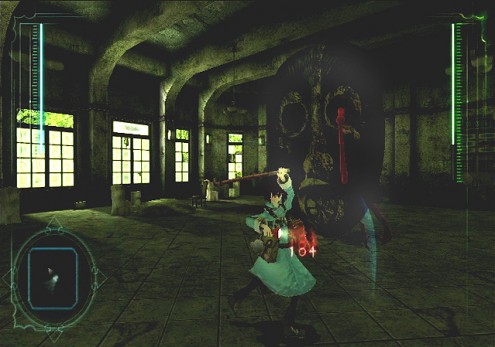
Gameplay involves you walking from one location to the next while the story justifies your doing so. Seto wields both a flashlight and weapons to be found laying around. Of course though, this world has been destroyed which means the only things laying around for you to wield are sticks, pipes, and brooms of various varieties. Good news though: swings of your weapon are executed by pressing the A button instead of by swinging the Wii Remote. Weapons can break if the A button is spammed though, so timing your combos properly is essential, and although it seems annoying and arbitrary at first, you come to love it once you accept that you can't do anything to change it. Of course, with broken weapons comes an inventory system, which is the same as that found in Resident Evil 4.
     The flashlight illuminates the dark path that lays before you while also stunning enemies. Flashlight, intuitively, is controlled by pointing the Wii Remote to the location you wish to illuminate. Using different types of flashlights will make hidden messages scrawled on the walls of the subways, hotels, and sewage pipes you navigate appear, and most of them when accompanied by the low piano scores played in the game, are pretty unnerving.
      Killing enemies will increase your max strength in a basic level-up system, and a crawling system is implemented to get past certain enemies or obstacles, making stealth always a conceivable option in case you decide to become curious about what life would be like if you were an enormous pussy.
      Fragile Dreams also makes great use of the Wii technology without using the motion controls. The speaker in the Wii Remote can be used to receive information from other characters by pressing the Wii Remote up to your ear at any point while playing, and creepy laughter of little girls gets pumped through the controller's speaker when ever you're near a hidden enemy.
      Really, you're in this game for the characters. The gameplay is fun, as it is pretty freaky and upsetting sometimes, stimulating an emotional response from me, but the story and fondness for the characters is what will keep you coming back. The story also has great pace; as soon as one character leaves you, another comes to its place almost immediately. Also, the voice acting is stellar.
   
Short-Comings
     Most complaints about Fragile Dreams: Farewell Ruins of the Moon regard the fact that the developers clearly cared more about the story than they did about the gameplay. According to professional reviewing companies, the story, while beautiful, overwhelmingly overpowers the bland gameplay. In response, I offer my opinion that the fight choreography in Toby McGuire's Spider-Man 2 overwhelmingly overpowers the personality of Mary Jane. Some aspects of some games are better off being pushed to the background in order to emphasize the game's strengths. In this case, the game's story shines more than it's gameplay does, so if you have a problem with a strong story being supported by average gameplay, then this game will not blow your mind the way it blew mine.

Conclusion
      Fragile Dreams: Farewell Ruins of the Moon is a game for gamers who like a good story. This is a hardcore game simply because it is a hidden gem, even though it is an easy game. It tells a great 11 hour story, so I recommend this game to anyone who is interested in that. I don't recommend this game as much to people who NEED rich gameplay in order to be engaged, because you won't find it here.

Sunday, December 22, 2013

This Bitch Contains Spoilers

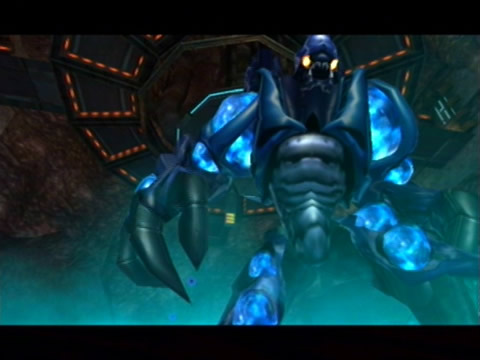
I've been playing a whole bunch of Metroid Prime recently. I feel like I am somewhat near the end of the game, but I have hit what seems to be a little bit of a wall- and by "wall", I mean "huge fucking monster with fucking all this shit that he keeps using to fucking kill me over and over." I am currently up to the Omega Pirate fight in Metroid Prime, and it really is such a damn good boss fight. It got me thinking about other memorable bosses I've had to slay in the past 19 years, and I just felt like writing about some of my favorite, or least favorite ones.

Omega Pirate - Metroid Prime
Jesus Christ this boss had been wrecking my shit. Basically what happens is Samus enters a chamber with a giant fucking monster sealed inside. The monster appears to be locked inside a pod, but evidently, the real breakthrough in locking technology didn't come until well after these science experiments were stored away. So, of course, the monster sees Samus and breaks out of her prison with the purpose of becoming Samus' best friend and falling in love with her and making sure no harm ever befalls her for the rest of her days. So Ms. Omega Pirate starts fucking attacking you. She has 4 weak spots encased in ice and they all must be struck in order to weaken her. So you shoot some missiles at her icy limbs while dodging the shock waves emitted from her giant ground-pounding fists of doom BUT these attacks must be timed properly or else they will be absorbed by Omega Pirate. Once her limbs are annihilated, she will send in some of her subordinate bitches to distract you from attacking her while she becomes invisible and attempts to regain her health. If you are able to destroy her minions quickly, you will have enough time to strap on your X-ray visor to see the invisible asshole and shoot her in the chest. You gotta do this like, 4 times to beat her, and it's HARD. FUCK.

Deathborn - F-Zero GX

This was literally a race from hell. Captain Falcon basically gets transported to hell in order to race a guy named Deathborn. If Deathborn wins, he will be able to seize the power of light and darkness for himself and destroy the universe. Because that's how it works. So this track is long, there are so many sharp turns, there are bombs all over the track AND even if you manage to survive all of the crazy shit happening on the track, you still have to navigate that shit faster than Deathborn does. I could barely beat this guy on Easy mode; I can't imagine what it is like on Hard. This is one great game, but sometimes it is so unbelievably difficult, and this boss fight doesn't make it any easier.

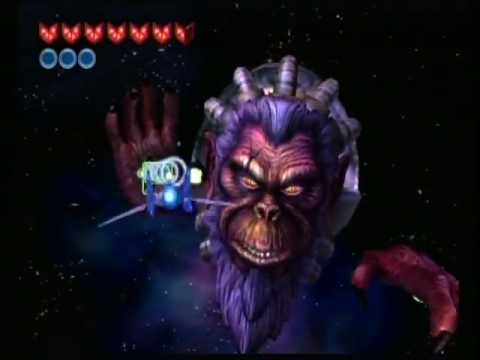
Andross - Starfox Adventures
So basically after spending an ENTIRE game on foot, out of your arwing, and with a dinosaur at your side, you fight the final boss of this game, Andross, the SAME EXACT way you fight bosses in Starfox 64. Andross claims to be the one responsible for all of the misfortune that has befallen Dinosaur Planet, but he is NEVER mentioned before this fight, not even a little tiny bit. As soon as he appeared on my TV screen, I just screamed "What the hell!". Andross had NOTHING to do with Starfox Adventures, yet at the end of the game, there he is, waiting yet again to be slayed by Starfox and Falco. OH YEAH. Also Falco makes his first appearance in this game during the last boss fight. Apparently before the events of the game unfolded, he bailed to start his own star-team, but I guess it didn't work out(?)  This boss was in such contrast to the rest of the game that it is literally laughable. It's still fun in my opinion, but it is so sloppily done.

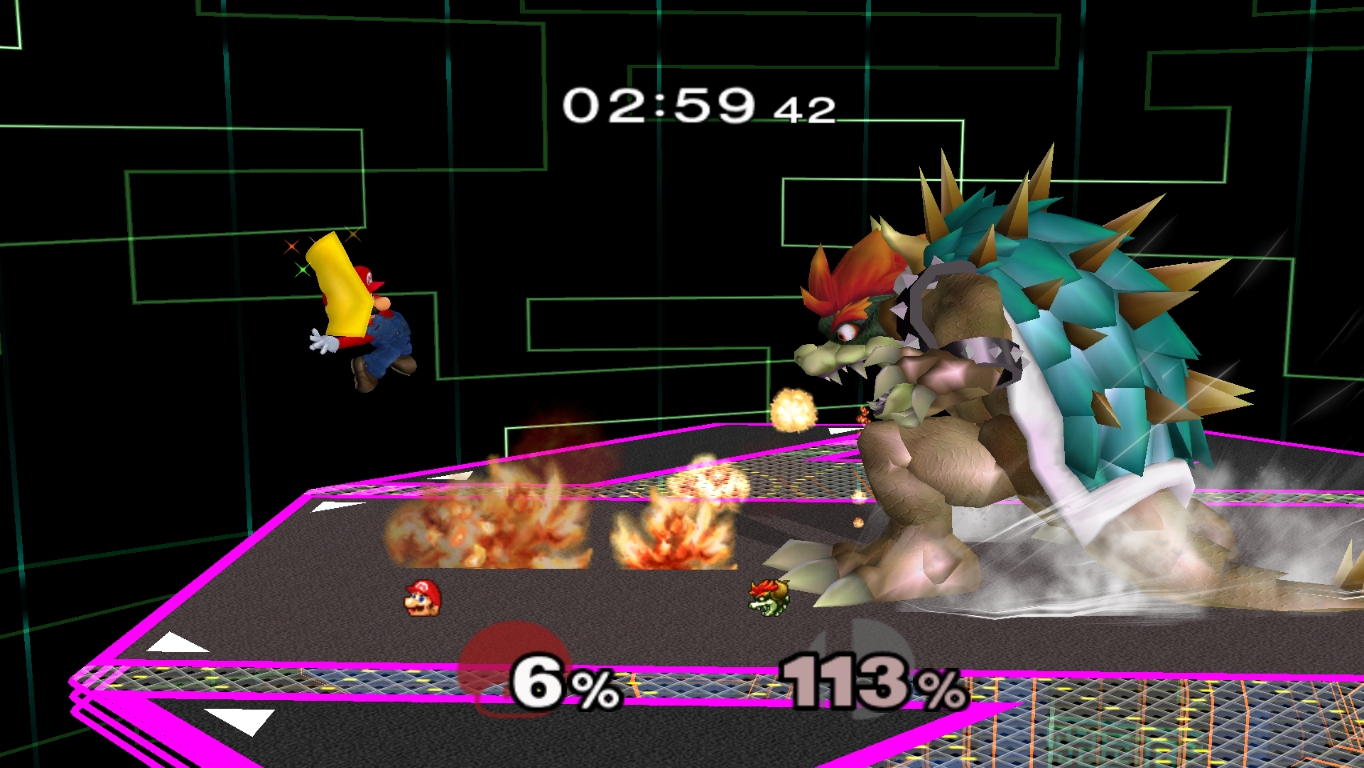
Giga Bowser - Super Smash Bros. Melee

Mwahahahahaha Giga Bowser! Event Match 51, everybody. I remember beating this colossal-sized King Koopa in elementary school. I remember my friend telling me that I had to use Jigglypuff's Rest attack in order to win. It wasn't until many years later did I go on to beat Giga Bowser and friends with Marth, Link, and Luigi, in addition to Jigglypuff, but before those days were simpler times and simpler melees. Now, I play this boss over and over just for fun but I used to really struggle with it. This boss isn't really too hard if you're good at Smash Bros., but it sure is fun.

Ganondorf  - Legend of Zelda Twilight Princess
THIS boss. This may be my favorite boss fight in any video game I've played. Finally, after all these 20 years of Zelda do we get a real 1 on 1 sword fight with Ganondorf himself. I wish playing against this boss for fun was more viable. Tedious smaller boss fights between this final fight and the last time you are able to save the game puts about 20 minutes of playing other shit before I get to fight Ganondorf, but if that wasn't the case, I would play this fight everyday, and I am probably not kidding. You get a small arena in the middle of Hyrule field where you and Ganondorf each draw your swords and take turns swinging away and blocking all of the swift strikes dealt. No gimmicks, no waiting for him to expose his weak spot or become dizzy from doing his spinning-attacking or anything, just a straight-up duel. Of course, there is always the option to distract him by casting your fishing rod! The first item of the game comes back with an easter egg so lethal that you can almost save the world with it alone! But if that is not your style, you just lure him in and attempt to knock him about the arena with your master sword, ending the fight by...! Well you'll just have to play the game to find out.

Friday, August 16, 2013

Playground Series: What the Hell Am I Playing?

I'm sure by now, you guys are sick of hearing me say things that aren't about video games, so fuck me apologizing for not writing in a while. Let's just roll the next review out.

Billy Hatcher and the Giant Egg


I've recently acquired about 20 new Gamecube games. So, where do you start playing? I figured I would start up 1 or 2 long games and 1 or 2 short games at a time, and just collect other games to save for later in between. One game that I wound up playing during all of this gaming madness was Billy Hatcher and the Giant Egg. I only read a little bit about this game in Gameradar's list of top 50 Gamecube games http://www.gamesradar.com/best-gamecube-games/ before I decided to never think about it again, simply because I could not imagine what I was reading actually being a real game. Well I am here tonight to discuss how I formally withdraw my original opinions of this game, and replace them with a whole new perspective on the concept of hatching eggs.

Billy Hatcher and the Giant Egg is an addictively ridiculous platformer developed by SEGA Sonic Team shortly after they released Sonic Adventure 2 in 2003. You play as a young boy named Billy who is thrown into a world ruled by chickens after he displays "great courage" by punching a small bird in the face in order to save his friends. Almost as soon as Billy arrives in Morning Land, he equips himself with a sacred Chicken Suit. This suit allows Billy to arm himself with giant eggs. Without an egg, Billy is pretty worthless, but WITH an egg, Billy is able to jump really high, ground pound the floor around him, ride on tracks meant to move eggs, and take out the evil crows by rolling the egg into them. The eggs, although are fragile, easily broken, and easily replaceable, utilize a basic upgrading system. It's nothing immersive, but it is important to know that when enemies are destroyed, they drop fruit. Roll an egg over the fruit, and the egg will grow. Eggs do more damage with each size-increase and a fully matured egg can be hatched by Mr. Billy Hatcher himself. A quick cock-a-doodle-doo will pop the egg open and potentially reveal 1 item from a large collection of possible egg-inhabitants. Different colored eggs hatch different items. More commonly found eggs can contain extra lives or collectables, but rarer blue or red eggs can contain animal assistants whose powers become yours to command upon hatching them. These animals help you solve puzzles or attack enemies once you befriend them in the ever-classic quest to reach one side of the level to the other.

The story is...well...it's a god damned kids game so who cares? There's an evil crow who wants to cast Morning Land into an eternal nighttime. Stop the evil crow, and do whatever everyone else tells you to do in order to beat the game. But if there is one thing everyone knows about kid's games, it's that they're fucking stupidly difficult. Unfortunately, poor game mechanics are responsible for a lot of the difficulty that this game has to offer, but they are not so plentiful that the game becomes unplayable (*coughSonicTheHedgehog2006cough*). So with any platformer, you really only have to consider a few different elements. Platforming video games date all the way back to 1981 Donkey Kong in the arcades, so when looking at modern platformers, you have to consider the factors that separate the games made today from the games made 30 years ago. You must consider graphics, originality, music (I guess), playability, and most importantly how much fun the game is to play. Well in my opinion Sonic Team spared very little cheese or tomatoes in this egg-wise adventure. Ill discuss each element separately.

Originality. So I don't know if you guys heard when I said it before, but your weapon...is an egg. A giant egg. It is important for those holding magnifying glasses to this game to note that the abilities you gain while holding an egg are not very original, as we have seen the ground pound/ butt bounce/ whatever you want to call it for years, but if rolling an egg into enemies in order to vanquish them isn't creative enough for you, then stop letting Stephen King set your creativity bar too high. You could say that this game is original because you roll an egg around in order to play, or you could say it's unoriginality is disguised by an egg, but either way, someone over at Sonic Team was ballsy enough to suggest that a game whose main attraction was rolling an egg would sell, and it did...at least...to me. Moving on.

Graphics. Let's see, 2003 graphics. Well we got Metroid Prime, F-Zero GX, and The Legend of
Zelda: The Wind Waker. Okay so the bar was set pretty high for graphics even in 2003. The visual importance of video games really became most noticeable upon the arrival of Playstation 2 games during the climax of it's career. Graphical legacies were also continued by Microsoft's Halo and Gears of War series, but if I had a dollar for every time someone mentioned how the graphics in Metroid Prime could rival those of modern games, I wouldn't have to go to college. That being said, graphical feats were not easily attainable in 2003, and unfortunately, it seams that Sonic Team missed the frying pan in this area. However, having average graphics will never mean that the game looks bad. Average graphics are a great canvas for a great art style. Wind Waker is the perfect example. While Billy Hatcher doesn't feature graphics of any impressive quality, it is a delightfully bright and colorful game, complimenting it's playful, light-hearted gameplay, and REALLY catchy music. You're god damn rolling an EGG. Does anyone really need goodgraphics for this?? What was really necessary for this game, were bright colors, and Sonic Team nailed that.

Like I said before, the game feels a little underdeveloped. Perhaps it is Sonic Team tradition to leave dumb mechanics in their games, or maybe it is the fact that Billy Hatcher is run by the same engine that ran Sonic Adventure 2 - a game whose glitches are almost as famous as it's level design, but like I said before, the difficult sequences of BH:GE are the result of a few poorly designed game mechanics. Some enemies are just too annoying, maintaining control while moving with your fragile egg is about 20% harder than it should be, and small mistakes are often extremely unforgiving to the point where you question why you're playing this game even more than you are intended to. The game is still very much playable, as these annoying mechanics are not found in every level, but when they do show up, you will die in your heart a little bit for every time Billy dies as a result of their bullshit.

Overall, Billy Hatcher really is a fun game. The level designs vary greatly from stage to stage, and are always a pleasure to look at. Sometimes the game can be too hard for all of the worst reasons, but in the end, you never really did expect a game that featured weaponized eggs to be 100% solid, did you? This game is 15 dollars on Amazon. Considering the fact that 15 is enough to get Metroid Prime, Resident Evil 4, Viewtiful Joe, SSX 3, Wave Race: Blue Storm, Mario Golf Toadstool Tour, Prince of Persia: Sands of Time or F-Zero GX, I would say that it may not be worth getting immediately, but if you ever run into it at your local Play N Trade like how I did, it may be destiny telling you to either play this title, or grab an omelet.

81/100
-10 Points - occasionally clumsy controls
-5   Points - occasionally dumb stupid mechanics
-4   Points - sometimes the game feels a little boring, as levels tend to be a bit too long, resulting in the witnessing of the same music and visuals for up to 15 minutes at a time
50  Points - originality
10  Points - visual appeal
6    Points - Audio appeal
10  Points - the game is not very long, but the amount of optional levels, in addition to the main story, makes the game feel like it is how long you want it to be
5    Points - the multiplayer is EXACTLY what you want it to be

Monday, August 5, 2013

Playground Series Number 4: "Hmph"

Originally, this post was going to be named "Hidden Gem" but I realized that a lot of you who will read about this next game will probably be sitting at your computer at 3a.m. with the potato chips in hand thinking only "hmph". Not in a bad way at all, I just imagine that very little people have played this game. Admittedly, this is a little bit more of an obscure title. Not obscure like P.N.03 where it is at least interesting, but obscure because it is very easy to overlook. With no immediate indications of what the game has in store, I can imagine someone looking at the rack of Gamecube games at your nearest Play N Trade and not even giving this game a first thought, let alone a second one. Despite that, this is truly one of the best racing games I've ever played, and to be honest, this is my god damn blog - I can write whatever I want.

ATV: Quad Power Racing 2

First of all, I am aware that there is an ATV: Quad Power Racing for the Playstation, but I never played it, so I can't and won't compare the two. Let's move the hell on.

ATV: Quad Power Racing 2 is an ATV racing game that features a myriad of different game modes, great graphics, great music and sound effects, and an incredibly not obtrusive upgrading system. The controls are passible (usually pretty tight) and the difficulty is fair for a racing game. Racing games are an interesting realm of video games. Often, hardcore gamers pass over racing titles because the gameplay can be predictable. What do these gamers predict? That in order to complete the game, you will race over many different tracks and come in first. When you beat one track, you will unlock the next one until you have beaten them all. That's how a race works. You dumb animal.
Well certainly, there is no arguing there. In ATV:QPR2, you will race across many different tracks with the goal to come in first in order to advance to the next track. It is however, the numerous different ways to play this title via the different game modes that make this game's replay value shoot through the ceiling more than the Koolaid guy with walls. So let's discuss them at least briefly. First off is Career mode, pretty typical to any racing game. Oh yeah, I guess the point of this post is to convince you how ATV: Quad Power Racing 2 is different/better than other racers. Okay Career mode. The object of this mode is to race and perform well enough on each track to advance to the next track. Simple. Notably, the Career mode is a very decent length that already earns this game a plus over other racers, but that's not all that's going on here. The first thing you do when you turn on this game is name your own character. The customizability is virtually non-existent which blows, but you learn to love what you have. This character you name is your character during Career mode, and is available to play as in other game modes. The point of having your own personal character is that it gives you the almost necessary opportunity to upgrade your racer as you play. Throughout every game mode, you can perform tricks - 20 (or something) total not including flips and spins. When a trick is landed, your boost meter fills. Using boost during a race increases
your speed temporarily, and in a racing game, it is always necessary to go fast. Why am I telling you this? Because the entire idea behind upgrading your character is not only increasing his racing stats, but increasing his knowledge of tricks. As your character ranks up from Newbie to Master, he learns new tricks that can be performed during a race. If a more difficult trick is landed, you will be rewarded with a larger amount of boost, and a greater amount of points compared to that yielded by a more basic trick. Basically, the more your character is upgraded, the better your tricks are. The better your tricks are, the more boost you have, and the faster you go. I mentioned before that the upgrading was non-obtrusive. What I mean by this is that the upgrading system feels very synergistic with the gameplay.  Usually, upgrading is associated with games that use swords or strength or magic or skills that should be improves over time. It seems odd for a racing game to use concepts that are atypical to it's genre, but ATV:QPR 2 really threads the two ideas together seamlessly. If you perform well during a race, your character will upgrade. If you kick your opponents off of their rides, your character's Strength ability will increase, the game way slaying a dragon in other games will increase your sword's power.

I am not going through every damn game mode, but I will mention them briefly:
*Arcade Mode - Race through every track one after another (15 total) without loosing. It is a simplified Career Mode
*Single Race - Choose to play 1 track 1 time
*Freestyle - Compete on a separate Arena-like stage and perform as many tricks as you can in order to achieve the highest score within a certain amount of time
*Challenge - Drive through various obstacle courses and complete them all within a certain amount of time. Don't mistake this for some kiddie bullshit - these jungle-gym stages will make you rip your fingers off.
*Time Trial - Complete each track as fast as you can. Your time is recorded for later reference
*Custom - Select up to 5 tracks in order to create your own personal Grand Prix
*Multiplayer - Race with up to 4 of ya friends
*Academy - the tutorial levels

After Career, the game modes are pretty straight forward, but are all rewarding. You see, my little blog fans, unlike lazy games, there is quite the incentive to complete every game mode. Even if it's not difficult, every game mode, yes even the tutorial, must be completed in order to 100% the game. Most of the unlockables are additional ATVs with different stats affecting their ability to race, but they are all good, and worth having. This kind of game forces you to squeeze every bit of life out of it. There are no modes that you can neglect if you really wish to unlock every ATV, and complete the game. The point is that although the main focal point of this game is the racing, as it is a racing game, there are so many more ways to play it if you get bored of racing before you get bored of the sound of a revving engine.

Speaking of sound, this is something worth a brief mention. This game's music and sound effects will make your ears leap off of your head and hug the T.V. Yes, I am being dramatic, but alas, I have almost 1000 views on this blog. How many do you have? That's right, eat shit. Moving on. Ironically to my previous comments regarding the sound, the soundtrack of this game is small. Like, REALLY small. There are only 6 songs in the whole thing. However, you have to realize that it's not a Tony Hawk game. You will only listen to about 75% of a song per race and you will only play about, I don't know, 6 races before you turn off the game for the night. So really, although it may seem like you will get sick of hearing the same songs over and over, you won't unless you don't like the music. To be frank, I learned about some of my favorite bands from this game. Tom Delonge's Boxcar Racer is featured in this game, as well as punk rock's very own The Reunion Show and Midtown. Complementary to the great tunes, is a bangin' engine sound effect. I will admit, I didn't learn to appreciate it until my Dad started to play and fucked with my sound effects, but eventually, I grew some balls and learned to love the sound of a great engine. Aurally, this game is an absolute pleasure.

To wrap it up, this ATV racing game does a great job of extending it's own life in a refreshing splash of off roading goodness. It does lack the customizability of other ATV racing games, but I found that it didn't affect the gameplay, although I will penalize for that offense. The large collection of game modes keeps you coming back for more, even if you don't feel like racing, and the fact that there are unlockables around every corner ensures your playing of every mode this game has to offer. And finally, I forgot to mention explicitly that you can kick other riders off of their ATVs during a race. Multiplayer perfection.

Score: 79/10
+30 points for just being a damn fun racing game
+30 points for all of the different game modes that are not "basically the same thing as the main game" *coughSoulCalibur4cough*
+10 points for the innovative upgrading systems during the Career mode
+9   points for the great audio/visual appeal
- 15 points for the absence of customizability throughout the game
- 5   points for some repetitive courses/gameplay during the Career/Arcade modes
- 1   points for slightly sloppy controls regarding the execution of tricks

Saturday, July 27, 2013

The Next Big Step

So because I feel so bad for blue-balling you guys when it came to my list of Gamecube games, I decided I am simply going to build a playground out of this blog. This time next week, I am going to upload at least 5 new reviews of games that each fit a certain qualification. These 8 topics are, in my opinion:
Most Overrated Gamecube Game
Most Underrated Gamecube Game
Overlooked Gamecube Game
Hidden Gem
Best Game Under 10 Dollars
Best Game Still Over 40 Dollars
...What The Fuck?
Wild Card

I am truly excited (and this time, capable) when it comes to approaching these topics. Keep in mind, the Wild Card will be one game that I choose from my collection at random. It could be anything from Super Smash Bros. Melee, to Mary Kate and Ashley, so brace yourselves.

Also remember that I will from now on be using a grading system, and a pros and cons list when discussing each game. I feel like this will contribute to a more accurate description of my feelings of each game. Remember to click that shit this time next week.

Finally, I've decided to occasionally post other relevant video game things among the archives of my blog in addition to my reviews. In case you missed it, I highly recommend a website I discovered recently. Be sure to check out http://www.howlongtobeat.com/ in order to figure out where your money is best spent.

Scroll down to see if you've missed anything, and of course, contact me to recommend a review or game. PEACE.

Sunday, July 21, 2013

Hang In There

Hey guys. This post is more of an apology than anything. Maybe I'm being too hard on myself, but I fear I will not be able to post my next review for a little while longer. I have been very busy with my band recently and I haven't had much time to get my Gamecube on. What I do have, however, is a website I just discovered. If you didn't already know about this site, I suggest you check it out.
http://www.howlongtobeat.com/index.php

Ever wonder if you're going to get the best deals on your games? Ever fear that you are going to pay up to 60$ for a game that you'll finish in a week? Well fear no more! http://www.howlongtobeat.com/index.php is a website where numerous gamers from all over can submit how long it took them to complete any video game you can think of! Simply type a game into the search bar, and BAM you have everything you need to know about how long any game will take you to complete. Separate times are provided for those who like to beat a game quickly, or for those who like to 100% a game. This site is the best way to make sure you're getting the most game for you buck.

Wednesday, July 17, 2013

Recap

Okay guys like I said in my last post, we are officially half way through my list of top ten favorite Gamecube games. I must admit, there is a problem with how I am going about this list. The fact that I recently just purchased a bunch of Gamecube games that are new to me in addition to the games I plan on obtaining in the near future is very much making me reconsider my list. Perhaps I will post a revised list later in the year, once I have completed each of my new games entirely. Just to establish some relatability, here are the games that I just got recently and the games I will try to pick up by the end of the summer:
Mary Kate and Ashley 16 Licensed to Drive                                              -Plan on Getting-
Starfox Adventures                                                                                   Super Monkey Ball 2
Legend of Zelda: The Windwaker                                                                   Metroid Prime
Legend of Zelda: Collector's Disc                                                           Metroid Prime 2: Echoes
Tales of Symphonia                                                                                            Pikmin 2
Luigi's Mansion

So far I've spent my posts discussing extensively the pros of each of the titles on my list, but I haven't touched the cons. There are reasons why I like certain games more than others, but I've neglected to reveal those reasons until now. This will be brief, but interesting. We will start at number 10:

1080: Avalanche - The game wasn't short, because there was actually a lot to do once you really
started looking at all of the unlockables. All different boards and such were unlocked by playing game modes that are typically overlooked in video games (time trial), but really, a lot of the unlockables don't affect gameplay enough for you to have a real desire to get them. There are definitely some cool prizes in the game, but by the time you get them, there is pretty much nothing left for you to do in the game. For this reason, despite how fun the game is, you do eventually lose motivation to really go the extra mile as far as 100percenting the game. Moreover, this game is WAY more fun when you race your friends, but no one plays this game...so good luck...

Mario Kart: Double Dash - I understand that number 9 might be a little low for this game, but really,
I feel pretty good about this. Despite how fun this game is, actually playing single player is a little but of a drag, but 100% necessary. Unlocking every character and track is kind of boring because it involves you playing the same track 4+ times (once on every difficulty). This game is fun for the MULTIPLAYER. But the multiplayer is only fun once you have your friend take one for the team, and unlock everything via single player.

 
Spiderman 2 - This game is awesome, but it is repetitive. Although swinging around and fighting people is SO fun, it really is all you do. It shares the same problem with the Prince of Persia titles in my opinion: they are fun, but too much of a good thing is never good. It simply looses it's flavor after a little while of chewing

Super Mario Sunshine - Definitely another awesome game, but ultimately, it is not Super Mario 64.
The game is also inconsistent in that some levels are really easy, and other levels are TV-smashingly difficult. It can be a little short and some levels can be a little not-as-fun as they could be. There really are no major faults with this game, but the little things add up. I mean, it's still my 7th favorite Gamecube game, so don't think I am trying to hate on this game; it is really good, but not number 1.

Lost Kingdoms 2 - Ehh this one is tough. Sometimes you face a game with no big problems, no major flaws, but simply is just not your favorite game ever. Honestly, this game needs a little bit of a better soundtrack. There are certainly moments when the soundtrack hits you in the best of ways, but usually it is pretty bland. I never go on an epic quest without some epic tunes, but apparently Activision does not agree with me. The graphics were also pretty laughable and even though the actual story was good, the characters didn't draw me into it. The gameplay was really REALLY fun and refreshing, but I think the story could have been emphasized more by some good voice acting and cut scenes. It is something I never thought I cared about until just now...

Soul Calibur 2- This fighting game is perfect. But that is just it- it's a fighting game. The gameplay is
repetitive at times simply because fighting games don't rely on story and characters and cut scenes to help you through the games. If you get bored during an adventure game, you can usually last a couple more hours or so by paying attention to the music or graphics or something, but fighting games are typically 100% fighting, 0% everything else. So if you get bored of fighting, then you change your game, because there is just nothing else to them.

So I hope that cleared some shit up for y'all. Please tell me if I've inspired any of you to bust out your old Gamecubes because I'd be honored to hear about it. Also, feel free to ask me about any game at all. I will review any game I have played and I love talking about games so if you ever wanna talk, find a way to let me know. Stay tuned, because I plan on posting a list of ALL of my 56 Gamecube games soon.

Saturday, June 29, 2013

Top Ten Favorite Gamecube Games Countdown: Number 9

When I first started thinking about this list, I knew that the number 1 spot would be difficult and I knew that the number 10 spot would be difficult. What I didn’t realize at first was how difficult spot number 9 in my Top Ten List of Favorite Gamecube games would be to fill. Telling a game that it made number 9 is like saying “I love you, but I love 8 things more than you”. Either way I figured it out, and I can only hope that this classic title will keep this list on track, and not swerving out of control.

9) Mario Kart: Double Dash

Ahh this classic series of games is known to be responsible for loud screaming and fierce rivalries between friends. This superstar racing game features Super Mario and all of his friends and foes in their own karts flinging items from banana peels to turtle shells in order to prove who is the fastest on the track. The catch to this game is not how many characters you can play as in total, rather how many characters you can play as at the same time. In this game, you get 2 characters for the price of 1 kart. The duality of this game exists in the 2 characters that you choose to play as, as they each assume different responsibilities on the kart. Although pressing the Z button will cause your characters to change roles during the race, you initially choose 1 character to drive and 1 character to throw items. The controls remain the same as any other Mario Kart game, despite having to control twice as many characters at a single time.

So here is the grand question: If gameplay remains the same, what the hell is the point of choosing 2 characters instead of 1? And the answer to that question is not very obvious, but is very important;
Strategy.

This Mario Kart game is the first one to feature the idea that certain items are exclusive to only 1 character. This means that in addition to weight, the difference between selecting to play as Mario or selecting to play as Bowser is the difference between throwing fire balls and throwing a koopa shell.  Character selection now involves memorizing the capabilities of the items exclusive to each character. But remember, you have 2 characters to pick. This means that you have to incorporate the potential of up to 2 exclusive items into your strategy. It is also important to know that although Mario and Luigi, for example, are 2 different characters, their “special items” are almost exactly the same. The pairing of 2 characters, each with a unique “special item” is crucial to developing the perfect racing duo. My favorite combo? Mario and Paratrooper.

Next we discuss the soundtrack and level design. I mean, it’s a Mario game…this is their specialty. Just like any other game that features the famed plumber, Mario Kart: Double Dash has incorporated only the brightest of colors and memorable musical scores in order to create the perfect family-friendly racing environment. There are 16 different tracks in total and in order to unlock every character and kart, you have to pretty much complete each track once on all 4 difficulties. That creates a game where you have to compete in 64 races total in order to experience it completely, not to mention the dreaded yet perfect solution to killing time with awkward cousins, ALL CUP. 1 circuit. Every track. 40 minutes. Damn. Despite the occasional feeling of déjà vu, the levels really never get old and the fun is prolonged depending on the amount of friends you have to play with.

Everyone has their favorite level, and of course Rainbow Road is reserved strictly for the ultimate Mario Kartists, but all-in-all, Double Dash keeps the bright and cheerful look of Mario alive through the clever color arrangements, memorable track designs, catchy and not annoying musical scores, and the placement of faces on EVERY single bit of scenery.