Nintendo Consoles

Nintendo Consoles
Showing posts with label NES. Show all posts

Thursday, April 28, 2016

And Presto, It's Kirby! - Kirby's Adventure

Kirby's Adventure - Nintendo Entertainment System

A Kirby game will hit me like bad romance- I wake up one day, turn one on, play it, love it, beat it, go to sleep, wake up the next day, and wonder what the hell happened the day before. And not unlike a bad romance, there are a couple of Kirby games I return to every once in a while no matter how many times I might swear them off. Kirby Nightmare in Dreamland is one of those Kirby games.

Of course (and I say 'of course' having only learned this a few years ago), Nightmare in Dreamland is a remake of an NES game entitled Kirby's Adventure. I must assert that better graphics, better animations, and better controls render the remake a higher quality game, but that doesn't mean the original wasn't amazing in it's own right. In fact, Kirby's Adventure is the only NES title I've ever completed, as it's easy for a NES game albeit widely more difficult when compared to recent entries in the Kirby franchise. Praise for Kirby's Adventure in any retro gaming community is not hard to find, but what's so striking about K.A. is how well it still holds up and how modern the game feels.

Kirby's Adventure is a side-scrolling platformer featuring 7 worlds, 35 levels, and 1 fat pink guy who can copy the abilities of his inhaled foes in order to progress. K.A. is the first title ever to feature Kirby's signature copying ability, although it is the second game in the series. What's fascinating about specifically the levels in Kirby's Adventure is that they would really be pretty boring in any other platformer. Each level contains a lot of flat ground without many traps, and enemies are often spread far apart; but these levels wind up being incredibly fun because of the numerous abilities Kirby can gain during them, with no one ability being clearly the best, and some abilities not even particularly good. Each ability feels extremely balanced, and obtaining one of the temporary powers in no way guarantees your safety. Instead, each ability, such as the ability to wield fire, sword, tornado, hammer, i.e., must be mastered and used cleverly to traverse each stage. Often, environments, platform placement, and enemy quantity will pose a bigger or smaller threat depending on which ability you choose to wield. Replayablity is high (as established previously) because of the many different ways you can defeat each boss and complete each level.

K.A.'s aesthetics are sincerely among the best on the system. Bright colors, clear sprites, and even some costume variety that comes with certain gained Kirby-powers (Ice FTW) all contribute to make Kirby's Adventure one of the most beautiful games on the NES, especially when compared to earlier titles like The Legend of Zelda, released 7 years before.

Remarkably, almost nothing about the gameplay is changed from Kirby's Adventure to Kirby Nightmare in Dreamland- a testament to the title's timelessness. Perfectly designed levels that consider each of the many abilities gained throughout the game combined with high variety in aesthetics and environments make Kirby's Adventure ideal for an afternoon of gaming. The title is short, and easy by 1985 standards, but it contains everything required to make an exceptional gaming experience + tons and tons of root beer.

Thursday, April 7, 2016

Kid Icarus: Uprising - Sorry to keep you waiting!!

Kid Icarus: Uprising - Nintendo 3DS

Kid Icarus: Uprising is a 3rd person shooter / rail shooter released for the Nintendo 3DS back in 2012. Immediately upon launch, the game was met both with ruthless criticism and professional acclaim. 25 years separates this sequel from the franchises' original 1986 installment and as a result, both games are radically different.

But different, in this case, is awesome. Though the NES Kid Icarus took the form of a vertical platformer, featuring our protagonist, Pit, jumping to scroll up and down to complete levels, Kid Icarus: Uprising features Pit soaring through the skies, shooting down soldiers of the Underworld Army, and using Mega Lasers, explosions, and swords to defeat famous mythological bosses over the course of 25 levels. The game employs fully 3D models, has bright colors, a consistent frame-rate, impressively adjustable difficulty levels, an appealing interface, a variety of game modes including multiplayer, customizable weapons and ability configurations, a good length, high replay value, cute dialogue, likable characters, beautifully crafted levels, and fun gameplay that should be appreciated both in long and short play-sessions.

Wow. That's a lot of good things. How is it that this game hasn't got everyone foaming at the 3DS-game-deprived mouth? 1 thing: the controls.

The controls of Kid Icarus: Uprising are really the only thing that keeps the game from perfection. Stay with me here as I describe them.

You have two different sections of every mission: Air and Ground. The air sections are on rails, so your flight path is taken care of for you, but dodging enemy fire is your own responsibility. Use the Circle Pad to dodge and move. Great. Shoot and attack with the L button. Strange that attack is not A, B, X, or Y, but whatever. Fine. Circle Pad and L. Now aim by sliding your stylus on the touch-screen- an action that uses up the entirety of your right hand. While on the ground, everything is the same, but camera is controlled by flicking the touch screen, much like how you would spin a globe to rotate it, and you use the circle pad to move through the levels as you would in a typical action game.

Basically, in order to really aim effectively with your right hand on the touch screen, you must hold your heavy 3DS in your left hand alone. This can be uncomfortable. And dumb. It really does take away from the experience. Everything offered in Kid Icarus: Uprising is crafted with extreme attention to detail and with mastery of game design in general, but the hand-fatiguing controls will inhibit you from playing more than one or two levels at a time.

DISCLAIMER: the controls can be changed in order for aiming to be performed with the ABXY buttons, but while this is way more comfortable, it is slower, less accurate, and less responsive.

The controls are disabling enough to warrant considerable score reductions for Uprising, but they do not make this game bad. Kid Icarus: Uprising is still a fantastic shooter overflowing with Nintendo charm, but it is nearly impossible to play for long stretches of time, which is a huge bummer. When a game is this good, it is disappointing and frustrating to have it physically hurt to play. Still, during the moments without discomfort, I argue that Uprising is a masterpiece. Simply put, it is a hard sell: if you can get past being unable to play this title for more than 30 minutes at a time, you'll love it; if you're looking for something to relax with and play for hours and hours on, say, a long car ride, Uprising is not for you.

Tuesday, March 15, 2016

Paper Boy

Although the trend has spent the last couple of years fading, waiting to be replaced by which ever big idea comes next, the endless runner genre of games dominated the mobile gaming market for quite some time. We first saw Temple Run in the year 2011, which then had to make room and share market space with spin-offs and copycats such as Subway Surfers, and Sonic Dash, but this genre is actually quite a bit older than many of those aforementioned games. Let's take a look at a retro endless runner.

Paper Boy - Arcade/ NES/ others 

Paper Boy is an endless runner made before endless runners were even around. Originally published by Atari for the arcades, it was later ported to many home consoles and P.C.s, including the NES in 1985. Paper Boy is an action game/ endless runner where you play as a boy throwing newspapers to white houses from his bicycle while dodging an array of hilarious obstacles taking the form of anything from an oncoming car, to break-dancers, to the Grim Reaper. It's often not considered to be among the best or most memorable NES games of the time, but it certainly is good for a laugh if not a few hours of cursing out tornadoes bent on ruining this newspaper company's delivery service. 

The paper boy, on his bicycle, is forced forward by default, leaving the player to influence his acceleration, steering, and of course throwing of newspapers. Completing the first level (called Monday) can be a fair challenge to those more accustomed to modern endless runners, but losing a life is usually so funny that one may not mind the initial struggle. If one keeps at it, allowing the humorous obstacles to ease the pain of constant death, then they more than likely may find themselves enjoying Paper Boy, despite its initial difficulty. 

Gameplay employs a pretty simple concept featuring only two rules: throw the newspapers onto the front lawns or into the mailboxes of the white houses, and don't die. Obstacles are added gradually throughout the course of the levels (each of which named after a day of the week), easing you into the experience and giving you a taste of how exciting it is to successfully launch a newspaper from the street or side walk into a mailbox, while simultaneously giving you a taste of the black asphalt beneath your tires as you ride through what has to be the world's most dangerous and unfortunate, possibly cursed, neighborhood. 

In the end, Paper Boy is a short experience with a long legacy. As one of the original endless runners, young gamers today may have no choice but to appreciate that which Paper Boy contributed to a genre that wouldn't be fully realized for another 20 years. All you guys in high school whom I watched kill time during English class by playing Temple Run 2, you may have Paper Boy to thank for your shameful course grades. 


Sunday, February 14, 2016

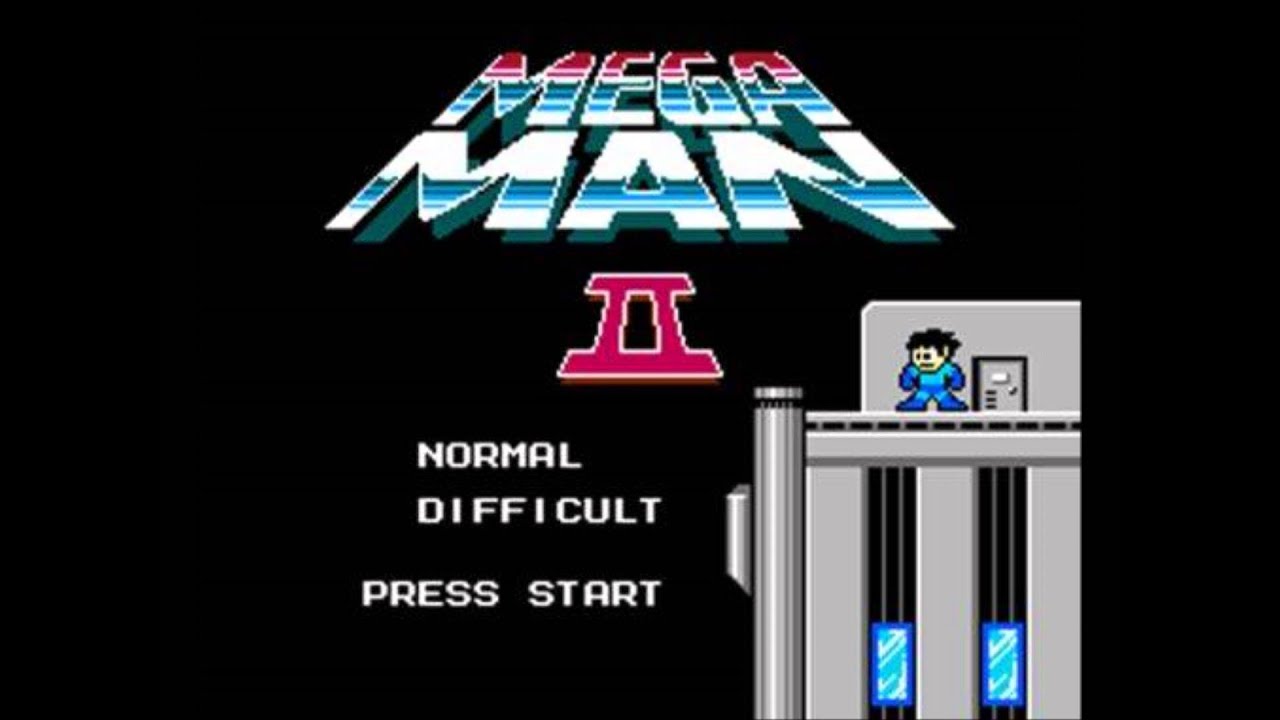
Mega Man II

As a member of the Long Island Retro Video Game community, I constantly find myself surrounded by older gamers discussing the glory of their older games. Many of these veteran gamers I know grew up on the Nintendo Entertainment System the same way I grew up on the Gamecube. I have spent a lot of time discussing why Gamecube games are still a fun option for the gamer with nothing else to play, but what about the titles my fellow retro gamers grew up on? What about the classics?

Mega Man II originally released for the Nintendo Entertainment System on December 24, 1988 (24th? REALLY? Hahahahahahahahaha). This game is considered not only to be one of the best games sold on the console, but one of the best action games of all time.
Already we have a problem.

This game came out almost 30 years ago and I still hear people praising it for its quality. I encourage thee to realize, when discussing games, that there is an enormous difference between a title that is perfect, a title that is perfect considering its age, and a title that actually stands the test of time. Having never played Mega Man II before, I decided to investigate; is this game actually good, or does nostalgia play too big of a factor when discussing Mega Man II?


Mega Man II - NES/ Nintendo 3DS

Okay no need to dance around this: Mega Man II is fantastic. It totally stands the test of time. Which is awesome! Because that means that the opinion of older gamers is still valuable to us young-punk gamers who think we know everything about what makes a good game.

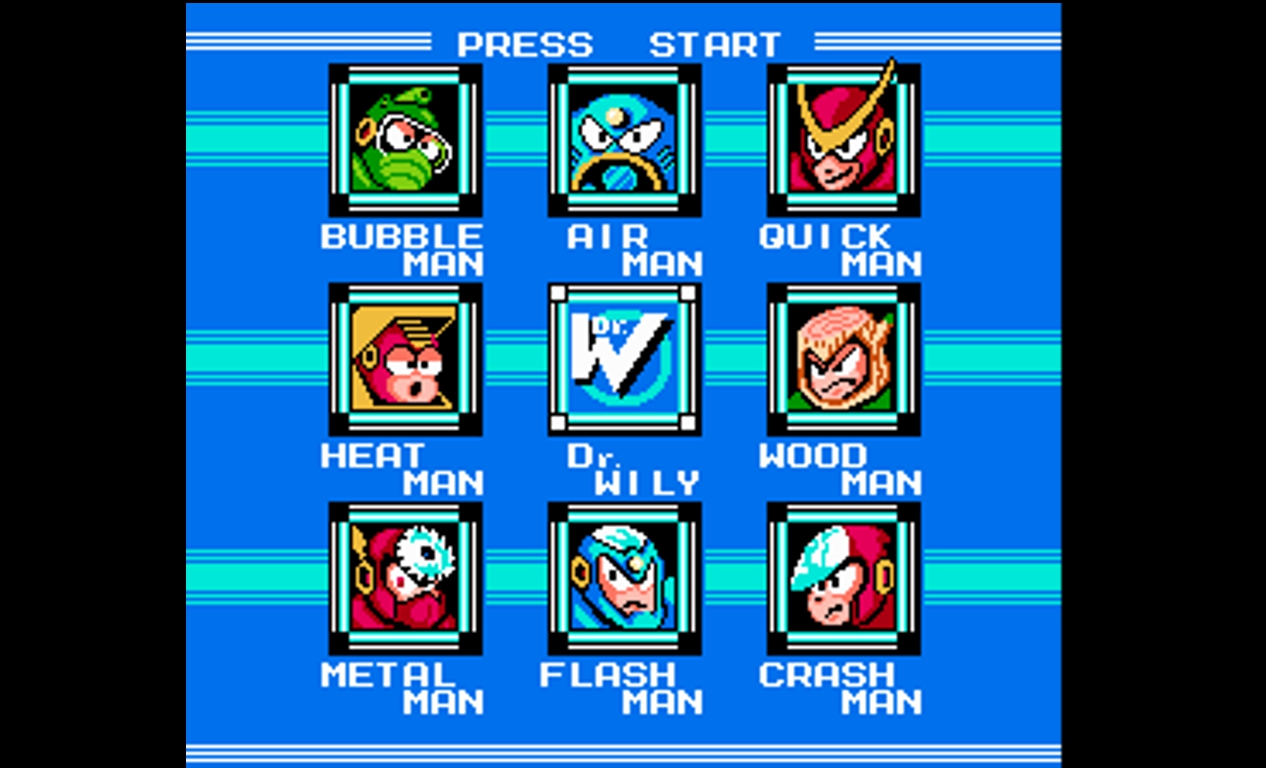
The magic of Mega Man II comes in the form of variety. MMII is broken up into 10 levels, each with a different tactical and aesthetic theme. Not only do each of the 10 levels feature different colors, enemies, and music, but they each demand totally different playing strategies. At the end of each of the 5-8 minute (if you die as often as I do) levels, is a boss fight. None of the bosses are too hard, though they certainly provide a fair challenge. Once each boss is defeated, Mega Man gains a new ability, usually a new offensive or tactical weapon. Essentially, the more bosses you defeat, the stronger you become.


The most remarkable aspect of this collection of levels is that the player is free to attempt each one in any order they desire. That being said, there are definitely recommended level sequences. You see, each boss you defeat earns you a specific new ability, and some levels are MUCH easier to complete after having been awarded certain specific abilities. So while the player is always free to choose which level they'd like to attempt next, they are also free to determine which weapons they need in order to progress through the game as easily as possible. To some extent, this results in a bit of trial-and-error playing, but it also encourages creativity that runs parallel to the nurturing of your Mega Man skillz.

This side-scrolling shooter/platformer is hard. But not too hard. It's also unfair. But not too unfair. Games of this time period had to be kept small due to hardware limitations, but they also had to have lasting appeal since there were fewer developers to pump out new games every week. An old game had to be kept small, but still last. How do you do that? Make it hard, but not so hard that it will keep people from playing it. Man, what a nightmarish challenge it must have been to get everything just right. Very few games balanced the equation perfectly, but Mega Man II did.

By the end of the 1-2 hour game, not only will Mega Man himself be equipped with a large assortment of different moves and weapons, but you, as the player, will have gained the cleverness needed to use them all when appropriate. The gradual acquisition of each new moves eases players into and out of a gaming experience for which they are required to master each of the title's nuances. Walking away from any game after having mastered the controls feels exhilarating, which is why it is extra sweet that Mega Man II seems to have been designed with this satisfaction in mind. In the end, Mega Man II comes so highly recommended because it leaves the player with the feeling of mastery, fluency, and unrivaled satisfaction.