Nintendo Consoles

Nintendo Consoles
Showing posts with label controller. Show all posts

Thursday, April 14, 2016

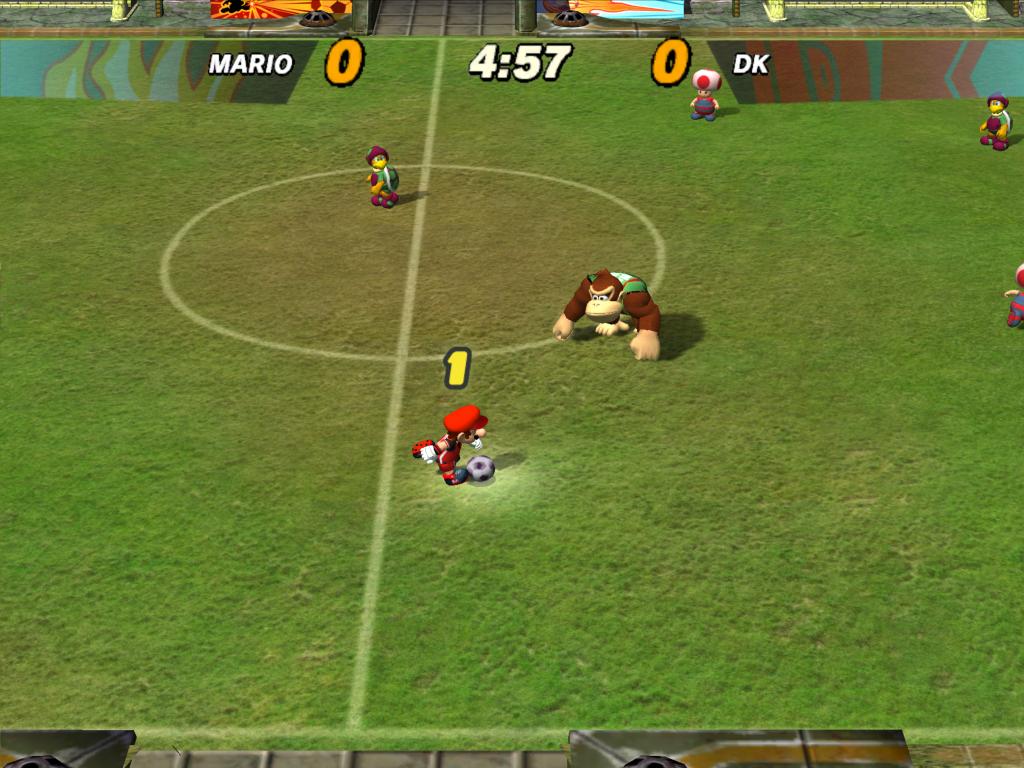
Super Mario Strikers

Super Mario Strikers - Nintendo Gamecube

Lists of top-ten best Gamecube games are usually comprised of about 9 first-party Nintendo titles, and Resident Evil 4. You always have Metroid Prime and The Wind Waker in the top 3, but after that I've seen Pikmin, Pikmin 2, Wave Race, Twilight Princess, Luigi's Mansion, etc. And sometimes, every once in a blue moon, hovering at around the 9th or 10th spot is a third-party title featuring first-party characters shoving and checking each other in pursuit of a soccer ball. This title is Super Mario Strikers.

Super Mario Strikers is a soccer game with slight modifications to the traditional rules of the international sport. The goal is still to kick the ball into the net of the defending team, but this wouldn't be a Gamecube game without some re-imagining of sorts; Super Mario Strikers is the only Mario-sports game I can think of to place this much emphasis on violence. During a match, you are encouraged to switch back and forth between each of the 4 players on your team to score as many points as possible. Normally this would mean good teamwork and skilled playing, but Strikers cares much more about the instant-gratification that comes with punching and slide-tackling your opponents than it does about adhering to classic soccer techniques. It's super fun and easy to knock the members of the opposing team into the electric walls surrounding each soccer field, and combining these attacks with Perfect Passes, Super Strikes, and dekes is the best way to ensure you have an extremely exciting Mario soccer match.

The main issue with Super Mario Strikers is the dearth of variety between game-modes. There are Cup Battles, Super Cup Battles, and Grudge Matches. Cup battles are your beginner-level single player mode. Beat all the cups, with the teams (in this mode) set to Rookie difficulty, in order to unlock Super Cup Battles. Super Cup Battles are the same thing with higher difficulty, and beating each of these tourneys unlocks different "cheats", such as Field Tilt and Explosive Power-ups, to be used in Grudge Match (man, remember cheats?). Grudge Match is simply your multiplayer mode, where up to 4 people can join in on the gnarly soccer fun. This being said, your friends can actually drop in and out from game to game to play all of the single-player modes Co-op. Each Cup can last anywhere from 5 to 15 matches total, so it's really nice for a friend to be able to join in for 3 or 4 matches, then drop out without having to change modes or exit menus or anything. The point is that completing the single player modes awards nothing more than enhancements to the multiplayer experience. This makes Strikers a perfect party game, but very little more- it just doesn't have enough content to hold up as a single player experience.

The unlockables in Super Mario Strikers, not including the cheats, also leave something to be desired. There are 9 playable teams in the game, and only 1 of them has to be unlocked by playing Cup Battles. You will also unlock different stadiums by completing certain cups, and although I do have my preferences now that I've unlocked them all, each are barely more than color-swaps, and none of them change the gameplay at all.

Super Mario Strikers is sincerely addicting. Even in the single player modes, you can adjust the length of any match to be 2 - 15 minutes, making them an awesome way to kill 15 - 20 minutes. It's also a great game to liven-up a party, or just hang out with a couple of friends and some snacks on a Thursday night. Unfortunately, Strikers suffers the most when those friends leave and all you've left are the single player modes. Playing the game alone is fun for a little while, but when a title is this silly and this violent, it can have the tendency to leave you with an itch that can only be scratched by shoving your friends into electric walls. If you have friends to play this game with and you collect for the Gamecube, buy Super Mario Strikers; if not, don't.

Sunday, February 14, 2016

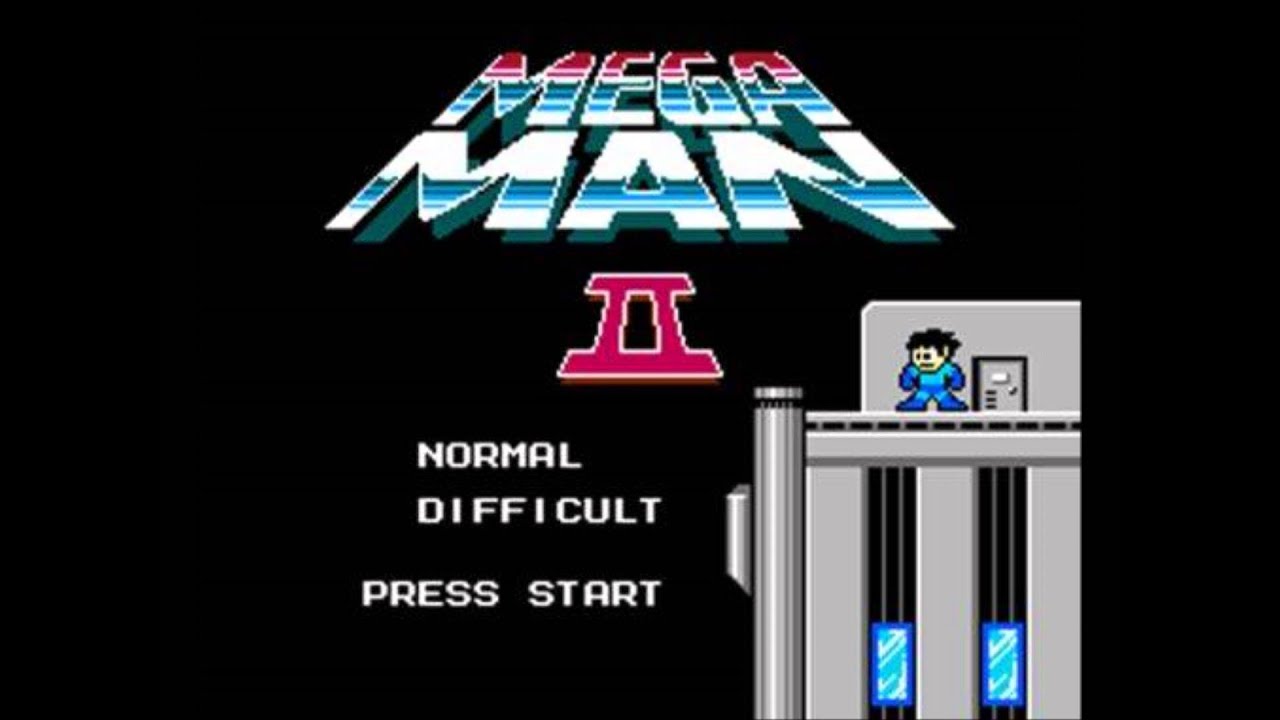
Mega Man II

As a member of the Long Island Retro Video Game community, I constantly find myself surrounded by older gamers discussing the glory of their older games. Many of these veteran gamers I know grew up on the Nintendo Entertainment System the same way I grew up on the Gamecube. I have spent a lot of time discussing why Gamecube games are still a fun option for the gamer with nothing else to play, but what about the titles my fellow retro gamers grew up on? What about the classics?

Mega Man II originally released for the Nintendo Entertainment System on December 24, 1988 (24th? REALLY? Hahahahahahahahaha). This game is considered not only to be one of the best games sold on the console, but one of the best action games of all time.
Already we have a problem.

This game came out almost 30 years ago and I still hear people praising it for its quality. I encourage thee to realize, when discussing games, that there is an enormous difference between a title that is perfect, a title that is perfect considering its age, and a title that actually stands the test of time. Having never played Mega Man II before, I decided to investigate; is this game actually good, or does nostalgia play too big of a factor when discussing Mega Man II?


Mega Man II - NES/ Nintendo 3DS

Okay no need to dance around this: Mega Man II is fantastic. It totally stands the test of time. Which is awesome! Because that means that the opinion of older gamers is still valuable to us young-punk gamers who think we know everything about what makes a good game.

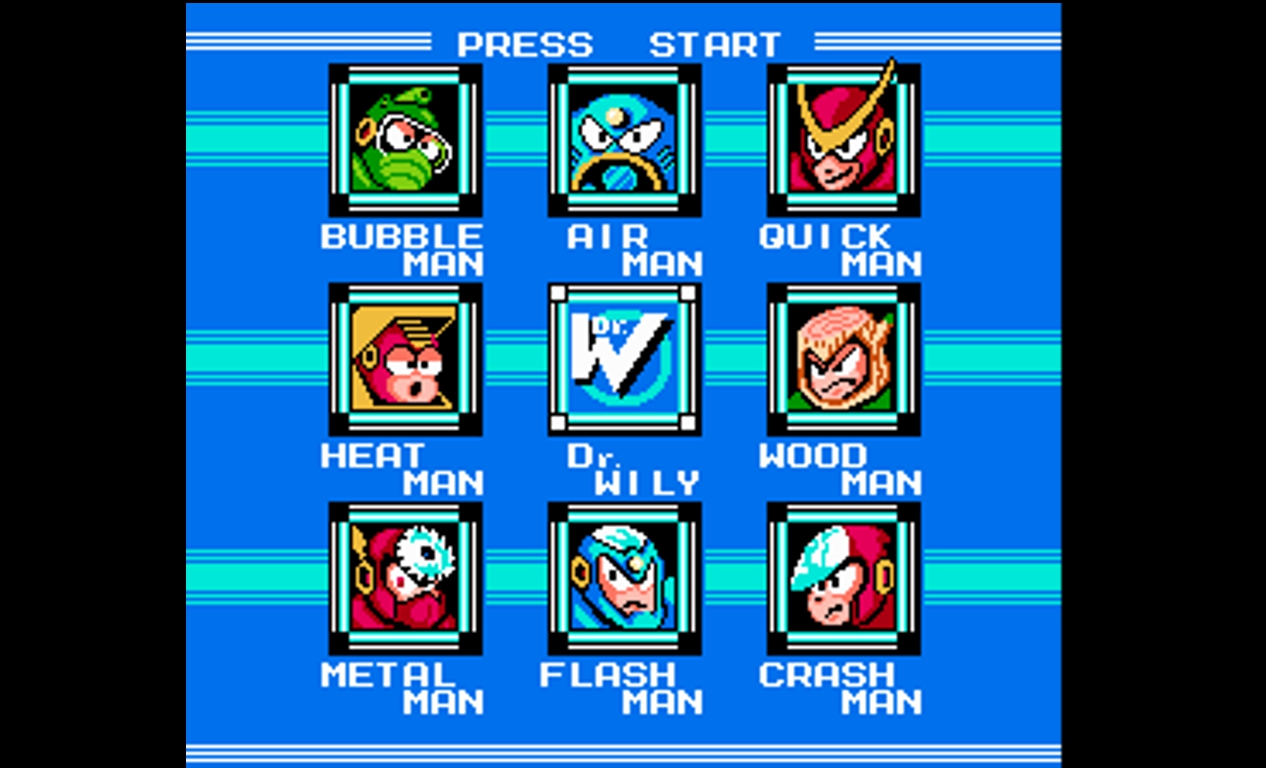
The magic of Mega Man II comes in the form of variety. MMII is broken up into 10 levels, each with a different tactical and aesthetic theme. Not only do each of the 10 levels feature different colors, enemies, and music, but they each demand totally different playing strategies. At the end of each of the 5-8 minute (if you die as often as I do) levels, is a boss fight. None of the bosses are too hard, though they certainly provide a fair challenge. Once each boss is defeated, Mega Man gains a new ability, usually a new offensive or tactical weapon. Essentially, the more bosses you defeat, the stronger you become.


The most remarkable aspect of this collection of levels is that the player is free to attempt each one in any order they desire. That being said, there are definitely recommended level sequences. You see, each boss you defeat earns you a specific new ability, and some levels are MUCH easier to complete after having been awarded certain specific abilities. So while the player is always free to choose which level they'd like to attempt next, they are also free to determine which weapons they need in order to progress through the game as easily as possible. To some extent, this results in a bit of trial-and-error playing, but it also encourages creativity that runs parallel to the nurturing of your Mega Man skillz.

This side-scrolling shooter/platformer is hard. But not too hard. It's also unfair. But not too unfair. Games of this time period had to be kept small due to hardware limitations, but they also had to have lasting appeal since there were fewer developers to pump out new games every week. An old game had to be kept small, but still last. How do you do that? Make it hard, but not so hard that it will keep people from playing it. Man, what a nightmarish challenge it must have been to get everything just right. Very few games balanced the equation perfectly, but Mega Man II did.

By the end of the 1-2 hour game, not only will Mega Man himself be equipped with a large assortment of different moves and weapons, but you, as the player, will have gained the cleverness needed to use them all when appropriate. The gradual acquisition of each new moves eases players into and out of a gaming experience for which they are required to master each of the title's nuances. Walking away from any game after having mastered the controls feels exhilarating, which is why it is extra sweet that Mega Man II seems to have been designed with this satisfaction in mind. In the end, Mega Man II comes so highly recommended because it leaves the player with the feeling of mastery, fluency, and unrivaled satisfaction.


Sunday, January 24, 2016

Madagascar...DUH.

Movie tie-in games are legendary for providing gamers with mediocre non-canon, filler, or just plain garbage. Children's games are known to be occasionally fun, but usually go unconsidered. Low expectations can often precede impressive surprises, but what happens when you have a movie tie-in that takes the form of a children's game? Usually mediocrity. But is this the case with one of the many games I have owned for years but up until recently never had the interest to play?

Madagascar - Nintendo Gamecube

Yes, this is totally the case. Madagascar is really mediocre. I mean, duh, right? It's a "kid's game". But I wanted to play this game after noticing that I had no idea what made kid's games bad. I don't remember disliking kid's games as a child, yet I no longer play them as an adult. Why? Let's find out.

(for real) Madagascar - Nintendo Gamecube

Madagascar the video game, based on the Dreamworks movie of the same name, is an action-platformer that combines many different types of gameplay into one coherent title with a strong emphasis on plot and surprisingly little to no repetition. The main game is broken up into levels that take anywhere from 10 to 20 minutes to complete. The levels are easy, and there are only enough to make up what comes out as a 4-5 hour game, but each level introduces one or more additional mechanics that keep gameplay fresh, yet never stop it from becoming boring. Each level has you playing as one or more members of the cast of the Madagascar movie, and the dialogue (as well as the entire game, for that matter) does not assume that the player is already familiar with the source material.

The constant switching of characters contributes largely to keep the gameplay fresh. Each of the 5 characters you play as have enough of the same moves in common, such as jump or attack, to ensure a smooth transition from character to character, but have enough unique moves to justify the transition in the first place. Levels are designed around the moveset of each character used to complete them: Alex with his double-jump ability is featured in many of the levels that focus on platforming, Gloria with her large collection of attacks is featured in levels that emphasize combat, etc.

The problem is that while the gameplay is varied, it is simple and unrewarding. The issue with these kids games is that while they are not particularly offensive on their own  (aside from some hilariously bad graphics and unpolished optional mini-games) there is nothing satisfying about playing them.

Of course the argument would be made that no kids game could satisfy the needs of an experienced adult gamer, but I would be very quick to disagree. That which is known as a "skill-cap" is the amount of time or practice that must be devoted to a video game in order to master it as thoroughly as possible. If a game has a high skill cap, then it can be said that the game requires a lot of practice and/or time to master it, while a game with a low skill-cap may require virtually no practice in order to achieve mastery status. Satisfaction in video gaming comes with having achieved mastery despite a high skill-cap. Some games have a high skill cap despite being easy to play- this would be an example of "easy to play, hard to master", a phrase that adequately describes many titles. Many kids games are "easy to play, hard to master", but Madagascar is not one of them, and thereby scratches no itch.

Kid's games can be fun under particular conditions. I am familiar with many kid's games that become more fun as knowledge of their nuances is gained, but Madagascar is not an example of such a title. Though not particularly lazy in any one department, it does not pose enough of a challenge, nor does it possess a high enough skill cap, to yield a satisfying victory.

Friday, November 6, 2015

Custom Robo

It's been a long time since I last reviewed a hidden gem on the Gamecube. To be honest, it has been a long time since I last started a new Gamecube game. A friend is letting me hold onto a few of his games for a while though, so I figured a few weeks ago was a perfect time to dust off the ol' cube and get back to what brought me here in the first place.

Custom Robo - Nintendo Gamecube

      It's not too often that we see an IP with five entrees slip under the radar to the extent that Custom Robo has. Spanning all the way back to 1999 on the Nintendo 64, the Custom Robo series was initially one that was kept exclusive to Japan, with its first three entrees, Custom Robo, Custom Robo v2, and Custom Robo GX never to see an international release. Eventually, North America got its first taste of the Custom Robo series in the year 2004 on the Nintendo Gamecube. For a retro game, Custom Robo has a pretty considerable price tag, sitting at around $25 on eBay at time of writing, but is Custom Robo still worth a 3-Way or Vertical shot, or has it rusted over time?

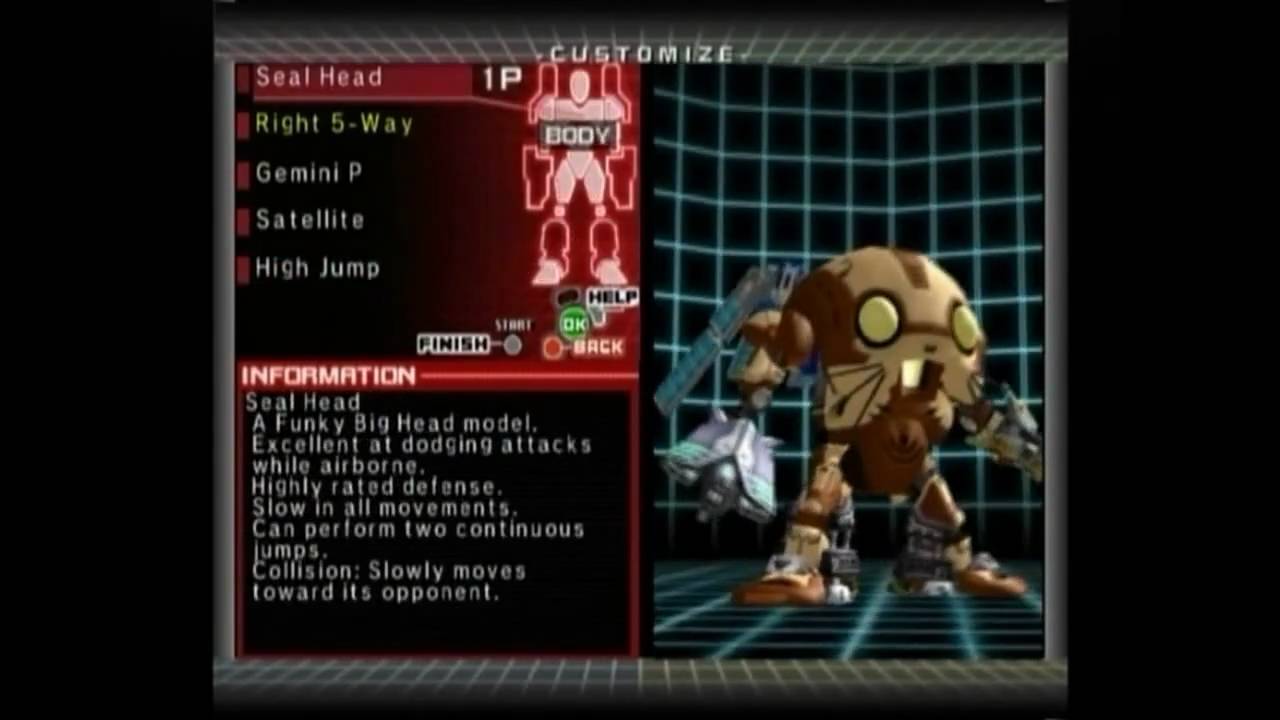
   At its forefront, Custom Robo is an action RPG. Most of the gameplay takes place in 3D battle arenas where either two or four Custom Robos will fight in order to reduce their opponent's health from 1000 to 0. The way to gain the advantage over your opponent is by taking the Robo that you are given in the beginning of the plot and upgrading it using parts you are awarded by completing certain tasks as you progress through the initial 10 hour campaign. Things start off pretty simple while you have few parts to select or swap-out, but quickly become much more interesting as you are awarded many different parts frequently. Each Custom Robo is made up of a combination of 5 parts: gun, bomb, pod, legs, and model. Most of the parts are so vastly different from each other that even the most subtle changes to your build can produce drastically different results in the battle arena. I experimented with a few different builds to find one that fit my playing style, and in the process played briefly with a Custom Robo that did heavy damage and jumped really high but lacked mobility and was armed with a 3-Way shooting gun and heat seeking missiles, and another Robo that was extremely agile and powerful while in the air but lacked fire power on the ground, equipped with triple-pods designed to meander around the battle field, before I finally built the perfect Robo for me: a Robo with the ability to warp while in the air, armed with a gun that shoots both forward and up, pods that could be fired three at a time, and bombs that cleared walls.

   
  Being able to quickly master the layout of each arena is another noteworthy albeit much less important skill to have when fighting. According to the lore, each battle arena is generated by natural abilities had by each Custom Robo master, and whenever you fight a new opponent, you play in their arena. Each arena stays roughly the same size, and the differences between each one can be a bit underwhelming, but the diversity in color scheme and music, as well as noticing how the layout of each arena reflects the personality of the character generating it makes what could have been an afterthought on behalf of the developers one of the most charming aspects of the game.

    The story is much less intricate than the building and fighting of Custom Robos, though it is not without its plot-twists, fun characters, and genuinely humorous dialogue. After selecting the name of your character, you wake up in your home and are immediately encouraged by your land-lady to pursue a job as a mercenary working for an organization called the Steel Hearts. You get the job after proving your natural talents with a Custom Robo by fighting off enemies from a rival gang called Z Syndicate who failed in an attempt to rob a nearby laboratory of a rare Custom Robo model. Without wishing to give anything more than the first 5 minutes of the game away, you eventually learn what/who it was that the Z Syndicate is after, as well as who runs the Z Syndicate. Overall, the story, while cute and necessary in order for some of the hilarious dialogue to hold meaning, does little more than serve the gameplay.

 
  After all of that, there is a second story mode that is unlocked after completing the first. The second story mode throws you and your fellow Steel Heart members into a tournament meant to have the citizens of the town regain the trust of the police after it was lost as a result of the events in story number 1. While I found the entirety of the first story to be extremely easy albeit fun, the second story provides a much greater challenge. As opposed to the fights in the first story won by selecting the same build and using the same strategies every round, I found myself having to use different parts and tactics in order to account for the game's increased difficulty level. In story number 1, I felt discouraged from using different parts after I found a build that worked perfectly for me, but the increased difficulty provided by the second story was exactly what I needed in order to explore the game's depths to further extent, and I wasn't disappointed.

     At the end of it all, the gameplay is divided into two parts: 1 where you walk your character to which ever location on the map triggers the next plot point, and 1 where you actually fight. Throughout all of Custom Robo, there are no puzzles, no exploring, and no level-up system besides the acquisition of new parts. While the fighting is addicting, I did become concerned that the lack of variety in gameplay would result in the game feeling samey. However, since the game is so short, with my completing of the first story taking a shade under 10 hours, it ends before you get tired, and while I will always appreciate a game for not over-staying it's welcome, it would have been nice to see more variety.

    Custom Robo is uncompromising in its gameplay; it is an action RPG about building robots and using them to fight other robots. Its arcade-like and campy tone is refreshing and has aged well. Despite some gameplay repetition and a generally weak story, Custom Robo offers an impressive level of depth when it comes to selecting your build, and features an addicting battle system that will be sure to keep you coming back even after your last opponent has fallen.


Thursday, July 16, 2015

Beyond Good & Evil and Character Development Through Gameplay

Beyond Good & Evil is a game I obtained with the help of a small retro gaming community based in Long Island. It was one of many Gamecube games I became interested in playing, appearing on almost every list of Gamecube hidden gems I read online. Obviously I had to get it, and now that I've played it, I must say that I am not disappointed. Unfortunately I had a large backlog of games to play at the time I finished Beyond Good & Evil's main story so I never had much of a chance to savor its sweet goodness, but the box art alone caught the attention of my friend as he browsed my collection the other day, stopping to say "oh you have this game??" to which I replied "Yes Dylan, I have this game." This one goes out to all the Dylans in the world.

Beyond Good & Evil - Nintendo Gamecube 
      So like I said, good ol' hidden gems on the Nintendo Gamecube. Strange as this may be for a hidden gem, it was actually developed by Ubisoft and released for multiple systems including the Gamecube. Beyond Good & Evil is critically acclaimed, but has never really escaped its status of "cult classic". Despite this, Beyond Good & Evil is seriously one of the best Gamecube games I've ever played and may even be one of the best video games of the Gamecube/PS2/XBOX generation. The game is filled with inspired characters, a gorgeous fantasy world brimming with life and depth complete with sky-whales, and a story that weaves its narrative and gameplay together harmoniously. 

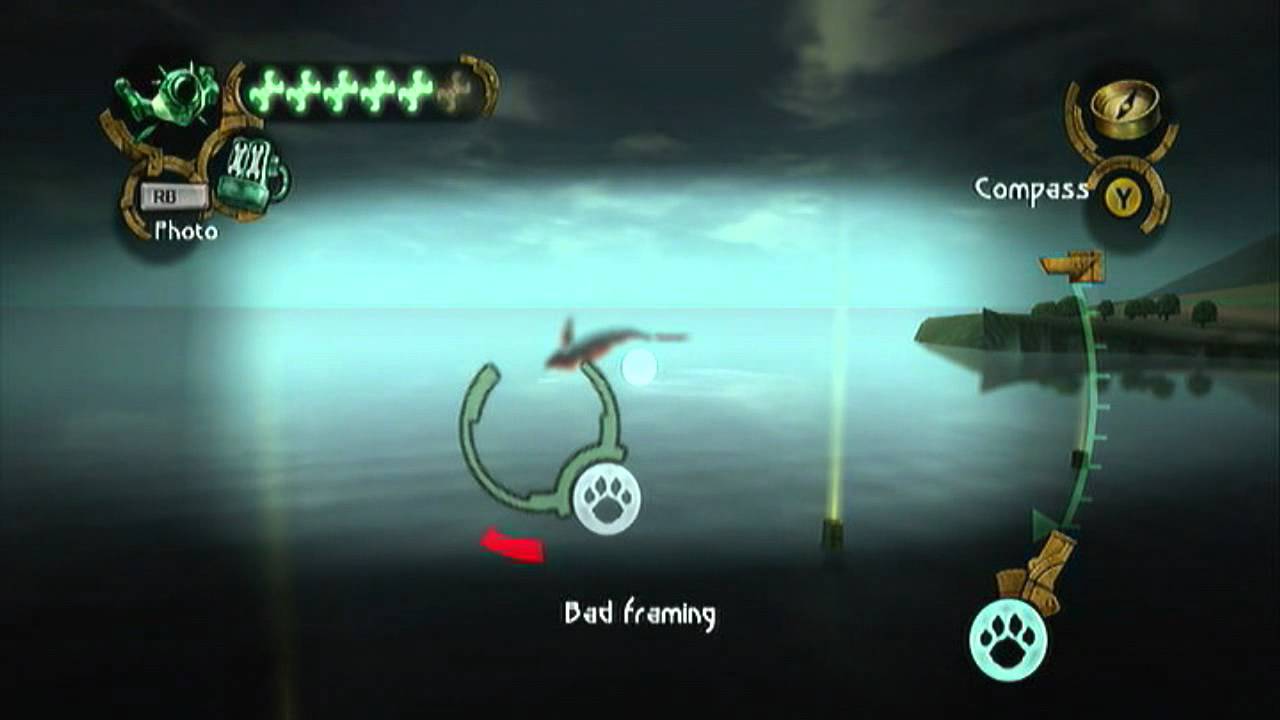
       The gameplay is most reminiscent of that found in a Legend of Zelda game, perhaps if Ocarina of Time was only 12 hours long. Your character, Jade, traverses the small open hub world of planet Hillys in a linear sequence of events and checkpoints which all eventually lead to you navigating masterfully crafted dungeons consisting of rooms that require you to solve refreshingly unique puzzles, defeat enemies using an extremely tight combat system, or sneak around all stealth-like without being detected. In addition to the expertly built dungeons, there exists hours of optional side-quests and games to play on the side should one decide to explore Hillys a little further. Planet Hillys is made up of a small sea with several islands jutting up from it's surface. Jade uses her motorboat to quickly zip all around planet Hillys in order to get from objective to objective. But whether you're going for a quick stroll through the bustling town, or sailing from dungeon to dungeon, there is always incentive for you to stop and explore. Mini-games can be found by talking to different residents of the central city, optional boat races are not only a blast to participate in but reward you with money which you NEED, and let's not forget the pictures you can take. OH the PICTURES you can take....

     
What must be understood about Jade is that despite her ability to kick ass with a staff or sweet-talk her way into getting what she needs, she is first and foremost a photographer. During the game, Jade finds herself collaborating with an underground organization of vigilantes called ISIS which promises to give her money in exchange for photographs of wildlife. Whether it's to upgrade your boat, weapon, or to increase your max health, you NEED money in this game, and sending pictures to ISIS is the easiest and most fun way to get it. Like I said, ISIS is particularly interested in photographs of the wildlife on planet Hillys. As a result, if at any point during your sailing from place to place, you stumble upon an unfamiliar breed of fish, it's up to you to whip out the kodak and snap a picture. Same thing with strange plants found growing on dungeon walls, imprisoned and weaponized dogs found in enemy bases, even the animal-like pedestrians found strolling about town; as long as it is living, a picture of it can be exchanged for money. 

     The thing that makes the ability to take pictures so ingenious is that it keeps Jade humbled and believable as a character; she is a photographer - that's part of her lore - and in order to play as a photographer, YOU, the player, must become a photographer. You need to wait for the right moment to capture the best angle of a bird, you become excited when you see a strange creature lurking around in the distance. Despite her taking on the responsibilities of an adventurer she never wanted to become, Jade stays true to herself, because no matter how many enemies she defeats and lives she saves, she is still a photographer at heart, and because the utilization of this feature is something that is required in order to make money, which is required in order to make progress in the game, this detail from Jade's lore is kept at the forefront of her character development. In this way, it is GAMEPLAY that directly influences the player's perception of her. We don't learn about Jade through any cutscene or dialogue, we learn about Jade by becoming Jade. 
      
     What Beyond Good & Evil has to offer is a gaming experience that tells an excellent story through excellent gameplay. Too often nowadays do we find games either whose story exists solely for the sake of the gameplay or whose gameplay exists solely for the sake of the story, but Beyond Good & Evil splits it right down the middle, offering gameplay and story that exist in order to emphasize the best points of each other. I give this game a very serious recommendation to all video game fans who crave side-quests, strong characters, tight combat, and solid dungeon-crawling. In other words, if you've ever thought that you wouldn't mind seeing Legend of Zelda re-imagined where everything is run by alien technology instead of magic, then Beyond Good & Evil is exactly for you. 

Monday, December 1, 2014

Gunman Clive

My experience with Gunman Clive started as one of those rare times when I actually purchase a game on a friend's recommendation. Shout out to my friend Andrew for suggesting this one to me. The game's price of $2 on the Nintendo 3DS E-shop was also a large contributor of why I went ahead and bought it. Turns out it was worth all 200 pennies, because Gunman Clive is actually pretty damn great, so let's talk about it.

Gunman Clive - Nintendo 3DS

Intro / Summary
     Gunman Clive is a side-scrolling shooter platformer that combines the best platforming elements from Rayman Origins with the best shooting elements from Mega Man II. You move from the left side of the screen to the right side of the screen shooting anything that is A) alive, and B) isn't you. Complete each level by jumping on platforms, climbing ladders and trying not to die as much as you are totally going to die. There are 20 levels each taking about 75 seconds to complete if you don't die, and something around 3 minutes each if you die as often as I did. All together I beat the game in about 65 minutes on a long car ride my band and I took from Long Island to Washington D.C. last week, and I did continue to play it on a harder difficulty once the game was beaten which believe it or not is something I don't normally do. The fact that I took the time to replay this game immediately after having beaten it means the game was either too short, or the game was really fun to play; I am going with the latter on the grounds that I feel a game can really only be too short if you paid $20+ for it, and beat it in 65 minutes- Once again, this game cost me $2, so I consider myself to have gotten exactly what I paid for, and I was pretty down with it.

Good Things: Also the title of a great Reel Big Fish song
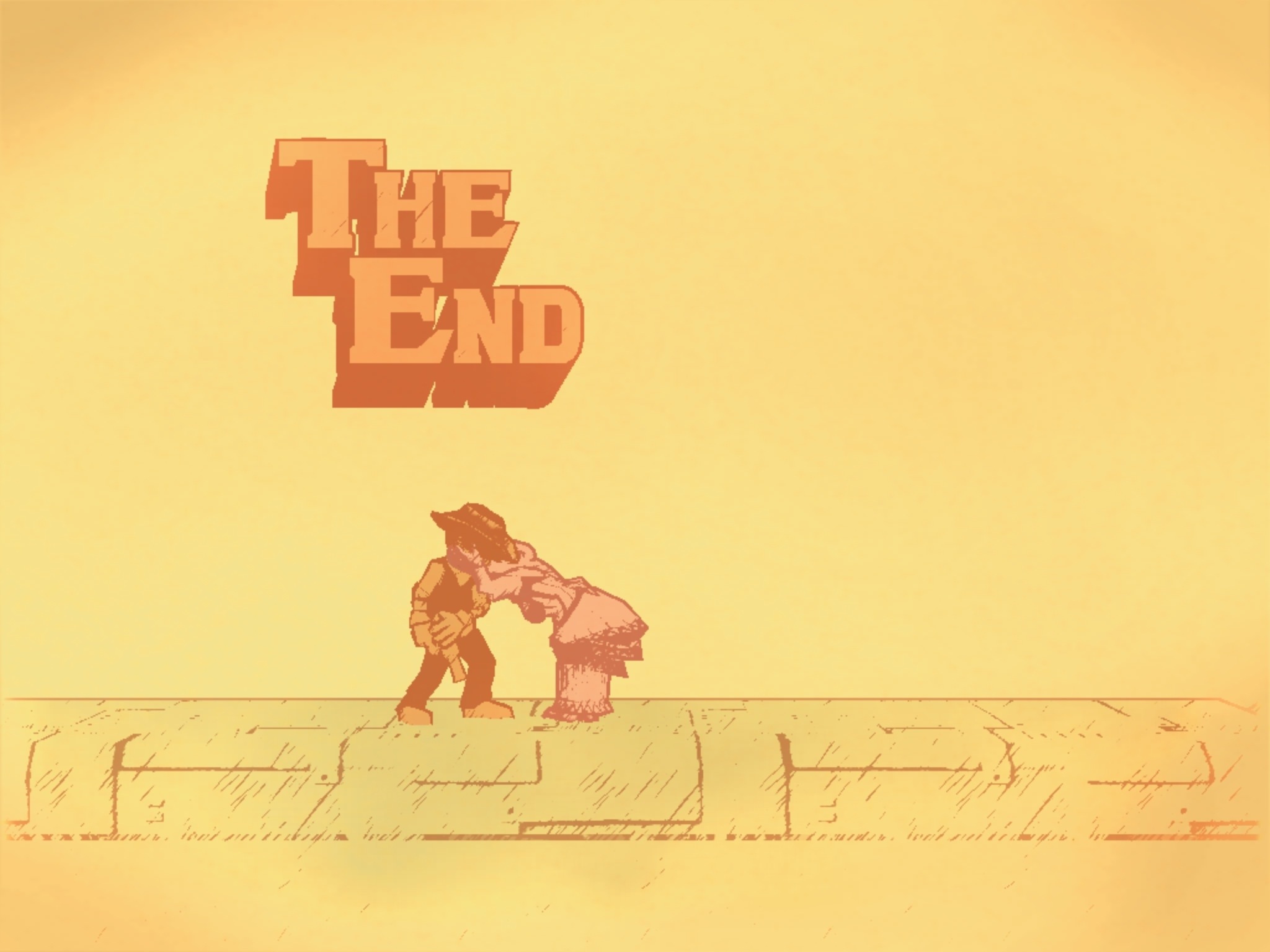
     One of the first things to be noticed about Gunman Clive is the visual style and the musical score; both are beautiful. The game employs a visual effect that makes it appear to have been hand-drawn frame by frame, complimenting the game's ol' western style. Gunman Clive looks like the music video for A-ha's Take On Me meets an old western film. Swag-tastic.
    Gunman Clive prizes itself on the classic easy-to-play, hard-to-master technique. All you are able to do in the game is jump, walk, and shoot, but the level design is so clever that even these old-school moves won't get boring before you finish the game. The game is pretty tough, being at about "diamond" on a hard-scale from Vanilla pudding to Dwayne "the rock" Johnson, but it is never frustrating because of a combination of different video game staples being removed from Gunman Clive. First, there are no lives in the game, which means no Game Overs. Live are outdated and dumb for reasons that have been discussed infinitely by gamers who aren't me, so if you need an explanation on that, go somewhere else and come back. No lives in Gunman Clive. Without any lives, checkpoints aren't really necessary either, because the threat of being thrown back to the start of a 55 second level in which dying has no penalty really isn't that scary, so those are removed as well, which would only be frustrating if the levels were long, but they are not. The game presents a challenge intense enough to make sure that it won't be completed in 20 minutes, but it is not so unfair that it frustrates the player. I believe "sweet-spot" is the proper term here, but I've always found that term to be suggestive (made worse by the pink-colored text), much like how utilization of the word "moist" suddenly begins to make me feel sticky out o....sorry, lost my train of thought there. Difficulty curve is just right.


The game has a very modest length. Games these days (or at least the ones I have been playing) have the most aggravating tendency to last about 6 hours longer than the amount of time for which I care to play them. I always think it is rather cocky of a game to assume that I will refuse to quit playing if it gets boring just because I'm already 10 hours in and I might as well finish it. Well, those games are fucking wrong, and they're the games out of which I take the most pleasure in ripping apart. Gunman Clive, like I said, is only about an hour long if you only play through it once. Honestly, the fact that this game is so good, while being so short makes me fear that the developers lost confidence during development and in the voice of an insecure 13 year old mumbled at some point "aw shucks, no one is gonna wanna play this game!", so they made the game an hour long assuming that no one would ever want to play it for more than an hour any way. Now don't get me wrong, I am glad that the game was only an hour long because it means I have more time to play other games, but honestly, this may be the first time ever where I wish a game was longer, but perhaps only by or hour or so. Also, you can play as a duck after beating the game once. This mode is called "Duck Mode" and it makes me giggle.

Short-Comings: "Homecoming" is a great Green Day song that sounds similar to "Short-Comings".
          Hmm...the game is short...but like...that is a good thing when playing simple games...I mean, Pac-Man is a great game, but does anyone want to play that for more than 20 minutes? I got nothing for short-comings. Gunman Clive is a great game, and it is so short that it ends before fucking anything up. So I am going to use this space to quote something profound I read on Kotaku: "The longer a game is, the more it has to justify its length." OR a different quote by Ben Yahtzee Croshaw of Zero Puntuation: "Madworld is a 6-8 hour game with enough unique ideas to fill a 3 hour game." I isolate these points because they have to do with length, which is a HUGE fucking problem with games nowadays. To all game developers everywhere: If you only have enough good ideas to keep me entertained for 5 hours, then your game should be 5 hours long. BAM. That's all folks. Gunman Clive has enough unique ideas to keep me REALLY satisfied (another sticky phrase) for 1 hour, and so the game is 1 hour long. And for that, Gunman Clive, you get my virtual glad-hand.

                                                                                                 Conclusion:
This game is $2 and is one of the best games I have played in a long time. You can beat it in a single lunch break and get right back to playing Super Smash Bros. afterwards, so just do it. I'm serious. I know I am just a computer, but seriously, buy this game and play it. Recommended to everyone.

Friday, October 10, 2014

Super Smash Bros. for 3DS

I've been writing on this blog for over a year now and I'm sure that all 6 people who actually read it have been beginning to wonder when I was going to get around to reviewing a game about which people actually care. Well, today is that day, because this is my review of Super Smash Bros. for the Nintendo 3DS.

I have to admit, I am a veteran in the world of Super Smash Bros. I understand the game, and I understand that those who don't play competitively see the game differently than those who do. I am on the edge of both worlds, so I will try to see this game with no preference to either perspective. Instead, I will take you through a journey of what my Smash Bros. 3DS experience has been like for the last week.

Super Smash Bros. for 3DS is the first entry in the legendary Smash Bros. series to appear on a handheld, and if you ask me, it's a pretty fucking good idea partially because no one owns a Wii U right now, but mostly because Nintendo has spent the last year upgrading the 3DS via all sorts of hardware and software improvements from system updates to the release of new limited edition consoles BUT has completely forgotten to release any fucking games for the damn thing. I was looking forward to Smash Bros. on a handheld because of the convenience of being able to play anywhere I go. My parents still live in the same hometown I graduated High School in, but now I am in college and most of my friends live in different states than I do, so being able to not only bring the game back and forth from home to school but being able to bring the multiplayer experience anywhere I go was something I originally found to be extremely appealing, but not so much anymore because the online is complete and utter shit. Many, nay, all people who owned Super Smash Bros. Brawl agreed on two things: Final smashes were horse shit, and the online was embarrassing and irresponsible. 6 years later, we are still faced with the later issue. Out of my 20 attempts made JUST NOW to play a 1 on 1 online match against a random opponent also using the online features, want to guess how many of them were successful? 0. 0 times. I was kicked to the start screen before the match had even begun, with the furthest I ever got being gaining access to a training area which I can only guess comes right before a match- I wouldn't know, because I never got to play one.

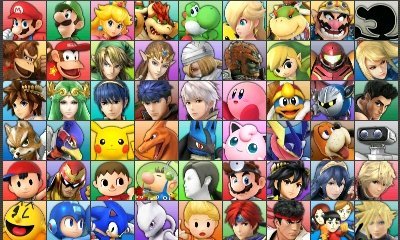
My next thought was then "okay whatever". I'll just play some single player. The main excitement that comes with any new entry in the Smash Bros. series is the thrill of both unlocking and using new characters or old characters with new abilities, and in this department, Smash Bros. 3DS really excels. Out of the 49 characters, not even the 2 or 3 sets of clones feel exactly identical, with the exception of Pit and Dark Pit, which I let slide because I loved Kid Icarus: Uprising. However, with the multiplayer options being limited to local multiplayer, an issue I plan on discussing in just a hot second, the player is forced to experience the thrill of new characters by playing single player modes in the game. Classic mode is the main single player mode mostly because it is the only single player mode that can be used to unlock characters. Once you play classic mode with the appropriate characters, you'll unlock every hidden character, of which there are only like, 10, and once you have unlocked every hidden character, you'll want to try them out in more single player modes, once again because multiplayer is hardly an option. Classic mode, however, is not the most suitable testing grounds because, in it, you can't turn the items off, this only being a problem because of the fact that almost every single item in the game just kills you. Blue Shell, The Beetle from Skyward Sword, every Assist Trophy, the Smash Ball, almost every Pokemon, every Bomb-omb, Gooey Bomb, Exploding X bomb thing, every capsule which is ALWAYS a bomb in disguise, and a properly placed bumper all really don't do anything more than just kill you, which believe it or not, reduces the fun of actually becoming good with a character by about 1 fuckton.

So what else is there? There is no online, and classic mode isn't any fun, so what I decided to do was try out a bunch of characters by playing against level 9 CPUs in Smash mode with, of course, the items turned the fuck off. Playing against random CPUs with 3 stock as I attempt to beat the shit out of them with my favorite Nintendo characters of new and old is actually the most fun I get out of the game, but like everything else in it, I am beginning to see how short-lived this is going to be as something about the CPU's tendency to spam both counter-attacks and shield has me convinced that the AI isn't actually very good in the game. In fact, there have been an unacceptable amount of times where I decided that instead of fighting in the fighting game, I thought that it would be more fun to wait in a corner and see how long it would take the CPU to notice that I am preparing to kill it. In the end, the CPU struggled desperately to convince me that my hacking away at it with a sword was something it preferred for me not to do. Instead, the characters against whom I played seemed much more concerned about their health as mostly all they ever did was run around or jump a bit, as opposed to hitting me back, even on the highest difficulty setting.

And so finally, we reach the last selling point of this game, the local multiplayer. Traditionally, local Smash Bros. took place on the living room sofa with 13 of your closest friends and 1 kind of smelly friend who heard you got the newest flavor of Mountain Dew and invited himself over. You'd all gather around the TV for better or for worse and enjoyed the $50 dollar investment made by one friend as you played his game with his controllers on his console in his house. Now, in order for even the most casual collection of players to indulge in the joy of local Smash multiplayer on the 3DS, each participant must own not only the $40 game, but the $200 system. Now I admit, this shouldn't be a problem for children who plan on spending study hall trying to escape from a hard day at middle school with a round or two of Smash Bros, but I am in college, a place where people come to study and learn, not fuck around with video games all day like how I do. I do have a few friends on campus who own the game, but because those who don't play Smash Bros. understand that we no longer need a TV to play, we are often kicked out of common rooms and forced to squeeze 4 dudes into my small bedroom, which I dislike not because of the small size of my room, but because the small size of my bed ill-suited to seat 4 grown men in a fashion that can be described in a manner other than "really gay".

Despite all of my bitching, Smash Bros for 3DS is an excellent entry to the series. In fact, I'd say it's second best with Melee being the first best and Brawl being the worst. There are advantages to having it on a handheld, but I don't really think anyone would argue the fact that the game is supposed to be played on a console with 6 bowls of chips, 14 friends, and 2 girl friends who would prefer to be doing anything besides play video games all night. As an entry in the Smash series, Smash Bros. 3DS is impressive to say the least, but as a game, it just can't be considered as good as people want it to be. The online doesn't work, the single player options are limited unless you are a masochist or a completionist as the collectibles are nearly endless, and the salvageable modes in the game are only fun for a short while due to mediocre AI. If you have the game, I am SO excited to play with you next time we are all home and have the game on us, but if you were one of the more skeptical players who decided to wait and see if this game was going to be executed properly on the 3DS, I declare that you don't have to get it if you don't want to. It's not a "must-play" for the console.

**EDIT** I have friends at home and in other parts of the state who have assured me that my poor experience with the online in this game may be the fault of my school having bad internet service, and not because Nintendo likes online multiplayer as much as I like eating glass. Fine. They are probably right, although I have heard about other players and professional gaming companies complaining about having as much trouble as I had. If your online mode works, ignore what I had to say about my experience, and go play it because it is probably awesome. I, on the other hand, will sit here in my bedroom and whine on the internet like a normal Nintendo fan.

Tuesday, September 30, 2014

Back To Dream Land!

One of the first things I did when I got back to college was hit up the local Gamestop to see what's good. They treated me really well there last semester and low-traffic shopping malls are some of my favorite places to score inexpensive games. Among the games in the store was a Wii game I had heard about recently but knew very little about. Used some saved up store credit to grab myself a copy of the late Nintendo Wii title, Kirby's Return To Dream Land. 

Kirby's Return To Dream Land - 
Nintendo Wii 

Intro + Summary
In recent years, Kirby games have been reviewed consistently pretty well, but I never hear about many people playing them. Mostly, I hear about how the games are too short, too easy, or both, making the latest installments in the Kirby series simply not worth the $40 that could be spent buying other popular titles. This is why it took a lot of faith for me to invest in a Kirby game that cost $45 "used" after all these years. Still, I did it and I regret nothing. 
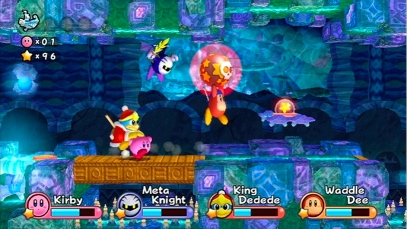
       Kirby's Return To Dream Land is a side-scrolling platformer that keeps the gay puff-ball's signature ability to inhale and copy his enemies at the forefront of the game-play experience. This time around, there are no yarn-related gimmicks or racing antics. It is just classic Kirby doing the thing he and we all love the most. This time, the antagonist is a mystery until the last chapter, and it becomes evident that the evil bad-guy is neither the classic Meta Knight nor King Dedede, because they are actually playable characters! Kirby's Return To Dream Land features 4 player co-op, much like how a number of modern Super Mario games do, making this title ideal for a either a group of friends looking to kick back and enjoy something silly and fun, as well as the perfect title for someone looking to play a fun single player game, which is how I played it.
      Does anyone remember Kirby's Nightmare In Dream Land? It's a GBA game that I remember being played by a lot of kids who lived through my generation of gaming. Nightmare In Dreamland was an incredible, memorable, and fun Gameboy Advanced game featuring the very same Pac-Man impersonator starring in today's review! Why bring it up? Because unlike the easy, short, and mildly boring Kirby games of recent times, Kirby's Return To Dream Land feels more like the fabulous Nightmare In Dream Land than any other comparable game in the series. In fact, it feels like a direct sequel - a game that takes what we all loved about Nightmare, and added to it, enhanced it, and further illuminated the bright world that was the Nightmare from which we never wanted to awaken. 

Good Things
Kirby's Return To Dream Land (at the time it was released) was one of the few times we saw the  Kirby formula in its purest form. Kirby's Squeak Squad for the Nintendo DS was received kind of well, Kirby's Epic Yarn although critically acclaimed was not the Kirby we all knew and loved, and the same could even be said about Kirby Air Ride for the Nintendo Gamecube, back in 2003. Kirby's Return is an awesome game because it succeeds in doing the things it tries to do. 
       For those who don't know, Kirby's only inherent ability is the ability to inhale enemies in each level. Kirby is usually able to copy the powers of his inhaled victims, sometimes resulting in Kirby wielding a sword, being able to breathe fire, or even turning into a laser-shooting UFO, all depending on the ability of the inhaled enemy. These copied abilities can be used to vanquish other enemies and reach the end of the level and/or unlock secret paths leading to collectibles. The main attraction to the classic Kirby games is the excitement that comes with using different powers in different levels. The objective of the game is to reach the end of each level, but the fun of the game comes from using different powers to do so. With this in mind, it becomes obvious that all any Kirby game would need to do in order to satisfy players is provide an abundance of fun levels in which the player can experiment with fun abilities. This, Kirby's Return To Dream Land does perfectly. I said PERFECTLY. With 7 worlds, 5 levels per world, 1 boss level per world, and countless collectibles whose collecting of allow you access to addicting mini-games, KRtDL offers non-stop variety in abilities and levels from the beginning to end, something recent Kirby games have been lacking. 
       To provide further contrast between Kirby's Return and more recent Kirby titles, I'd like to point out that Return has a very Nintendo-typical difficulty curve. For those who are unfamiliar, classic Nintendo games usually have a way of opening at an almost irresponsibly easy level, and then getting exponentially harder as the game progresses. I died in this Kirby game. I was concerned about my life-count in this Kirby game BUT, I never got frustrated at the Kirby game. Rather, I got frustrated at myself, because I got cocky once I noticed the game was easy and as soon as I got cocky, the game got hard. This game has the ideal difficulty level in my opinion. The later levels were quite difficult, but never made me want to rip my gorgeous hair out. The opening levels were difficult enough to suggest that I couldn't play the game with a blindfold on, while easy enough for me to learn naturally as I played. 
     Finally, a full arrangement of colors and appropriate art-style made this game a pleasure to look at, while its soundtrack literally had me going to Youtube and searching for the game's music even while the game was off, "Peaceful Place" being among my favorite tracks.


Short Comings
I find myself squinting and starring at the title of this section and saying "hmm...". Ehh I suppose you could say that this game isn't really much more than what it is. This is a platforming game starring Kirby and his friends using abilities to get from one end of the level to the other. The story is negligible and there isn't any depth to the game, nor is there anything that makes you care about Kirby other than how cute he is. Not that anyone was asking for an emotionally moving Kirby game! - I am just saying that this is not any game from which you'll walk away as a different person than who you were before you played it; it's just fun on a basic level. 
The game can be a tad-bit repetitive towards the end, as it is very possible to become fluent in the ways of every ability at around the 6 hour mark of this 8 hour game. However, that hardly makes the game any easier, plus the number of collectibles will keep any completionist playing for long after they complete the main story. I completed the main story and only achieved a 63% completion rating. This being said, the game is fun enough to justify an 8 hour story mode with ease. If this game was 20 hours, while it got repetitive after 6, we'd have a very different game here. 
     The final short-coming is the following: once the main story is completed, the only reason to continue playing is to obtain every collectible. Once every collectible is obtained, you will be able to unlock every mini-game, and that's it. The only incentive to extending your playtime beyond 10 hours is to unlock mini-games that are fun, but may not be worth the hours of grinding. I wouldn't know- I didn't unlock them all.

To Whom Would I Recommend This Game?
Nintendo fans, ANYONE who liked Kirby's Nightmare In Dream Land, anyone looking to play some fun local multiplayer, anyone who is looking for an excuse to dust off their Wii (or Wii U), anyone who wants to see Kirby on a console as opposed to a handheld, anyone in the mood to play something short and sweet

Friday, December 6, 2013

The Grand Return

So after a short hiatus from this blog, I have decided to resume my writing for a little while. Yesterday, I entered my school's lounge to watch one of my classmates play an old favorite of mine on the 72 inch TV. I watched this kid tear up the streets of City Escape and dive through Aquatic Mine and when he finally introduced himself, he and I started talking a bit about the Gamecube. Our conversation ended with me mentioning that I have 75 Gamecube games in my dorm room. He responded "Wow, you are a Gamecube MASTER if you have 75 games." Well that little fat dick was right! This one goes out to him.

What I noticed about his Sonic Adventure 2 experience was that it was unfolding via Steam - without a Gamecube controller. How could anyone resist playing a video game without the Gamecube controller if they have the option to?? The Gamecube controller is my favorite controller out of any controller I've ever used, and I've used a lot. My friends at home have invited me to share my opinions of the Gamecube controller with them, but I always feel bad because I knew my full opinion would be so long, that it would take up an entire blog post. So in honor of that kid in the lounge, and in honor of the new consoles and their controllers, whose generation pushes the Gamecube and its controller one generation further into the chasms of time, here we fucking go.

The Nintendo Gamecube Controller

How is it that despite the Gamecube controller celebrating it's 12th birthday this year, people still insist on using it to play games that are 5, 4, 2 years old? What is it about this controller, about its unusual button layout, its strange colors, and tiny D-pad that make it so loveable- make it rival with the XBOX 360's or PS3's beloved controllers? Well let's check it out.

Mkay so first to tackle the things that everybody knows: The Gamecube controller features one of the first wing-grip designs, was one of the first controllers to feature 2 thumbsticks and a D-pad, had 6 digital buttons (including the START button), and two shoulder buttons that each sported a hybrid of digital/analog technology. There are two things about the Gamecube controller that are unconventional, and I just mentioned one of them. Two features, two attributes of the Gamecube controller that brought it to the top of my list of favorite video game controllers. These two features that I am about to discuss make the Gamecube controller appear to some gamers as silly or even dumb and luckily for you guys, you have me to tell those people to fuck off.

The Gamecube controller doesn't have any new face-buttons, in fact, it has even less than the controller of the console that came before it, Nintendo 64, and the same amount as the controller that came before THAT, the Super Nintendo Entertainment System. It seems that the Gamecube controller didn't have any new amount of buttons, but it did sport a different, unparalleled layout. The Gamecube controller is the only controller ever made (I've ever seen or have been made aware of) that features one very large central button with 3 other smaller buttons arranged around it. As you can see in this diagram, the A button is the large center button, the B button is a smaller, circular button to the lower left of the A button, and the X and Y buttons are sort of cashew-shaped buttons above and to the right of the A button. Okay, fuck, everybody knows this. But does everybody know why? I mean, it makes sense: if there is one button that in the history of gaming has been traditionally used more often than any other button, why not make it bigger? Give it special treatment, because it is a special button. Fine. The A button is big because it is used most often.

So what about the B, X, and Y buttons? From here on out, this is my own theory for why the buttons are arranged the way they are. So if you are going to have a large A button, it would make sense that the other buttons are going to be sized with respect to how often the player is going to press the other buttons compared to the A button. With the Gamecube controller, there is no question that Nintendo was prepared to design their games to feature the A button as a means to activate the game's primary command. Let's look at Metroid Prime. Which action, out of Jump, Shoot, Fire Missiles, and Roll in a ball, each of the actions that can be triggered by pressing each face-button, do you do most often? The answer is Shoot. And which button is Shoot? A - the biggest button on the controller. Now. Which action do you secondarily, or the second most often? Jump. Jump is the B button. So now we see that secondary actions are mapped to the B button, but why B? What is so special about the B button when it seems that the X and Y buttons could just as easily be given the secondary role? Check this out, I actually have the controller in front of me right now. Assume that your thumb is going to naturally rest over the A button simply because it is the most comfortable position for the thumb to rest in. Now hold the A button down. Without removing your thumb from the A button, try
to tap the B, X, and Y buttons a bunch of times each. The button that is most comfortable to hit without removing your thumb from the A button is B, followed by Y, followed by X. Why? Look at the face-buttons from their sides. If you look closely, you'll see that the top of the A button is slightly rounded like a small hill while B, X, and Y have flat tops. Now look at the lowest point of the "hill" top of the A button. If, in your head, you drew an imaginary line continuing along the slope of the A button at the same angle and stopped your line as soon as it hit another face-button, you will notice something kind of crazy. The line you draw that hits the X and Y buttons strike those buttons on their side, not on their tops. The line you draw that hits the B button, strikes the B button on its face, not its side. So what does this mean? Well the lines I had you guys draw in your head are actually the paths your thumb travels in order to press B, X, and Y without releasing A, like I had you do before. If you are rolling your thumb along each of these lines, the lines that lead from A to either B, X, or Y, you will hit X and Y on their side and B on the top. Obviously, it is most comfortable to hit a button on its top, explaining why B the most comfortable button to hit without releasing A when it is being held down. It is also important to know that in order to maximize the comfort of "rolling" from A to B, the B button is set slightly deeper into the controller compared to X or Y, ensuring that you strike the B button on its face every single time you go to hit it.
 

I said that the Y button is second most comfortable to hit without releasing A. Why? Why not X?
Okay. Pangaea the shit out of these face-buttons and what happens? The X and Y buttons fit around the A button like a puzzle. The B button does not, but its circular shape makes it easier to fit onto the face of the controller, so that takes precedence over what I am about to explain about the X and Y buttons. Let's take the X and Y button separately. In your head, draw a line that connects the right side of the Y button to the right side of the A button. Then do the same thing for the left sides and color the 2 buttons and the space between them. You'll wind up with a mental picture that looks something like this image.

Look at your thumb. It's the same shape. What face-button command do you do THIRD most often in Metroid Prime? Fire Missiles. Y button. Second most comfortable to hit without releasing A. I know.

If you do the same thing with the X button, you get a slightly different shape that doesn't really look too much like anything. The best thing I could come up with is the following: The X button has the same shape as the right-most third of your thumb. If we cut your thumb vertically into thirds, the X button is about the same shape as the third furthest to the right.  When you line up the X button with the X-button-shaped part of your thumb perfectly, you still have a whole bunch of thumb left over which sits directly above the A button. Push down, and you've got yourself your third most comfortable position for your thumb to rest in. What is your 4th most used face-button action in Metroid Prime? Morph Ball. X button.

So why make a controller whose face-buttons are all able to be pressed while holding A? Think about this: you have 4 actions that the face-buttons allow you to do. But what if you need to do 2 of them at the same time? Jump and shoot? Lock-on and Shoot? Accelerate and use items? Jump and Change weapons? These are all examples of typical actions that we need to perform at the same time or else we would be killed or lose the race or whatever SO when you position the buttons in a way that allows them each to be pressed comfortably without having to stop performing the main action triggered by A button, then you have a controller that allows you to perform multiple actions at the same time. But if this is the case, why don't other controllers use this layout? I mean, Gamecube is not the only home of games where it is necessary to perform 2 actions at once, so how is this done without the Gamecube controller's button layout? The answer is triggers. Triggers are pressed with the pointer or middle finger - not the thumb. 2 fingers to tackle 2 different buttons instead of the thumb to tackle 2 at once. That's why in Halo 3, Shoot, the first most important command is mapped to a trigger and Jump, the second most important is mapped to a face-button. With 1 finger to shoot and 1 to jump, jumping and shooting at the same time is easy. The Gamecube controller accomplishes the same exact thing in Metroid Prime, but without the trigger. In fact, the addition of the triggers on the Gamecube controller allow Samus in Metroid Prime to perform 3 actions simultaneously - Jump, Shoot with B and A respectively, and Lock-on with L. Impressive, no?

But what about those triggers? (This is the second function unique to the Gamecube controller) Push them down half way, and they glide the same way the XBOX 360 controller's do. Push them down all the way and they click. This is that digital/analog hybrid technology I mentioned earlier. Analog signals are used when triggers are pushed down on the XBOX 360. Gamecube uses the same technology, until the triggers are pushed down all the way and "click". This click, knocks an activator inside the controller that initiates a digital signal, also used by the face-buttons. This duality allows one button to perform up to 2 different functions. Light shield vs Heavy shield in Super Smash Bros. Melee or Run + Squirt vs. Stand still + Squirt in Super Mario Sunshine, maximizing the number of different commands available to the player without overwhelming the player with too many buttons.

And that's it! Gamecube controllers are awesome and that is why.

Saturday, September 7, 2013

I Put This Down, Then Picked It Up Again

I put this down, then picked it up again
because it's good enough for one more round.
I put this down, then picked it up again
thought it would be better this time around.
I put this down!

Nothing like a Tubthumping reference to start a new line of posts.

Anyway, I Put This Down will be yet another short archetype of posts. Each IPTD post will be a brief discussion of my thoughts of a game that I played for a bit, but didn't finish immediately. The pattern for these games will be the following: I bought it, played it, put it down, forgot about it, picked it up again. The discussion will take place after I pick it up and start playing it again. Who knows what will happen the second time around?

Prince of Persia: Sands of Time

The Prince of Persia titles have exhibited a new form of platforming/adventure games ever since their original
conceptualization. In these games, you play as the Prince of Persia himself who has decided that the best way to save Persia from the rule of an evil king is to run around a bit, jump off a few walls, and kill some bad guys. Fair enough. These games are praised for their ability to combine parkour-like skillsets with puzzle-solving, and dungeon-crawling mechanics. In addition to all of the moves that I wish I could do in real-life, the prince also uncovers a dagger whose hilt stores the sands of time. Releasing the sands of time from the dagger reverses the flow of time. This ability can be used during gameplay in a way that is exactly like re-winding an old VHS tape (speaking of old reality...). Pressing R will not only employ the power of the most ridiculous but still awesome backwards WOOSHing sound effects, but will bring the prince back in time for up to about 5 seconds real-time. So that's what we have for us today - a parkour prince and a dagger that can reverse the flow of time.

Of course, I am writing as if I intend to belittle the game - I don't. Prince of Persia: Sands of Time really is a fun game. The controls, outdated as they are, are solid, and although the camera makes me want to die, the ability to reverse the flow of time in order to undo your mistakes is compensation enough. So the 3 big questions are the following:
Why did I put this game down?
Why did I pick it up again?
What do I think of it the second time around?

I did just admit that I thought this game was fun, because I do - I wouldn't lie to you guys. But I put this game down a long, long time ago because I thought it fell into a trap that Mirror's Edge introduced me to, but wound up existing for a long time before that. You see, Prince of Persia: Sands of Time is really 3 different styles of gameplay arranged separately on 1 disc. This game is exactly 33% parkour, 33% puzzle-solving, 33% hack-and-slash combat, and 1% synergy (this proto-discovery was realized by my friend Dylan = credit where credit is due). What is unique to the P.O.P. series is the parkour-extreme-platforming so I bought this game (my first Prince of Persia game) thinking that it was going to be about 90% parkour and 10% wishing I was still doing parkour. The trap that this game falls into most likely stems from the developers thinking that the parkour parts were awesome, but the princes' skillset weren't large enough to create a game of 100% parkour without it starting to feel repetitive after about 2 hours. So what they did was create additional gameplay styles that included combat, by throwing in some beat 'em up sections which consisted of the slaying of multiple waves of enemies until everyone except you is dead. Fine. But what happens with these "solutions" sometimes is that the very remedy used to cure repetitive gameplay becomes repetitive. So let me be more specific to this title:
Problem: The game would be boring and repetitive as shit if ALL you did was parkour.
Solution: Add more game mechanics, like fighting and puzzle-solving, in order to prevent the parkour from getting stale.
New Problem: Fighting and Puzzle-Solving get stale and supersaturate the game to the point where I miss the parkour. #ijustlearnedhowtobold

So I really really loved the parkour parts of the game, but the combat sections were sloppy, and the puzzle-solving sections were challenging, but not fun, and were really more annoying than anything, as they hindered my ability to throw myself off of buildings and stuff. I put Prince of Persia: Sands of Time down because I couldn't handle how not fun the puzzle-sections were. All I wanted to do was some wall-runs and some jumping off of stuff, but apparently Sonic The Hedgehog is still my best bet for that desire.

Probably 18 months passed and I decided to see what would happen if I popped that disc back into the cube again. Perhaps, I thought, my new found video-game wisdom would aid in my future appreciation of what is usually considered to be, like, the 5th best Gamecube game ever. Resuming my old file, I immediately became stuck in a parkour portion that only a youtube video walk-through could help me out of, and then was INSTANTLY thrown into the most annoying puzzle-section I had yet to behold. I cleared it after about a half hour of fucking falling like an idiot, and pretty much just said "fuck it" after that. Prince of Persia has yet to see the world outside of its since then. Being several hours into it, I feel like I have played it enough in order to decide that I have seen what I needed to see.

On a side note, I understand that the game took a different approach to the video game soundtrack by...well...not having one, but it didn't work. If I am going to literally be watching myself fuck up, and be forced to watch myself fuck up in reverse slow-mo, then imma need some tunes to keep me going. And that's all I have to say about that.

Verdict:
I put this down, then picked it up again, and threw it back to the ground
where it stayed down.
http://www.youtube.com/watch?v=2H5uWRjFsGc