Nintendo Consoles

Nintendo Consoles
Showing posts with label retro video games. Show all posts

Tuesday, March 15, 2016

Paper Boy

Although the trend has spent the last couple of years fading, waiting to be replaced by which ever big idea comes next, the endless runner genre of games dominated the mobile gaming market for quite some time. We first saw Temple Run in the year 2011, which then had to make room and share market space with spin-offs and copycats such as Subway Surfers, and Sonic Dash, but this genre is actually quite a bit older than many of those aforementioned games. Let's take a look at a retro endless runner.

Paper Boy - Arcade/ NES/ others 

Paper Boy is an endless runner made before endless runners were even around. Originally published by Atari for the arcades, it was later ported to many home consoles and P.C.s, including the NES in 1985. Paper Boy is an action game/ endless runner where you play as a boy throwing newspapers to white houses from his bicycle while dodging an array of hilarious obstacles taking the form of anything from an oncoming car, to break-dancers, to the Grim Reaper. It's often not considered to be among the best or most memorable NES games of the time, but it certainly is good for a laugh if not a few hours of cursing out tornadoes bent on ruining this newspaper company's delivery service. 

The paper boy, on his bicycle, is forced forward by default, leaving the player to influence his acceleration, steering, and of course throwing of newspapers. Completing the first level (called Monday) can be a fair challenge to those more accustomed to modern endless runners, but losing a life is usually so funny that one may not mind the initial struggle. If one keeps at it, allowing the humorous obstacles to ease the pain of constant death, then they more than likely may find themselves enjoying Paper Boy, despite its initial difficulty. 

Gameplay employs a pretty simple concept featuring only two rules: throw the newspapers onto the front lawns or into the mailboxes of the white houses, and don't die. Obstacles are added gradually throughout the course of the levels (each of which named after a day of the week), easing you into the experience and giving you a taste of how exciting it is to successfully launch a newspaper from the street or side walk into a mailbox, while simultaneously giving you a taste of the black asphalt beneath your tires as you ride through what has to be the world's most dangerous and unfortunate, possibly cursed, neighborhood. 

In the end, Paper Boy is a short experience with a long legacy. As one of the original endless runners, young gamers today may have no choice but to appreciate that which Paper Boy contributed to a genre that wouldn't be fully realized for another 20 years. All you guys in high school whom I watched kill time during English class by playing Temple Run 2, you may have Paper Boy to thank for your shameful course grades. 


Monday, December 21, 2015

Metroid Zero Mission

Metroid Zero Mission -
Gameboy Advance 

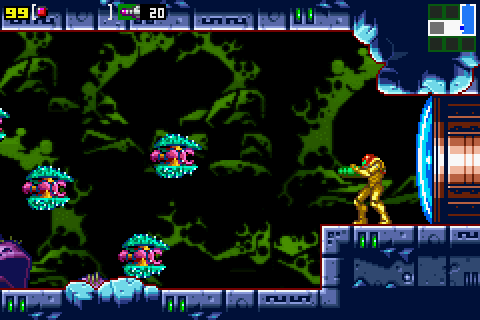
In the year 2004, two years after the series' debut on the Gameboy Advance with Metroid Fusion, we received a game that would not only be the second Metroid title on the Gameboy Advance, but many gamer's second chance to experience the Metroid series in its original capacity. While Metroid Zero Mission is technically a remake of the original Metroid released on the NES in 1986, it certainly has no problem justifying its own existence. Updated graphics along with the original Metroid in-full now being literally in the palms of your hands are nice touches, but careful consideration must be made when reviewing this retouched game; does the original Metroid still hold up even with meticulous updating, or is this one classic better left back in the 80's?

The story, as is the case with many Metroid games, is easy to understand. Our protagonist, Samus, is sent to Planet Zebes in order to annihilate the mechanism being used by opposing space pirates to build super weapons. With the exception of a few cutscenes added in order to update the feel of the original (at that point) 18 year old game, Metroid Zero Mission pretty much leaves you to explore on your own. Those who have never played a Metroid game before should have no problem entering the series via Zero Mission, as multiple difficulty levels are available to select right from the start, and even on Normal difficulty, the game isn't too challenging.

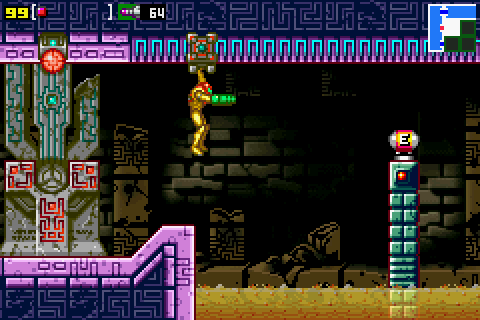
The difficulty usually associated with the Metroid series stems from the player lacking the intuition necessary in order to figure out where in each of the game's 7 (later, 8) worlds they must explore next. Navigating each room in each environment is simple enough, and the map, upgrades, and new abilities come with the exploration, along with the opportunity to uncover secret passages that more often than not will lead the way to the next area or even to supplementary power-ups such as an increase in missile-storage capacity, or health buffs. Updated graphics borrowing assets and art design from Metroid Fusion are extremely successful in bringing life to the once aging world of Planet Zebes. Hardware limitations of the Gameboy Advance seemed to be no hindrance at all while designing Metroid Zero Mission; from start to finish, Planet Zebes is an absolute pleasure to explore.

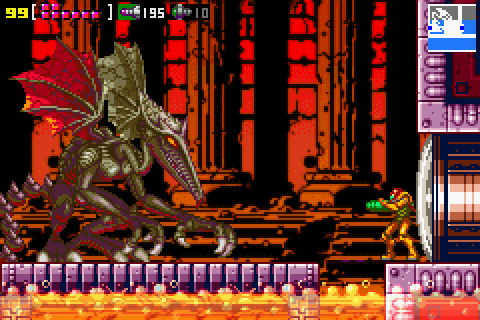
Often if a game is too easy, it can become boring. Then again, if a game is too challenging, it can become discouraging. Despite Metroid Zero Mission being a little bit on the easy, and while I'm at it, short side, it does not lack any bit of the magic that gamers have come to expect from other Metroid games. Initially, the map sizes of many of Zero Mission's environments, such as Norfair or Ridley, can feel intimidatingly ambitious. While "intimidating" can often mean "discouraging", as it does in many other games, Zero Mission finds a way around this through building up the confidence of the player by building up the strength of Samus. Small power-ups, such as the Charge Shot, Missiles, Super Missiles, and Morph Ball just to name a few, are awarded frequently, and the types of power-ups obtained are never too similar to the power-up most recently acquired. Missiles and Super Missiles are acquired at opposite ends of the game, as are Morph Ball and Power Bomb, as well as many other similar upgrades. This rapid change in arsenal often supports rapid changes in scenery; if you've just acquired a new weapon, you can expect a new type of area, thus a new type of gameplay.

Unlike most modern Metroid games, Metroid Zero Mission only features 3 boss fights, which is 1 more than the original featured. While Zero Mission does involve a great deal of combat, from blasting small nuisances of enemies to bringing down both Kraid and Ridley, the environments prove themselves to be much more threatening than any monster, especially in the later 20% of the game. Often, the way forward will be shown on the map, but left purposely unclear in the world. Using every weapon to try to blast through every wall in the hopes of revealing a hidden path is a habit that all players of Zero Mission will get into, and even still, will often finish the game far from 100% completion.

Though an average playtime of Zero Mission will probably only last around 3-4 hours, there is plenty of content to be enjoyed after the initial play-through is completed. Finishing the game once will not only unlock Hard mode, but will unlock the original Metroid game which can be played by selecting it in the Options menu. Inputting a certain sequence of buttons on the Options menu of a game file after having completed Normal mode will also unlock Time Attack mode, which will time how quickly you can complete 1 play-through on Normal difficulty.

Metroid Zero Mission is short, being only a little bit longer than the original because of an extra chapter exclusive to this version, and it can be easy if played on Normal or Easy difficulty, especially if this isn't your first Metroid game. Despite this, Metroid Zero Mission is excellent. Everything from the graphics to the tone to the pacing is absolutely wonderful, and the life exuding from Planet Zebes' environments serves as a praise-worthy example of how hardware limitations can be over-come through clever art and carefully considered level-design. Whether you originally played Metroid back in 1986, or have never considered playing Metroid before, Metroid Zero Mission is not only a perfect example of what this series has to offer, but a perfect example of how fun timeless game design can be.

Wednesday, August 26, 2015

The Nintendo Wii

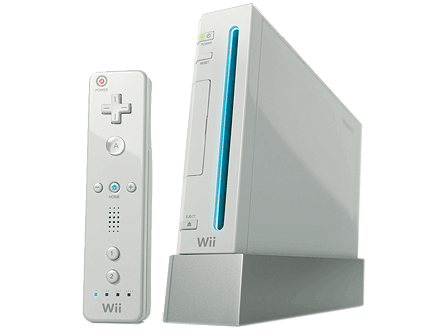
Can we discuss the Nintendo Wii for a second? It's an amazing console. No doubt everyone on planet earth knows what the Wii is, but I wonder how many "serious" gamers have realized the true potential in this console.

I bring my Nintendo Wii, as opposed to my Gamecube, Xbox 360, or WiiU, with me to college each semester; it is so clearly my best option for many reasons, and after having spent the last couple of years playing the Wii to death, I can honestly admit that I would seriously recommend this console to any gamer looking for something different or new to play.

It could be that even after all of these years, you still have a Nintendo Wii tucked away in your attic or basement, gone untouched for the better half of the last 10 years. The Wii fell off from about 2008 - 2012, and considering that console generations only last for about 7 years, it's safe to say that the Wii suffered from a somewhat pre-mature death. Or at least that's what you may think.

First off, I'm going to take a moment to declare that there are so many more great games on the Wii then one might think. You have your Mario Galaxy, Legend of Zelda Twilight Princess, Metroid Prime 3, Guitar Hero 3, and Smash Bros. Brawl released within the first couple of years of the Wii's life, then everyone else knows about Mario Galaxy 2, Sonic Colors, and Legend of Zelda Skyward Sword, but I'm here as always to talk about lesser-known games, and let me say, these following titles are legitimately not only a few of my favorite games on the Wii, but a few of my favorite games of all time:

Kirby's Return to Dreamland

Fragile Dreams: Farewell Ruins of the Moon

Excitebots

Sin and Punishment Star Successor

Pandora's Tower

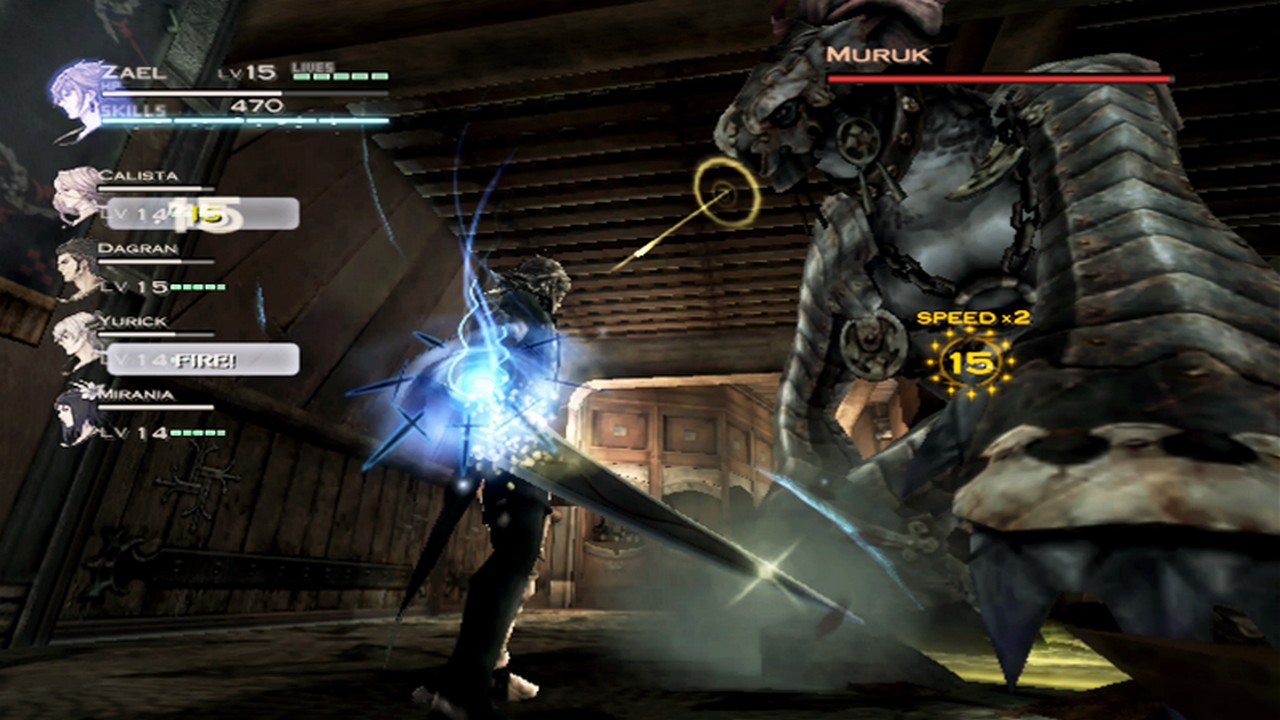
The Last Story

Six masterfully crafted, must-have games if you own a Wii. All six are unlike anything I had ever played prior, and each are games unlike anything else offered on the 360 or PS3 during the same generation; I'm not saying these games are better than anything on the other consoles, but they hold up by today's standards and offer an inspired and wonderful gaming experience that has yet to be recreated by any other game I've played.

Right off the bat, six games to buy if you still have your Wii hanging around collecting dust BUT catching up on missed games is not exactly where the Wii earns it's $60 grey-market value.
The real hidden feature on the Wii that makes missing it a critical error in my eyes is the Wii's Virtual Console.

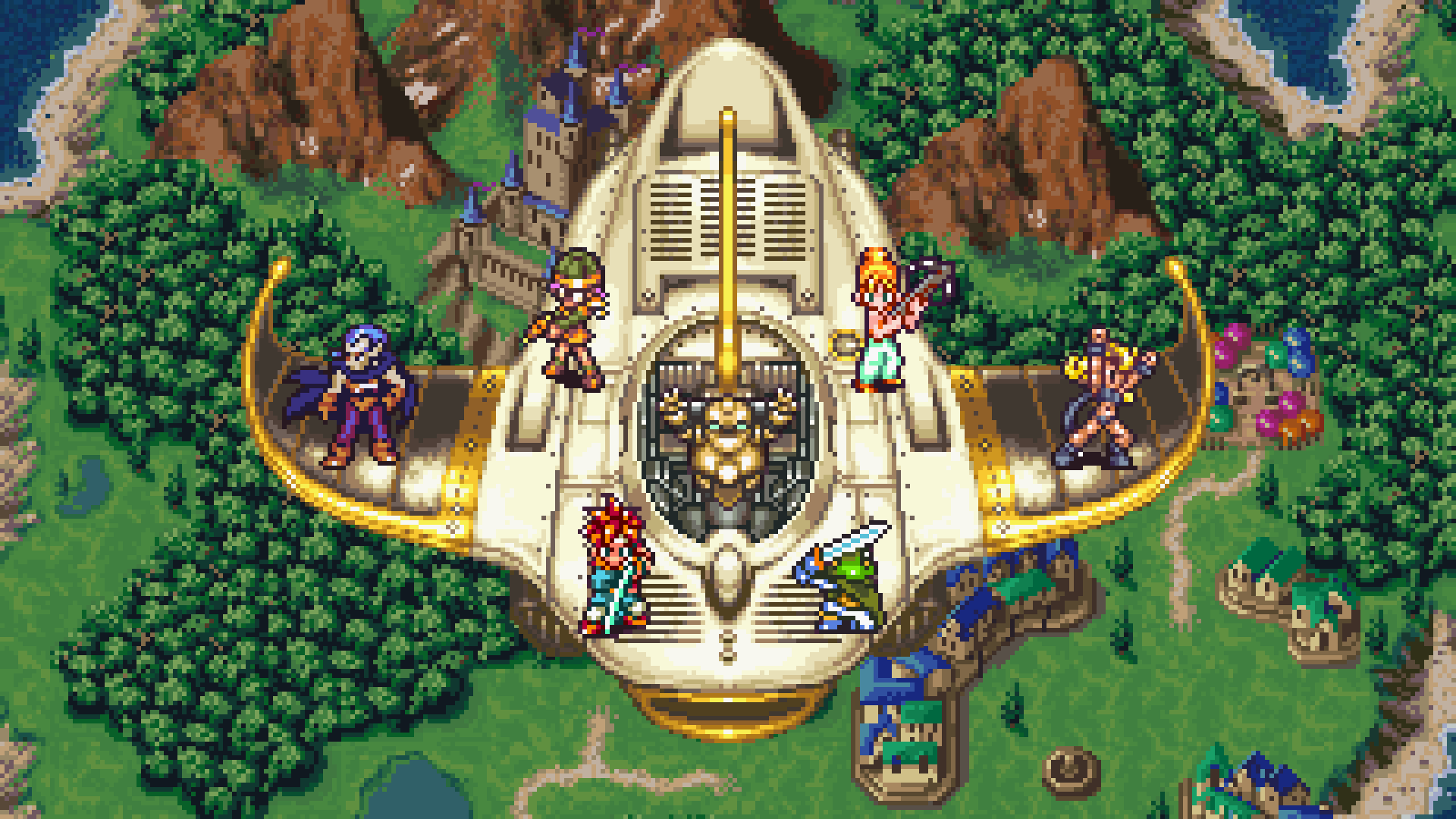
The Virtual Console is a free service offered by Nintendo with which one can use their Wii to download retro games for an extremely low price. I'm not talking only Super Mario Bros. to The Legend of Zelda, I'm talking everything from Mario Bros. to Golden Axe, to Megaman 2, then Legend of Zelda A Link to the Past, to Super Metroid, to Super Castlevania IV, to Secret of Mana, to Mega Man X, to Chrono Trigger on the SNES. After that, you've every must-play on the Nintendo 64.

92 titles from the NES - all $5
63 titles from the SNES - all $8
21 titles from the N64 - all $10
73 titles from the Sega Genesis - all $8
59 titles from TurboGrafx 16 - all $6
54 titles from NeoGeo - all $9
15 titles from the Sega Master System - all $5
and then hundreds of games released for download-only such as Sonic the Hedgehog 4 and Megaman 10

What must be understood about the Virtual Console is that it gives players easy access to the games for which collectors will easily pay $80+ dollars. Take Chrono Trigger for the SNES: Chrono Trigger is considered to be one of the greatest RPGs of all-time. Grey Market Price: ~$90. Virtual Console Price: $8.

Of course, collectors collecting for their retro consoles will never be interested in a digital copy of a game as opposed to a cartridge, but this service is perfect for gamers like me since I'm willing to sacrifice a cartridge if I get to save $82 in return- I'll just use the saved money to fill my car up so I can drive to all of the cool parties I get invited to...

THEN, you have 100% backwards compatibility with the Nintendo Gamecube, provided you got your Wii before 2011, back when all of the cool kids got theirs. No need to discuss how awesome backwards compatibility is, provided you've read literally anything else on this blog (I am quite fond of the Gamecube, if you haven't noticed). What is also noteworthy is the fact that while component cables that upscale video quality from 480i to 480p are impossible to find for the Gamecube, they can be found easily for the Wii. So if you've ever wanted improved video quality for your Gamecube games, get a Wii.

With the Wii (about $50 on eBay at time of writing), you gain access to easily 20 amazing games as well as the rest of the Wii's admittedly mediocre library, all of the Gamecube's library, most of the library of the NES, SNES, and Sega Genesis, a bunch of N64 titles, Netflix, Youtube, and Project M. It's an old console with very few hidden gems, and even a handful of it's first party titles are garbage, but this console has immeasurable value to gamers who, like me, may be looking to update their knowledge of retro games without making their wallets cry or are trying to get through the summer's gaming drought with some great original Wii games that hold up without question.