Nintendo Consoles

Nintendo Consoles
Showing posts with label nightmare. Show all posts

Thursday, April 28, 2016

And Presto, It's Kirby! - Kirby's Adventure

Kirby's Adventure - Nintendo Entertainment System

A Kirby game will hit me like bad romance- I wake up one day, turn one on, play it, love it, beat it, go to sleep, wake up the next day, and wonder what the hell happened the day before. And not unlike a bad romance, there are a couple of Kirby games I return to every once in a while no matter how many times I might swear them off. Kirby Nightmare in Dreamland is one of those Kirby games.

Of course (and I say 'of course' having only learned this a few years ago), Nightmare in Dreamland is a remake of an NES game entitled Kirby's Adventure. I must assert that better graphics, better animations, and better controls render the remake a higher quality game, but that doesn't mean the original wasn't amazing in it's own right. In fact, Kirby's Adventure is the only NES title I've ever completed, as it's easy for a NES game albeit widely more difficult when compared to recent entries in the Kirby franchise. Praise for Kirby's Adventure in any retro gaming community is not hard to find, but what's so striking about K.A. is how well it still holds up and how modern the game feels.

Kirby's Adventure is a side-scrolling platformer featuring 7 worlds, 35 levels, and 1 fat pink guy who can copy the abilities of his inhaled foes in order to progress. K.A. is the first title ever to feature Kirby's signature copying ability, although it is the second game in the series. What's fascinating about specifically the levels in Kirby's Adventure is that they would really be pretty boring in any other platformer. Each level contains a lot of flat ground without many traps, and enemies are often spread far apart; but these levels wind up being incredibly fun because of the numerous abilities Kirby can gain during them, with no one ability being clearly the best, and some abilities not even particularly good. Each ability feels extremely balanced, and obtaining one of the temporary powers in no way guarantees your safety. Instead, each ability, such as the ability to wield fire, sword, tornado, hammer, i.e., must be mastered and used cleverly to traverse each stage. Often, environments, platform placement, and enemy quantity will pose a bigger or smaller threat depending on which ability you choose to wield. Replayablity is high (as established previously) because of the many different ways you can defeat each boss and complete each level.

K.A.'s aesthetics are sincerely among the best on the system. Bright colors, clear sprites, and even some costume variety that comes with certain gained Kirby-powers (Ice FTW) all contribute to make Kirby's Adventure one of the most beautiful games on the NES, especially when compared to earlier titles like The Legend of Zelda, released 7 years before.

Remarkably, almost nothing about the gameplay is changed from Kirby's Adventure to Kirby Nightmare in Dreamland- a testament to the title's timelessness. Perfectly designed levels that consider each of the many abilities gained throughout the game combined with high variety in aesthetics and environments make Kirby's Adventure ideal for an afternoon of gaming. The title is short, and easy by 1985 standards, but it contains everything required to make an exceptional gaming experience + tons and tons of root beer.

Tuesday, April 1, 2014

Metroid Primate

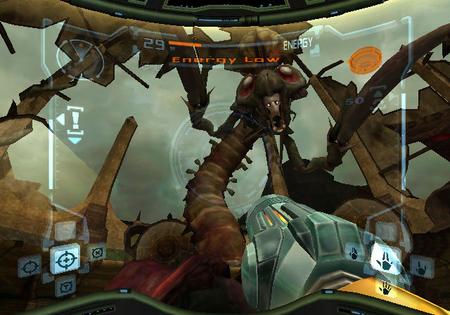
The distance between my WiiU and me has put me back in the mood to go on some kind of grand adventure. I was super into Darksiders II on the WiiU and as a result of me leaving my WiiU at home, I am left to my Gamecube while I am here, at school. Now normally, this wouldn't be any issue at all since Nintendo is known for it's large adventure games with great characters and gameplay. With a longing for something bigger than I am, I decided to resume my Metroid Prime experience. Unfortunately, I found that this game was much more of what the doctor diagnosed, as opposed to what the doctor ordered.


Metroid Prime

Metroid Prime is the Metroid franchise's debut into the 3D world, much like how The Legend of Zelda: Ocarina of Time paved the first 3D path for the hero of time on the Nintendo 64. Many fans were horrified of the idea of Metroid transitioning from 2D to 3D. "What if they fucked it up?", they asked. "I hope they don't do it wrong!" they exclaimed. Well unfortunately, the fans were wise to be so concerned. Metroid Prime is simply a lazily made game with embarrassingly bad graphics, power-ups and abilities copied from other series, and a soundtrack that is only memorable because of how annoying it is.


Let's start with the environment, since it is this aspect of the game that we as the player have the misfortune of having to deal with more than anything else. This game was released in 2003. At that point, Nintendo had only been making video games for about 18 years, so I am willing to be merciful when I judge a game made with only a few years of experience under their belts, but it seems obvious that Nintendo's claims of compensating for bad graphics with better gameplay started way before the days of the Nintendo Wii, only the gameplay here too was shoddy. The graphics in this game are shockingly mediocre at best. There are times when the graphics do have some strong points, for example, the design for the space pirate enemies are admittedly somewhat realistic, but generally, the environments are bland, monochromatic wisps of negligible design that serve not as a compliment to the game, but as a reminder only of what could have been had Nintendo spent some more time considering level designs. I give it a B-

Next we have control scheme and soundtrack, appropriately written about simultaneously because they are both frustrating and poorly done. In the past, Nintendo has had success making attempts at being innovative and breaking molds - just take a look at the Nintendo 64 controller. When it comes to controls though, Metroid Prime was a collection of new ideas that should have never made it to the final product. Shooting, for example, is done unconventionally with the A button as opposed to the industrially-standardized R button. This transition took weeks for me to get used to before I finally had to reconfigure the controls manually and reassign the shoot command to the R button, like how everyone in the whole world is used to. Thank you Nintendo for trying something new, but please, don't fix what isn't broken. And speaking of broken, the soundtrack to this game! I honestly think that the speakers on my TV are broken when I play this game. To me, it seems that the soundtrack is half-missing from the disc! What comes off as some pretentious attempt to add a soundtrack that compliments the environment really only leaves a bad taste in my mouth. Some people praise the soundtrack for this game, but they're elitists who claim to have grown out of music that requires drums or guitar. Excuse me for thinking that a piano and ambient-exclusive soundtrack gets boring after playing the 60 hour game for the first 15 minutes. Perhaps a soundtrack that compliments the environment would have worked better if there was any real environment to compliment. Nintendo, if you're going to base every bit of your game off of the surroundings, then please make sure that you remember to include the surroundings in your game. C+

And finally we end this nightmare of a game with a brief discussion of how every single power-up in this game is stolen from another franchise. Understanding the way that other games execute their ideas is essential to developing your own game, but the similarities must be subtle unless they are obviously references, like how Dragon Ball Z's 7 Dragon Balls is a blatant reference to Sonic The Hedgehog's 7 Chaos Emeralds. Let's take a look at some specific examples:
Charge Shot = Mega Man
First Person Camera = James Bond 007: Golden Eye
Morph Ball = Sonic The Hedgehog
Spider Ball = Spider-Man 2
Double Jump = Dragon Buster
Ice Beam = Rayman Arena
Missiles = Galaga
Energy Tanks = Legend of Zelda
Grapple Beam = Indiana Jones
The Life-Sucking Metroids = Stand By Me (film)
Female Protagonist = Alien
Wave Beam = Wave Race 64
Arm Cannon = Planet Terror

Overall, this game was too easy, too long, and too annoying to actually play through. Admittedly, I only played through about 20-25 minutes of the game before deciding that it was not for me. Maybe I am missing something, but if you ask me, this game is simply a no-go. Happy April Fool's Day.

Thursday, December 12, 2013

Sequels

I've been listening to a band called Autopilot Off recently. They fucking rock and they entered my life the same way some of my all time favorite bands did in the past. Goldfinger, System of a Down, Less Than Jake, Bodyjar, Cauterize, Crush 40, and Autopilot Off were all introduced to me via the video game. When ever I think about certain bands, such as the bands I listed above, sometimes I get brought back to the game that exposed me to that music. In which game did I really learn about Autopilot Off? SSX 3.

So I turned on SSX 3 again for the first time since the middle of the summer today because I wanted to listen to some Autopilot Off and maybe because it just snowed the other day and it was appropriate. After a whole bunch of racing and freestyle runs, I started thinking something rather treasonous:

SSX Tricky or SSX 3?

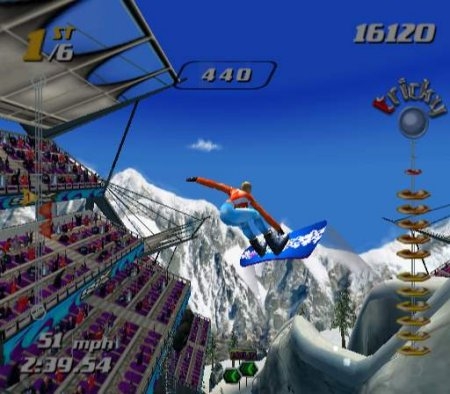
I think SSX 3 is a better game than SSX Tricky. There. I won't be clever and wait until the end of the whole fucking post before I come out and say it. I love both SSX Tricky and SSX 3, but I prefer SSX 3 over the former. The main question that I ask myself is the following: Why is it that SSX Tricky is the game that I find more people talking about when I feel that SSX 3 is a better game? Unfortunately, I don't have the energy to actually determine the answer to that question, but what I can do is compare the two games so you guys can decide for yourselves. SSX Tricky or SSX 3?

So here we go. The SSX series is a series of snowboarding racing games made by EA Big. There are several installments in the series, including 3 for the Nintendo Gamecube and at least 1 for the Wii (I don't claim to be an expert on Wii....yet). Based on the conversations I have with my friends both at home and at college (so you can tell I am getting a really wide range of people here), it would seem that SSX Tricky is the more popular game. For that reason, it must be the better game! SSX Tricky is an AMAZING game that kept my younger self entertained for weeks and weeks and weeks at a time, but I am not certain if it matches up with SSX 3, personally. I suppose I'll start off by discussing the features both games have in common.

SSX Tricky and SSX 3 both offer 2 main types of single and multiplayer player modes: Race and Showoff/Freestyle (Showoff  in Tricky and Freestyle in 3. They're the same thing.) Race mode has you blasting down huge snowy mountains as fast as you can in an attempt to get from the beginning of the course to the end of the course in less time than it takes your opponent. That's how a race works. Showoff/Freestyle is a mode where you basically have the entire course as your own personal skatepark. You start at the top of whatever course you want, and try to score as many points as you can by doing all sorts of different crazy tricks before you cross the finish line. Each game has several different courses to board on. Each game has an upgrading system where you will get to choose which of your rider's stats you wish to increase, and the abundance of these opportunities increases depending on how brutally you kick your opponent's ass during the race. There are many different boards with all different stats for you to unlock AND there are different clothing options for each character that are purely cosmetic.

So both games have the same basic formula. And I'm not kidding, like, they are pretty much the same idea. Same equation and formula. No risk taken from Tricky to 3. This presents us with a unique opportunity where we can just literally compare the two games track by track, move by move. It's not like comparing Super Smash Bros. Melee's Adventure Mode to Brawl's Subspace Emissary, where they are completely different but are forced to be compared. SSX Tricky and SSX 3 have so much in common that it is incredibly easy and natural feeling to compare the two. It is a case like Minute Maid lemonade vs. Country Time lemonade where we can just say "This is better because I like it more." So. Obviously the games aren't EXACTLY the same, they just function the same. They look different, feel different, and play differently despite their concepts being akin. So we only have a couple of different things to compare, and a side by side comparison would be most efficient.

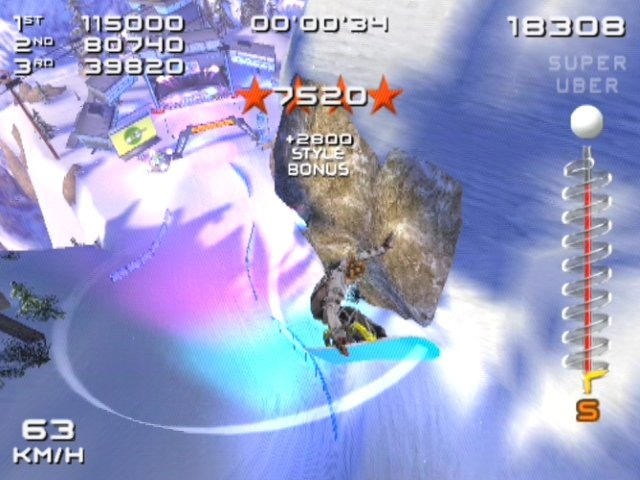
Let's start with the characters. Pretty much the same characters give or take a few newbies added to SSX 3 from SSX Tricky. Personally, I feel that the updated graphics that come with a game being newer does wonders for the SSX 3 character roster. It looks better since it is the same art style, and because it is newer. Visual appeal goes to SSX 3. Also, IM SORRY, but as much as everyone loved the announcer (Rozell?) in Tricky, SSX 3 has a real soundtrack complete with the auto-synching feature. Which means like, if in these rock songs, normally, there is a quiet section, then that quiet section is going to be played while you're in a dark cave. Then once you come shooting out of that cave, the chorus of that song is going to slam through the TV speakers, and the best part of the song is going to be pumping through while you're high in the air about to land and shit all over your opponents. Like how music is in a cheesy summer-movie made in the 90s? That's what SSX 3 does. Sound goes to SSX 3 as well.

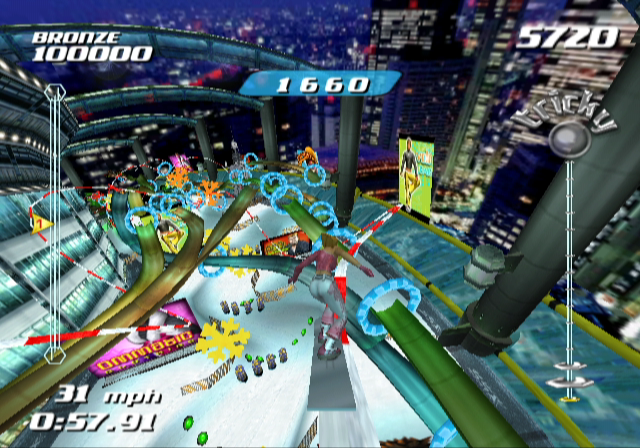
Courses. Perhaps the tracks in SSX Tricky are more memorable. Maybe this is the result of nostalgia or because I've spent more hours total playing Tricky when compared to 3. I do feel that there was less emphasis on the course designs in 3. They don't feel lazy, in fact, they really are awesome. But, like, for example, the name of each course in SSX Tricky is blown thrown the TV speakers every time you select one. In SSX 3, they are not. And because in SSX 3, you can technically access a majority of the courses from an open-world-ish hub, you may play many courses without even knowing their names. Perhaps what I am trying to avoid saying is that even though the courses in SSX 3 are really damn fun, they do all kind of look the same - just a bunch of snow and a bunch of ramps. Fun, but I mean, Tricky has Tokyo Megaplex on its side....courses go to Tricky.

Finally, with a 1 to 1 score, we have how the game feels. Tricky does an amazing job of incorporating the element of doing tricks with the controls that can feel button-mashy but work, into a game that is not necessarily always about doing tricks. Maybe you'll want to tone the showoff inside of you down while you're ripping through tougher courses in SSX Tricky. This is because in Tricky, accidentally performing tricks you never wanted to do happens often and can REALLY fuck you up. It is very easy to accidentally stop performing your front flips (for example) while you're upside down. So like, you're blasting through a course, and a surprise ramp pops up from out of no where. Because you didn't see the ramp until it was too late, you're still holding up on the control stick, because holding up on the control stick makes you accelerate when you're on the ground. BUT in the air, holding up makes you flip, kinda. So before you know it, you're upside down, you're in the air, and you're about to eat shit and once you do, it's over. Time to press Restart. SSX 3 completely fixed this problem. In SSX 3, you automatically complete your flips every time they are executed. It's like the bottom of your board is magnetized to the snow. It makes doing double front flips on flat ground possible, but who cares how unrealistic that is? If you're going to spam tricks all day during the race, you're going to lose anyway. The point is that SSX 3 has solved the one problem SSX Tricky had with its trick system- you pretty much automatically land them every time. You still have to avoid hitting trees and stuff, but there is no bullshit when doing the tricks; each one can be performed with confidence. With the installation of SSX 3, the SSX series has finally worked out every kink in the system that links doing tricks to going fast, and for that, SSX 3 takes the best-feeling trophy.

Looks like SSX 3 wins 2 to 1. Of course, this is all just my opinion. I cannot discredit the volunteer opinions of my friends - SSX Tricky MUST be an awesome game since so many people always want to play it when they see that it is in my library. I couldn't resist getting the sequel because I was curious, but perhaps some of you may join my side one day. SSX 3 I do believe is only 5 or so dollars on Amazon. Enjoy, and don't forget that whether it is in a game or in real life, yellow snow is piss. Don't eat it.

Sunday, July 21, 2013

Hang In There

Hey guys. This post is more of an apology than anything. Maybe I'm being too hard on myself, but I fear I will not be able to post my next review for a little while longer. I have been very busy with my band recently and I haven't had much time to get my Gamecube on. What I do have, however, is a website I just discovered. If you didn't already know about this site, I suggest you check it out.
http://www.howlongtobeat.com/index.php

Ever wonder if you're going to get the best deals on your games? Ever fear that you are going to pay up to 60$ for a game that you'll finish in a week? Well fear no more! http://www.howlongtobeat.com/index.php is a website where numerous gamers from all over can submit how long it took them to complete any video game you can think of! Simply type a game into the search bar, and BAM you have everything you need to know about how long any game will take you to complete. Separate times are provided for those who like to beat a game quickly, or for those who like to 100% a game. This site is the best way to make sure you're getting the most game for you buck.

Wednesday, July 17, 2013

Recap

Okay guys like I said in my last post, we are officially half way through my list of top ten favorite Gamecube games. I must admit, there is a problem with how I am going about this list. The fact that I recently just purchased a bunch of Gamecube games that are new to me in addition to the games I plan on obtaining in the near future is very much making me reconsider my list. Perhaps I will post a revised list later in the year, once I have completed each of my new games entirely. Just to establish some relatability, here are the games that I just got recently and the games I will try to pick up by the end of the summer:
Mary Kate and Ashley 16 Licensed to Drive                                              -Plan on Getting-
Starfox Adventures                                                                                   Super Monkey Ball 2
Legend of Zelda: The Windwaker                                                                   Metroid Prime
Legend of Zelda: Collector's Disc                                                           Metroid Prime 2: Echoes
Tales of Symphonia                                                                                            Pikmin 2
Luigi's Mansion

So far I've spent my posts discussing extensively the pros of each of the titles on my list, but I haven't touched the cons. There are reasons why I like certain games more than others, but I've neglected to reveal those reasons until now. This will be brief, but interesting. We will start at number 10:

1080: Avalanche - The game wasn't short, because there was actually a lot to do once you really
started looking at all of the unlockables. All different boards and such were unlocked by playing game modes that are typically overlooked in video games (time trial), but really, a lot of the unlockables don't affect gameplay enough for you to have a real desire to get them. There are definitely some cool prizes in the game, but by the time you get them, there is pretty much nothing left for you to do in the game. For this reason, despite how fun the game is, you do eventually lose motivation to really go the extra mile as far as 100percenting the game. Moreover, this game is WAY more fun when you race your friends, but no one plays this game...so good luck...

Mario Kart: Double Dash - I understand that number 9 might be a little low for this game, but really,
I feel pretty good about this. Despite how fun this game is, actually playing single player is a little but of a drag, but 100% necessary. Unlocking every character and track is kind of boring because it involves you playing the same track 4+ times (once on every difficulty). This game is fun for the MULTIPLAYER. But the multiplayer is only fun once you have your friend take one for the team, and unlock everything via single player.

 
Spiderman 2 - This game is awesome, but it is repetitive. Although swinging around and fighting people is SO fun, it really is all you do. It shares the same problem with the Prince of Persia titles in my opinion: they are fun, but too much of a good thing is never good. It simply looses it's flavor after a little while of chewing

Super Mario Sunshine - Definitely another awesome game, but ultimately, it is not Super Mario 64.
The game is also inconsistent in that some levels are really easy, and other levels are TV-smashingly difficult. It can be a little short and some levels can be a little not-as-fun as they could be. There really are no major faults with this game, but the little things add up. I mean, it's still my 7th favorite Gamecube game, so don't think I am trying to hate on this game; it is really good, but not number 1.

Lost Kingdoms 2 - Ehh this one is tough. Sometimes you face a game with no big problems, no major flaws, but simply is just not your favorite game ever. Honestly, this game needs a little bit of a better soundtrack. There are certainly moments when the soundtrack hits you in the best of ways, but usually it is pretty bland. I never go on an epic quest without some epic tunes, but apparently Activision does not agree with me. The graphics were also pretty laughable and even though the actual story was good, the characters didn't draw me into it. The gameplay was really REALLY fun and refreshing, but I think the story could have been emphasized more by some good voice acting and cut scenes. It is something I never thought I cared about until just now...

Soul Calibur 2- This fighting game is perfect. But that is just it- it's a fighting game. The gameplay is
repetitive at times simply because fighting games don't rely on story and characters and cut scenes to help you through the games. If you get bored during an adventure game, you can usually last a couple more hours or so by paying attention to the music or graphics or something, but fighting games are typically 100% fighting, 0% everything else. So if you get bored of fighting, then you change your game, because there is just nothing else to them.

So I hope that cleared some shit up for y'all. Please tell me if I've inspired any of you to bust out your old Gamecubes because I'd be honored to hear about it. Also, feel free to ask me about any game at all. I will review any game I have played and I love talking about games so if you ever wanna talk, find a way to let me know. Stay tuned, because I plan on posting a list of ALL of my 56 Gamecube games soon.

Monday, July 15, 2013

Top Ten Favorite Gamecube Games: Number 5

Alright guys, we are half way there. Half way down the list of my top 10 favorite games for the Nintendo Gamecube. I hope that everyone is enjoying everything I write, but please, if anyone has any suggestions, comments, or recommendations, feel free to leave a comment, tell me over facebook, or stalk me at my house. With any luck, this blog has taken you guys down memory lane and maybe even inspired you to bust out the ol' Gamecube, yourselves. At the very least, this blog is something for you to read at 3am when the internet has run out of things to look at for the day. I'd like to believe that so far, this list has been a nice collection of charming titles, some you may have heard of, some you haven't, but I will admit it lacks something...I'd say...it lacks some soul...

Soul Calibur, that is!

5) Soul Calibur II
Welp. It was about damn time.

The Soul Calibur series was originally introduced in the arcades in 1996. It's fighting-style mechanics were immediately compared to those of other popular fighting games such as Tekken or Mortal Combat. Eventually, the Soul Calibur games found their way onto the home console, following the steps of most other arcade-style fighters. There were instantly a few notable differences between Soul Calibur and some of the other fighting games around at the time and these differences were pretty key when it came to the gameplay, feel, and overall experience of the game. Soul Calibur featured a combat system that involved, first of all, weapons. Every character held a weapon. It didn't really affect the gameplay itself, but it sure did look badass. When it came to playing the game, Soul Calibur definitely stood out because of the functions of the buttons. At this point, in the arcades, fighting games had anywhere from 3 to 8 different buttons. Pressing some buttons would result in a kick to the face, maybe a kick to the feet, punch to the torso, punch to the feetpunchto head, face, neck, punchkickpunchpocuncudiwulmeofiuwnq AHHH OMG. Soul Calibur featured only a few different commands, and these same commands exist without any complication to this very day, in Soul Calibur 5. In Soul Calibur, 1 button was responsible for attacks that struck horizontally, 1 button made your character strike vertically, 1 made them kick, and 1 made them guard. Vertical? Horizontal? I don't get it. The idea was to create a fighting game where Horizontal attacks could only be avoided by ducking under them, jumping over them, or blocking. Vertical attacks could only be avoided by dodging to the right or left, or guarding. Essentially, there were different ways that would affectively dodge each attack, depending on which direction it came from. Ducking from a vertical wouldn't work, because you would just be hit on the head, and trying to move to the right to avoid an attack that is swung from the left to the right wouldn't work either because you would get hit either way. During a time where the last thing the world needed was another fighting game, The Soul Calibur series stuck out like a fat, exploding peacock.

Onto the sequel! Soul Calibur II plays the same way as the original Soul Calibur and Soul Edge, so really, there is very little for veterans to adjust to. This game is also, however, newcomer-friendly, which is great because I know a lot of people to whom Soul Calibur II was their first soul-slaying experience. As I said, Soul Calibur's sequel featured the same fighting ideas and pretty much the same gameplay as the original, so what makes it so special? The expansion of the idea.

See Namco and Project Soul have earned a reputation of NOT creating the same exact SC game twice
in a row. Although SC and SC2 were very similar, the later featured numerous different game modes, an addictive single player mode called Weapon Master, interchangeable weapons to choose to equip your character with, and many more characters. I believe that when the first sequel to anything is made, it should be simply an expansion to the original idea. I don't think it is necessary to completely overhaul the game, and obviously Project Soul agrees. The multiplayer is what keeps players coming back for more, as SC is a very easy game to pick up and learn how to play on the spot. It is fun and although the best results come from hours of studying the MOVE LIST in order to conclude which combos were the strongest, the game is very playable without knowing all of it's dark secrets (TL,DR it's girlfriend-friendly). Multiplayer modes include VS. Battle, Extra VS. Battle, VS. Team Battle, and Extra VS. Team Battle. Any mode that is preceded by the word "extra" means that the option to chose alternative weapons for your character to fight with is enabled. Different weapons have different affects on the character wielding or the character fighting against them. Some have greater range, some increase health with every blow you land, etc. Team Battle involves you and your opponent selecting up to 8 different characters, and having them all fighting each other 1 after another, for a longer game and a better opportunity to showcase your skills with many characters simultaneously.


So the multiplayer keeps you coming back for more, but what gets you started in the first place? The single player mode - Weapon Master. Weapon Master worked in a "chapter-like" system, where the idea was to complete each mission in the chapter in order to proceed to the following chapter until you beat every chapter. Each chapter featured a new collection of missions to complete, along with a new store to access. Completing each mission would not only result in your nearing of the chapter's completion, but it also rewarded you with gold. Gold could be exchanged, in the Chapter's Store, for new weapons, new character costumes, new artwork and new weapons. Did I mention new weapons? The missions involved you fighting Soul Calibur style under special, random conditions. Sometimes you can only defeat your opponent with a RING OUT (throwing him/her off the stage as opposed to depleting their health with attacks). Other times the enemies are invisible. Sometimes, you lose instantly if you are knocked to the ground. It sounds simple, but it is a clever way to be able to unlock new items without having to playing through Arcade mode 50,000 times with a million different characters. The mode progressively got more difficult so the pressure for you to constantly increase your skills was also on, and ultimately made you a better player. Once you beat every chapter in Weapon Master, including the 5 or so hidden chapters, you had access to the stores containing every weapon in the game, but you still had to raise Gold in order to buy them all if you couldn't afford to do so already. This increased the length of the game without making it boring. It was very possible for you to play without buying the weapons respective to the characters that you never play as, so you were never to feel stressed about missing certain weapons at first.

The characters, old and new are all shining and well-endowed as they blast onto this generation of gaming. All 25 characters have unique fighting styles, are all good-looking and are fun to play as. The voice acting is fantastic (this is important to me), and the moves of each fighter are clever and often have my friends and me looking at each other saying "...what the fuck just happened?" The new stages in SC2 are also fantastic. Stages in these types of fighting games often don't matter, as the characters never interact with them, but it is still nice to have something other than giant swords to look at once in a while. These stages are all accompanied by a great musical score. These are the kinds of things that true gamers appreciate- good looking stages and great music are nothing that would missed had they not been in the game, but the fact that the designers went the extra mile to enhance the Soul Calibur 2 experience is really why the fans love Soul Calibur so much. Soul Calibur 2 also included 1 guest character to the game. The character available to you depends on which system you play the game on, but the Gamecube version featured Link, from the Legend of Zelda series. Seems strange, but it's fun as hell. Trust me.

Soul Calibur 2 is a game for fans of fighting games, but it is also a great chance for the newcomers to jump onboard a genre of gaming that is easy to get lost in. Ever find yourself attracted to giant swords? If your answer is "Yes", then I hereby diagnose you with normality and welcome you to a game transcending history and the world, a tale of souls and swords, eternally retold.