Nintendo Consoles

Nintendo Consoles
Showing posts with label wii. Show all posts

Thursday, May 5, 2016

Fast Racing NEO - A Neon Blitzkrieg

Fast Racing NEO - Wii U


Fast Racing NEO is a futuristic racing game attempting to scratch the itch left by Nintendo's abstaining from developing a new entry in their F-Zero franchise. Trailers and promotional material suggested that Fast Racing NEO would have everything a hardcore racing fan would want, but skepticism is inevitable when an impressive-looking title bears a $15 price tag. HD graphics and lightening-fast races while playing are considerably awesome, but a slightly underwhelming lack of content in addition to unstable online servers (at time of writing), make a strong case to justify Fast Racing NEO's extremely reasonable cost. 

Fast Racing NEO offers absolutely stunning graphics, extremely responsive controls, 10 racers, 16 different tracks split across 4 cups, 3 difficulty settings and 5 game modes. Of course what matters most are the tracks, which are exceedingly beautiful and masterfully designed. While many tracks have themes and environments shared between them, such as airborne rain forests, stormy oceans, and port-side bays, the tracks themselves are entirely unique and seldom bore, especially since the short races coming as the result of high speeds don't last long enough for you to get tired of any track. Moreover, an inspired color-based mechanic allows you to gain an advantage over your opponents while you race. At all times, each car glows either orange or cyan; certain boost-pads and ramps can only be utilized if your car's color matches that of the boost-pad and ramps. It is up to you to toggle the color of your car while you race in order to take advantage of each of the color boosts, resulting not only in beautiful displays of the game's visual style, but rapid inputs and easily punishable errors in timing. Mastering the toggling of your car's color and the layout of the tracks themselves is no easy task, but doing so will be necessary for victory rewarded by unlocking additional racers or circuits.

Even the most conditioned futuristic racing fanatic may want to begin their Fast Racing NEO career on Subsonic speed, before working their way through Supersonic and Hypersonic. Fast Racing NEO offers a challenging experience but much like F-Zero, is rarely unfair. This is said not to discourage those curious about NEO, but to make clear the fact that Fast Racing NEO is not a casual, fun-for-the-whole-family kind of game. While Fast Racing NEO is perfect for those seeking a challenge, it certainly occupies an area of the racing-game spectrum opposite of more casual racers, such as Mario Kart 8 or Sonic & All-Stars Racing Transformed, both also found on the Wii U.

Though Fast Racing NEO contains both single player circuits, online multiplayer, and 4-way local multiplayer (with the multiplayer modes running acceptably well, albeit not perfectly), the real criticism comes from the dearth of content. F-Zero GX, released 13 years ago featured both single player circuits and an entirely separate story mode containing exclusive tracks and missions. This story mode in F-Zero GX made the game feel complete, instead of just a collection of tracks to play with. Fast Racing NEO feels incomplete with only its 16 tracks to be played at least 3 times each (once on each difficulty). Repetition plagues Fast Racing NEO, and those looking for an endless stream of new courses and content will be disappointed. Unstable servers also result in an inconsistent online multiplayer experience,  essentially eliminating the easiest way to extend Fast Racing NEO's life. 

The most important elements of a wonderful racing title are easily found in Fast Racing NEO. Spellbinding graphics, thrilling track design, and both local and online multiplayer definitely make this game worth $15, even $25, but not any more than that. Fast Racing NEO is sincerely excellent, but not quite perfect. That which is offered in F.R.N. is crafted with originality and inspiration, but it's small size leaves more to be desired. While Fast Racing NEO does very little badly, compared to F-Zero GX, it feels more like a large appetizer- not quite a full meal.  

Monday, December 28, 2015

A Retrospective: Guitar Hero

I ventured a bit around Long Island today with a couple of my friends to our favorite video game
stores. One of our destinations was a retro video game shop called Video Game Trading Post, and it is incredible. It is just the tiniest bit out of the way of my usual hangout spots, but they have an extremely impressive quantity of quality games, as well as several walls filled from floor to ceiling with hilarious amounts of rubbish. It was while browsing the towers of garbage games and shovelware did I find a title about whose existence I had either once completely neglected or have since completely forgotten: Guitar Hero 5.

So I bought Guitar Hero 5 for the Playstation 2, but it was also released for the Wii. So there you go- we are still talking about Nintendo consoles if you're willing to use a bit of imagination for this post.

I played Guitar Hero 5 Career Mode for a bit, perhaps for a couple of tiers, then I went over to Quick Play mode and played a set of songs (all of which were unlocked without me finishing the Career Mode), and then I turned it off. Did I have fun? No, not really. But of course, the question is "why"?

Guitar Hero used to be incredible. It took the video game world by storm a good 10 years ago, but it was a fast-fading trend, and even it's attempted "revival" this year wasn't enough to rekindle interest in the rhythm-based franchise. The reason it stopped being fun is actually pretty obvious, especially for someone who has been with Guitar Hero since the near-beginning, but before we can answer that question, we first must identify exactly when Guitar Hero stopped being fun, look at the game that began the decline of Guitar Hero, and identify just how it influenced the future of the series' installments.


So here we go:
The game that began to ruin the Guitar Hero franchise was Guitar Hero 3.

Despite the currently (or once-currently) mass appeal of Guitar Hero 2, Guitar Hero 1 and Rocks the 80's were pretty niche for their time, and not very popular. In fact, Guitar Hero 1 and Rocks the 80's were hardcore games. They were challenging, and felt like the developers approached their creation from a gamer's perspective as opposed to strictly one of a music-lover. The games had solid difficulty curves, didn't insult the players by cheating them out of the experience they expected, and certainly offered gamers something new. Guitar Hero 2 was a sequel the way sequels are supposed to be, featuring proudly its improvements to the original game, hosting not only a larger quantity of songs, but a greater quality of songs when compared to that and those of the original title. Still, the difficulty curve was like that of a traditional video game: beginning easy and ending difficult, with each victory having felt earned, as opposed to grinded out. It is important to note that Guitar Hero 3 DID retain the same feeling, pacing, and tone that appealed primarily to gamers seen from Guitar Hero 1 to Rocks the 80's, but while it was Guitar Hero 2 that made the series popular, it was Guitar Hero 3 that made the series famous, and once you become famous, everything starts to die.

Each iteration of the Guitar Hero series following Guitar Hero 3 felt like games that were created not for art, not for experimentation, not even for the gamer, but exclusively for the studio to get more money. The design elements that made Guitar Hero feel like a traditional video game were completely removed from all Guitar Hero games following GH3. Up until GH3, the Guitar Hero franchise was responsible for delivering to me not only really fun gameplay, appealing to the gamer within me, but really good songs and music, appealing to normal person (deep) within me. There was a balance created by a development studio who knew that Guitar Hero was a video game first, and that gameplay could not be compromised if the title was expected to be fun. Guitar Hero 5's content is weak, man. There are a few good songs, but nothing about the game makes me want to play more. The personality and charm of the cartoonish graphics, awful covers, and sense of humor seen in the first games has given way to that which appeals to the masses: blink-182 songs in the line-up, long hammer-on sections that look difficult but are actually insultingly easy, lifeless venues, GOOD SONGS WITH BORING NOTE CHARTS, no context, no reason to even play the Career Mode since every song is just given to you from the start of the game.

Guitar Hero 5 reminds me of parents who just give their children what they want without asking if what the kid wants is actually good for them. Want more Guitar Hero? There you go: Guitar Hero 5. And yeah, fans who asked for a new Guitar Hero got what they asked for, but how does it feel? Does GH5 feel new, or earned, or valuable, or does it just feel like more of what you already have? Does it feel redundant and insulting, making you realize that while there exists an endless ocean of quality video games spanning 30+ years across multiple generations of artistic and technological experimentation, you've spent another $50 dollars on something you basically already own, albeit an inferior version? Do you feel like a chump who has sold your soul to a company that doesn't care about you unless you have money?

Guitar Hero 1 - 3 felt like an experiment gone wonderfully right; it started a little shaky, definitely strange but certainly suggesting potential. Guitar Hero 2 improved everything that had to be so. Rocks the 80's was essentially a DLC pack, but the songs were fun to play and fun to hear, as well as respectful of a gamer's-type difficulty curve and pacing, and Guitar Hero 3 was the series perfected with the best soundtrack, graphics, and gameplay the series has ever seen. But Guitar Hero 3 was too good. Guitar Hero 3 was the game that made the developers realize that they no longer had to respect their fans because the fans no longer respected themselves. Once it became clear that everyone everywhere was going to buy Guitar Hero no matter what, the developers didn't feel it was necessary for them to try anymore. In other words, once the fans stop putting pressure on the developers to make a better game, developers stop putting pressure on themselves to make a better game, and when that happens, you get Guitar Hero 5: the last few drops of water wrung out from a now-damp towel that once contained viscous, french-vanilla creams of originality, creativity, and video game art supremacy.


Wednesday, August 26, 2015

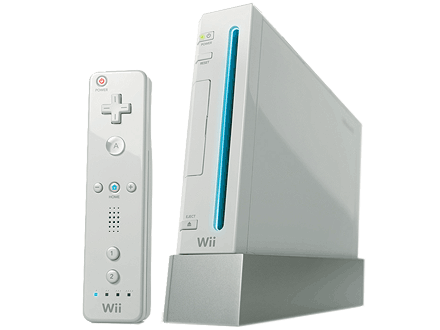
The Nintendo Wii

Can we discuss the Nintendo Wii for a second? It's an amazing console. No doubt everyone on planet earth knows what the Wii is, but I wonder how many "serious" gamers have realized the true potential in this console.

I bring my Nintendo Wii, as opposed to my Gamecube, Xbox 360, or WiiU, with me to college each semester; it is so clearly my best option for many reasons, and after having spent the last couple of years playing the Wii to death, I can honestly admit that I would seriously recommend this console to any gamer looking for something different or new to play.

It could be that even after all of these years, you still have a Nintendo Wii tucked away in your attic or basement, gone untouched for the better half of the last 10 years. The Wii fell off from about 2008 - 2012, and considering that console generations only last for about 7 years, it's safe to say that the Wii suffered from a somewhat pre-mature death. Or at least that's what you may think.

First off, I'm going to take a moment to declare that there are so many more great games on the Wii then one might think. You have your Mario Galaxy, Legend of Zelda Twilight Princess, Metroid Prime 3, Guitar Hero 3, and Smash Bros. Brawl released within the first couple of years of the Wii's life, then everyone else knows about Mario Galaxy 2, Sonic Colors, and Legend of Zelda Skyward Sword, but I'm here as always to talk about lesser-known games, and let me say, these following titles are legitimately not only a few of my favorite games on the Wii, but a few of my favorite games of all time:

Kirby's Return to Dreamland

Fragile Dreams: Farewell Ruins of the Moon

Excitebots

Sin and Punishment Star Successor

Pandora's Tower

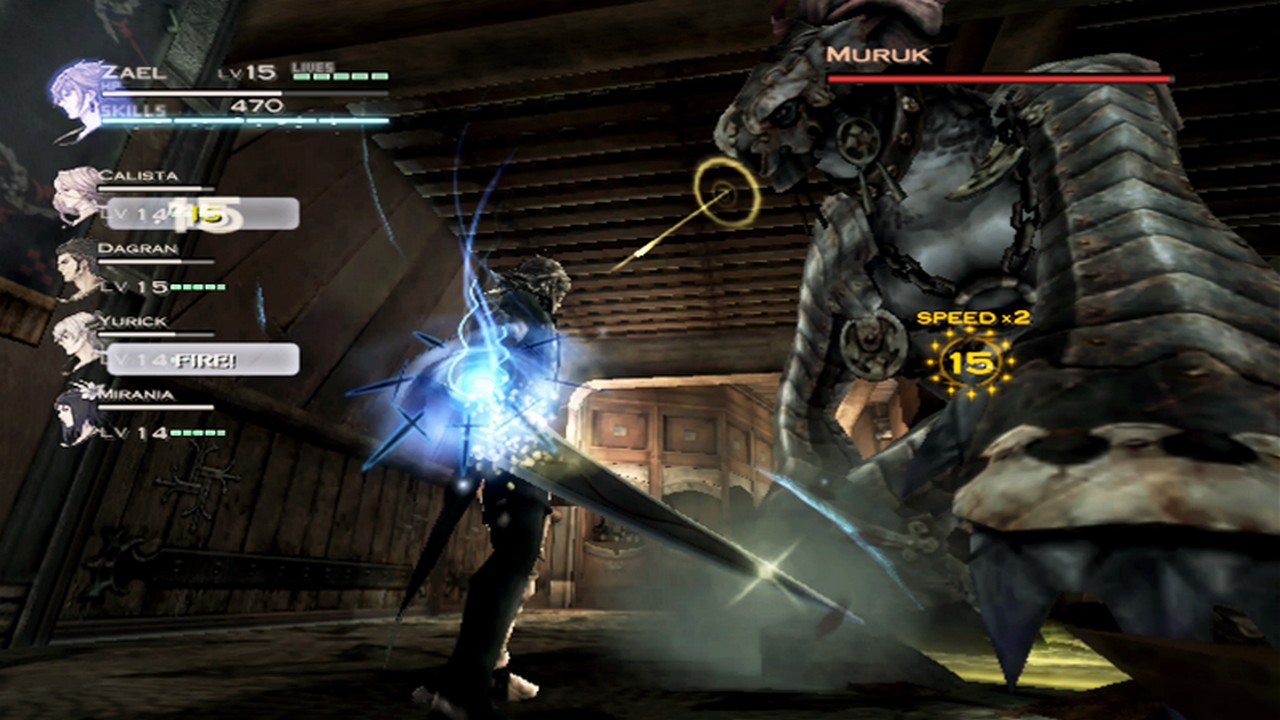
The Last Story

Six masterfully crafted, must-have games if you own a Wii. All six are unlike anything I had ever played prior, and each are games unlike anything else offered on the 360 or PS3 during the same generation; I'm not saying these games are better than anything on the other consoles, but they hold up by today's standards and offer an inspired and wonderful gaming experience that has yet to be recreated by any other game I've played.

Right off the bat, six games to buy if you still have your Wii hanging around collecting dust BUT catching up on missed games is not exactly where the Wii earns it's $60 grey-market value.
The real hidden feature on the Wii that makes missing it a critical error in my eyes is the Wii's Virtual Console.

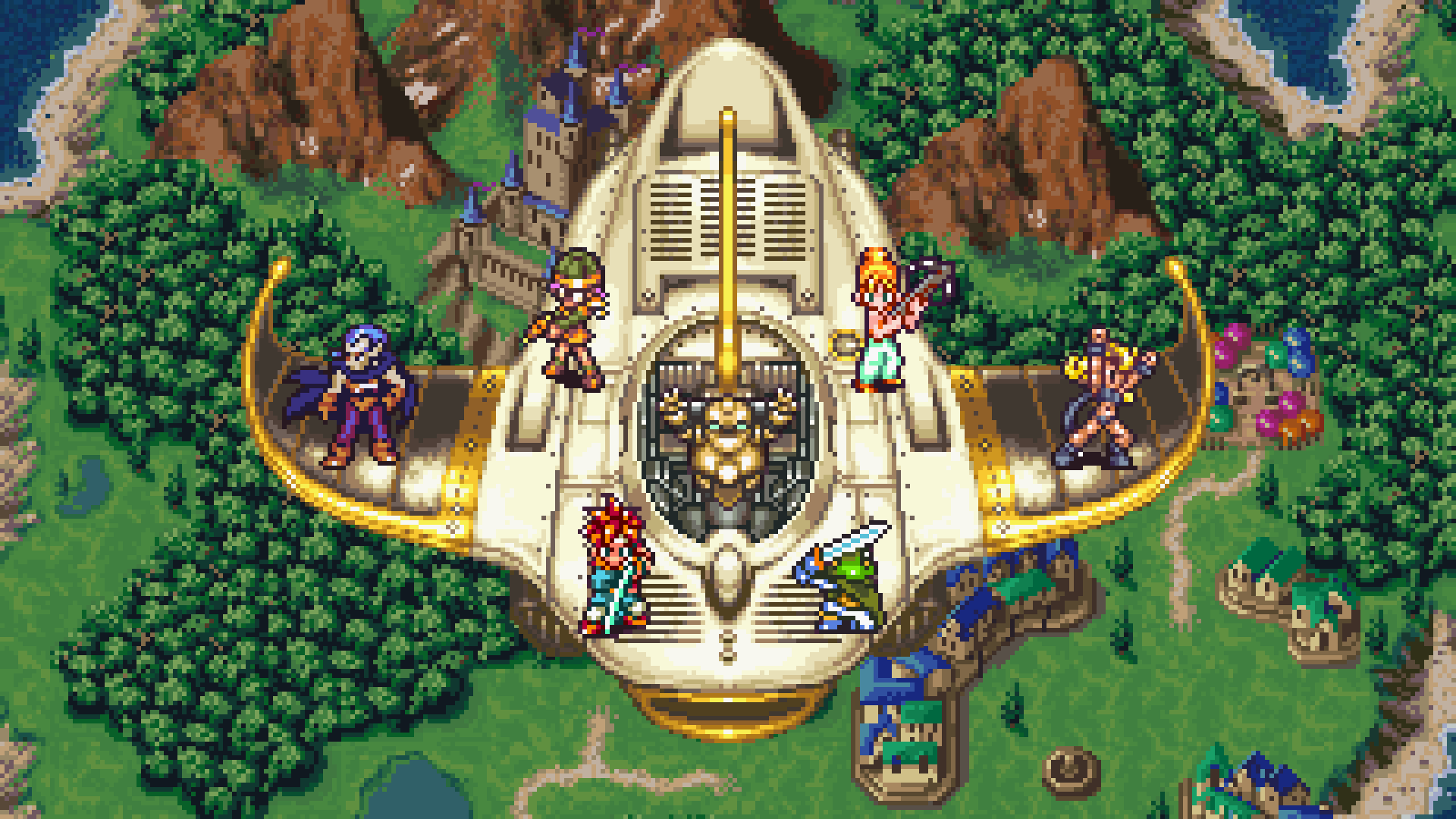
The Virtual Console is a free service offered by Nintendo with which one can use their Wii to download retro games for an extremely low price. I'm not talking only Super Mario Bros. to The Legend of Zelda, I'm talking everything from Mario Bros. to Golden Axe, to Megaman 2, then Legend of Zelda A Link to the Past, to Super Metroid, to Super Castlevania IV, to Secret of Mana, to Mega Man X, to Chrono Trigger on the SNES. After that, you've every must-play on the Nintendo 64.

92 titles from the NES - all $5
63 titles from the SNES - all $8
21 titles from the N64 - all $10
73 titles from the Sega Genesis - all $8
59 titles from TurboGrafx 16 - all $6
54 titles from NeoGeo - all $9
15 titles from the Sega Master System - all $5
and then hundreds of games released for download-only such as Sonic the Hedgehog 4 and Megaman 10

What must be understood about the Virtual Console is that it gives players easy access to the games for which collectors will easily pay $80+ dollars. Take Chrono Trigger for the SNES: Chrono Trigger is considered to be one of the greatest RPGs of all-time. Grey Market Price: ~$90. Virtual Console Price: $8.

Of course, collectors collecting for their retro consoles will never be interested in a digital copy of a game as opposed to a cartridge, but this service is perfect for gamers like me since I'm willing to sacrifice a cartridge if I get to save $82 in return- I'll just use the saved money to fill my car up so I can drive to all of the cool parties I get invited to...

THEN, you have 100% backwards compatibility with the Nintendo Gamecube, provided you got your Wii before 2011, back when all of the cool kids got theirs. No need to discuss how awesome backwards compatibility is, provided you've read literally anything else on this blog (I am quite fond of the Gamecube, if you haven't noticed). What is also noteworthy is the fact that while component cables that upscale video quality from 480i to 480p are impossible to find for the Gamecube, they can be found easily for the Wii. So if you've ever wanted improved video quality for your Gamecube games, get a Wii.

With the Wii (about $50 on eBay at time of writing), you gain access to easily 20 amazing games as well as the rest of the Wii's admittedly mediocre library, all of the Gamecube's library, most of the library of the NES, SNES, and Sega Genesis, a bunch of N64 titles, Netflix, Youtube, and Project M. It's an old console with very few hidden gems, and even a handful of it's first party titles are garbage, but this console has immeasurable value to gamers who, like me, may be looking to update their knowledge of retro games without making their wallets cry or are trying to get through the summer's gaming drought with some great original Wii games that hold up without question.

Tuesday, December 2, 2014

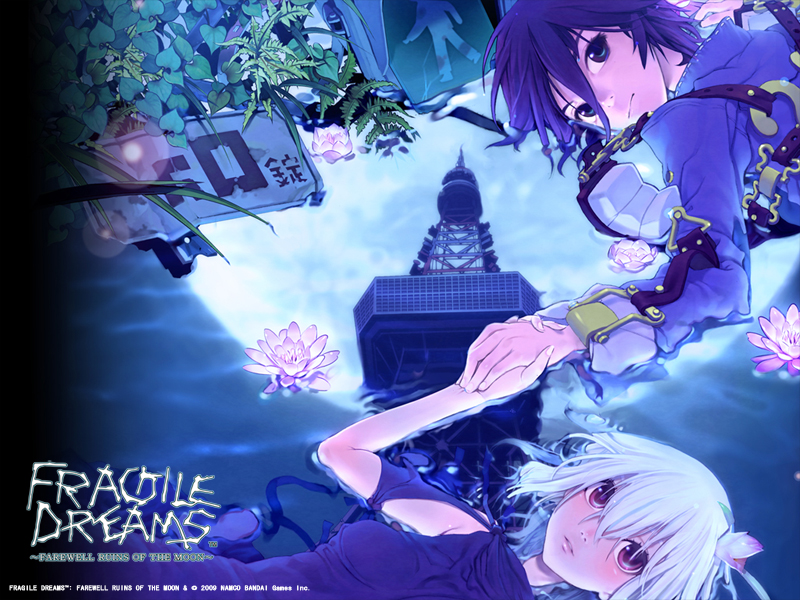
Fragile Dreams: Farewell Ruins of the Moon

Apparently, some kind of undocumented planetary alignment is upon us, because lately I have played some video gameS that I actually rather loved. Yes, after a string of games that I decided (or decided for you) were sub par came and went, I stumbled upon a few older titles for the Nintendo Wii that I quite enjoyed. Today's game is my favorite kind of hidden gem as it is a game completely forsaken by the internet, and it allowed me to prove once again to myself that I, James, am the only person I can trust to be right about anything. So without further narcissism, I give thee Fragile Dreams: Farewell Ruins of the Moon.

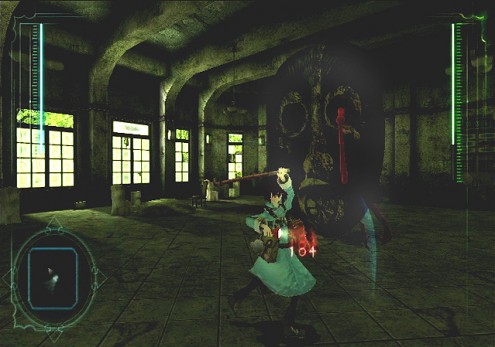
Fragile Dreams: Farewell Ruins of the Moon - Nintendo Wii
     First off, has anybody ever fucking heard of this game? I sure as hell hadn't before I found it featured in this youtube video https://www.youtube.com/watch?v=zhl6Tn3Kf1c. Fragile Dreams is a...game. You see, I found Fragile Dreams to be a game containing elements from most genres of video games albeit with an extremely ambiguous core around which each element orbited. At its heart, I suppose it is an exploration game, but it was linear, which means you didn't really explore anything more than what was in front of you. There was combat, but no more than what was necessary. Fragile Dreams was entirely story driven in such a way that I actually referred to it as a "drama game" for about an hour and a half before remembering that I am an aspiring critic and I have to be careful about using my knowledge in such fields to say stupid garbage like that. Ultimately, Fragile Dreams boils down to a linear exploration experience with elements of survival horror, JRPG, stealth RPG, and action games. It is also very artsy with great graphics and music, and every single thing that is on the disc contributes to the game's carefully designed story driving the entire game.

Good Things
       Fragile Dreams: Farewell Ruins of the Moon was another short game, clocking in at around 11
hours. I like shorter games because the longer a game is, the greater chance it has to become boring or fuck something up. Short games decrease their risk of becoming boring because they seldom overstay their welcome. It's like how the cool guy at the party stays cool because you only see HIM for a little bit before he leaves to have sex with twins or something, as opposed to the women who get to the party an hour before it starts and leave once they sense that everyone has been sick of them for 9 hours, if you'll excuse my misogyny. Fragile Dreams is a great example of a game whose story ends at the same time the original ideas do. 
      Now I guess I should talk about this story for a second, since it's the only reason to play this game. The first thing that happens when you start Fragile Dreams is you get told that the grandfather of Seto, the protagonist, just died. Like, JUST died. You also learn that Seto's grandfather was the only human that Seto has ever seen or known in his life. You then control Seto, wandering around his home for a bit before you find a note left by Seto's grandfather in which he tells Seto to seek this red tower in order to potentially find more "survivors". About two seconds after leaving his home, Seto accidentally startles a girl who upon being startled, falls, and blacks out long enough for Seto to approach her and touch her cheek to make sure she is still breathing (or something). The girl awakens upon being touched, and flees. Seto is then in shock because he has lived something like 14 years and has never seen another human being before. Fascinated by her, Seto spends the rest of the game seeking the girl instead of the red tower, although as you can imagine, the red tower eventually returns. Along the way, Seto meets a number of non-human characters, mostly androids, robots, or ghosts of humans who perished in the disaster that killed mostly everything and the game ends at the red tower with an explanation to and conclusion of the mystery of how the world got to its post-apocalyptic state.
   
Gameplay involves you walking from one location to the next while the story justifies your doing so. Seto wields both a flashlight and weapons to be found laying around. Of course though, this world has been destroyed which means the only things laying around for you to wield are sticks, pipes, and brooms of various varieties. Good news though: swings of your weapon are executed by pressing the A button instead of by swinging the Wii Remote. Weapons can break if the A button is spammed though, so timing your combos properly is essential, and although it seems annoying and arbitrary at first, you come to love it once you accept that you can't do anything to change it. Of course, with broken weapons comes an inventory system, which is the same as that found in Resident Evil 4.
     The flashlight illuminates the dark path that lays before you while also stunning enemies. Flashlight, intuitively, is controlled by pointing the Wii Remote to the location you wish to illuminate. Using different types of flashlights will make hidden messages scrawled on the walls of the subways, hotels, and sewage pipes you navigate appear, and most of them when accompanied by the low piano scores played in the game, are pretty unnerving.
      Killing enemies will increase your max strength in a basic level-up system, and a crawling system is implemented to get past certain enemies or obstacles, making stealth always a conceivable option in case you decide to become curious about what life would be like if you were an enormous pussy.
      Fragile Dreams also makes great use of the Wii technology without using the motion controls. The speaker in the Wii Remote can be used to receive information from other characters by pressing the Wii Remote up to your ear at any point while playing, and creepy laughter of little girls gets pumped through the controller's speaker when ever you're near a hidden enemy.
      Really, you're in this game for the characters. The gameplay is fun, as it is pretty freaky and upsetting sometimes, stimulating an emotional response from me, but the story and fondness for the characters is what will keep you coming back. The story also has great pace; as soon as one character leaves you, another comes to its place almost immediately. Also, the voice acting is stellar.
   
Short-Comings
     Most complaints about Fragile Dreams: Farewell Ruins of the Moon regard the fact that the developers clearly cared more about the story than they did about the gameplay. According to professional reviewing companies, the story, while beautiful, overwhelmingly overpowers the bland gameplay. In response, I offer my opinion that the fight choreography in Toby McGuire's Spider-Man 2 overwhelmingly overpowers the personality of Mary Jane. Some aspects of some games are better off being pushed to the background in order to emphasize the game's strengths. In this case, the game's story shines more than it's gameplay does, so if you have a problem with a strong story being supported by average gameplay, then this game will not blow your mind the way it blew mine.

Conclusion
      Fragile Dreams: Farewell Ruins of the Moon is a game for gamers who like a good story. This is a hardcore game simply because it is a hidden gem, even though it is an easy game. It tells a great 11 hour story, so I recommend this game to anyone who is interested in that. I don't recommend this game as much to people who NEED rich gameplay in order to be engaged, because you won't find it here.