Nintendo Consoles

Nintendo Consoles
Showing posts with label gunman clive. Show all posts

Saturday, January 9, 2016

Yu-Gi-Oh! The Eternal Duelist Soul

The early 2000's was no stranger to trends that would be known to spellbind the hearts and hands of young gamers. The new millennium introduced us nerds to popular and memorable franchises such as Guitar Hero, World of Warcraft, and Call of Duty, but among the games competing to shine the brightest was a more traditional game, a trading-card game, that ruled supreme for half a decade; that card game was Yu-Gi-Oh!

Yu-Gi-Oh! The Eternal Duelist Soul - GBA
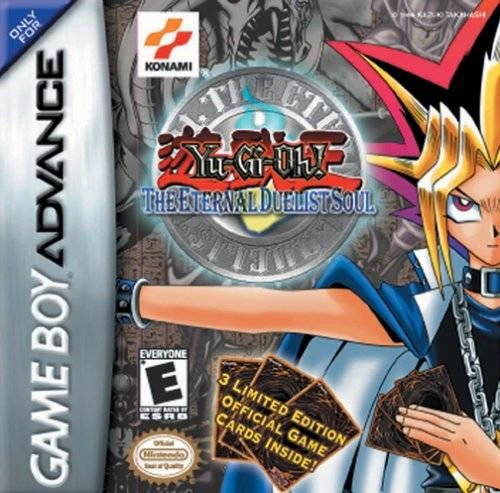
The popular Japanese manga-turned-game-turned-international sensation saw many different video game interpretations, some re-imagining Yu-Gi-Oh! as a turn-based RPG, to an open-world Pokemon-ish game, while other publications stuck to the rules and characters that made the franchise popular in the first place, and few accomplished the later more successfully than Yu-Gi-Oh! The Eternal Duelist Soul. 

Unlike many other entries to its video game career, Yu-Gi-Oh! The Eternal Duelist Soul sticks to the original rules of the traditional card-based game; it's these same rules with which EDS expects players to be preemptively familiar in order to play, as there exist no tutorials in EDS, making it somewhat impenetrable to gamers unfamiliar with Yu-Gi-Oh! That being said, the game initially offers opponents that are fairly easy to defeat, and as a result it may not be too difficult for determined newbies to quickly get the hang of what winds up becoming a fairly challenging game. The experience of Yu-Gi-Oh! video games will always inevitably be different for those who are long-time fans and those who have never played before, but since EDS doesn't allow you to make moves or play cards that don't abide by the rules of the game, it doesn't really take too long for novices to become familiar with what does and doesn't work.
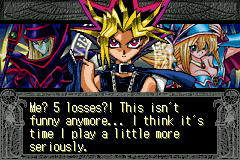
Players begin the only single-player game mode by selecting from 1 of 3 decks to get you started. There is no way of knowing which decks contain which cards, but all 3 are sufficient for getting you through your first few duels once you become familiar with the rules of the game. Initially, you have the option of dueling against 5 faces familiar to even the most casual Yu-Gi-Oh! fan, and additional opponents are unlocked after having defeated each character in each tier a specific number of times. Each collection of characters unlocked serves not only as fun guides through the first 2 seasons of the Yu-Gi-Oh! anime, but becomes increasingly difficult and fun to duel against. After you win any duel against any opponent, you are brought to a screen where you get to choose 1 booster-pack to open. Each booster pack holds cards that are unlocked and available to you after selecting to claim them, though once again the contents of each pack is random until it is opened. Constant acquisition of additional cards that you are encouraged to add to your deck helps to keep things from becoming stale. Abstaining from making changes to your deck may result in frequent loses as the skill of your newest opponents becomes more considerable, so having a consistent influx of new cards is an efficient way to make progress and pacing fluid. 

The goal of the game is to advance to and then win the Yu-Gi-Oh! World Championship. Each duel either won or lost advances the calendar by a single day, and there are a great number of days to get through before the Yu-Gi-Oh! World Championship arrives. Players will spend most of these calendar days dueling against new opponents to unlock more cards and characters. Unfortunately, there is an extremely large number of days between unlocking the final opponent and unlocking the World Championship, and the game slows to a grinding hault during this second half, which abruptly withholds new content. 

Though there are now countless Yu-Gi-Oh! video games out there, I find myself drawn to replay Eternal Duelist Soul every couple of years. The best part about Eternal Duelist Soul is that despite it featuring out-dated cards and strategies, the cards it does feature are the original cards, and your opponents are the original characters from the original cast. Eternal Duelist Soul is to Yu-Gi-Oh! as Red and Blue are to Pokemon. The value in EDS lays in its ability to encourage casual fans to sharpen their knowledge of the basics of the real-life game. Attempting to dive head-first into the world of Yu-Gi-Oh! nowadays can be a tall order, and introducing a new duelist to the latest strategies and combinations can be daunting, but playing these old video games that are more-or-less Yu-Gi-Oh! simulators can be extremely helpful for one trying to begin to play the real-life game. Moreover, EDS and other old Yu-Gi-Oh! games are fun for veteran fans who may have missed out on the opportunity to use old cards and strategies that may have seemed fun at the time but are now out-dated. My Exodia deck is unmatched in this period of Yu-Gi-Oh's history. 
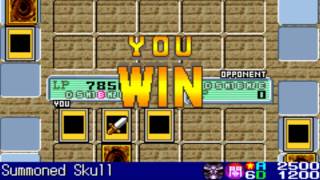
Retrospectively, Yu-Gi-Oh! The Eternal Duelist Soul doesn't offer anything that can't be found in any other Yu-Gi-Oh! game. There are fewer cards, fewer opponents, and fewer strategies to be seen in this classic title, but Eternal Duelist Soul may be valuable to players who wish to get a grasp of what Yu-Gi-Oh! is without throwing themselves into the deep end of a pool filled with unfamiliar monsters and demons (literally). EDS is also still fun for old-time Yu-Gi-Oh! fans who yearn for simpler times of a simpler game. With the exception of some outdated banned-lists and rulings, EDS offers a genuine Yu-Gi-Oh! experience all wrapped up into a handheld video game with an impressive amount of content and replay value limited only by your ability to conceive of new and fun decks and strategies. 

Monday, December 28, 2015

A Retrospective: Guitar Hero

I ventured a bit around Long Island today with a couple of my friends to our favorite video game
stores. One of our destinations was a retro video game shop called Video Game Trading Post, and it is incredible. It is just the tiniest bit out of the way of my usual hangout spots, but they have an extremely impressive quantity of quality games, as well as several walls filled from floor to ceiling with hilarious amounts of rubbish. It was while browsing the towers of garbage games and shovelware did I find a title about whose existence I had either once completely neglected or have since completely forgotten: Guitar Hero 5.

So I bought Guitar Hero 5 for the Playstation 2, but it was also released for the Wii. So there you go- we are still talking about Nintendo consoles if you're willing to use a bit of imagination for this post.

I played Guitar Hero 5 Career Mode for a bit, perhaps for a couple of tiers, then I went over to Quick Play mode and played a set of songs (all of which were unlocked without me finishing the Career Mode), and then I turned it off. Did I have fun? No, not really. But of course, the question is "why"?

Guitar Hero used to be incredible. It took the video game world by storm a good 10 years ago, but it was a fast-fading trend, and even it's attempted "revival" this year wasn't enough to rekindle interest in the rhythm-based franchise. The reason it stopped being fun is actually pretty obvious, especially for someone who has been with Guitar Hero since the near-beginning, but before we can answer that question, we first must identify exactly when Guitar Hero stopped being fun, look at the game that began the decline of Guitar Hero, and identify just how it influenced the future of the series' installments.


So here we go:
The game that began to ruin the Guitar Hero franchise was Guitar Hero 3.

Despite the currently (or once-currently) mass appeal of Guitar Hero 2, Guitar Hero 1 and Rocks the 80's were pretty niche for their time, and not very popular. In fact, Guitar Hero 1 and Rocks the 80's were hardcore games. They were challenging, and felt like the developers approached their creation from a gamer's perspective as opposed to strictly one of a music-lover. The games had solid difficulty curves, didn't insult the players by cheating them out of the experience they expected, and certainly offered gamers something new. Guitar Hero 2 was a sequel the way sequels are supposed to be, featuring proudly its improvements to the original game, hosting not only a larger quantity of songs, but a greater quality of songs when compared to that and those of the original title. Still, the difficulty curve was like that of a traditional video game: beginning easy and ending difficult, with each victory having felt earned, as opposed to grinded out. It is important to note that Guitar Hero 3 DID retain the same feeling, pacing, and tone that appealed primarily to gamers seen from Guitar Hero 1 to Rocks the 80's, but while it was Guitar Hero 2 that made the series popular, it was Guitar Hero 3 that made the series famous, and once you become famous, everything starts to die.

Each iteration of the Guitar Hero series following Guitar Hero 3 felt like games that were created not for art, not for experimentation, not even for the gamer, but exclusively for the studio to get more money. The design elements that made Guitar Hero feel like a traditional video game were completely removed from all Guitar Hero games following GH3. Up until GH3, the Guitar Hero franchise was responsible for delivering to me not only really fun gameplay, appealing to the gamer within me, but really good songs and music, appealing to normal person (deep) within me. There was a balance created by a development studio who knew that Guitar Hero was a video game first, and that gameplay could not be compromised if the title was expected to be fun. Guitar Hero 5's content is weak, man. There are a few good songs, but nothing about the game makes me want to play more. The personality and charm of the cartoonish graphics, awful covers, and sense of humor seen in the first games has given way to that which appeals to the masses: blink-182 songs in the line-up, long hammer-on sections that look difficult but are actually insultingly easy, lifeless venues, GOOD SONGS WITH BORING NOTE CHARTS, no context, no reason to even play the Career Mode since every song is just given to you from the start of the game.

Guitar Hero 5 reminds me of parents who just give their children what they want without asking if what the kid wants is actually good for them. Want more Guitar Hero? There you go: Guitar Hero 5. And yeah, fans who asked for a new Guitar Hero got what they asked for, but how does it feel? Does GH5 feel new, or earned, or valuable, or does it just feel like more of what you already have? Does it feel redundant and insulting, making you realize that while there exists an endless ocean of quality video games spanning 30+ years across multiple generations of artistic and technological experimentation, you've spent another $50 dollars on something you basically already own, albeit an inferior version? Do you feel like a chump who has sold your soul to a company that doesn't care about you unless you have money?

Guitar Hero 1 - 3 felt like an experiment gone wonderfully right; it started a little shaky, definitely strange but certainly suggesting potential. Guitar Hero 2 improved everything that had to be so. Rocks the 80's was essentially a DLC pack, but the songs were fun to play and fun to hear, as well as respectful of a gamer's-type difficulty curve and pacing, and Guitar Hero 3 was the series perfected with the best soundtrack, graphics, and gameplay the series has ever seen. But Guitar Hero 3 was too good. Guitar Hero 3 was the game that made the developers realize that they no longer had to respect their fans because the fans no longer respected themselves. Once it became clear that everyone everywhere was going to buy Guitar Hero no matter what, the developers didn't feel it was necessary for them to try anymore. In other words, once the fans stop putting pressure on the developers to make a better game, developers stop putting pressure on themselves to make a better game, and when that happens, you get Guitar Hero 5: the last few drops of water wrung out from a now-damp towel that once contained viscous, french-vanilla creams of originality, creativity, and video game art supremacy.


Friday, November 6, 2015

Custom Robo

It's been a long time since I last reviewed a hidden gem on the Gamecube. To be honest, it has been a long time since I last started a new Gamecube game. A friend is letting me hold onto a few of his games for a while though, so I figured a few weeks ago was a perfect time to dust off the ol' cube and get back to what brought me here in the first place.

Custom Robo - Nintendo Gamecube

      It's not too often that we see an IP with five entrees slip under the radar to the extent that Custom Robo has. Spanning all the way back to 1999 on the Nintendo 64, the Custom Robo series was initially one that was kept exclusive to Japan, with its first three entrees, Custom Robo, Custom Robo v2, and Custom Robo GX never to see an international release. Eventually, North America got its first taste of the Custom Robo series in the year 2004 on the Nintendo Gamecube. For a retro game, Custom Robo has a pretty considerable price tag, sitting at around $25 on eBay at time of writing, but is Custom Robo still worth a 3-Way or Vertical shot, or has it rusted over time?

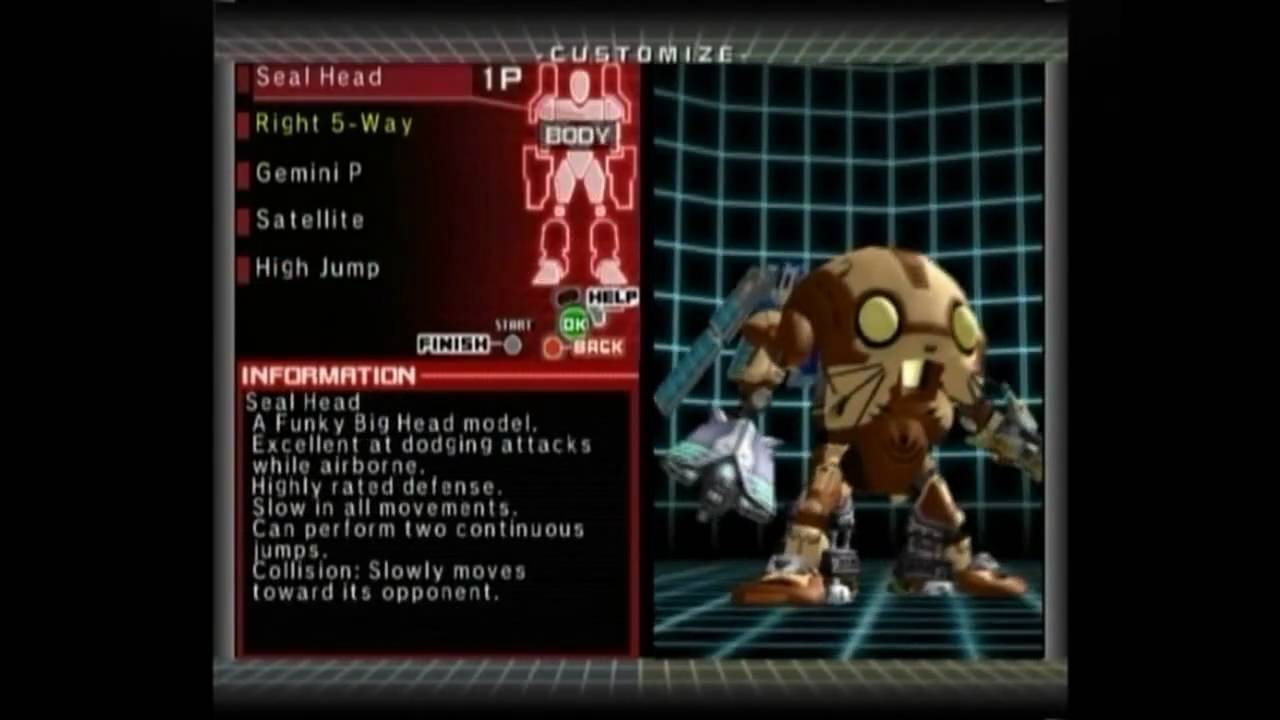
   At its forefront, Custom Robo is an action RPG. Most of the gameplay takes place in 3D battle arenas where either two or four Custom Robos will fight in order to reduce their opponent's health from 1000 to 0. The way to gain the advantage over your opponent is by taking the Robo that you are given in the beginning of the plot and upgrading it using parts you are awarded by completing certain tasks as you progress through the initial 10 hour campaign. Things start off pretty simple while you have few parts to select or swap-out, but quickly become much more interesting as you are awarded many different parts frequently. Each Custom Robo is made up of a combination of 5 parts: gun, bomb, pod, legs, and model. Most of the parts are so vastly different from each other that even the most subtle changes to your build can produce drastically different results in the battle arena. I experimented with a few different builds to find one that fit my playing style, and in the process played briefly with a Custom Robo that did heavy damage and jumped really high but lacked mobility and was armed with a 3-Way shooting gun and heat seeking missiles, and another Robo that was extremely agile and powerful while in the air but lacked fire power on the ground, equipped with triple-pods designed to meander around the battle field, before I finally built the perfect Robo for me: a Robo with the ability to warp while in the air, armed with a gun that shoots both forward and up, pods that could be fired three at a time, and bombs that cleared walls.

   
  Being able to quickly master the layout of each arena is another noteworthy albeit much less important skill to have when fighting. According to the lore, each battle arena is generated by natural abilities had by each Custom Robo master, and whenever you fight a new opponent, you play in their arena. Each arena stays roughly the same size, and the differences between each one can be a bit underwhelming, but the diversity in color scheme and music, as well as noticing how the layout of each arena reflects the personality of the character generating it makes what could have been an afterthought on behalf of the developers one of the most charming aspects of the game.

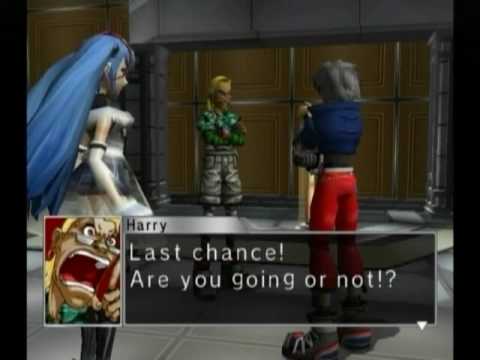
    The story is much less intricate than the building and fighting of Custom Robos, though it is not without its plot-twists, fun characters, and genuinely humorous dialogue. After selecting the name of your character, you wake up in your home and are immediately encouraged by your land-lady to pursue a job as a mercenary working for an organization called the Steel Hearts. You get the job after proving your natural talents with a Custom Robo by fighting off enemies from a rival gang called Z Syndicate who failed in an attempt to rob a nearby laboratory of a rare Custom Robo model. Without wishing to give anything more than the first 5 minutes of the game away, you eventually learn what/who it was that the Z Syndicate is after, as well as who runs the Z Syndicate. Overall, the story, while cute and necessary in order for some of the hilarious dialogue to hold meaning, does little more than serve the gameplay.

 
  After all of that, there is a second story mode that is unlocked after completing the first. The second story mode throws you and your fellow Steel Heart members into a tournament meant to have the citizens of the town regain the trust of the police after it was lost as a result of the events in story number 1. While I found the entirety of the first story to be extremely easy albeit fun, the second story provides a much greater challenge. As opposed to the fights in the first story won by selecting the same build and using the same strategies every round, I found myself having to use different parts and tactics in order to account for the game's increased difficulty level. In story number 1, I felt discouraged from using different parts after I found a build that worked perfectly for me, but the increased difficulty provided by the second story was exactly what I needed in order to explore the game's depths to further extent, and I wasn't disappointed.

     At the end of it all, the gameplay is divided into two parts: 1 where you walk your character to which ever location on the map triggers the next plot point, and 1 where you actually fight. Throughout all of Custom Robo, there are no puzzles, no exploring, and no level-up system besides the acquisition of new parts. While the fighting is addicting, I did become concerned that the lack of variety in gameplay would result in the game feeling samey. However, since the game is so short, with my completing of the first story taking a shade under 10 hours, it ends before you get tired, and while I will always appreciate a game for not over-staying it's welcome, it would have been nice to see more variety.

    Custom Robo is uncompromising in its gameplay; it is an action RPG about building robots and using them to fight other robots. Its arcade-like and campy tone is refreshing and has aged well. Despite some gameplay repetition and a generally weak story, Custom Robo offers an impressive level of depth when it comes to selecting your build, and features an addicting battle system that will be sure to keep you coming back even after your last opponent has fallen.


Monday, December 1, 2014

Gunman Clive

My experience with Gunman Clive started as one of those rare times when I actually purchase a game on a friend's recommendation. Shout out to my friend Andrew for suggesting this one to me. The game's price of $2 on the Nintendo 3DS E-shop was also a large contributor of why I went ahead and bought it. Turns out it was worth all 200 pennies, because Gunman Clive is actually pretty damn great, so let's talk about it.

Gunman Clive - Nintendo 3DS

Intro / Summary
     Gunman Clive is a side-scrolling shooter platformer that combines the best platforming elements from Rayman Origins with the best shooting elements from Mega Man II. You move from the left side of the screen to the right side of the screen shooting anything that is A) alive, and B) isn't you. Complete each level by jumping on platforms, climbing ladders and trying not to die as much as you are totally going to die. There are 20 levels each taking about 75 seconds to complete if you don't die, and something around 3 minutes each if you die as often as I did. All together I beat the game in about 65 minutes on a long car ride my band and I took from Long Island to Washington D.C. last week, and I did continue to play it on a harder difficulty once the game was beaten which believe it or not is something I don't normally do. The fact that I took the time to replay this game immediately after having beaten it means the game was either too short, or the game was really fun to play; I am going with the latter on the grounds that I feel a game can really only be too short if you paid $20+ for it, and beat it in 65 minutes- Once again, this game cost me $2, so I consider myself to have gotten exactly what I paid for, and I was pretty down with it.

Good Things: Also the title of a great Reel Big Fish song
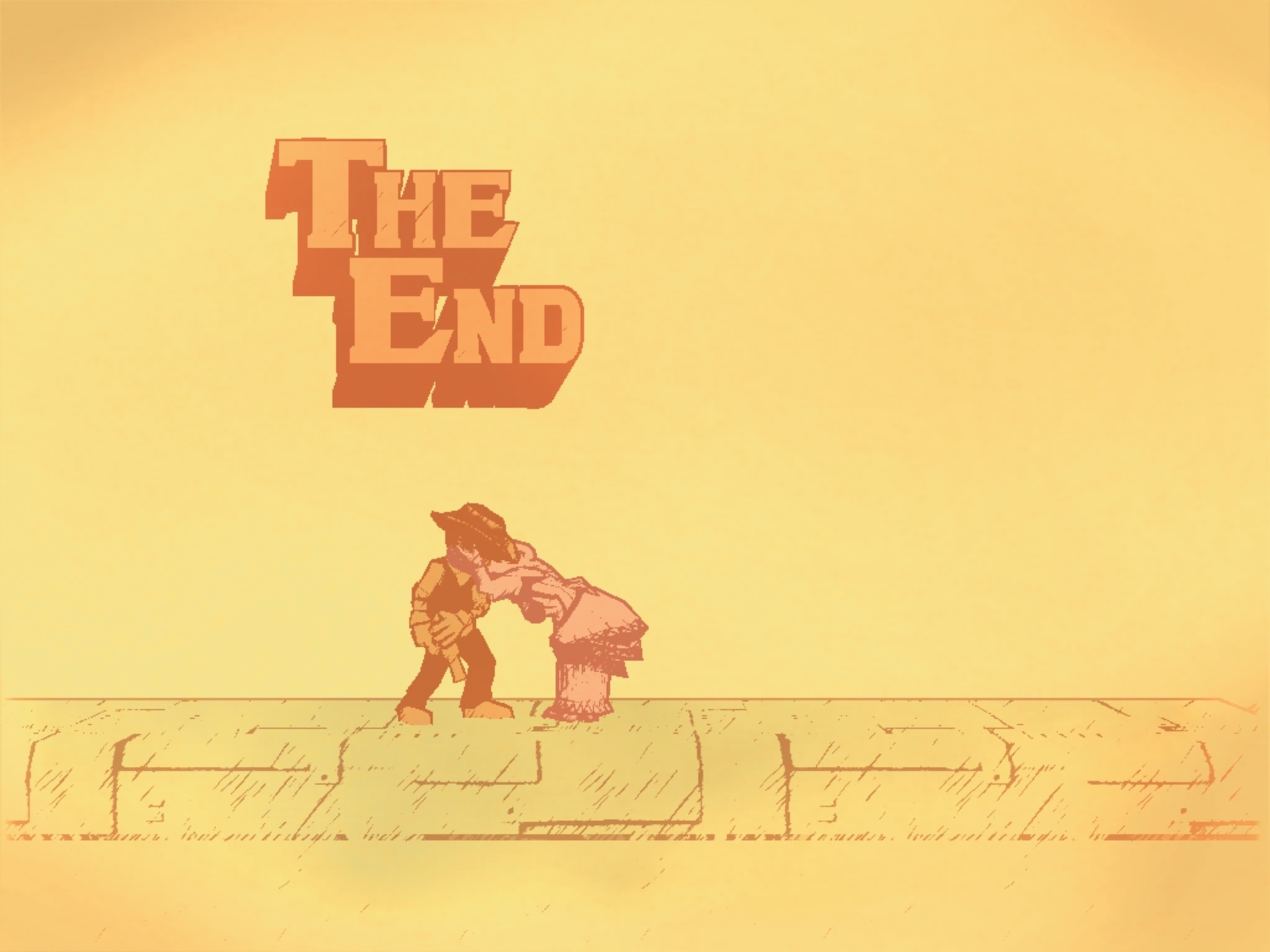
     One of the first things to be noticed about Gunman Clive is the visual style and the musical score; both are beautiful. The game employs a visual effect that makes it appear to have been hand-drawn frame by frame, complimenting the game's ol' western style. Gunman Clive looks like the music video for A-ha's Take On Me meets an old western film. Swag-tastic.
    Gunman Clive prizes itself on the classic easy-to-play, hard-to-master technique. All you are able to do in the game is jump, walk, and shoot, but the level design is so clever that even these old-school moves won't get boring before you finish the game. The game is pretty tough, being at about "diamond" on a hard-scale from Vanilla pudding to Dwayne "the rock" Johnson, but it is never frustrating because of a combination of different video game staples being removed from Gunman Clive. First, there are no lives in the game, which means no Game Overs. Live are outdated and dumb for reasons that have been discussed infinitely by gamers who aren't me, so if you need an explanation on that, go somewhere else and come back. No lives in Gunman Clive. Without any lives, checkpoints aren't really necessary either, because the threat of being thrown back to the start of a 55 second level in which dying has no penalty really isn't that scary, so those are removed as well, which would only be frustrating if the levels were long, but they are not. The game presents a challenge intense enough to make sure that it won't be completed in 20 minutes, but it is not so unfair that it frustrates the player. I believe "sweet-spot" is the proper term here, but I've always found that term to be suggestive (made worse by the pink-colored text), much like how utilization of the word "moist" suddenly begins to make me feel sticky out o....sorry, lost my train of thought there. Difficulty curve is just right.


The game has a very modest length. Games these days (or at least the ones I have been playing) have the most aggravating tendency to last about 6 hours longer than the amount of time for which I care to play them. I always think it is rather cocky of a game to assume that I will refuse to quit playing if it gets boring just because I'm already 10 hours in and I might as well finish it. Well, those games are fucking wrong, and they're the games out of which I take the most pleasure in ripping apart. Gunman Clive, like I said, is only about an hour long if you only play through it once. Honestly, the fact that this game is so good, while being so short makes me fear that the developers lost confidence during development and in the voice of an insecure 13 year old mumbled at some point "aw shucks, no one is gonna wanna play this game!", so they made the game an hour long assuming that no one would ever want to play it for more than an hour any way. Now don't get me wrong, I am glad that the game was only an hour long because it means I have more time to play other games, but honestly, this may be the first time ever where I wish a game was longer, but perhaps only by or hour or so. Also, you can play as a duck after beating the game once. This mode is called "Duck Mode" and it makes me giggle.

Short-Comings: "Homecoming" is a great Green Day song that sounds similar to "Short-Comings".
          Hmm...the game is short...but like...that is a good thing when playing simple games...I mean, Pac-Man is a great game, but does anyone want to play that for more than 20 minutes? I got nothing for short-comings. Gunman Clive is a great game, and it is so short that it ends before fucking anything up. So I am going to use this space to quote something profound I read on Kotaku: "The longer a game is, the more it has to justify its length." OR a different quote by Ben Yahtzee Croshaw of Zero Puntuation: "Madworld is a 6-8 hour game with enough unique ideas to fill a 3 hour game." I isolate these points because they have to do with length, which is a HUGE fucking problem with games nowadays. To all game developers everywhere: If you only have enough good ideas to keep me entertained for 5 hours, then your game should be 5 hours long. BAM. That's all folks. Gunman Clive has enough unique ideas to keep me REALLY satisfied (another sticky phrase) for 1 hour, and so the game is 1 hour long. And for that, Gunman Clive, you get my virtual glad-hand.

                                                                                                 Conclusion:
This game is $2 and is one of the best games I have played in a long time. You can beat it in a single lunch break and get right back to playing Super Smash Bros. afterwards, so just do it. I'm serious. I know I am just a computer, but seriously, buy this game and play it. Recommended to everyone.