Nintendo Consoles

Nintendo Consoles
Showing posts with label Legend of Zelda. Show all posts

Tuesday, March 15, 2016

Paper Boy

Although the trend has spent the last couple of years fading, waiting to be replaced by which ever big idea comes next, the endless runner genre of games dominated the mobile gaming market for quite some time. We first saw Temple Run in the year 2011, which then had to make room and share market space with spin-offs and copycats such as Subway Surfers, and Sonic Dash, but this genre is actually quite a bit older than many of those aforementioned games. Let's take a look at a retro endless runner.

Paper Boy - Arcade/ NES/ others 

Paper Boy is an endless runner made before endless runners were even around. Originally published by Atari for the arcades, it was later ported to many home consoles and P.C.s, including the NES in 1985. Paper Boy is an action game/ endless runner where you play as a boy throwing newspapers to white houses from his bicycle while dodging an array of hilarious obstacles taking the form of anything from an oncoming car, to break-dancers, to the Grim Reaper. It's often not considered to be among the best or most memorable NES games of the time, but it certainly is good for a laugh if not a few hours of cursing out tornadoes bent on ruining this newspaper company's delivery service. 

The paper boy, on his bicycle, is forced forward by default, leaving the player to influence his acceleration, steering, and of course throwing of newspapers. Completing the first level (called Monday) can be a fair challenge to those more accustomed to modern endless runners, but losing a life is usually so funny that one may not mind the initial struggle. If one keeps at it, allowing the humorous obstacles to ease the pain of constant death, then they more than likely may find themselves enjoying Paper Boy, despite its initial difficulty. 

Gameplay employs a pretty simple concept featuring only two rules: throw the newspapers onto the front lawns or into the mailboxes of the white houses, and don't die. Obstacles are added gradually throughout the course of the levels (each of which named after a day of the week), easing you into the experience and giving you a taste of how exciting it is to successfully launch a newspaper from the street or side walk into a mailbox, while simultaneously giving you a taste of the black asphalt beneath your tires as you ride through what has to be the world's most dangerous and unfortunate, possibly cursed, neighborhood. 

In the end, Paper Boy is a short experience with a long legacy. As one of the original endless runners, young gamers today may have no choice but to appreciate that which Paper Boy contributed to a genre that wouldn't be fully realized for another 20 years. All you guys in high school whom I watched kill time during English class by playing Temple Run 2, you may have Paper Boy to thank for your shameful course grades. 


Monday, December 21, 2015

Metroid Zero Mission

Metroid Zero Mission -
Gameboy Advance 

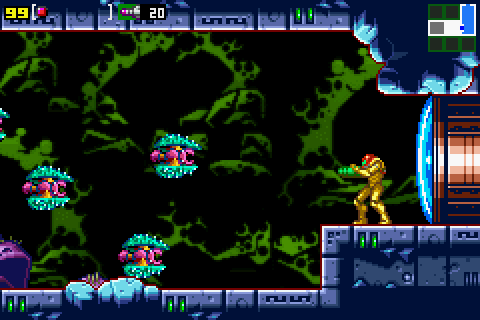
In the year 2004, two years after the series' debut on the Gameboy Advance with Metroid Fusion, we received a game that would not only be the second Metroid title on the Gameboy Advance, but many gamer's second chance to experience the Metroid series in its original capacity. While Metroid Zero Mission is technically a remake of the original Metroid released on the NES in 1986, it certainly has no problem justifying its own existence. Updated graphics along with the original Metroid in-full now being literally in the palms of your hands are nice touches, but careful consideration must be made when reviewing this retouched game; does the original Metroid still hold up even with meticulous updating, or is this one classic better left back in the 80's?

The story, as is the case with many Metroid games, is easy to understand. Our protagonist, Samus, is sent to Planet Zebes in order to annihilate the mechanism being used by opposing space pirates to build super weapons. With the exception of a few cutscenes added in order to update the feel of the original (at that point) 18 year old game, Metroid Zero Mission pretty much leaves you to explore on your own. Those who have never played a Metroid game before should have no problem entering the series via Zero Mission, as multiple difficulty levels are available to select right from the start, and even on Normal difficulty, the game isn't too challenging.

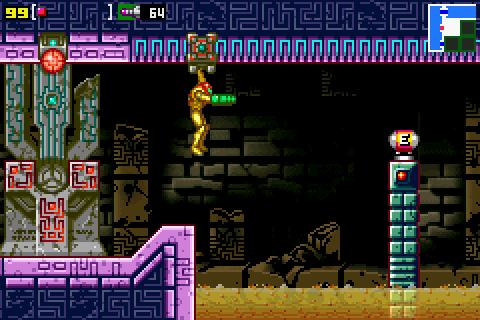
The difficulty usually associated with the Metroid series stems from the player lacking the intuition necessary in order to figure out where in each of the game's 7 (later, 8) worlds they must explore next. Navigating each room in each environment is simple enough, and the map, upgrades, and new abilities come with the exploration, along with the opportunity to uncover secret passages that more often than not will lead the way to the next area or even to supplementary power-ups such as an increase in missile-storage capacity, or health buffs. Updated graphics borrowing assets and art design from Metroid Fusion are extremely successful in bringing life to the once aging world of Planet Zebes. Hardware limitations of the Gameboy Advance seemed to be no hindrance at all while designing Metroid Zero Mission; from start to finish, Planet Zebes is an absolute pleasure to explore.

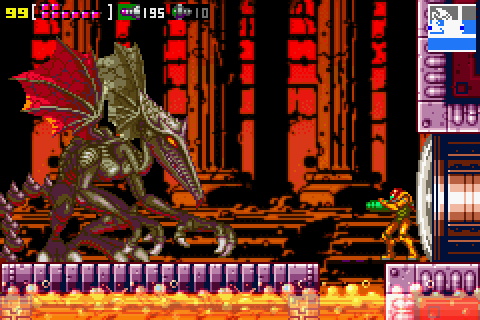
Often if a game is too easy, it can become boring. Then again, if a game is too challenging, it can become discouraging. Despite Metroid Zero Mission being a little bit on the easy, and while I'm at it, short side, it does not lack any bit of the magic that gamers have come to expect from other Metroid games. Initially, the map sizes of many of Zero Mission's environments, such as Norfair or Ridley, can feel intimidatingly ambitious. While "intimidating" can often mean "discouraging", as it does in many other games, Zero Mission finds a way around this through building up the confidence of the player by building up the strength of Samus. Small power-ups, such as the Charge Shot, Missiles, Super Missiles, and Morph Ball just to name a few, are awarded frequently, and the types of power-ups obtained are never too similar to the power-up most recently acquired. Missiles and Super Missiles are acquired at opposite ends of the game, as are Morph Ball and Power Bomb, as well as many other similar upgrades. This rapid change in arsenal often supports rapid changes in scenery; if you've just acquired a new weapon, you can expect a new type of area, thus a new type of gameplay.

Unlike most modern Metroid games, Metroid Zero Mission only features 3 boss fights, which is 1 more than the original featured. While Zero Mission does involve a great deal of combat, from blasting small nuisances of enemies to bringing down both Kraid and Ridley, the environments prove themselves to be much more threatening than any monster, especially in the later 20% of the game. Often, the way forward will be shown on the map, but left purposely unclear in the world. Using every weapon to try to blast through every wall in the hopes of revealing a hidden path is a habit that all players of Zero Mission will get into, and even still, will often finish the game far from 100% completion.

Though an average playtime of Zero Mission will probably only last around 3-4 hours, there is plenty of content to be enjoyed after the initial play-through is completed. Finishing the game once will not only unlock Hard mode, but will unlock the original Metroid game which can be played by selecting it in the Options menu. Inputting a certain sequence of buttons on the Options menu of a game file after having completed Normal mode will also unlock Time Attack mode, which will time how quickly you can complete 1 play-through on Normal difficulty.

Metroid Zero Mission is short, being only a little bit longer than the original because of an extra chapter exclusive to this version, and it can be easy if played on Normal or Easy difficulty, especially if this isn't your first Metroid game. Despite this, Metroid Zero Mission is excellent. Everything from the graphics to the tone to the pacing is absolutely wonderful, and the life exuding from Planet Zebes' environments serves as a praise-worthy example of how hardware limitations can be over-come through clever art and carefully considered level-design. Whether you originally played Metroid back in 1986, or have never considered playing Metroid before, Metroid Zero Mission is not only a perfect example of what this series has to offer, but a perfect example of how fun timeless game design can be.

Thursday, November 12, 2015

Nintendo Direct 11/12/15

Earlier this evening, Nintendo streamed the first Nintendo Direct presentation we have seen since the passing of former Nintendo of Japan President Satoru Iwata. The following is everything discussed during said presentation in order, along with some brief thoughts:

The Legend of Zelda Twilight Princess HD Remake coming to WiiU -
Twilight Princess is my favorite LoZ game, so I am excited to know that many gamers will be picking it up to play again. That being said, the footage of the game showed during the Nintendo Direct looked underwhelming. I had a very hard time identifying the differences between the original version and the HD footage, not to mention the fact that those near 10 year old models haven't aged as well as they did in Wind Waker. It'll be fine, since it's Zelda, but we'll have to see about this one. 

Zelda WiiU- 
Literally all they said was that it was still happening.

New Pokemon Mystery Dungeon for the 3DS- 
Take it or leave it. I left it. 

New Splatoon stages/weapons/gear/etc.- 
Indifferent. The game is amazing with or without new additions, so either way is fine by me.

Super Mario Maker App-
Apparently, a new PC and mobile devices app is going to be released in order to introduce a more efficient way of searching for user-made stages worth playing in Super Mario Maker. lol

Animal Crossing Amiibo Festival-
Take it or leave it. I bloody left it. They also mentioned a couple of Animal Crossing Amiibo, but I feel like that craze has passed.

Mario Tennis Ultra Smash-
Release date- Nov 20. Demonstrated a few of the new moves in the game. If you're into it, you should be pleased; if not, skip.

Xenoblade Chronicles X- 
Xenoblade Chronicles X
Release date: Dec 3. Kind of just reminded us that it was coming out...again. It looks really good, but nothing new to report.

Nintendo Badges- 
God, I can't even remember. I think it is a free-to-start 3DS game that contributes to an ability to unlock new themes for the 3DS Home Screen. 

Pokemon Picross- 
Another Pokemon-themed puzzle game for the 3DS. Pokemon shuffle is really good, but I don't need another Pokepuzzle game, personally.

Steamworld Heist-
A tactical 2D strategy game. It kind of looks like a 2D Codename S.T.E.A.M. It looks pretty good to me. I'll keep my eye on it.

Fast Racing Neo-
Didn't look as good as what I would want a new F-Zero game to be, but I'll keep my eye on it.

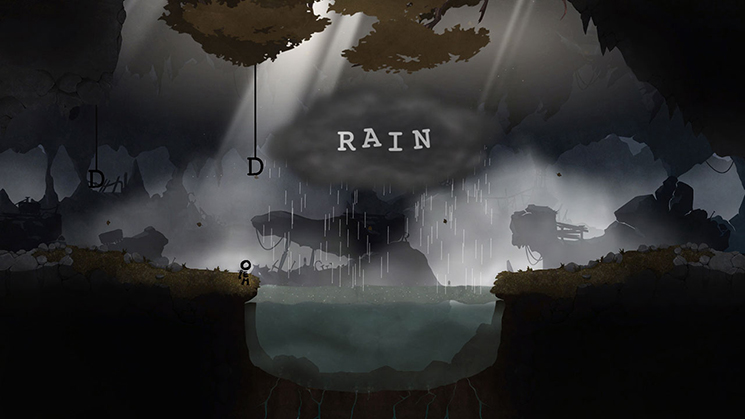
Typoman-
Apparently, the WiiU gamepad makes Typoman
 noteworthy and intuitive
Puzzle platformer that uses the manipulation of letters in words to affect what that word does in the game. It looks artsy and unique; I'll be sure to keep my eye on this as well, especially since I can sense that it will be inexpensive upon release.

Pokken Tournament- 
Nothing really new to report, but it looks really fun. I'll probably get it soon after it launches.

Star Fox Zero-
Release date- Apr 22. Doesn't look any better or worse than it has been looking in past trailers. I'm curious about how this game will do.

Mario and Luigi / Paper Mario crossover game- 
Looks to be a combination of Paper Mario and the Mario & Luigi games. It's not hard to imagine since the games feature almost identical gameplay.

Final Fantasy Explorers- 
Release date- Jan 26. Looks alright. First FF game on the 3DS. Should be worth keeping an eye on.

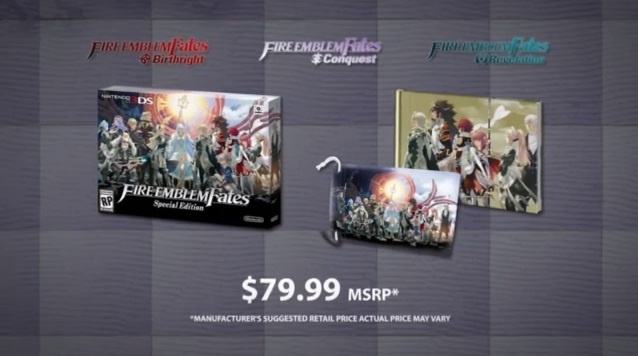
FE Fates Bundle includes all 3 games, 3DS
 drawstring pouch, and an artbook for $80
Fire Emblem Fates: Birthright/ Conquest/ Revelation-  
Release date: Feb 19th. Looks really good. Dunno how I feel about the story being spread across multiple games, but an $80 bundle for all 3 titles is being released, and tbh, that's not the worst deal.

Pokemon Red, Blue, Yellow on 3DS eshop- 
Release date- Feb 27th. Can't find anything to complain about here, unless you already own the games. At least having them on the 3DS will relieve you of the stress of having that old internal battery wear out on you. I'm curious to see how much they will cost.

Hyrule Warrior Legends-
Release date- March 25. Take it or leave it. Didn't look too bad to me, but redundant if you've played the Wii U version

Dragon Question VII- 
If you're into DQ, I don't see why you wouldn't be happy.

Cloud Strife in Super Smash Bros.- 
I'm stoked. No release date, but an awesome choice. 
http://www.ign.com/articles/2015/11/12/final-fantasy-7s-cloud-coming-to-super-smash-bros-wii-u-3ds Check it out here. 

All in all, there should be something here for everyone. I'm excited, but more importantly, I'm pleased. 

Friday, November 6, 2015

Custom Robo

It's been a long time since I last reviewed a hidden gem on the Gamecube. To be honest, it has been a long time since I last started a new Gamecube game. A friend is letting me hold onto a few of his games for a while though, so I figured a few weeks ago was a perfect time to dust off the ol' cube and get back to what brought me here in the first place.

Custom Robo - Nintendo Gamecube

      It's not too often that we see an IP with five entrees slip under the radar to the extent that Custom Robo has. Spanning all the way back to 1999 on the Nintendo 64, the Custom Robo series was initially one that was kept exclusive to Japan, with its first three entrees, Custom Robo, Custom Robo v2, and Custom Robo GX never to see an international release. Eventually, North America got its first taste of the Custom Robo series in the year 2004 on the Nintendo Gamecube. For a retro game, Custom Robo has a pretty considerable price tag, sitting at around $25 on eBay at time of writing, but is Custom Robo still worth a 3-Way or Vertical shot, or has it rusted over time?

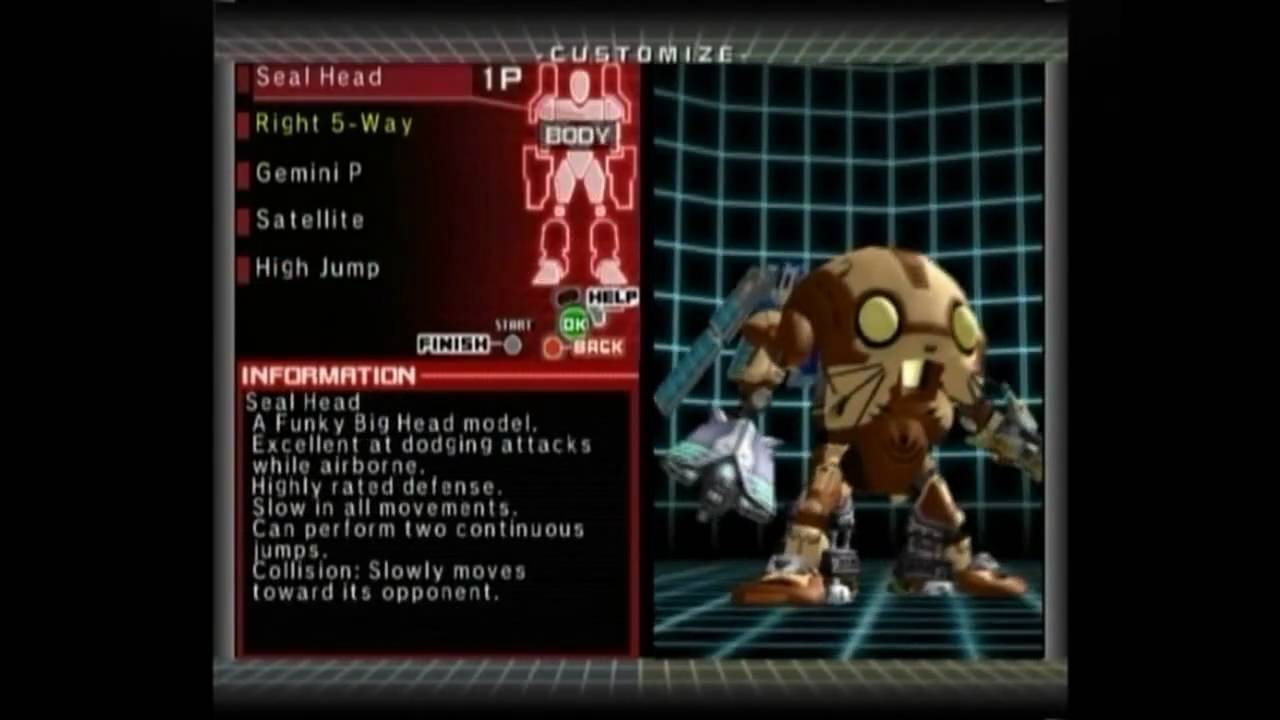
   At its forefront, Custom Robo is an action RPG. Most of the gameplay takes place in 3D battle arenas where either two or four Custom Robos will fight in order to reduce their opponent's health from 1000 to 0. The way to gain the advantage over your opponent is by taking the Robo that you are given in the beginning of the plot and upgrading it using parts you are awarded by completing certain tasks as you progress through the initial 10 hour campaign. Things start off pretty simple while you have few parts to select or swap-out, but quickly become much more interesting as you are awarded many different parts frequently. Each Custom Robo is made up of a combination of 5 parts: gun, bomb, pod, legs, and model. Most of the parts are so vastly different from each other that even the most subtle changes to your build can produce drastically different results in the battle arena. I experimented with a few different builds to find one that fit my playing style, and in the process played briefly with a Custom Robo that did heavy damage and jumped really high but lacked mobility and was armed with a 3-Way shooting gun and heat seeking missiles, and another Robo that was extremely agile and powerful while in the air but lacked fire power on the ground, equipped with triple-pods designed to meander around the battle field, before I finally built the perfect Robo for me: a Robo with the ability to warp while in the air, armed with a gun that shoots both forward and up, pods that could be fired three at a time, and bombs that cleared walls.

   
  Being able to quickly master the layout of each arena is another noteworthy albeit much less important skill to have when fighting. According to the lore, each battle arena is generated by natural abilities had by each Custom Robo master, and whenever you fight a new opponent, you play in their arena. Each arena stays roughly the same size, and the differences between each one can be a bit underwhelming, but the diversity in color scheme and music, as well as noticing how the layout of each arena reflects the personality of the character generating it makes what could have been an afterthought on behalf of the developers one of the most charming aspects of the game.

    The story is much less intricate than the building and fighting of Custom Robos, though it is not without its plot-twists, fun characters, and genuinely humorous dialogue. After selecting the name of your character, you wake up in your home and are immediately encouraged by your land-lady to pursue a job as a mercenary working for an organization called the Steel Hearts. You get the job after proving your natural talents with a Custom Robo by fighting off enemies from a rival gang called Z Syndicate who failed in an attempt to rob a nearby laboratory of a rare Custom Robo model. Without wishing to give anything more than the first 5 minutes of the game away, you eventually learn what/who it was that the Z Syndicate is after, as well as who runs the Z Syndicate. Overall, the story, while cute and necessary in order for some of the hilarious dialogue to hold meaning, does little more than serve the gameplay.

 
  After all of that, there is a second story mode that is unlocked after completing the first. The second story mode throws you and your fellow Steel Heart members into a tournament meant to have the citizens of the town regain the trust of the police after it was lost as a result of the events in story number 1. While I found the entirety of the first story to be extremely easy albeit fun, the second story provides a much greater challenge. As opposed to the fights in the first story won by selecting the same build and using the same strategies every round, I found myself having to use different parts and tactics in order to account for the game's increased difficulty level. In story number 1, I felt discouraged from using different parts after I found a build that worked perfectly for me, but the increased difficulty provided by the second story was exactly what I needed in order to explore the game's depths to further extent, and I wasn't disappointed.

     At the end of it all, the gameplay is divided into two parts: 1 where you walk your character to which ever location on the map triggers the next plot point, and 1 where you actually fight. Throughout all of Custom Robo, there are no puzzles, no exploring, and no level-up system besides the acquisition of new parts. While the fighting is addicting, I did become concerned that the lack of variety in gameplay would result in the game feeling samey. However, since the game is so short, with my completing of the first story taking a shade under 10 hours, it ends before you get tired, and while I will always appreciate a game for not over-staying it's welcome, it would have been nice to see more variety.

    Custom Robo is uncompromising in its gameplay; it is an action RPG about building robots and using them to fight other robots. Its arcade-like and campy tone is refreshing and has aged well. Despite some gameplay repetition and a generally weak story, Custom Robo offers an impressive level of depth when it comes to selecting your build, and features an addicting battle system that will be sure to keep you coming back even after your last opponent has fallen.


Saturday, October 31, 2015

Kingdom Hearts

Since its creation, I have used this blog exclusively to discuss games published for or released on Nintendo consoles. Never before today have I written about a series whose most popular titles were released on consoles other than those made by Nintendo, but today is no ordinary day.

Every once in a while, my scouring of Google, IGN forums, Youtube, and Gamestop discount bins leads me to a game or series that forces me to redefine myself as a gamer. When I was 11, I played The Legend of Zelda Twilight Princess and would proceed to incorporate my love for that game into my description of myself as a gamer for the next 10 years. Later, I would discover my favorite game of all time, The Last Story, a game about which I have never extensively written. Most recently, I have added to my collection of self-redefining games Kingdom Hearts. Over the summer, after coming to the sad realization that I have played quite literally nearly every single Gamecube and Wii game I have had interest in, I acquired a Playstation 2. My flourishing love for quality RPGs produced an itch that could not be scratched by the Gamecube, so I decided to finally try my hand at a series that I had watched capture the hearts of some of my friends and millions of gamers everywhere: Kingdom Hearts. 

The Kingdom Hearts Series So Far 
There are seven main installments in the Kingdom Hearts series, and in order of release date, they are listed as follows:

Kingdom Hearts (originally PS2)

Kingdom Hearts Chain of Memories (originally GBA; re-released on PS2) 

Kingdom Hearts II (originally PS2)

Kingdom Hearts 358/2 Days (Nintendo DS)

Kingdom Hearts Birth By Sleep (PSP)

Kingdom Hearts Coded (originally on Japanese mobile devices; re-released on Nintendo DS) 

Kingdom Hearts Dream Drop Distance (Nintendo 3DS)

Most people don't realize that the majority of this series actually is released on Nintendo handhelds, but I suppose marketing has gotten the best of this series with regards to that information. Gamers expect their JRPGs to be on proper consoles, and without a T.V. in front of them and a controller-in-hand, it can appear as though the hand-held side-stories of the Kingdom Hearts lore lack legitimacy, though this is entirely untrue. This series rose to fame thanks largely to its popularity on the Playstation 2, and without that symmetrical controller to comfort those who first played the series when it began over 10 years ago, it can be easy to forget that Kingdom Hearts games are released on handheld devices often, with new installments of impressive quality and scale for us to enjoy being made every few years.

I have not finished all 7 Kingdom Hearts titles yet, though I intend to. I have finished the first 4 aforementioned titles, and am making my way through re:Coded as I wait for my friend to lend me his PSP so I can begin Birth By Sleep. Despite my having not completed the series so far, Kingdom Hearts has left an impression on me by which I am profoundly inspired and moved. 

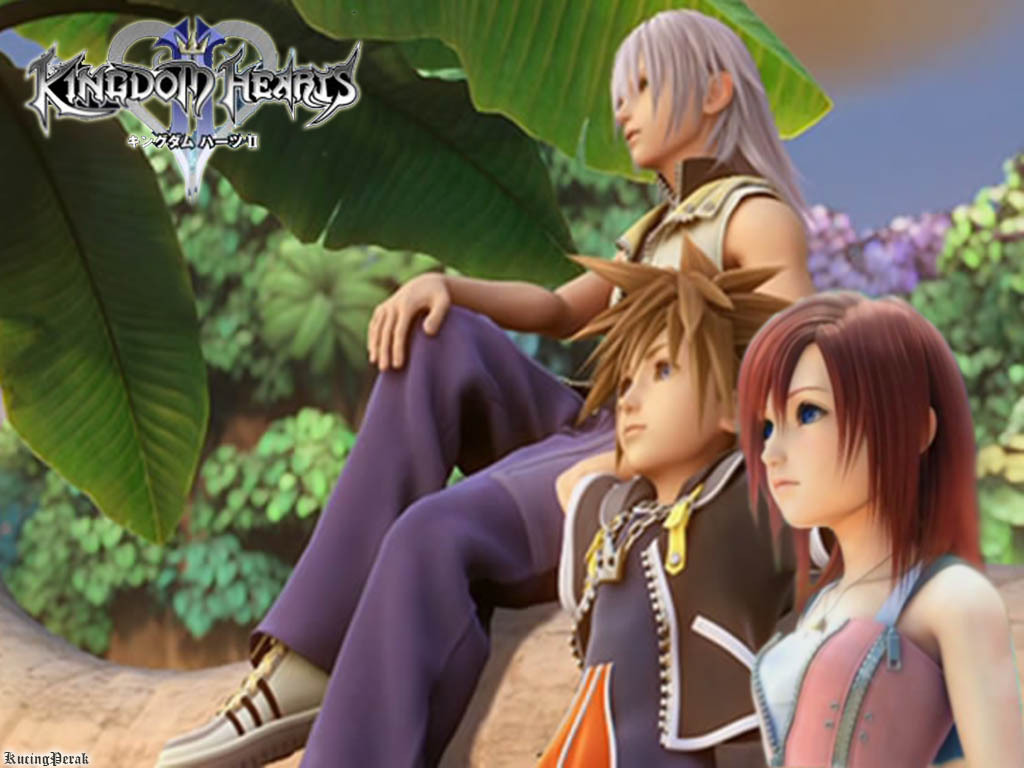
Initially, Kingdom Hearts tells the story of Sora, a boy who decides with his friends Riku and Kairi that they wish to see everything the world has to offer, even if it means leaving their peaceful and quiet life on Destiny Island behind. The night before the three friends plan to sail away from their home, a supernatural storm tears their island apart and engulfs its ruins in darkness. The three friends are then cast to different corners of a universe comprised mostly of famous Disney worlds, and are left to spend the rest of the game exploring each Disney world, searching for each other. We play as Sora, who with his new friends Disney's Goofy and Donald Duck, eventually finds both Riku and Kaira, but not before learning that his adventure to new worlds is part of a much, much bigger story to be explained and experienced through the subsequent games. 

My friends insisted that if I were to become genuinely interested in playing any Kingdom Hearts game, to play the titles in order of their release date despite moderately aged and worn gameplay seen in some of the older games, lest my enjoyment of the series be diminished by my failure to appreciate the links between each game with regards to story. Playing each game in this order produces what can seem like a massively convoluted story often leaving the player wondering if certain details were meant to be enigmatic, or if those same details were simply lost in the blitzkrieg of lore presented by each game. Following each nuance of each twist throughout the series can be difficult at times, but those who pay attention and follow the story closely are rewarded with a masterfully crafted narrative currently contending for the top spot on my fake list of best video game stories ever. 

Though the gameplay of Kingdom Hearts and all of its sequels is fun and varied enough, this franchise is here to tell a story filled with exceptionally realistic and convincing characters, plot-twists that have at times relieved me of my ability to keep my bottom jaw attached to my top, and the battle between inner demons and our purest, most divine inner strengths. 

While extensively abundant, the characters of Kingdom Hearts all contribute to a story that describes the battle of good vs. evil within ourselves. The message of Kingdom Hearts, while told in a fantasy setting, is very real, especially to me. The ever-growing struggle between Sora, a warrior chosen to symbolize hope, and Riku, a warrior symbolizing darkness while struggling with his own inner-turmoil, teaches that there is no extinguishing of light or dark within the world nor within ourselves; rather that the coexistence of both is necessary to achieve inner peace, but the light can be as powerful as the darkness is seductive, and without a careful balance between the two, we can lose ourselves, and fail in protecting those we love. 


This isn't really much of a review as it is an article appreciating good poetry in video games. There can be beauty in this young art, and certain games seek to expose that. In order to realize the true value of video games, we must be attentive enough to see the beauty in this art when it exists, and though typically, it can be that games demonstrating such beauty only appear once in a long while, there is never an excuse to miss a game that demonstrates this element as perfectly as it is by Kingdom Hearts.

Power sleeps within you-
if you give it form, it will give you strength. 


Thursday, July 16, 2015

Beyond Good & Evil and Character Development Through Gameplay

Beyond Good & Evil is a game I obtained with the help of a small retro gaming community based in Long Island. It was one of many Gamecube games I became interested in playing, appearing on almost every list of Gamecube hidden gems I read online. Obviously I had to get it, and now that I've played it, I must say that I am not disappointed. Unfortunately I had a large backlog of games to play at the time I finished Beyond Good & Evil's main story so I never had much of a chance to savor its sweet goodness, but the box art alone caught the attention of my friend as he browsed my collection the other day, stopping to say "oh you have this game??" to which I replied "Yes Dylan, I have this game." This one goes out to all the Dylans in the world.

Beyond Good & Evil - Nintendo Gamecube 
      So like I said, good ol' hidden gems on the Nintendo Gamecube. Strange as this may be for a hidden gem, it was actually developed by Ubisoft and released for multiple systems including the Gamecube. Beyond Good & Evil is critically acclaimed, but has never really escaped its status of "cult classic". Despite this, Beyond Good & Evil is seriously one of the best Gamecube games I've ever played and may even be one of the best video games of the Gamecube/PS2/XBOX generation. The game is filled with inspired characters, a gorgeous fantasy world brimming with life and depth complete with sky-whales, and a story that weaves its narrative and gameplay together harmoniously. 

       The gameplay is most reminiscent of that found in a Legend of Zelda game, perhaps if Ocarina of Time was only 12 hours long. Your character, Jade, traverses the small open hub world of planet Hillys in a linear sequence of events and checkpoints which all eventually lead to you navigating masterfully crafted dungeons consisting of rooms that require you to solve refreshingly unique puzzles, defeat enemies using an extremely tight combat system, or sneak around all stealth-like without being detected. In addition to the expertly built dungeons, there exists hours of optional side-quests and games to play on the side should one decide to explore Hillys a little further. Planet Hillys is made up of a small sea with several islands jutting up from it's surface. Jade uses her motorboat to quickly zip all around planet Hillys in order to get from objective to objective. But whether you're going for a quick stroll through the bustling town, or sailing from dungeon to dungeon, there is always incentive for you to stop and explore. Mini-games can be found by talking to different residents of the central city, optional boat races are not only a blast to participate in but reward you with money which you NEED, and let's not forget the pictures you can take. OH the PICTURES you can take....

     
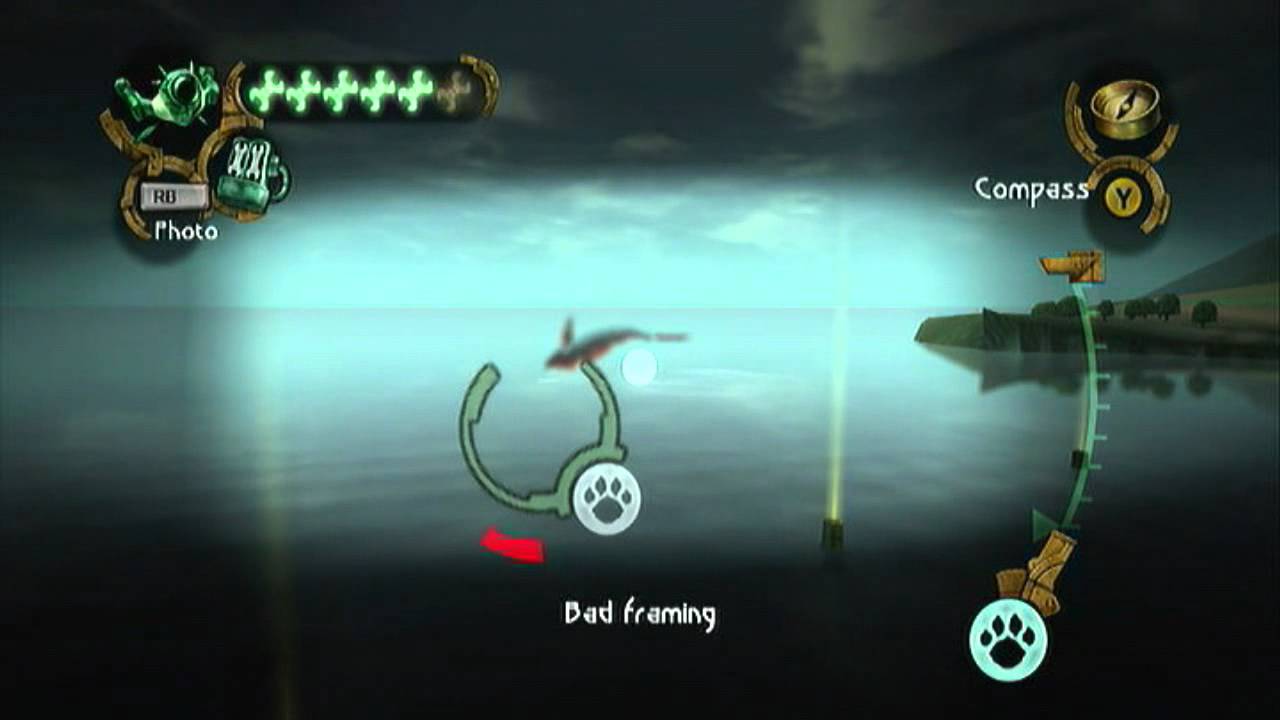
What must be understood about Jade is that despite her ability to kick ass with a staff or sweet-talk her way into getting what she needs, she is first and foremost a photographer. During the game, Jade finds herself collaborating with an underground organization of vigilantes called ISIS which promises to give her money in exchange for photographs of wildlife. Whether it's to upgrade your boat, weapon, or to increase your max health, you NEED money in this game, and sending pictures to ISIS is the easiest and most fun way to get it. Like I said, ISIS is particularly interested in photographs of the wildlife on planet Hillys. As a result, if at any point during your sailing from place to place, you stumble upon an unfamiliar breed of fish, it's up to you to whip out the kodak and snap a picture. Same thing with strange plants found growing on dungeon walls, imprisoned and weaponized dogs found in enemy bases, even the animal-like pedestrians found strolling about town; as long as it is living, a picture of it can be exchanged for money. 

     The thing that makes the ability to take pictures so ingenious is that it keeps Jade humbled and believable as a character; she is a photographer - that's part of her lore - and in order to play as a photographer, YOU, the player, must become a photographer. You need to wait for the right moment to capture the best angle of a bird, you become excited when you see a strange creature lurking around in the distance. Despite her taking on the responsibilities of an adventurer she never wanted to become, Jade stays true to herself, because no matter how many enemies she defeats and lives she saves, she is still a photographer at heart, and because the utilization of this feature is something that is required in order to make money, which is required in order to make progress in the game, this detail from Jade's lore is kept at the forefront of her character development. In this way, it is GAMEPLAY that directly influences the player's perception of her. We don't learn about Jade through any cutscene or dialogue, we learn about Jade by becoming Jade. 
      
     What Beyond Good & Evil has to offer is a gaming experience that tells an excellent story through excellent gameplay. Too often nowadays do we find games either whose story exists solely for the sake of the gameplay or whose gameplay exists solely for the sake of the story, but Beyond Good & Evil splits it right down the middle, offering gameplay and story that exist in order to emphasize the best points of each other. I give this game a very serious recommendation to all video game fans who crave side-quests, strong characters, tight combat, and solid dungeon-crawling. In other words, if you've ever thought that you wouldn't mind seeing Legend of Zelda re-imagined where everything is run by alien technology instead of magic, then Beyond Good & Evil is exactly for you. 

Monday, October 13, 2014

Another Essay: Incentive

I've noticed that it has become more difficult for video games to capture my attention lately. I blame growing up. But actually, I blame only myself and my personal need for video games to offer me something profound. In fact, I think the only reason anyone would ever play a video game is to gain something spiritually satisfying. Yes, we play video games for fun, but the question I intend to answer is the following: what makes certain video games fun for some people and not fun for other people? Why do we personally choose to play the games we choose to play? I've been dwelling on both the question and its answer for a long time, and I believe the answer is "incentive".

       INCENTIVE FOR THE PLAYER                                     INCENTIVE FOR THE AVATAR

These are the two categories under which every single video game ever created falls.
So let's discuss each form of incentive separately:

       Incentive for the player - "If you play this game, you will gain skill".
We know that there are some video games out there that require skill, practice, and repetition. We know there are games that are designed to force the player to improve their skills in order to overcome challenges. We know there are games that require us to become better at its end than we were at its beginning. If you, as a gamer, are drawn to these types of games, then you prefer games where the incentive is for the player. A game where the incentive is for the player is a game designed with the progression and fluency of the "player" in mind. These games can be identified as having minimal or no story, a multiplayer mode(s), a scoring/ranking system, or a competitive push.
Still don't get it?
Super Smash Bros, Mario Kart, Tetris, Super Mario Bros, Mortal Kombat, Guitar Hero, Bejeweled, Flappy Bird, and Angry Birds are all games where the incentive is "if you play this game, you will become better at it/ you will become better than your friends/ you will achieve a higher score than other players/ you will be the best player". The magic behind these games is that when they're being developed, game developers can devote more time to the game's ability to entertain instead of the game's cinematic appeal. The games mentioned above are all examples that are simple in concept, but are played aggressively and religiously. The best games where the incentive is for the player has players playing for dozens, sometimes even hundreds of hours as they each compete and practice and train in order to become the "best". The end goal of these games is determined by the player, not the game. Do you want to be the best Tetris player? If you do, that's awesome, but remember, no one told you that you had to - you set that goal on your own. The problem with these games though is that if the gameplay doesn't compel people to play, then nothing else will. No one will bother competing at a game liked by 0 people- a game that simply isn't fun. Why would anyone want to waste their time becoming good at a game about which no one cares?

      Incentive for the avatar- "If you play this game, your avatar will gain skill".
Then there are some games where we fall in love with a character, or grow to loathe an enemy, or decide that we want what our avatar wants. If you are drawn to these games, then you prefer games where the incentive is for the avatar. The avatar is the character you play as on the screen, and these games involve the gamer pushing the character around from place to place witnessing what he/she witnesses and feeling what he/she feels. These games can be identified as having a deep story, deep characters, motives, and choices with an emphasis on progression or working from a beginning to an end. It is important to note that it may not be necessary for the player to gain any skill at all while playing these types of games. To elaborate, I am borrowing the term "avatar strength" from youtuber Egoraptor, which he describes as a technique used by game developers in order to create the illusion of progression- a game that becomes easier not because the player is becoming more competent, but because his avatar is becoming more capable (stronger, faster, etc.). For example, imagine you're playing a game where your character wields a sword that can kill a given enemy in 4 hits. You then reach a certain point in the game where the sword gets upgraded as a part of the story, and now you can kill that same enemy in 2 hits. YOU did not become better at the game, but your avatar did. Because you played the game, the avatar gained skill. The magic behind these games is that you get the chance to relate to a character in a world to which you would never ordinarily be exposed, you get to watch a story unfold, you get to feel empathy and patience and attachment to characters for a short while, which are all profound feelings! The problem with these games though, is that if the developers fail to create an avatar worth caring about, then the game probably won't be very good. I recently played Tales of the Abyss, a game where the incentive to play was exclusively for the avatar Luke whose purpose in the game was to fulfill his destiny as the chosen hero. Luke, though, was an asshole, refused to develop as a character, and was an absolute displeasure for me to have spent 12 hours with. Why the fuck would I want Luke to gain anything? I didn't care about my avatar, so I didn't like the game. Tales of Symphonia, Assassin's Creed, Resident Evil, and the Paper Mario games, however, are all games in this category that established more likable characters, and were more popular because of it.

Now for the surprise category: the games that consider both types of incentive, games that emphasize the progression of the story AND the acquisition of skill to the player. Examples? Some of the best games out there: The Halo games, Legend of Zelda games, The Last of Us, Resident Evil 4, the Metroid games, Pokemon, and the Final Fantasy games. These are all examples of games where the skills acquired by the player contribute just as much to the gaming experience as the game's characters do. I care about Link in The Legend of Zelda: Twilight Princess because he is a good guy, looking after the children of his village while harboring affection for the mayor's daughter. At the same time, though, I feel personally empowered as the player when I find the double claw shot item and am able to spend hours zipping around Hyrule as a character who at that point becomes essentially Spider-Man with a sword. Both Link and I experience the same thrill by riding Epona the horse through the open fields of Hyrule, and we both feel the same grief when our partner Midna has to return to the Twilight Realm at the game's end (SPOILER HAHAHA). The perfect video games consider incentive for both the player and the avatar.

So why did I write this essay? I don't know. To arrogantly exhibit my comprehension of the video game world? I suppose. But really, I hope that someone finds this essay and it makes them realize that the formula for what definitely makes the perfect video game will become cracked soon enough as long as we keep asking the right questions. At the very least, I hope it gets you guys to consider what you love most about your favorite video games and learn to appreciate them for things you never saw before. And maybe, just maybe, reading this essay has helped you guys realize your own gaming preferences and in the future will now have a better understanding of what you look for in a video game. Time for me to get back to Smash Bros. Thank you!


Friday, October 10, 2014

Super Smash Bros. for 3DS

I've been writing on this blog for over a year now and I'm sure that all 6 people who actually read it have been beginning to wonder when I was going to get around to reviewing a game about which people actually care. Well, today is that day, because this is my review of Super Smash Bros. for the Nintendo 3DS.

I have to admit, I am a veteran in the world of Super Smash Bros. I understand the game, and I understand that those who don't play competitively see the game differently than those who do. I am on the edge of both worlds, so I will try to see this game with no preference to either perspective. Instead, I will take you through a journey of what my Smash Bros. 3DS experience has been like for the last week.

Super Smash Bros. for 3DS is the first entry in the legendary Smash Bros. series to appear on a handheld, and if you ask me, it's a pretty fucking good idea partially because no one owns a Wii U right now, but mostly because Nintendo has spent the last year upgrading the 3DS via all sorts of hardware and software improvements from system updates to the release of new limited edition consoles BUT has completely forgotten to release any fucking games for the damn thing. I was looking forward to Smash Bros. on a handheld because of the convenience of being able to play anywhere I go. My parents still live in the same hometown I graduated High School in, but now I am in college and most of my friends live in different states than I do, so being able to not only bring the game back and forth from home to school but being able to bring the multiplayer experience anywhere I go was something I originally found to be extremely appealing, but not so much anymore because the online is complete and utter shit. Many, nay, all people who owned Super Smash Bros. Brawl agreed on two things: Final smashes were horse shit, and the online was embarrassing and irresponsible. 6 years later, we are still faced with the later issue. Out of my 20 attempts made JUST NOW to play a 1 on 1 online match against a random opponent also using the online features, want to guess how many of them were successful? 0. 0 times. I was kicked to the start screen before the match had even begun, with the furthest I ever got being gaining access to a training area which I can only guess comes right before a match- I wouldn't know, because I never got to play one.

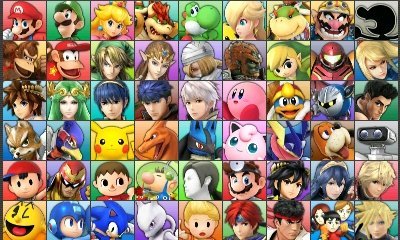
My next thought was then "okay whatever". I'll just play some single player. The main excitement that comes with any new entry in the Smash Bros. series is the thrill of both unlocking and using new characters or old characters with new abilities, and in this department, Smash Bros. 3DS really excels. Out of the 49 characters, not even the 2 or 3 sets of clones feel exactly identical, with the exception of Pit and Dark Pit, which I let slide because I loved Kid Icarus: Uprising. However, with the multiplayer options being limited to local multiplayer, an issue I plan on discussing in just a hot second, the player is forced to experience the thrill of new characters by playing single player modes in the game. Classic mode is the main single player mode mostly because it is the only single player mode that can be used to unlock characters. Once you play classic mode with the appropriate characters, you'll unlock every hidden character, of which there are only like, 10, and once you have unlocked every hidden character, you'll want to try them out in more single player modes, once again because multiplayer is hardly an option. Classic mode, however, is not the most suitable testing grounds because, in it, you can't turn the items off, this only being a problem because of the fact that almost every single item in the game just kills you. Blue Shell, The Beetle from Skyward Sword, every Assist Trophy, the Smash Ball, almost every Pokemon, every Bomb-omb, Gooey Bomb, Exploding X bomb thing, every capsule which is ALWAYS a bomb in disguise, and a properly placed bumper all really don't do anything more than just kill you, which believe it or not, reduces the fun of actually becoming good with a character by about 1 fuckton.

So what else is there? There is no online, and classic mode isn't any fun, so what I decided to do was try out a bunch of characters by playing against level 9 CPUs in Smash mode with, of course, the items turned the fuck off. Playing against random CPUs with 3 stock as I attempt to beat the shit out of them with my favorite Nintendo characters of new and old is actually the most fun I get out of the game, but like everything else in it, I am beginning to see how short-lived this is going to be as something about the CPU's tendency to spam both counter-attacks and shield has me convinced that the AI isn't actually very good in the game. In fact, there have been an unacceptable amount of times where I decided that instead of fighting in the fighting game, I thought that it would be more fun to wait in a corner and see how long it would take the CPU to notice that I am preparing to kill it. In the end, the CPU struggled desperately to convince me that my hacking away at it with a sword was something it preferred for me not to do. Instead, the characters against whom I played seemed much more concerned about their health as mostly all they ever did was run around or jump a bit, as opposed to hitting me back, even on the highest difficulty setting.

And so finally, we reach the last selling point of this game, the local multiplayer. Traditionally, local Smash Bros. took place on the living room sofa with 13 of your closest friends and 1 kind of smelly friend who heard you got the newest flavor of Mountain Dew and invited himself over. You'd all gather around the TV for better or for worse and enjoyed the $50 dollar investment made by one friend as you played his game with his controllers on his console in his house. Now, in order for even the most casual collection of players to indulge in the joy of local Smash multiplayer on the 3DS, each participant must own not only the $40 game, but the $200 system. Now I admit, this shouldn't be a problem for children who plan on spending study hall trying to escape from a hard day at middle school with a round or two of Smash Bros, but I am in college, a place where people come to study and learn, not fuck around with video games all day like how I do. I do have a few friends on campus who own the game, but because those who don't play Smash Bros. understand that we no longer need a TV to play, we are often kicked out of common rooms and forced to squeeze 4 dudes into my small bedroom, which I dislike not because of the small size of my room, but because the small size of my bed ill-suited to seat 4 grown men in a fashion that can be described in a manner other than "really gay".

Despite all of my bitching, Smash Bros for 3DS is an excellent entry to the series. In fact, I'd say it's second best with Melee being the first best and Brawl being the worst. There are advantages to having it on a handheld, but I don't really think anyone would argue the fact that the game is supposed to be played on a console with 6 bowls of chips, 14 friends, and 2 girl friends who would prefer to be doing anything besides play video games all night. As an entry in the Smash series, Smash Bros. 3DS is impressive to say the least, but as a game, it just can't be considered as good as people want it to be. The online doesn't work, the single player options are limited unless you are a masochist or a completionist as the collectibles are nearly endless, and the salvageable modes in the game are only fun for a short while due to mediocre AI. If you have the game, I am SO excited to play with you next time we are all home and have the game on us, but if you were one of the more skeptical players who decided to wait and see if this game was going to be executed properly on the 3DS, I declare that you don't have to get it if you don't want to. It's not a "must-play" for the console.

**EDIT** I have friends at home and in other parts of the state who have assured me that my poor experience with the online in this game may be the fault of my school having bad internet service, and not because Nintendo likes online multiplayer as much as I like eating glass. Fine. They are probably right, although I have heard about other players and professional gaming companies complaining about having as much trouble as I had. If your online mode works, ignore what I had to say about my experience, and go play it because it is probably awesome. I, on the other hand, will sit here in my bedroom and whine on the internet like a normal Nintendo fan.

Sunday, September 28, 2014

Gotta Go Fast

This is review is going to be written in what I think is the ideal format - no numbers, no bullshit.

The other day, I was in Gamestop looking for something cheap that could hold me over until Smash Bros comes out on Friday. I just bought a brand new Limited Edition Smash Bros 3DS XL and I didn't want it to sit there while I tried to amuse myself with some outdated Wii games for the next week so after almost no consideration, and almost completely impulsively, I decided to try out Sonic & All Stars Racing Transformed for the 3DS. 

Sonic & All Stars Racing Transformed - Nintendo 3DS 

Intro + Summary

Branching paths lead to the same end, but allow access to unlockables.

Although the idea of Sonic the Hedgehog, who can canonically run at the speed of sound, driving a car that tops out at 120 mph was originally offensive to me, turns out that I think Sonic & All Stars Racing Transformed is actually a pretty damn good game. I was seriously surprised. This cross-over racing game features 25 of SEGA's most famous or likable (which ever comes first) characters, of whom you might know 7 - this is totally not a bad thing, I'm just pointing it out. As of now, I only have about 12 characters unlocked, and I actually know about 10 of them, but only because I am kind of a video game buff. Anyway, single player features the racing-game-staple Grand Prix, where you race across 4 tracks and earn points based on your performance in each race individually, which get added up at the end with whomever having the most points being the grand wiener. I honestly have only done a couple of Grand Prix races because the game also features a totally separate Career mode. Career mode starts with a single challenge. You select the challenge and difficulty for the challenge. If you complete the challenge, you unlock the next challenge, rinse and repeat. Career mode = beat all of the challenges. I dumbed that down for simplicity's sake, especially since I am going to put a fucking picture right here, which will effectively obsolesce any wordy description, but it's definitely worth noting that each challenge features a different track, and different objective within the challenge. Sometimes you just have to place 1st in a race, other times you have to complete 1 lap within a certain amount of time, etc. Branching paths in the career mode challenge selection screen will allow you access to secondary objectives whose completion will award you with new characters and collectibles. Finally, EXP will be gained by the character you choose before each challenge should you complete it successfully. Every time a character levels-up, you unlock a "Mod Pack" for that character. Mod Packs allow you to select the same character, but apply different set of stats for his/her car. About to race on a track with a lot of turns? Use the handling Mod Pack. 


Good Things
I thought this game was going to be a blatant Mario Kart rip-off. It's not. It IS another mascot, kart-racing game though, a bit redundant in a genre dominated by the famous Italian plumber. However, there are certainly enough distinguishable features in Sonic & All Stars Racing Transformed for it to earn a solid A for effort, and maybe even a little bit more. S&ASRT features extremely fun, bright and colorful track designs inspired by SEGA's most famous games of which you probably know more than you think you do, some of them being Sonic the Hedgehog, Monkey Ball, Crazy Taxi, Golden Axe, Nights, Billy Hatcher and the Giant Egg, and Skies of Arcadia. The main attraction to this game is that even though each race features 3 laps on a track, the track changes (or transforms) each time you complete a single lap, offering track variety out the ass, and you can bet that same ass that when the track transforms, your vehicle transforms! The word "Transformed" in the game's title refers to the transformations made by your vehicle when racing. Driving on a boardwalk that suddenly gives out? Your car will turn into a boat! And does the river you're now trying to traverse give way to an enormous waterfall? Boat --> Airplane. Not every track uses all 3 forms of vehicle, but when your vehicle does transform, it is totally appropriate, feels good, and is really fucking fun. The Career mode is particularly effective in making me want to play more. I don't always have time for 1 more Grand Prix in Mario Kart, but another 4 minute challenge is seldom an issue with my personal schedule. Items in Sonic Racing are also fun and balanced. If You want to win in this Kart Racing game, you need more skills behind the wheel than you need Red Shells. I can truly say that no item in this game feels copied from Mario Kart (I didn't mean to spend this review comparing this game to Mario Kart, but I KNOW that's what you're doing so I'm just responding to how I know you're responding). The Career mode isn't too long, but earning the maximum amount of stars for each challenge means that you'll have to complete each challenge on HARD mode, as opposed to Easy or Normal, which is not an easy feat. You can only unlock certain characters by obtaining a certain number of stars, so although the Career Mode itself is a bit on the shorter side, obtaining every star to unlock every character will probably satisfy any need to play a medium-lengthed game. Finally, the 3DS's bottom screen is used to display an over-head live racing map. Having it on the bottom screen is nice, obviously because it doesn't obstruct the racing-action. It's also handy because occasionally the "track" during the boat or flying sections can be a tiny bit ambiguous, so having a map when you're threatened to get lost is un-ironically the perfect solution. This is a fucking fun racing game. 

Short-Comings 
Sonic & All Stars Racing Transformed on the Nintendo 3DS doesn't suffer from any lag technically, but like, it runs at what feels like 15 frames per second. Keep in mind, this is a straight port of a game that was originally sold for XBOX 360 and PS3, as well as the Wii U. The game performs impressively after knowing that, but ONLY after knowing that. My eyes immediately felt the difference between playing Sonic & All Stars and playing the Smash Bros. demo, but I would be such a bitch if I didn't admit that I totally got used to the frame rate after playing for, like, 2 minutes. You get over it. Also. perhaps 3% of the time, I can't tell what is 10 feet ahead of me in the game, which wouldn't be a problem if we weren't discussing a racing game. Remember though, I said this happens rarely, although when it happens, it totally happens. Graphics are also a bit pixely, but again, nothing a determined gamer wouldn't be able to brush off. This game is also out, like I said, for the 360, PS3, and Wii U. I plan on buying it for the Wii U when I get home from school. I played the demo and the graphics were appropriately gorgeous, and now that I know the rest of the game is awesome, I am confident that the Wii U version will hold up. I am playing this game on the 3DS XL. I cannot imagine this game on the small screen of the standard 3DS, and when I do try to imagine it, I imagine, like, a nightmarish, nebulous, chaotic, vague image of like, 10 guys driving play-dough cars through a guillotine testing factory. Not sure - never played it on the standard 3DS. I could be wrong, but I could be totally right.  

To Whom Would I Recommend This Game?
Of the 2 viable kart racing games out there, Sonic & All Stars Racing Transformed is not definitely  the best one, but it could be. Though Sonic & All Stars Racing Transformed is hella fun, don't be surprised if you find yourself pondering this game asking yourself "Do I really need to play another Kart Racing game?" if you've already played Mario Kart 7 or 8. I admit though, I haven't played Mario Kart 7 and thanks to this game, I don't think I will anytime soon. I feel like the demand for kart racing games is strongest after not having played one for a long time. If you have played Mario Kart 7 or 8 recently, there is no pressure to play Sonic & All Stars Racing Transformed, but it is still a killer game. 

So to whom would I recommend this game? SEGA fans, die-hard kart racing fans, anyone who needs to play something on the 3DS and has already played all of its first party-titles (barring Mario Kart 7), and anyone who is opposed to playing this on a home console. 


Sunday, September 14, 2014

Why I Don't Like Open World Games

A year ago, I watched my friends foam at the mouth as they murdered thousands of innocent, hard-working, married pedestrians on the streets of "Grand Theft Auto Anything Goes Who Cares It's Just A Video Game City 5: About 3 Games Too Many". Conversation eventually led to the declaration by one of my friends that no person ever has been disappointed to hear that a game was to be made "open-world". I secretly disagreed with him but couldn't figure out why. Turns out the only thing that would render me sedimentary enough to sit down and develop my thoughts on the topic would be eating two colossal pieces of cheesecake from The Cheesecake Factory back-to-back, then sitting down to finally catch up on the internet's newest series "Selena Gomez Has More Nude Pictures: About 3 Galleries Too Many".

I don't like open world games because I think they are hardly ever done right. Open world games only ever do 1 thing in a variety of different ways: provide the illusion of choice- essentially a lie that the game is giving you "choices" when really, it is not. Let's examine each variation of the deception separately:

The first variation of the illusion of choice gives players the following two options:
A) Complete missions necessary to beat the story
B) Complete missions NOT necessary to beat the story

So let's begin. You are given a game with an open world. Right off the bat this means one of two things: You will be given permission to do things you are not required to OR it is a bad game.
You are free to abandon what the game demands you to do, granting you permission to do almost whatever you want. Let's assume though that what you want is to complete the story. Open-worldedness is a liberating freedom, but how much this freedom contributes to the game has yet to be determined (as far as this article goes). Think about this: Let's say that the developers of a game take their time to write out a story with great characters, twists, growth, and plot BUT they give you side missions that are completely optional. Why? Why give players the option to NOT play content that you spent valuable time creating? This is the same as having them tell you that you only need to play 60% (or whatever percent of the game is required) of the missions to experience 100% of the game. VALIDATION YOU ASK FOR: If you complete Legend of Zelda: Ocarina of Time but you don't get the Biggoron's Sword (an optional mission), can anyone tell you fairly that you HAVEN'T played OoT? No. Giving players optional missions is the same thing as me telling you that I have written an incredible book and it's fine if you skip 40% of the pages, as long as you get to the end. Having optional missions, even creating parts of the world that don't NEED to be seen, is the developer's way of admitting that they know not every player will want to play everything on the disc, instead of insisting that every player should. I wouldn't be very convinced by Nintendo that some Super Mario game is worth playing if they gave me the option to not play half of it. The way I look at it, open worlds are the developers admitting that at least some of the game is not worth playing. And also, if you have an open world game WITHOUT optional missions, then why have an open world at all?

The second variation of the illusion of choice is giving the player the next duo of options:
A) Explore the World
B) Don't Explore the World

Now this is a good one that basically boils down to a simple question - Do you HAVE to explore the world in order to beat the game? We have to discuss incentive for a second - Question 2: WHY would I want to explore a world? Well there are a lot of reasons! Let's start with a good one - In order to find optional weapons. Optional weapons or items are usually things that make the game either easier or funny. They, however, seldom make the game more fun. Think about this: If a weapon existed in the game that made the game generally more fun, why would the developers make that weapon optional? Wouldn't developers want something that makes the game more fun to be experienced by everyone playing it? But I digress (not really). Optional weapons are things that make the game either easier or funny but do you need them? Can you complete the game without them? If you CAN complete the game without them, then it would seem that developers wasted time designing items that some people will never see, and (**this is important**) if you CAN'T, or it would be extremely difficult to, complete the game without them, then they aren't optional! The whole idea behind the illusion of "choice" is that you really never have one, and if you never have any real choice, then what the fuck is the point of an open-world?

The second incentive to explore a world is to find Side-quests. These are popular in RPGs and I can already hear my friends yelling at me, justifying the inclusion of side-quests in RPGs. Often, in RPGs, you need to complete optional side-quests in order to gain experience to level-up your character so that you can more easily defeat certain bosses. But that's the thing- if you NEED to complete optional side-quests in order to make progress, then they aren't optional! You are once again being tricked into thinking that you have a choice, when really, you don't. The residents of open-worlds are always the providers of optional side-quests, but if you MUST complete the side-quests in order to increase the strength of your character in order to progress, then all the open-world does is trick you into thinking that you've accepted a task you didn't have to, when really, you did, and the only real option you have is to accept the mission, or use an avatar that cannot ever win ever. All I ask is that the game doesn't lie to me! Don't tell me I have a choice not to do a certain side-quest if I am going to undoubtedly regret it later! Game devs could alternatively distribute appropriate amounts of EXP during the main story so that side-quests become redundant and obsolesced, or just include the side-quests as part of the main story, eliminating the "option" entirely. Now I can certainly think of linear games with optional side-quests, Sonic Unleashed and Lost Kingdoms II come to mind, but the optional missions in those games are once again hardly optional, and now that I think about it, I don't remember the game ever telling me that they were. There is something to be noted about the difference between additional levels that help you progress and side-quests that compensate for what the main story could not provide.

Finally, we have to discuss The Legend of Zelda. Do I mean to suggest the Legend of Zelda should be linear, and relieved of its open world? Well...let's think about this. The game Dark Siders II was essentially an angry, M-rated LoZ game. Exactly the same way Legend of Zelda is, it has a nonlinear (open) world, but a linear story, so all you ever did in the impressively enormous open world was move from point A to B to C to D, etc. until you beat the game. There was about as much incentive to explore as there was in a Legend of Zelda game (not much), so I ask the following: If you're spending an entire game moving in a straight line through an open world, then WHAT THE FUCK IS THE POINT OF THE OPEN WORLD?? Having an open world is certainly more impressive to look at and experience, but it's all for nothing if it doesn't add anything to the game. As a side-note, this issue is actually addressed 100% perfectly by a game called The Last Story on the Wii. I'll talk about it some other time.

It would seem that I've spent this entire article writing objectively, assuming that everyone plays games for the same reason I do, but remember, this article is about why I, James, don't like open-world games. Now there are some that I like, even love. Pokemon works because the game functions around the idea of exploring a world, and the game just literally wouldn't work without it. Zelda: Twilight Princess is another that just works well, mostly because despite it being an open world, it is small and doesn't overwhelm the player. I am brutally aware that giving the player an option, even if it is a sham, creates a more personal connection between the player and his/her avatar, resulting in a greater sense of immersion, which is the very state that powers the video game industry itself. Open world games can be fun just because they create a greater sense of control, but it should be noted that the only aspect of a game controlled by the player in an open-world game is the pacing of progress, NOT what is required of them. A Sonic the Hedgehog game (not open world) can only be played by either making progress or losing. Open world games are unique in that they can be played without making progress or losing. They allow the player to complete the missions (over which they, once again, have no control) whenever they want. But honestly, I think you get it. Open-world games don't do it for me, except for Spider-Man 2, which is essentially the only reason why I bothered to use the words "mostly, often, and seldom" in this article, as opposed to "always, never, and never", which would have forced me to title this article "An Abundance of Words That Make Me Sound Ignorant: About 3 Adjectives Too Many".

Wednesday, March 26, 2014

What's Good With That Game - Paper Mario Thousand Year Door

In celebration of what feels like the end of a thousand year break from this blog, I shall resume my work with a game whose story also has to do with a thousand years!

Despite having pestered my friend all summer about returning my copy of Paper Mario Thousand Year Door to me, it wasn't until just a few weeks ago did I finally get to really devote some time to sitting down and playing it. Just a reminder, What's Good With That Game is an arch of this blog where I write about a game that I have only played a small bit of (less than half) so we can witness how my initial feelings towards the game either change or remain the same as the game goes on. As of this point, I have just completed chapter 3 out of what I am guessing is 7 or 8 chapters. I have about 11 hours clocked on my file "dicks" and I am still having a blast playing it. So, as Mario does, allow me to jump into it.

Paper Mario Thousand Year Door


The Paper Mario series has been one that combines a side-scrolling open world with strong influences from RPG and platforming games. Gameplay and progression is rather Zelda-like, as you typically spend a bunch of time in several different locations, get some new items or a new ability, and use that ability, along with abilities obtained earlier in the game, to solve puzzles, hit switches, find keys, defeat bosses, and save days. The game is divided up into chapters to provide clear separations between sections of the game like a story book, and the fighting system is a really refreshing and rather hands-on turn based RPG. So with this in mind, we ask the same questions as always:

Why did I pick up this game?
What do I think of it so far?
What do I anticipate?

I got a WiiU and 3DS for Christmas (divorced parents FTW). I've been playing a lot of Sonic Lost World for both systems along with Sonic Unleashed which I have been playing with my suite mate at school. I've also been playing Donkey Kong Country Returns, Monster Hunter 3 Ultimate, Super Mario 3D World and Cave Story 3D. A lot of these games are just platformers or adventure games with little depth. Although I love each of these games so much, I did long to play something more story-driven, and since I keep my WiiU at home so my brother can still enjoy Darksiders 2 and Pikmin 3, I have not much more than my trusty Gamecube and a bunch of unopened games from the summer to play. One of those games was Paper Mario Thousand Year Door. Recommended to me by my friend SchistOnUranus, whose opinion I consider very highly, I decided to give this one a go, expecting that if anyone was going to provide me with an experience that was going to make me feel like the hero I longed to be, it would be Nintendo. I looked forward to a story-driven adventure game, and I've been beginning to think that I am getting so much more.

For me, Paper Mario Thousand Year Door had a slow start. I walked around the main town, Roguesport, for a bit, solved some puzzles, fought a dragon, typical ZeldaMarioMetroid stuff. The game essentially has 2 different ideas fueling the entire experience: oldschool Zelda Dungeons and Final Fantasy turn-based RPG fighting. Now I was aware of this going into the game, but I had trouble determining which area was going to offer me the most consistent level of fun. I expected the open-world and exploring to be the part that I enjoyed more, as opposed to the fighting which I thought would be shallow. Because of this, I began my Paper Mario experience running around a pretty large world that admittedly had little to explore while skipping over a majority of the avoidable fighting, but I was wrong to do so. It wasn't until I started to fight more and increase the levels of Mario and his pals did I realize that fighting was much less of a hassle, and was a lot more fun than I had originally thought. You are pretty weak in the beginning of the game, and there isn't much you can do about it, but the more you fight, the better you get, and when each fight changes from a world that stresses you the fuck out to a world that involves you stomping on Dragon's heads and pounding Goombas with hammers, it really starts to establish itself as the better half of the game. The chapter I just completed, Chapter 3, had a lot of emphasis on fighting and even though I consider turn-based games to be slow, I was thoroughly entertained during all of chapter 3, so much so that I do dare say I am excited for chapter 4.

I am usually pretty skeptical about games I play nowadays. I am just so afraid of spending my time playing a game I don't enjoy that I look for reasons to put games down instead of looking for reasons to continue playing them. However, the more I think about Paper Mario Thousand Year Door, the more trouble I have deciding why I would stop playing it. It is a great difficulty level, does not require a walkthrough, minimizes grinding of both fighting EXP and coins, and has a good story that is simple, yet effective. My only complaint so far is that sometimes there is WAY too much fucking talking. I find my self spamming the A button during most of the text as of recently. Sometimes, I just want to play, and when I do, just shut your fucking mouth.

In the end, I look for games that I will pause because I want to take a break, not because I am stuck, lost, or lacking the necessary skills. Honestly, eventually I do plan to get back to that list of my top ten favorite Gamecube games and when I do, this may be a contender. Paper Mario Thousand Year Door is a perfect difficulty and is just fun to play, and honestly, games that can be described in such a way can be tough to find today, so if you're looking for one, both SchistOnUranus and I are recommending this guy to y'all.

Note: From what I have seen of the game, South Park Stick of Truth is a Paper Mario game in disguise. If you like one, you'll probably like the other.

Sunday, December 22, 2013

This Bitch Contains Spoilers

I've been playing a whole bunch of Metroid Prime recently. I feel like I am somewhat near the end of the game, but I have hit what seems to be a little bit of a wall- and by "wall", I mean "huge fucking monster with fucking all this shit that he keeps using to fucking kill me over and over." I am currently up to the Omega Pirate fight in Metroid Prime, and it really is such a damn good boss fight. It got me thinking about other memorable bosses I've had to slay in the past 19 years, and I just felt like writing about some of my favorite, or least favorite ones.

Omega Pirate - Metroid Prime
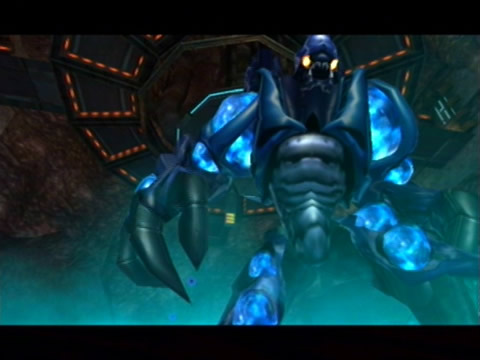
Jesus Christ this boss had been wrecking my shit. Basically what happens is Samus enters a chamber with a giant fucking monster sealed inside. The monster appears to be locked inside a pod, but evidently, the real breakthrough in locking technology didn't come until well after these science experiments were stored away. So, of course, the monster sees Samus and breaks out of her prison with the purpose of becoming Samus' best friend and falling in love with her and making sure no harm ever befalls her for the rest of her days. So Ms. Omega Pirate starts fucking attacking you. She has 4 weak spots encased in ice and they all must be struck in order to weaken her. So you shoot some missiles at her icy limbs while dodging the shock waves emitted from her giant ground-pounding fists of doom BUT these attacks must be timed properly or else they will be absorbed by Omega Pirate. Once her limbs are annihilated, she will send in some of her subordinate bitches to distract you from attacking her while she becomes invisible and attempts to regain her health. If you are able to destroy her minions quickly, you will have enough time to strap on your X-ray visor to see the invisible asshole and shoot her in the chest. You gotta do this like, 4 times to beat her, and it's HARD. FUCK.

Deathborn - F-Zero GX

This was literally a race from hell. Captain Falcon basically gets transported to hell in order to race a guy named Deathborn. If Deathborn wins, he will be able to seize the power of light and darkness for himself and destroy the universe. Because that's how it works. So this track is long, there are so many sharp turns, there are bombs all over the track AND even if you manage to survive all of the crazy shit happening on the track, you still have to navigate that shit faster than Deathborn does. I could barely beat this guy on Easy mode; I can't imagine what it is like on Hard. This is one great game, but sometimes it is so unbelievably difficult, and this boss fight doesn't make it any easier.

Andross - Starfox Adventures
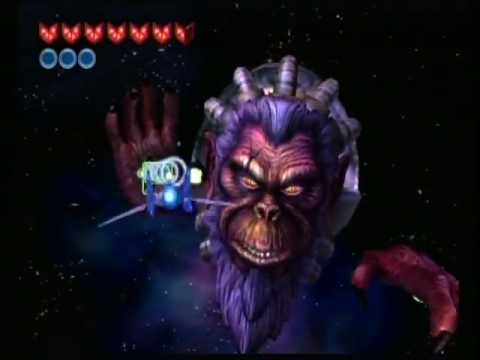
So basically after spending an ENTIRE game on foot, out of your arwing, and with a dinosaur at your side, you fight the final boss of this game, Andross, the SAME EXACT way you fight bosses in Starfox 64. Andross claims to be the one responsible for all of the misfortune that has befallen Dinosaur Planet, but he is NEVER mentioned before this fight, not even a little tiny bit. As soon as he appeared on my TV screen, I just screamed "What the hell!". Andross had NOTHING to do with Starfox Adventures, yet at the end of the game, there he is, waiting yet again to be slayed by Starfox and Falco. OH YEAH. Also Falco makes his first appearance in this game during the last boss fight. Apparently before the events of the game unfolded, he bailed to start his own star-team, but I guess it didn't work out(?)  This boss was in such contrast to the rest of the game that it is literally laughable. It's still fun in my opinion, but it is so sloppily done.

Giga Bowser - Super Smash Bros. Melee

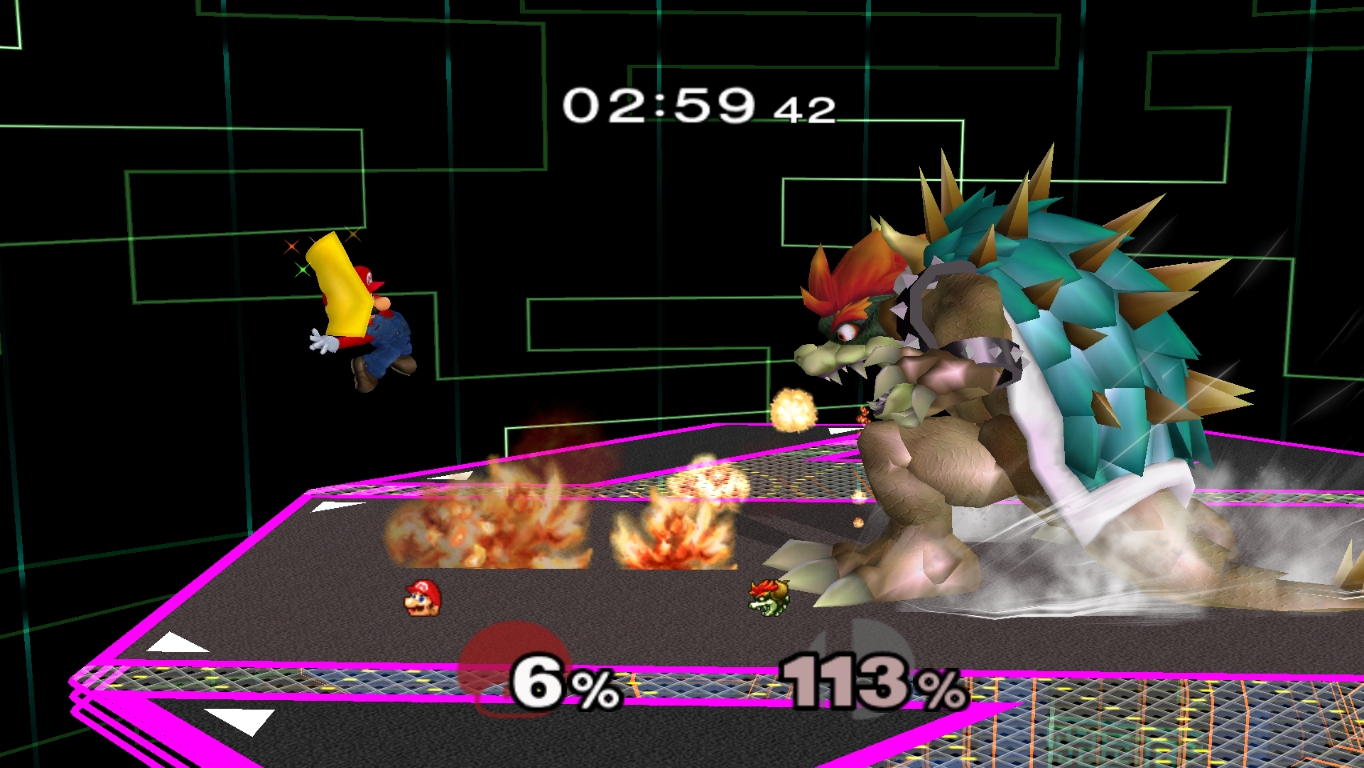
Mwahahahahaha Giga Bowser! Event Match 51, everybody. I remember beating this colossal-sized King Koopa in elementary school. I remember my friend telling me that I had to use Jigglypuff's Rest attack in order to win. It wasn't until many years later did I go on to beat Giga Bowser and friends with Marth, Link, and Luigi, in addition to Jigglypuff, but before those days were simpler times and simpler melees. Now, I play this boss over and over just for fun but I used to really struggle with it. This boss isn't really too hard if you're good at Smash Bros., but it sure is fun.

Ganondorf  - Legend of Zelda Twilight Princess
THIS boss. This may be my favorite boss fight in any video game I've played. Finally, after all these 20 years of Zelda do we get a real 1 on 1 sword fight with Ganondorf himself. I wish playing against this boss for fun was more viable. Tedious smaller boss fights between this final fight and the last time you are able to save the game puts about 20 minutes of playing other shit before I get to fight Ganondorf, but if that wasn't the case, I would play this fight everyday, and I am probably not kidding. You get a small arena in the middle of Hyrule field where you and Ganondorf each draw your swords and take turns swinging away and blocking all of the swift strikes dealt. No gimmicks, no waiting for him to expose his weak spot or become dizzy from doing his spinning-attacking or anything, just a straight-up duel. Of course, there is always the option to distract him by casting your fishing rod! The first item of the game comes back with an easter egg so lethal that you can almost save the world with it alone! But if that is not your style, you just lure him in and attempt to knock him about the arena with your master sword, ending the fight by...! Well you'll just have to play the game to find out.