Nintendo Consoles

Nintendo Consoles
Showing posts with label Dreamcast. Show all posts

Thursday, March 31, 2016

Time To Make Some Crazy Money!!! - Crazy Taxi

Crazy Taxi - Nintendo Gamecube

Crazy Taxi is one of those games you see almost everywhere. Whether it's taking its original 1999 form in an arcade, waiting to be downloaded on Steam, or enjoying life on any of the sixth generation consoles, Crazy Taxi is nothing less than a classic title screaming with personality. I find this game, with its dumb yellow box, at retro game shops and flea markets everywhere I go. Usually a single copy will be accompanied by a second and third and fourth just sitting on the shelf unwanted, bearing a humbling $5 price tag. I recently grabbed a copy to use its box to brighten up the aesthetics of my Gamecube collection, but instead I found myself hooked on burning rubber.

Even on consoles, Crazy Taxi still retains its arcade feel. Gameplay involves picking up and dropping off passengers on the streets of what appears to be an exaggerated, cartoon version of San Francisco. You are free to drive around the town, disobeying all traffic laws, flying over sidewalks and off of truck-beds, but time will quickly expire if you neglect to pick up pedestrians waiting for a taxi ride. Both taking on and unloading passengers will award you additional time, and the game ends when time runs out. That's pretty much it. The console version keeps track of your high scores, and as long as you're playing the "Arcade" or "Original" version of the game (selected on the main menu), achieving a respectable high score is all there is to it.

The console version also has a challenge mode. Challenge mode presents players with different scenarios, such as seeing how far you can launch off of a ramp, or how quickly you can escort a certain number of passengers. Gameplay stays pretty uniform no matter which mode you play, but challenge mode does its best to mix things up, sometimes successfully and other times just adding more of the same.

The best way to play Crazy Taxi (in my experience) is to put it on if you have 10 or 15 minutes to kill before you need to go to work or something. As many times as I have booted Crazy Taxi since I purchased it 3 days ago, I haven't yet played for more than 20 minutes at a time- this is not a game meant to be played for hours and hours at once. That being said, it is addictive and the punk-rock soundtrack featuring early hits by The Offspring is an excellent compliment to the fast-paced bad-ass attitude the game proudly demonstrates.

Don't get me wrong, Crazy Taxi isn't going to change anyone's life. But it is really fun and undoubtedly worth $5. I recommend this to anyone who is looking for something dumb to bust out at a party, or to anyone whose video game box collection is severally missing the color yellow.

Saturday, January 9, 2016

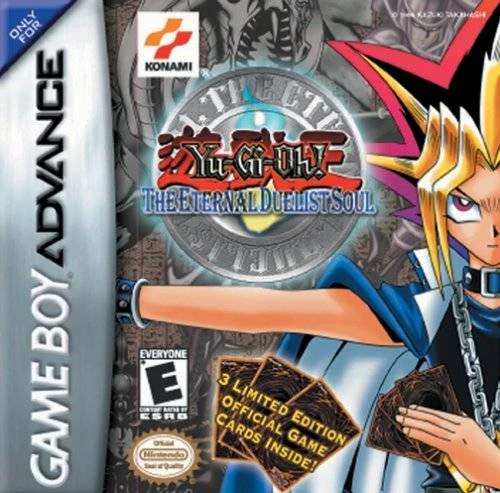
Yu-Gi-Oh! The Eternal Duelist Soul

The early 2000's was no stranger to trends that would be known to spellbind the hearts and hands of young gamers. The new millennium introduced us nerds to popular and memorable franchises such as Guitar Hero, World of Warcraft, and Call of Duty, but among the games competing to shine the brightest was a more traditional game, a trading-card game, that ruled supreme for half a decade; that card game was Yu-Gi-Oh!

Yu-Gi-Oh! The Eternal Duelist Soul - GBA

The popular Japanese manga-turned-game-turned-international sensation saw many different video game interpretations, some re-imagining Yu-Gi-Oh! as a turn-based RPG, to an open-world Pokemon-ish game, while other publications stuck to the rules and characters that made the franchise popular in the first place, and few accomplished the later more successfully than Yu-Gi-Oh! The Eternal Duelist Soul. 

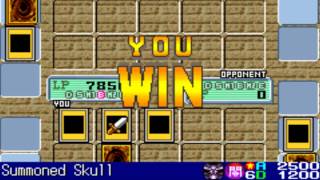
Unlike many other entries to its video game career, Yu-Gi-Oh! The Eternal Duelist Soul sticks to the original rules of the traditional card-based game; it's these same rules with which EDS expects players to be preemptively familiar in order to play, as there exist no tutorials in EDS, making it somewhat impenetrable to gamers unfamiliar with Yu-Gi-Oh! That being said, the game initially offers opponents that are fairly easy to defeat, and as a result it may not be too difficult for determined newbies to quickly get the hang of what winds up becoming a fairly challenging game. The experience of Yu-Gi-Oh! video games will always inevitably be different for those who are long-time fans and those who have never played before, but since EDS doesn't allow you to make moves or play cards that don't abide by the rules of the game, it doesn't really take too long for novices to become familiar with what does and doesn't work.

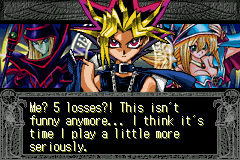
Players begin the only single-player game mode by selecting from 1 of 3 decks to get you started. There is no way of knowing which decks contain which cards, but all 3 are sufficient for getting you through your first few duels once you become familiar with the rules of the game. Initially, you have the option of dueling against 5 faces familiar to even the most casual Yu-Gi-Oh! fan, and additional opponents are unlocked after having defeated each character in each tier a specific number of times. Each collection of characters unlocked serves not only as fun guides through the first 2 seasons of the Yu-Gi-Oh! anime, but becomes increasingly difficult and fun to duel against. After you win any duel against any opponent, you are brought to a screen where you get to choose 1 booster-pack to open. Each booster pack holds cards that are unlocked and available to you after selecting to claim them, though once again the contents of each pack is random until it is opened. Constant acquisition of additional cards that you are encouraged to add to your deck helps to keep things from becoming stale. Abstaining from making changes to your deck may result in frequent loses as the skill of your newest opponents becomes more considerable, so having a consistent influx of new cards is an efficient way to make progress and pacing fluid. 

The goal of the game is to advance to and then win the Yu-Gi-Oh! World Championship. Each duel either won or lost advances the calendar by a single day, and there are a great number of days to get through before the Yu-Gi-Oh! World Championship arrives. Players will spend most of these calendar days dueling against new opponents to unlock more cards and characters. Unfortunately, there is an extremely large number of days between unlocking the final opponent and unlocking the World Championship, and the game slows to a grinding hault during this second half, which abruptly withholds new content. 

Though there are now countless Yu-Gi-Oh! video games out there, I find myself drawn to replay Eternal Duelist Soul every couple of years. The best part about Eternal Duelist Soul is that despite it featuring out-dated cards and strategies, the cards it does feature are the original cards, and your opponents are the original characters from the original cast. Eternal Duelist Soul is to Yu-Gi-Oh! as Red and Blue are to Pokemon. The value in EDS lays in its ability to encourage casual fans to sharpen their knowledge of the basics of the real-life game. Attempting to dive head-first into the world of Yu-Gi-Oh! nowadays can be a tall order, and introducing a new duelist to the latest strategies and combinations can be daunting, but playing these old video games that are more-or-less Yu-Gi-Oh! simulators can be extremely helpful for one trying to begin to play the real-life game. Moreover, EDS and other old Yu-Gi-Oh! games are fun for veteran fans who may have missed out on the opportunity to use old cards and strategies that may have seemed fun at the time but are now out-dated. My Exodia deck is unmatched in this period of Yu-Gi-Oh's history. 

Retrospectively, Yu-Gi-Oh! The Eternal Duelist Soul doesn't offer anything that can't be found in any other Yu-Gi-Oh! game. There are fewer cards, fewer opponents, and fewer strategies to be seen in this classic title, but Eternal Duelist Soul may be valuable to players who wish to get a grasp of what Yu-Gi-Oh! is without throwing themselves into the deep end of a pool filled with unfamiliar monsters and demons (literally). EDS is also still fun for old-time Yu-Gi-Oh! fans who yearn for simpler times of a simpler game. With the exception of some outdated banned-lists and rulings, EDS offers a genuine Yu-Gi-Oh! experience all wrapped up into a handheld video game with an impressive amount of content and replay value limited only by your ability to conceive of new and fun decks and strategies. 

Monday, October 13, 2014

Another Essay: Incentive

I've noticed that it has become more difficult for video games to capture my attention lately. I blame growing up. But actually, I blame only myself and my personal need for video games to offer me something profound. In fact, I think the only reason anyone would ever play a video game is to gain something spiritually satisfying. Yes, we play video games for fun, but the question I intend to answer is the following: what makes certain video games fun for some people and not fun for other people? Why do we personally choose to play the games we choose to play? I've been dwelling on both the question and its answer for a long time, and I believe the answer is "incentive".

       INCENTIVE FOR THE PLAYER                                     INCENTIVE FOR THE AVATAR

These are the two categories under which every single video game ever created falls.
So let's discuss each form of incentive separately:

       Incentive for the player - "If you play this game, you will gain skill".
We know that there are some video games out there that require skill, practice, and repetition. We know there are games that are designed to force the player to improve their skills in order to overcome challenges. We know there are games that require us to become better at its end than we were at its beginning. If you, as a gamer, are drawn to these types of games, then you prefer games where the incentive is for the player. A game where the incentive is for the player is a game designed with the progression and fluency of the "player" in mind. These games can be identified as having minimal or no story, a multiplayer mode(s), a scoring/ranking system, or a competitive push.
Still don't get it?
Super Smash Bros, Mario Kart, Tetris, Super Mario Bros, Mortal Kombat, Guitar Hero, Bejeweled, Flappy Bird, and Angry Birds are all games where the incentive is "if you play this game, you will become better at it/ you will become better than your friends/ you will achieve a higher score than other players/ you will be the best player". The magic behind these games is that when they're being developed, game developers can devote more time to the game's ability to entertain instead of the game's cinematic appeal. The games mentioned above are all examples that are simple in concept, but are played aggressively and religiously. The best games where the incentive is for the player has players playing for dozens, sometimes even hundreds of hours as they each compete and practice and train in order to become the "best". The end goal of these games is determined by the player, not the game. Do you want to be the best Tetris player? If you do, that's awesome, but remember, no one told you that you had to - you set that goal on your own. The problem with these games though is that if the gameplay doesn't compel people to play, then nothing else will. No one will bother competing at a game liked by 0 people- a game that simply isn't fun. Why would anyone want to waste their time becoming good at a game about which no one cares?

      Incentive for the avatar- "If you play this game, your avatar will gain skill".
Then there are some games where we fall in love with a character, or grow to loathe an enemy, or decide that we want what our avatar wants. If you are drawn to these games, then you prefer games where the incentive is for the avatar. The avatar is the character you play as on the screen, and these games involve the gamer pushing the character around from place to place witnessing what he/she witnesses and feeling what he/she feels. These games can be identified as having a deep story, deep characters, motives, and choices with an emphasis on progression or working from a beginning to an end. It is important to note that it may not be necessary for the player to gain any skill at all while playing these types of games. To elaborate, I am borrowing the term "avatar strength" from youtuber Egoraptor, which he describes as a technique used by game developers in order to create the illusion of progression- a game that becomes easier not because the player is becoming more competent, but because his avatar is becoming more capable (stronger, faster, etc.). For example, imagine you're playing a game where your character wields a sword that can kill a given enemy in 4 hits. You then reach a certain point in the game where the sword gets upgraded as a part of the story, and now you can kill that same enemy in 2 hits. YOU did not become better at the game, but your avatar did. Because you played the game, the avatar gained skill. The magic behind these games is that you get the chance to relate to a character in a world to which you would never ordinarily be exposed, you get to watch a story unfold, you get to feel empathy and patience and attachment to characters for a short while, which are all profound feelings! The problem with these games though, is that if the developers fail to create an avatar worth caring about, then the game probably won't be very good. I recently played Tales of the Abyss, a game where the incentive to play was exclusively for the avatar Luke whose purpose in the game was to fulfill his destiny as the chosen hero. Luke, though, was an asshole, refused to develop as a character, and was an absolute displeasure for me to have spent 12 hours with. Why the fuck would I want Luke to gain anything? I didn't care about my avatar, so I didn't like the game. Tales of Symphonia, Assassin's Creed, Resident Evil, and the Paper Mario games, however, are all games in this category that established more likable characters, and were more popular because of it.

Now for the surprise category: the games that consider both types of incentive, games that emphasize the progression of the story AND the acquisition of skill to the player. Examples? Some of the best games out there: The Halo games, Legend of Zelda games, The Last of Us, Resident Evil 4, the Metroid games, Pokemon, and the Final Fantasy games. These are all examples of games where the skills acquired by the player contribute just as much to the gaming experience as the game's characters do. I care about Link in The Legend of Zelda: Twilight Princess because he is a good guy, looking after the children of his village while harboring affection for the mayor's daughter. At the same time, though, I feel personally empowered as the player when I find the double claw shot item and am able to spend hours zipping around Hyrule as a character who at that point becomes essentially Spider-Man with a sword. Both Link and I experience the same thrill by riding Epona the horse through the open fields of Hyrule, and we both feel the same grief when our partner Midna has to return to the Twilight Realm at the game's end (SPOILER HAHAHA). The perfect video games consider incentive for both the player and the avatar.

So why did I write this essay? I don't know. To arrogantly exhibit my comprehension of the video game world? I suppose. But really, I hope that someone finds this essay and it makes them realize that the formula for what definitely makes the perfect video game will become cracked soon enough as long as we keep asking the right questions. At the very least, I hope it gets you guys to consider what you love most about your favorite video games and learn to appreciate them for things you never saw before. And maybe, just maybe, reading this essay has helped you guys realize your own gaming preferences and in the future will now have a better understanding of what you look for in a video game. Time for me to get back to Smash Bros. Thank you!




Thursday, September 19, 2013

I Put This Down: Tales of Symphonia

Mkay so as you all know, I acquired about 20-22 new Gamecube games over the summer. God damn. I haven't even opened all of them yet. I had to develop a strategy in order to quickly play and/or beat all of these games so that I could talk about them here. Typically, I would figure out which games were short, and I tried to blast through them, while allowing myself to spend weeks on longer games, such as Metroid or Wind Waker. Among these longer games was, and still is, one REALLY damn long game. With a typical playthrough occupying at least 80 hours of your life, this next title really had me baffled as far as how I was going to go about playing it quickly. Do I play it every day for a month until it's done? Do I allow myself to take 1000000000 years on it while playing other games in between sessions? Well Ill tell you, what wound up happening was me putting this game down. "Ill play it later" I would tell myself. But days, weeks, maybe a month went by before I finally picked this game up again; this is where our story begins.

Tales of Symphonia

Recently, I've been going around saying "Most of Gamecube's best games came from Dreamcast." It's a hyperbole, not a lie. Tales of Symphonia is a JRPG (Japanese Role Playing Game) that came out for the Sega Dreamcast maaaaany many years ago. Despite it's age, it has made a pretty remarkable impression on Gamecube and RPG fans alike. There are many notable qualities this game has. From it's adorable graphics, to it's deep story, this game really kicks ass from beginning until...you put it down. Notice I didn't say "end". It's true- I haven't finished this game yet, but I will. Don't worry. The question today is the same as it always is with I Put This Down:
Why did I put it down?  Why did I pick it up again? What do I think of it now?

Why did I put this game down? Well let's see. I suppose the answer is that I simply didn't have time to play this game. Believe it or not, between my band, school, sleep, friends, working out, getting mad chicks, getting beefy, buying Red Bull, and donating large sums of money to charity, I didn't have a spare 80 hours of my awesome life to designate to this game. It is a shame too because I really do enjoy this game. Tales of Symphonia is the first real RPG I've ever played, so the new gaming experience was very exciting. This game is often praised for it's amazing character development, graphics, fighting style, and soundtrack. The dungeons are fun because the 1 item you have that pertains only to dungeon exploration changes with every dungeon, affectively creating as many different puzzles as there are dungeons. These are all claims that I found too awesome to be true while reading about the game, but it turns out that they are, in fact, true. Those were just a few reasons why the game was all the more difficult to pause. Unfortunately, in the end, the amount of fun the game was to me was not enough to keep me going for more than 20 hours at a time. Ultimately, I put this game down.
 
But then I picked it up again! I think I just missed playing it. The thing about Tales of Symphonia is that the story makes you want to play the game. It's like reading a good book - you may not love reading in general, but what the hell, are you just going to put down the damn book without fucking finishing it? You're already 20 damn hours into it you scumbag! Just finish it and learn what happens. The game is fun to play and the ever-growing story counteracts the sometimes repetitive gameplay. Maybe you find yourself pressing the same buttons over and over, but the reason WHY you're pressing those buttons changes, and so does too your feelings towards the repetition. Considering the game has 80 hours to god damn do it, the character development IS really flawless. You got some dudes betraying you, some people dying, some friends destined to become enemies, some unlikely alliances, all while optional cut scenes take the development one step further by providing you with windows into the personal lives of each of your team members. Is the viewing of these scenes essential for the understand of the story? Not at all, but they are a good example of the steps game designers can take in order to ensure that those who may put this game down pick it up again. As you guys know, this isn't a review, so I can't talk about gameplay that much, but I will say that the fighting is fun as hell, as it takes place in real-time akin to Viewtiful Joe or even Super Smash Bros., and navigating the open hub world is very fun and rewarding. When a developers give you a big map, they want you to get lost. They want you to appreciate what they have created, and I do. I so do, Namco.

So what do I think of it now? I love it. In the end, Tales of Symphonia offers an exceptional gaming experience. Nothing is too challenging, nothing is too annoying. Everything is perfect as far as I am concerned. The idea of playing an 80 hour game is daunting to me, as, like I've said, I've never played an RPG before (I know this isn't even the longest RPG out there, dickhead, so don't yell at me), but I anticipate feeling really good when I beat it. It will be rewarding and I look forward to it. I do feel like I will wind up putting it down in increments of 20 or so hours, but that's fine by me. If spending 80 hours on this game is inevitable, then I might as well enjoy every last second of it. Seashells. Forever.