I've noticed that it has become more difficult for video games to capture my attention lately. I blame growing up. But actually, I blame only myself and my personal need for video games to offer me something profound. In fact, I think the only reason anyone would ever play a video game is to gain something spiritually satisfying. Yes, we play video games for fun, but the question I intend to answer is the following: what makes certain video games fun for some people and not fun for other people? Why do we personally choose to play the games we choose to play? I've been dwelling on both the question and its answer for a long time, and I believe the answer is "incentive".
INCENTIVE FOR THE PLAYER INCENTIVE FOR THE AVATAR
These are the two categories under which every single video game ever created falls.
So let's discuss each form of incentive separately:
Incentive for the player - "If you play this game, you will gain skill".
We know that there are some video games out there that require skill, practice, and repetition. We know there are games that are designed to force the player to improve their skills in order to overcome challenges. We know there are games that require us to become better at its end than we were at its beginning. If you, as a gamer, are drawn to these types of games, then you prefer games where the incentive is for the player. A game where the incentive is for the player is a game designed with the progression and fluency of the "player" in mind. These games can be identified as having minimal or no story, a multiplayer mode(s), a scoring/ranking system, or a competitive push.
Still don't get it?
Super Smash Bros, Mario Kart, Tetris, Super Mario Bros, Mortal Kombat, Guitar Hero, Bejeweled, Flappy Bird, and Angry Birds are all games where the incentive is "if you play this game, you will become better at it/ you will become better than your friends/ you will achieve a higher score than other players/ you will be the best player". The magic behind these games is that when they're being developed, game developers can devote more time to the game's ability to entertain instead of the game's cinematic appeal. The games mentioned above are all examples that are simple in concept, but are played aggressively and religiously. The best games where the incentive is for the player has players playing for dozens, sometimes even hundreds of hours as they each compete and practice and train in order to become the "best". The end goal of these games is determined by the player, not the game. Do you want to be the best Tetris player? If you do, that's awesome, but remember, no one told you that you had to - you set that goal on your own. The problem with these games though is that if the gameplay doesn't compel people to play, then nothing else will. No one will bother competing at a game liked by 0 people- a game that simply isn't fun. Why would anyone want to waste their time becoming good at a game about which no one cares?
Incentive for the avatar- "If you play this game, your avatar will gain skill".
Then there are some games where we fall in love with a character, or grow to loathe an enemy, or decide that we want what our avatar wants. If you are drawn to these games, then you prefer games where the incentive is for the avatar. The avatar is the character you play as on the screen, and these games involve the gamer pushing the character around from place to place witnessing what he/she witnesses and feeling what he/she feels. These games can be identified as having a deep story, deep characters, motives, and choices with an emphasis on progression or working from a beginning to an end. It is important to note that it may not be necessary for the player to gain any skill at all while playing these types of games. To elaborate, I am borrowing the term "avatar strength" from youtuber Egoraptor, which he describes as a technique used by game developers in order to create the illusion of progression- a game that becomes easier not because the player is becoming more competent, but because his avatar is becoming more capable (stronger, faster, etc.). For example, imagine you're playing a game where your character wields a sword that can kill a given enemy in 4 hits. You then reach a certain point in the game where the sword gets upgraded as a part of the story, and now you can kill that same enemy in 2 hits. YOU did not become better at the game, but your avatar did. Because you played the game, the avatar gained skill. The magic behind these games is that you get the chance to relate to a character in a world to which you would never ordinarily be exposed, you get to watch a story unfold, you get to feel empathy and patience and attachment to characters for a short while, which are all profound feelings! The problem with these games though, is that if the developers fail to create an avatar worth caring about, then the game probably won't be very good. I recently played Tales of the Abyss, a game where the incentive to play was exclusively for the avatar Luke whose purpose in the game was to fulfill his destiny as the chosen hero. Luke, though, was an asshole, refused to develop as a character, and was an absolute displeasure for me to have spent 12 hours with. Why the fuck would I want Luke to gain anything? I didn't care about my avatar, so I didn't like the game. Tales of Symphonia, Assassin's Creed, Resident Evil, and the Paper Mario games, however, are all games in this category that established more likable characters, and were more popular because of it.
Now for the surprise category: the games that consider both types of incentive, games that emphasize the progression of the story AND the acquisition of skill to the player. Examples? Some of the best games out there: The Halo games, Legend of Zelda games, The Last of Us, Resident Evil 4, the Metroid games, Pokemon, and the Final Fantasy games. These are all examples of games where the skills acquired by the player contribute just as much to the gaming experience as the game's characters do. I care about Link in The Legend of Zelda: Twilight Princess because he is a good guy, looking after the children of his village while harboring affection for the mayor's daughter. At the same time, though, I feel personally empowered as the player when I find the double claw shot item and am able to spend hours zipping around Hyrule as a character who at that point becomes essentially Spider-Man with a sword. Both Link and I experience the same thrill by riding Epona the horse through the open fields of Hyrule, and we both feel the same grief when our partner Midna has to return to the Twilight Realm at the game's end (SPOILER HAHAHA). The perfect video games consider incentive for both the player and the avatar.
So why did I write this essay? I don't know. To arrogantly exhibit my comprehension of the video game world? I suppose. But really, I hope that someone finds this essay and it makes them realize that the formula for what definitely makes the perfect video game will become cracked soon enough as long as we keep asking the right questions. At the very least, I hope it gets you guys to consider what you love most about your favorite video games and learn to appreciate them for things you never saw before. And maybe, just maybe, reading this essay has helped you guys realize your own gaming preferences and in the future will now have a better understanding of what you look for in a video game. Time for me to get back to Smash Bros. Thank you!
Nintendo Consoles

Showing posts with label Zelda. Show all posts
Showing posts with label Zelda. Show all posts
Monday, October 13, 2014

Tuesday, April 22, 2014
Saturday, April 12, 2014
Sunday, December 22, 2013
This Bitch Contains Spoilers
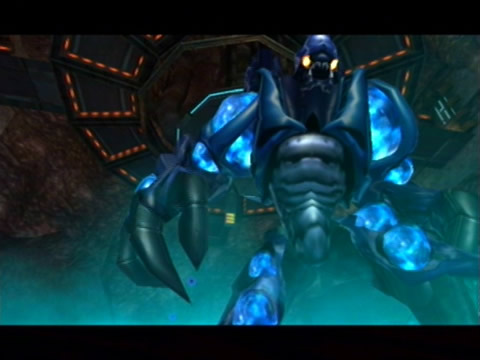
I've been playing a whole bunch of Metroid Prime recently. I feel like I am somewhat near the end of the game, but I have hit what seems to be a little bit of a wall- and by "wall", I mean "huge fucking monster with fucking all this shit that he keeps using to fucking kill me over and over." I am currently up to the Omega Pirate fight in Metroid Prime, and it really is such a damn good boss fight. It got me thinking about other memorable bosses I've had to slay in the past 19 years, and I just felt like writing about some of my favorite, or least favorite ones.
Omega Pirate - Metroid Prime
 Jesus Christ this boss had been wrecking my shit. Basically what happens is Samus enters a chamber with a giant fucking monster sealed inside. The monster appears to be locked inside a pod, but evidently, the real breakthrough in locking technology didn't come until well after these science experiments were stored away. So, of course, the monster sees Samus and breaks out of her prison with the purpose of becoming Samus' best friend and falling in love with her and making sure no harm ever befalls her for the rest of her days. So Ms. Omega Pirate starts fucking attacking you. She has 4 weak spots encased in ice and they all must be struck in order to weaken her. So you shoot some missiles at her icy limbs while dodging the shock waves emitted from her giant ground-pounding fists of doom BUT these attacks must be timed properly or else they will be absorbed by Omega Pirate. Once her limbs are annihilated, she will send in some of her subordinate bitches to distract you from attacking her while she becomes invisible and attempts to regain her health. If you are able to destroy her minions quickly, you will have enough time to strap on your X-ray visor to see the invisible asshole and shoot her in the chest. You gotta do this like, 4 times to beat her, and it's HARD. FUCK.
Deathborn - F-Zero GX
 This was literally a race from hell. Captain Falcon basically gets transported to hell in order to race a guy named Deathborn. If Deathborn wins, he will be able to seize the power of light and darkness for himself and destroy the universe. Because that's how it works. So this track is long, there are so many sharp turns, there are bombs all over the track AND even if you manage to survive all of the crazy shit happening on the track, you still have to navigate that shit faster than Deathborn does. I could barely beat this guy on Easy mode; I can't imagine what it is like on Hard. This is one great game, but sometimes it is so unbelievably difficult, and this boss fight doesn't make it any easier.
Andross - Starfox Adventures
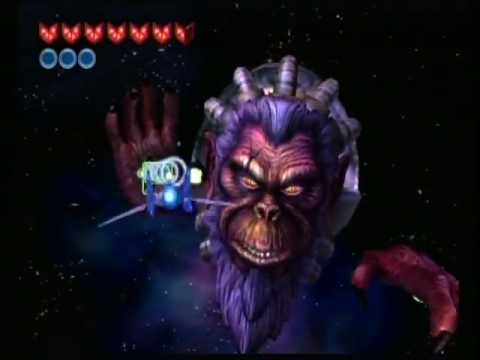
 So basically after spending an ENTIRE game on foot, out of your arwing, and with a dinosaur at your side, you fight the final boss of this game, Andross, the SAME EXACT way you fight bosses in Starfox 64. Andross claims to be the one responsible for all of the misfortune that has befallen Dinosaur Planet, but he is NEVER mentioned before this fight, not even a little tiny bit. As soon as he appeared on my TV screen, I just screamed "What the hell!". Andross had NOTHING to do with Starfox Adventures, yet at the end of the game, there he is, waiting yet again to be slayed by Starfox and Falco. OH YEAH. Also Falco makes his first appearance in this game during the last boss fight. Apparently before the events of the game unfolded, he bailed to start his own star-team, but I guess it didn't work out(?) This boss was in such contrast to the rest of the game that it is literally laughable. It's still fun in my opinion, but it is so sloppily done.
Giga Bowser - Super Smash Bros. Melee
 Mwahahahahaha Giga Bowser! Event Match 51, everybody. I remember beating this colossal-sized King Koopa in elementary school. I remember my friend telling me that I had to use Jigglypuff's Rest attack in order to win. It wasn't until many years later did I go on to beat Giga Bowser and friends with Marth, Link, and Luigi, in addition to Jigglypuff, but before those days were simpler times and simpler melees. Now, I play this boss over and over just for fun but I used to really struggle with it. This boss isn't really too hard if you're good at Smash Bros., but it sure is fun.
Ganondorf - Legend of Zelda Twilight Princess
 THIS boss. This may be my favorite boss fight in any video game I've played. Finally, after all these 20 years of Zelda do we get a real 1 on 1 sword fight with Ganondorf himself. I wish playing against this boss for fun was more viable. Tedious smaller boss fights between this final fight and the last time you are able to save the game puts about 20 minutes of playing other shit before I get to fight Ganondorf, but if that wasn't the case, I would play this fight everyday, and I am probably not kidding. You get a small arena in the middle of Hyrule field where you and Ganondorf each draw your swords and take turns swinging away and blocking all of the swift strikes dealt. No gimmicks, no waiting for him to expose his weak spot or become dizzy from doing his spinning-attacking or anything, just a straight-up duel. Of course, there is always the option to distract him by casting your fishing rod! The first item of the game comes back with an easter egg so lethal that you can almost save the world with it alone! But if that is not your style, you just lure him in and attempt to knock him about the arena with your master sword, ending the fight by...! Well you'll just have to play the game to find out.
Omega Pirate - Metroid Prime
Deathborn - F-Zero GX
 This was literally a race from hell. Captain Falcon basically gets transported to hell in order to race a guy named Deathborn. If Deathborn wins, he will be able to seize the power of light and darkness for himself and destroy the universe. Because that's how it works. So this track is long, there are so many sharp turns, there are bombs all over the track AND even if you manage to survive all of the crazy shit happening on the track, you still have to navigate that shit faster than Deathborn does. I could barely beat this guy on Easy mode; I can't imagine what it is like on Hard. This is one great game, but sometimes it is so unbelievably difficult, and this boss fight doesn't make it any easier.
Andross - Starfox Adventures
Giga Bowser - Super Smash Bros. Melee
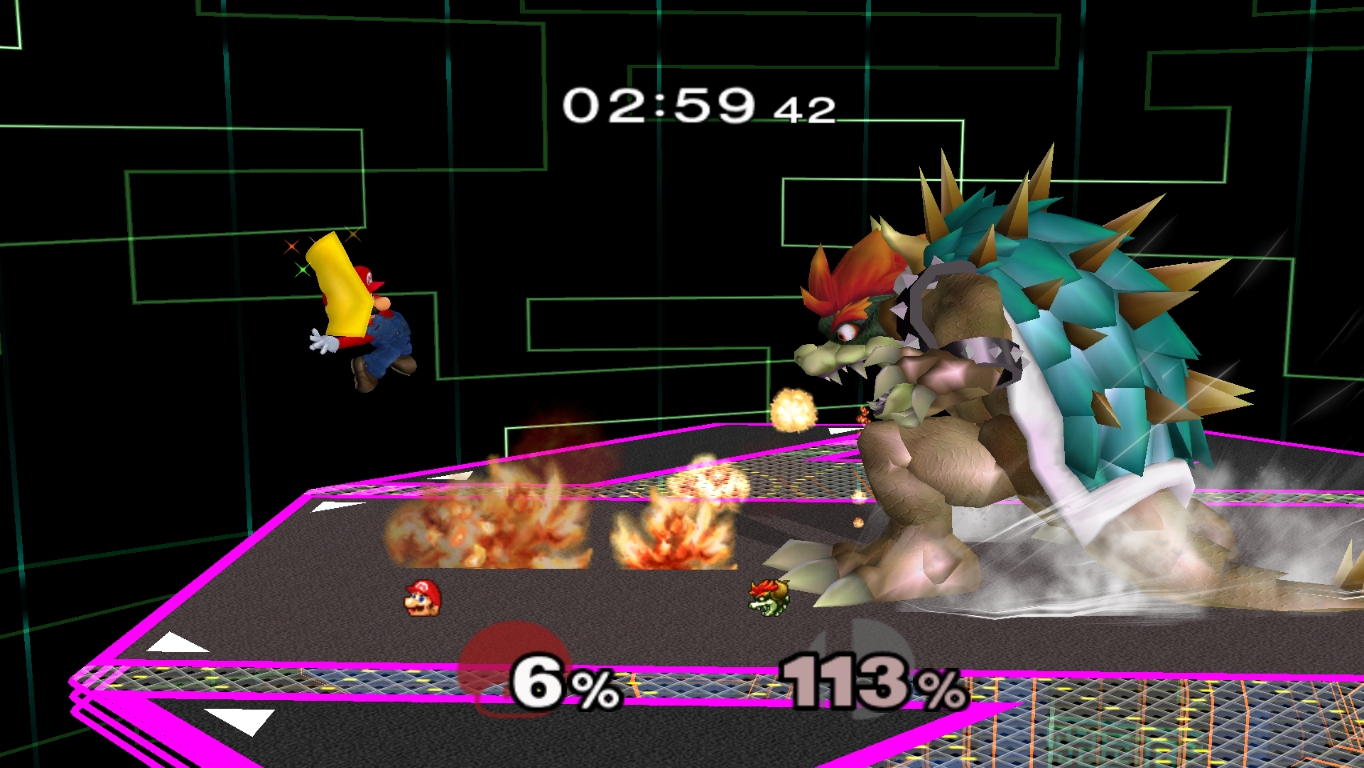 Mwahahahahaha Giga Bowser! Event Match 51, everybody. I remember beating this colossal-sized King Koopa in elementary school. I remember my friend telling me that I had to use Jigglypuff's Rest attack in order to win. It wasn't until many years later did I go on to beat Giga Bowser and friends with Marth, Link, and Luigi, in addition to Jigglypuff, but before those days were simpler times and simpler melees. Now, I play this boss over and over just for fun but I used to really struggle with it. This boss isn't really too hard if you're good at Smash Bros., but it sure is fun.
Ganondorf - Legend of Zelda Twilight Princess
.png)
Friday, December 6, 2013
The Grand Return
So after a short hiatus from this blog, I have decided to resume my writing for a little while. Yesterday, I entered my school's lounge to watch one of my classmates play an old favorite of mine on the 72 inch TV. I watched this kid tear up the streets of City Escape and dive through Aquatic Mine and when he finally introduced himself, he and I started talking a bit about the Gamecube. Our conversation ended with me mentioning that I have 75 Gamecube games in my dorm room. He responded "Wow, you are a Gamecube MASTER if you have 75 games." Well that little fat dick was right! This one goes out to him.
What I noticed about his Sonic Adventure 2 experience was that it was unfolding via Steam - without a Gamecube controller. How could anyone resist playing a video game without the Gamecube controller if they have the option to?? The Gamecube controller is my favorite controller out of any controller I've ever used, and I've used a lot. My friends at home have invited me to share my opinions of the Gamecube controller with them, but I always feel bad because I knew my full opinion would be so long, that it would take up an entire blog post. So in honor of that kid in the lounge, and in honor of the new consoles and their controllers, whose generation pushes the Gamecube and its controller one generation further into the chasms of time, here we fucking go.
The Nintendo Gamecube Controller

How is it that despite the Gamecube controller celebrating it's 12th birthday this year, people still insist on using it to play games that are 5, 4, 2 years old? What is it about this controller, about its unusual button layout, its strange colors, and tiny D-pad that make it so loveable- make it rival with the XBOX 360's or PS3's beloved controllers? Well let's check it out.
Mkay so first to tackle the things that everybody knows: The Gamecube controller features one of the first wing-grip designs, was one of the first controllers to feature 2 thumbsticks and a D-pad, had 6 digital buttons (including the START button), and two shoulder buttons that each sported a hybrid of digital/analog technology. There are two things about the Gamecube controller that are unconventional, and I just mentioned one of them. Two features, two attributes of the Gamecube controller that brought it to the top of my list of favorite video game controllers. These two features that I am about to discuss make the Gamecube controller appear to some gamers as silly or even dumb and luckily for you guys, you have me to tell those people to fuck off.
 The Gamecube controller doesn't have any new face-buttons, in fact, it has even less than the controller of the console that came before it, Nintendo 64, and the same amount as the controller that came before THAT, the Super Nintendo Entertainment System. It seems that the Gamecube controller didn't have any new amount of buttons, but it did sport a different, unparalleled layout. The Gamecube controller is the only controller ever made (I've ever seen or have been made aware of) that features one very large central button with 3 other smaller buttons arranged around it. As you can see in this diagram, the A button is the large center button, the B button is a smaller, circular button to the lower left of the A button, and the X and Y buttons are sort of cashew-shaped buttons above and to the right of the A button. Okay, fuck, everybody knows this. But does everybody know why? I mean, it makes sense: if there is one button that in the history of gaming has been traditionally used more often than any other button, why not make it bigger? Give it special treatment, because it is a special button. Fine. The A button is big because it is used most often.
So what about the B, X, and Y buttons? From here on out, this is my own theory for why the buttons are arranged the way they are. So if you are going to have a large A button, it would make sense that the other buttons are going to be sized with respect to how often the player is going to press the other buttons compared to the A button. With the Gamecube controller, there is no question that Nintendo was prepared to design their games to feature the A button as a means to activate the game's primary command. Let's look at Metroid Prime. Which action, out of Jump, Shoot, Fire Missiles, and Roll in a ball, each of the actions that can be triggered by pressing each face-button, do you do most often? The answer is Shoot. And which button is Shoot? A - the biggest button on the controller. Now. Which action do you secondarily, or the second most often? Jump. Jump is the B button. So now we see that secondary actions are mapped to the B button, but why B? What is so special about the B button when it seems that the X and Y buttons could just as easily be given the secondary role? Check this out, I actually have the controller in front of me right now. Assume that your thumb is going to naturally rest over the A button simply because it is the most comfortable position for the thumb to rest in. Now hold the A button down. Without removing your thumb from the A button, try
 to tap the B, X, and Y buttons a bunch of times each. The button that is most comfortable to hit without removing your thumb from the A button is B, followed by Y, followed by X. Why? Look at the face-buttons from their sides. If you look closely, you'll see that the top of the A button is slightly rounded like a small hill while B, X, and Y have flat tops. Now look at the lowest point of the "hill" top of the A button. If, in your head, you drew an imaginary line continuing along the slope of the A button at the same angle and stopped your line as soon as it hit another face-button, you will notice something kind of crazy. The line you draw that hits the X and Y buttons strike those buttons on their side, not on their tops. The line you draw that hits the B button, strikes the B button on its face, not its side. So what does this mean? Well the lines I had you guys draw in your head are actually the paths your thumb travels in order to press B, X, and Y without releasing A, like I had you do before. If you are rolling your thumb along each of these lines, the lines that lead from A to either B, X, or Y, you will hit X and Y on their side and B on the top. Obviously, it is most comfortable to hit a button on its top, explaining why B the most comfortable button to hit without releasing A when it is being held down. It is also important to know that in order to maximize the comfort of "rolling" from A to B, the B button is set slightly deeper into the controller compared to X or Y, ensuring that you strike the B button on its face every single time you go to hit it.
I said that the Y button is second most comfortable to hit without releasing A. Why? Why not X?
 Okay. Pangaea the shit out of these face-buttons and what happens? The X and Y buttons fit around the A button like a puzzle. The B button does not, but its circular shape makes it easier to fit onto the face of the controller, so that takes precedence over what I am about to explain about the X and Y buttons. Let's take the X and Y button separately. In your head, draw a line that connects the right side of the Y button to the right side of the A button. Then do the same thing for the left sides and color the 2 buttons and the space between them. You'll wind up with a mental picture that looks something like this image.
Look at your thumb. It's the same shape. What face-button command do you do THIRD most often in Metroid Prime? Fire Missiles. Y button. Second most comfortable to hit without releasing A. I know.
If you do the same thing with the X button, you get a slightly different shape that doesn't really look too much like anything. The best thing I could come up with is the following: The X button has the same shape as the right-most third of your thumb. If we cut your thumb vertically into thirds, the X button is about the same shape as the third furthest to the right. When you line up the X button with the X-button-shaped part of your thumb perfectly, you still have a whole bunch of thumb left over which sits directly above the A button. Push down, and you've got yourself your third most comfortable position for your thumb to rest in. What is your 4th most used face-button action in Metroid Prime? Morph Ball. X button.
 So why make a controller whose face-buttons are all able to be pressed while holding A? Think about this: you have 4 actions that the face-buttons allow you to do. But what if you need to do 2 of them at the same time? Jump and shoot? Lock-on and Shoot? Accelerate and use items? Jump and Change weapons? These are all examples of typical actions that we need to perform at the same time or else we would be killed or lose the race or whatever SO when you position the buttons in a way that allows them each to be pressed comfortably without having to stop performing the main action triggered by A button, then you have a controller that allows you to perform multiple actions at the same time. But if this is the case, why don't other controllers use this layout? I mean, Gamecube is not the only home of games where it is necessary to perform 2 actions at once, so how is this done without the Gamecube controller's button layout? The answer is triggers. Triggers are pressed with the pointer or middle finger - not the thumb. 2 fingers to tackle 2 different buttons instead of the thumb to tackle 2 at once. That's why in Halo 3, Shoot, the first most important command is mapped to a trigger and Jump, the second most important is mapped to a face-button. With 1 finger to shoot and 1 to jump, jumping and shooting at the same time is easy. The Gamecube controller accomplishes the same exact thing in Metroid Prime, but without the trigger. In fact, the addition of the triggers on the Gamecube controller allow Samus in Metroid Prime to perform 3 actions simultaneously - Jump, Shoot with B and A respectively, and Lock-on with L. Impressive, no?
 But what about those triggers? (This is the second function unique to the Gamecube controller) Push them down half way, and they glide the same way the XBOX 360 controller's do. Push them down all the way and they click. This is that digital/analog hybrid technology I mentioned earlier. Analog signals are used when triggers are pushed down on the XBOX 360. Gamecube uses the same technology, until the triggers are pushed down all the way and "click". This click, knocks an activator inside the controller that initiates a digital signal, also used by the face-buttons. This duality allows one button to perform up to 2 different functions. Light shield vs Heavy shield in Super Smash Bros. Melee or Run + Squirt vs. Stand still + Squirt in Super Mario Sunshine, maximizing the number of different commands available to the player without overwhelming the player with too many buttons.
And that's it! Gamecube controllers are awesome and that is why.
What I noticed about his Sonic Adventure 2 experience was that it was unfolding via Steam - without a Gamecube controller. How could anyone resist playing a video game without the Gamecube controller if they have the option to?? The Gamecube controller is my favorite controller out of any controller I've ever used, and I've used a lot. My friends at home have invited me to share my opinions of the Gamecube controller with them, but I always feel bad because I knew my full opinion would be so long, that it would take up an entire blog post. So in honor of that kid in the lounge, and in honor of the new consoles and their controllers, whose generation pushes the Gamecube and its controller one generation further into the chasms of time, here we fucking go.
The Nintendo Gamecube Controller

How is it that despite the Gamecube controller celebrating it's 12th birthday this year, people still insist on using it to play games that are 5, 4, 2 years old? What is it about this controller, about its unusual button layout, its strange colors, and tiny D-pad that make it so loveable- make it rival with the XBOX 360's or PS3's beloved controllers? Well let's check it out.
Mkay so first to tackle the things that everybody knows: The Gamecube controller features one of the first wing-grip designs, was one of the first controllers to feature 2 thumbsticks and a D-pad, had 6 digital buttons (including the START button), and two shoulder buttons that each sported a hybrid of digital/analog technology. There are two things about the Gamecube controller that are unconventional, and I just mentioned one of them. Two features, two attributes of the Gamecube controller that brought it to the top of my list of favorite video game controllers. These two features that I am about to discuss make the Gamecube controller appear to some gamers as silly or even dumb and luckily for you guys, you have me to tell those people to fuck off.
 The Gamecube controller doesn't have any new face-buttons, in fact, it has even less than the controller of the console that came before it, Nintendo 64, and the same amount as the controller that came before THAT, the Super Nintendo Entertainment System. It seems that the Gamecube controller didn't have any new amount of buttons, but it did sport a different, unparalleled layout. The Gamecube controller is the only controller ever made (I've ever seen or have been made aware of) that features one very large central button with 3 other smaller buttons arranged around it. As you can see in this diagram, the A button is the large center button, the B button is a smaller, circular button to the lower left of the A button, and the X and Y buttons are sort of cashew-shaped buttons above and to the right of the A button. Okay, fuck, everybody knows this. But does everybody know why? I mean, it makes sense: if there is one button that in the history of gaming has been traditionally used more often than any other button, why not make it bigger? Give it special treatment, because it is a special button. Fine. The A button is big because it is used most often.
 So what about the B, X, and Y buttons? From here on out, this is my own theory for why the buttons are arranged the way they are. So if you are going to have a large A button, it would make sense that the other buttons are going to be sized with respect to how often the player is going to press the other buttons compared to the A button. With the Gamecube controller, there is no question that Nintendo was prepared to design their games to feature the A button as a means to activate the game's primary command. Let's look at Metroid Prime. Which action, out of Jump, Shoot, Fire Missiles, and Roll in a ball, each of the actions that can be triggered by pressing each face-button, do you do most often? The answer is Shoot. And which button is Shoot? A - the biggest button on the controller. Now. Which action do you secondarily, or the second most often? Jump. Jump is the B button. So now we see that secondary actions are mapped to the B button, but why B? What is so special about the B button when it seems that the X and Y buttons could just as easily be given the secondary role? Check this out, I actually have the controller in front of me right now. Assume that your thumb is going to naturally rest over the A button simply because it is the most comfortable position for the thumb to rest in. Now hold the A button down. Without removing your thumb from the A button, try


I said that the Y button is second most comfortable to hit without releasing A. Why? Why not X?
 Okay. Pangaea the shit out of these face-buttons and what happens? The X and Y buttons fit around the A button like a puzzle. The B button does not, but its circular shape makes it easier to fit onto the face of the controller, so that takes precedence over what I am about to explain about the X and Y buttons. Let's take the X and Y button separately. In your head, draw a line that connects the right side of the Y button to the right side of the A button. Then do the same thing for the left sides and color the 2 buttons and the space between them. You'll wind up with a mental picture that looks something like this image.
 Look at your thumb. It's the same shape. What face-button command do you do THIRD most often in Metroid Prime? Fire Missiles. Y button. Second most comfortable to hit without releasing A. I know.
If you do the same thing with the X button, you get a slightly different shape that doesn't really look too much like anything. The best thing I could come up with is the following: The X button has the same shape as the right-most third of your thumb. If we cut your thumb vertically into thirds, the X button is about the same shape as the third furthest to the right. When you line up the X button with the X-button-shaped part of your thumb perfectly, you still have a whole bunch of thumb left over which sits directly above the A button. Push down, and you've got yourself your third most comfortable position for your thumb to rest in. What is your 4th most used face-button action in Metroid Prime? Morph Ball. X button.


And that's it! Gamecube controllers are awesome and that is why.
Saturday, September 7, 2013
I Put This Down, Then Picked It Up Again
I put this down, then picked it up again
because it's good enough for one more round.
I put this down, then picked it up again
thought it would be better this time around.
I put this down!
Nothing like a Tubthumping reference to start a new line of posts.
Anyway, I Put This Down will be yet another short archetype of posts. Each IPTD post will be a brief discussion of my thoughts of a game that I played for a bit, but didn't finish immediately. The pattern for these games will be the following: I bought it, played it, put it down, forgot about it, picked it up again. The discussion will take place after I pick it up and start playing it again. Who knows what will happen the second time around?
Prince of Persia: Sands of Time
 The Prince of Persia titles have exhibited a new form of platforming/adventure games ever since their original
conceptualization. In these games, you play as the Prince of Persia himself who has decided that the best way to save Persia from the rule of an evil king is to run around a bit, jump off a few walls, and kill some bad guys. Fair enough. These games are praised for their ability to combine parkour-like skillsets with puzzle-solving, and dungeon-crawling mechanics. In addition to all of the moves that I wish I could do in real-life, the prince also uncovers a dagger whose hilt stores the sands of time. Releasing the sands of time from the dagger reverses the flow of time. This ability can be used during gameplay in a way that is exactly like re-winding an old VHS tape (speaking of old reality...). Pressing R will not only employ the power of the most ridiculous but still awesome backwards WOOSHing sound effects, but will bring the prince back in time for up to about 5 seconds real-time. So that's what we have for us today - a parkour prince and a dagger that can reverse the flow of time.
Of course, I am writing as if I intend to belittle the game - I don't. Prince of Persia: Sands of Time really is a fun game. The controls, outdated as they are, are solid, and although the camera makes me want to die, the ability to reverse the flow of time in order to undo your mistakes is compensation enough. So the 3 big questions are the following:
Why did I put this game down?
Why did I pick it up again?
What do I think of it the second time around?
 I did just admit that I thought this game was fun, because I do - I wouldn't lie to you guys. But I put this game down a long, long time ago because I thought it fell into a trap that Mirror's Edge introduced me to, but wound up existing for a long time before that. You see, Prince of Persia: Sands of Time is really 3 different styles of gameplay arranged separately on 1 disc. This game is exactly 33% parkour, 33% puzzle-solving, 33% hack-and-slash combat, and 1% synergy (this proto-discovery was realized by my friend Dylan = credit where credit is due). What is unique to the P.O.P. series is the parkour-extreme-platforming so I bought this game (my first Prince of Persia game) thinking that it was going to be about 90% parkour and 10% wishing I was still doing parkour. The trap that this game falls into most likely stems from the developers thinking that the parkour parts were awesome, but the princes' skillset weren't large enough to create a game of 100% parkour without it starting to feel repetitive after about 2 hours. So what they did was create additional gameplay styles that included combat, by throwing in some beat 'em up sections which consisted of the slaying of multiple waves of enemies until everyone except you is dead. Fine. But what happens with these "solutions" sometimes is that the very remedy used to cure repetitive gameplay becomes repetitive. So let me be more specific to this title:
Problem: The game would be boring and repetitive as shit if ALL you did was parkour.
Solution: Add more game mechanics, like fighting and puzzle-solving, in order to prevent the parkour from getting stale.
New Problem: Fighting and Puzzle-Solving get stale and supersaturate the game to the point where I miss the parkour. #ijustlearnedhowtobold
 So I really really loved the parkour parts of the game, but the combat sections were sloppy, and the puzzle-solving sections were challenging, but not fun, and were really more annoying than anything, as they hindered my ability to throw myself off of buildings and stuff. I put Prince of Persia: Sands of Time down because I couldn't handle how not fun the puzzle-sections were. All I wanted to do was some wall-runs and some jumping off of stuff, but apparently Sonic The Hedgehog is still my best bet for that desire.
Probably 18 months passed and I decided to see what would happen if I popped that disc back into the cube again. Perhaps, I thought, my new found video-game wisdom would aid in my future appreciation of what is usually considered to be, like, the 5th best Gamecube game ever. Resuming my old file, I immediately became stuck in a parkour portion that only a youtube video walk-through could help me out of, and then was INSTANTLY thrown into the most annoying puzzle-section I had yet to behold. I cleared it after about a half hour of fucking falling like an idiot, and pretty much just said "fuck it" after that. Prince of Persia has yet to see the world outside of its since then. Being several hours into it, I feel like I have played it enough in order to decide that I have seen what I needed to see.
On a side note, I understand that the game took a different approach to the video game soundtrack by...well...not having one, but it didn't work. If I am going to literally be watching myself fuck up, and be forced to watch myself fuck up in reverse slow-mo, then imma need some tunes to keep me going. And that's all I have to say about that.
Verdict:
I put this down, then picked it up again, and threw it back to the ground
where it stayed down.
http://www.youtube.com/watch?v=2H5uWRjFsGc
because it's good enough for one more round.
I put this down, then picked it up again
thought it would be better this time around.
I put this down!
Nothing like a Tubthumping reference to start a new line of posts.
Anyway, I Put This Down will be yet another short archetype of posts. Each IPTD post will be a brief discussion of my thoughts of a game that I played for a bit, but didn't finish immediately. The pattern for these games will be the following: I bought it, played it, put it down, forgot about it, picked it up again. The discussion will take place after I pick it up and start playing it again. Who knows what will happen the second time around?
Prince of Persia: Sands of Time
 The Prince of Persia titles have exhibited a new form of platforming/adventure games ever since their original
conceptualization. In these games, you play as the Prince of Persia himself who has decided that the best way to save Persia from the rule of an evil king is to run around a bit, jump off a few walls, and kill some bad guys. Fair enough. These games are praised for their ability to combine parkour-like skillsets with puzzle-solving, and dungeon-crawling mechanics. In addition to all of the moves that I wish I could do in real-life, the prince also uncovers a dagger whose hilt stores the sands of time. Releasing the sands of time from the dagger reverses the flow of time. This ability can be used during gameplay in a way that is exactly like re-winding an old VHS tape (speaking of old reality...). Pressing R will not only employ the power of the most ridiculous but still awesome backwards WOOSHing sound effects, but will bring the prince back in time for up to about 5 seconds real-time. So that's what we have for us today - a parkour prince and a dagger that can reverse the flow of time.
Of course, I am writing as if I intend to belittle the game - I don't. Prince of Persia: Sands of Time really is a fun game. The controls, outdated as they are, are solid, and although the camera makes me want to die, the ability to reverse the flow of time in order to undo your mistakes is compensation enough. So the 3 big questions are the following:
Why did I put this game down?
Why did I pick it up again?
What do I think of it the second time around?
 I did just admit that I thought this game was fun, because I do - I wouldn't lie to you guys. But I put this game down a long, long time ago because I thought it fell into a trap that Mirror's Edge introduced me to, but wound up existing for a long time before that. You see, Prince of Persia: Sands of Time is really 3 different styles of gameplay arranged separately on 1 disc. This game is exactly 33% parkour, 33% puzzle-solving, 33% hack-and-slash combat, and 1% synergy (this proto-discovery was realized by my friend Dylan = credit where credit is due). What is unique to the P.O.P. series is the parkour-extreme-platforming so I bought this game (my first Prince of Persia game) thinking that it was going to be about 90% parkour and 10% wishing I was still doing parkour. The trap that this game falls into most likely stems from the developers thinking that the parkour parts were awesome, but the princes' skillset weren't large enough to create a game of 100% parkour without it starting to feel repetitive after about 2 hours. So what they did was create additional gameplay styles that included combat, by throwing in some beat 'em up sections which consisted of the slaying of multiple waves of enemies until everyone except you is dead. Fine. But what happens with these "solutions" sometimes is that the very remedy used to cure repetitive gameplay becomes repetitive. So let me be more specific to this title:
Problem: The game would be boring and repetitive as shit if ALL you did was parkour.
Solution: Add more game mechanics, like fighting and puzzle-solving, in order to prevent the parkour from getting stale.
New Problem: Fighting and Puzzle-Solving get stale and supersaturate the game to the point where I miss the parkour. #ijustlearnedhowtobold
Probably 18 months passed and I decided to see what would happen if I popped that disc back into the cube again. Perhaps, I thought, my new found video-game wisdom would aid in my future appreciation of what is usually considered to be, like, the 5th best Gamecube game ever. Resuming my old file, I immediately became stuck in a parkour portion that only a youtube video walk-through could help me out of, and then was INSTANTLY thrown into the most annoying puzzle-section I had yet to behold. I cleared it after about a half hour of fucking falling like an idiot, and pretty much just said "fuck it" after that. Prince of Persia has yet to see the world outside of its since then. Being several hours into it, I feel like I have played it enough in order to decide that I have seen what I needed to see.
On a side note, I understand that the game took a different approach to the video game soundtrack by...well...not having one, but it didn't work. If I am going to literally be watching myself fuck up, and be forced to watch myself fuck up in reverse slow-mo, then imma need some tunes to keep me going. And that's all I have to say about that.
Verdict:
I put this down, then picked it up again, and threw it back to the ground
where it stayed down.
http://www.youtube.com/watch?v=2H5uWRjFsGc
Friday, August 16, 2013
Playground Series: What the Hell Am I Playing?
I'm sure by now, you guys are sick of hearing me say things that aren't about video games, so fuck me apologizing for not writing in a while. Let's just roll the next review out.
Billy Hatcher and the Giant Egg

I've recently acquired about 20 new Gamecube games. So, where do you start playing? I figured I would start up 1 or 2 long games and 1 or 2 short games at a time, and just collect other games to save for later in between. One game that I wound up playing during all of this gaming madness was Billy Hatcher and the Giant Egg. I only read a little bit about this game in Gameradar's list of top 50 Gamecube games http://www.gamesradar.com/best-gamecube-games/ before I decided to never think about it again, simply because I could not imagine what I was reading actually being a real game. Well I am here tonight to discuss how I formally withdraw my original opinions of this game, and replace them with a whole new perspective on the concept of hatching eggs.


Originality. So I don't know if you guys heard when I said it before, but your weapon...is an egg. A giant egg. It is important for those holding magnifying glasses to this game to note that the abilities you gain while holding an egg are not very original, as we have seen the ground pound/ butt bounce/ whatever you want to call it for years, but if rolling an egg into enemies in order to vanquish them isn't creative enough for you, then stop letting Stephen King set your creativity bar too high. You could say that this game is original because you roll an egg around in order to play, or you could say it's unoriginality is disguised by an egg, but either way, someone over at Sonic Team was ballsy enough to suggest that a game whose main attraction was rolling an egg would sell, and it did...at least...to me. Moving on.
 Graphics. Let's see, 2003 graphics. Well we got Metroid Prime, F-Zero GX, and The Legend of
 Zelda: The Wind Waker. Okay so the bar was set pretty high for graphics even in 2003. The visual importance of video games really became most noticeable upon the arrival of Playstation 2 games during the climax of it's career. Graphical legacies were also continued by Microsoft's Halo and Gears of War series, but if I had a dollar for every time someone mentioned how the graphics in Metroid Prime could rival those of modern games, I wouldn't have to go to college. That being said, graphical feats were not easily attainable in 2003, and unfortunately, it seams that Sonic Team missed the frying pan in this area. However, having average graphics will never mean that the game looks bad. Average graphics are a great canvas for a great art style. Wind Waker is the perfect example. While Billy Hatcher doesn't feature graphics of any impressive quality, it is a delightfully bright and colorful game, complimenting it's playful, light-hearted gameplay, and REALLY catchy music. You're god damn rolling an EGG. Does anyone really need goodgraphics for this?? What was really necessary for this game, were bright colors, and Sonic Team nailed that.
Like I said before, the game feels a little underdeveloped. Perhaps it is Sonic Team tradition to leave dumb mechanics in their games, or maybe it is the fact that Billy Hatcher is run by the same engine that ran Sonic Adventure 2 - a game whose glitches are almost as famous as it's level design, but like I said before, the difficult sequences of BH:GE are the result of a few poorly designed game mechanics. Some enemies are just too annoying, maintaining control while moving with your fragile egg is about 20% harder than it should be, and small mistakes are often extremely unforgiving to the point where you question why you're playing this game even more than you are intended to. The game is still very much playable, as these annoying mechanics are not found in every level, but when they do show up, you will die in your heart a little bit for every time Billy dies as a result of their bullshit. Overall, Billy Hatcher really is a fun game. The level designs vary greatly from stage to stage, and are always a pleasure to look at. Sometimes the game can be too hard for all of the worst reasons, but in the end, you never really did expect a game that featured weaponized eggs to be 100% solid, did you? This game is 15 dollars on Amazon. Considering the fact that 15 is enough to get Metroid Prime, Resident Evil 4, Viewtiful Joe, SSX 3, Wave Race: Blue Storm, Mario Golf Toadstool Tour, Prince of Persia: Sands of Time or F-Zero GX, I would say that it may not be worth getting immediately, but if you ever run into it at your local Play N Trade like how I did, it may be destiny telling you to either play this title, or grab an omelet.
81/100
-10 Points - occasionally clumsy controls
-5 Points - occasionally dumb stupid mechanics
-4 Points - sometimes the game feels a little boring, as levels tend to be a bit too long, resulting in the witnessing of the same music and visuals for up to 15 minutes at a time
50 Points - originality
10 Points - visual appeal
6 Points - Audio appeal
10 Points - the game is not very long, but the amount of optional levels, in addition to the main story, makes the game feel like it is how long you want it to be
5 Points - the multiplayer is EXACTLY what you want it to be
Monday, August 5, 2013
Playground Series Number 4: "Hmph"
Originally, this post was going to be named "Hidden Gem" but I realized that a lot of you who will read about this next game will probably be sitting at your computer at 3a.m. with the potato chips in hand thinking only "hmph". Not in a bad way at all, I just imagine that very little people have played this game. Admittedly, this is a little bit more of an obscure title. Not obscure like P.N.03 where it is at least interesting, but obscure because it is very easy to overlook. With no immediate indications of what the game has in store, I can imagine someone looking at the rack of Gamecube games at your nearest Play N Trade and not even giving this game a first thought, let alone a second one. Despite that, this is truly one of the best racing games I've ever played, and to be honest, this is my god damn blog - I can write whatever I want.
 ATV: Quad Power Racing 2
First of all, I am aware that there is an ATV: Quad Power Racing for the Playstation, but I never played it, so I can't and won't compare the two. Let's move the hell on.
ATV: Quad Power Racing 2 is an ATV racing game that features a myriad of different game modes, great graphics, great music and sound effects, and an incredibly not obtrusive upgrading system. The controls are passible (usually pretty tight) and the difficulty is fair for a racing game. Racing games are an interesting realm of video games. Often, hardcore gamers pass over racing titles because the gameplay can be predictable. What do these gamers predict? That in order to complete the game, you will race over many different tracks and come in first. When you beat one track, you will unlock the next one until you have beaten them all. That's how a race works. You dumb animal.
 Well certainly, there is no arguing there. In ATV:QPR2, you will race across many different tracks with the goal to come in first in order to advance to the next track. It is however, the numerous different ways to play this title via the different game modes that make this game's replay value shoot through the ceiling more than the Koolaid guy with walls. So let's discuss them at least briefly. First off is Career mode, pretty typical to any racing game. Oh yeah, I guess the point of this post is to convince you how ATV: Quad Power Racing 2 is different/better than other racers. Okay Career mode. The object of this mode is to race and perform well enough on each track to advance to the next track. Simple. Notably, the Career mode is a very decent length that already earns this game a plus over other racers, but that's not all that's going on here. The first thing you do when you turn on this game is name your own character. The customizability is virtually non-existent which blows, but you learn to love what you have. This character you name is your character during Career mode, and is available to play as in other game modes. The point of having your own personal character is that it gives you the almost necessary opportunity to upgrade your racer as you play. Throughout every game mode, you can perform tricks - 20 (or something) total not including flips and spins. When a trick is landed, your boost meter fills. Using boost during a race increases
 your speed temporarily, and in a racing game, it is always necessary to go fast. Why am I telling you this? Because the entire idea behind upgrading your character is not only increasing his racing stats, but increasing his knowledge of tricks. As your character ranks up from Newbie to Master, he learns new tricks that can be performed during a race. If a more difficult trick is landed, you will be rewarded with a larger amount of boost, and a greater amount of points compared to that yielded by a more basic trick. Basically, the more your character is upgraded, the better your tricks are. The better your tricks are, the more boost you have, and the faster you go. I mentioned before that the upgrading was non-obtrusive. What I mean by this is that the upgrading system feels very synergistic with the gameplay. Usually, upgrading is associated with games that use swords or strength or magic or skills that should be improves over time. It seems odd for a racing game to use concepts that are atypical to it's genre, but ATV:QPR 2 really threads the two ideas together seamlessly. If you perform well during a race, your character will upgrade. If you kick your opponents off of their rides, your character's Strength ability will increase, the game way slaying a dragon in other games will increase your sword's power.
I am not going through every damn game mode, but I will mention them briefly:
*Arcade Mode - Race through every track one after another (15 total) without loosing. It is a simplified Career Mode
*Single Race - Choose to play 1 track 1 time
*Freestyle - Compete on a separate Arena-like stage and perform as many tricks as you can in order to achieve the highest score within a certain amount of time
*Challenge - Drive through various obstacle courses and complete them all within a certain amount of time. Don't mistake this for some kiddie bullshit - these jungle-gym stages will make you rip your fingers off.
*Time Trial - Complete each track as fast as you can. Your time is recorded for later reference
*Custom - Select up to 5 tracks in order to create your own personal Grand Prix
*Multiplayer - Race with up to 4 of ya friends
*Academy - the tutorial levels
 After Career, the game modes are pretty straight forward, but are all rewarding. You see, my little blog fans, unlike lazy games, there is quite the incentive to complete every game mode. Even if it's not difficult, every game mode, yes even the tutorial, must be completed in order to 100% the game. Most of the unlockables are additional ATVs with different stats affecting their ability to race, but they are all good, and worth having. This kind of game forces you to squeeze every bit of life out of it. There are no modes that you can neglect if you really wish to unlock every ATV, and complete the game. The point is that although the main focal point of this game is the racing, as it is a racing game, there are so many more ways to play it if you get bored of racing before you get bored of the sound of a revving engine.
Speaking of sound, this is something worth a brief mention. This game's music and sound effects will make your ears leap off of your head and hug the T.V. Yes, I am being dramatic, but alas, I have almost 1000 views on this blog. How many do you have? That's right, eat shit. Moving on. Ironically to my previous comments regarding the sound, the soundtrack of this game is small. Like, REALLY small. There are only 6 songs in the whole thing. However, you have to realize that it's not a Tony Hawk game. You will only listen to about 75% of a song per race and you will only play about, I don't know, 6 races before you turn off the game for the night. So really, although it may seem like you will get sick of hearing the same songs over and over, you won't unless you don't like the music. To be frank, I learned about some of my favorite bands from this game. Tom Delonge's Boxcar Racer is featured in this game, as well as punk rock's very own The Reunion Show and Midtown. Complementary to the great tunes, is a bangin' engine sound effect. I will admit, I didn't learn to appreciate it until my Dad started to play and fucked with my sound effects, but eventually, I grew some balls and learned to love the sound of a great engine. Aurally, this game is an absolute pleasure.
 To wrap it up, this ATV racing game does a great job of extending it's own life in a refreshing splash of off roading goodness. It does lack the customizability of other ATV racing games, but I found that it didn't affect the gameplay, although I will penalize for that offense. The large collection of game modes keeps you coming back for more, even if you don't feel like racing, and the fact that there are unlockables around every corner ensures your playing of every mode this game has to offer. And finally, I forgot to mention explicitly that you can kick other riders off of their ATVs during a race. Multiplayer perfection.
Score: 79/10
+30 points for just being a damn fun racing game
+30 points for all of the different game modes that are not "basically the same thing as the main game" *coughSoulCalibur4cough*
+10 points for the innovative upgrading systems during the Career mode
+9 points for the great audio/visual appeal
- 15 points for the absence of customizability throughout the game
- 5 points for some repetitive courses/gameplay during the Career/Arcade modes
- 1 points for slightly sloppy controls regarding the execution of tricks
 ATV: Quad Power Racing 2
 First of all, I am aware that there is an ATV: Quad Power Racing for the Playstation, but I never played it, so I can't and won't compare the two. Let's move the hell on.
ATV: Quad Power Racing 2 is an ATV racing game that features a myriad of different game modes, great graphics, great music and sound effects, and an incredibly not obtrusive upgrading system. The controls are passible (usually pretty tight) and the difficulty is fair for a racing game. Racing games are an interesting realm of video games. Often, hardcore gamers pass over racing titles because the gameplay can be predictable. What do these gamers predict? That in order to complete the game, you will race over many different tracks and come in first. When you beat one track, you will unlock the next one until you have beaten them all. That's how a race works. You dumb animal.
 Well certainly, there is no arguing there. In ATV:QPR2, you will race across many different tracks with the goal to come in first in order to advance to the next track. It is however, the numerous different ways to play this title via the different game modes that make this game's replay value shoot through the ceiling more than the Koolaid guy with walls. So let's discuss them at least briefly. First off is Career mode, pretty typical to any racing game. Oh yeah, I guess the point of this post is to convince you how ATV: Quad Power Racing 2 is different/better than other racers. Okay Career mode. The object of this mode is to race and perform well enough on each track to advance to the next track. Simple. Notably, the Career mode is a very decent length that already earns this game a plus over other racers, but that's not all that's going on here. The first thing you do when you turn on this game is name your own character. The customizability is virtually non-existent which blows, but you learn to love what you have. This character you name is your character during Career mode, and is available to play as in other game modes. The point of having your own personal character is that it gives you the almost necessary opportunity to upgrade your racer as you play. Throughout every game mode, you can perform tricks - 20 (or something) total not including flips and spins. When a trick is landed, your boost meter fills. Using boost during a race increases
  your speed temporarily, and in a racing game, it is always necessary to go fast. Why am I telling you this? Because the entire idea behind upgrading your character is not only increasing his racing stats, but increasing his knowledge of tricks. As your character ranks up from Newbie to Master, he learns new tricks that can be performed during a race. If a more difficult trick is landed, you will be rewarded with a larger amount of boost, and a greater amount of points compared to that yielded by a more basic trick. Basically, the more your character is upgraded, the better your tricks are. The better your tricks are, the more boost you have, and the faster you go. I mentioned before that the upgrading was non-obtrusive. What I mean by this is that the upgrading system feels very synergistic with the gameplay. Usually, upgrading is associated with games that use swords or strength or magic or skills that should be improves over time. It seems odd for a racing game to use concepts that are atypical to it's genre, but ATV:QPR 2 really threads the two ideas together seamlessly. If you perform well during a race, your character will upgrade. If you kick your opponents off of their rides, your character's Strength ability will increase, the game way slaying a dragon in other games will increase your sword's power.
 I am not going through every damn game mode, but I will mention them briefly:
*Arcade Mode - Race through every track one after another (15 total) without loosing. It is a simplified Career Mode
*Single Race - Choose to play 1 track 1 time
*Freestyle - Compete on a separate Arena-like stage and perform as many tricks as you can in order to achieve the highest score within a certain amount of time
*Challenge - Drive through various obstacle courses and complete them all within a certain amount of time. Don't mistake this for some kiddie bullshit - these jungle-gym stages will make you rip your fingers off.
*Time Trial - Complete each track as fast as you can. Your time is recorded for later reference
*Custom - Select up to 5 tracks in order to create your own personal Grand Prix
*Multiplayer - Race with up to 4 of ya friends
*Academy - the tutorial levels

Speaking of sound, this is something worth a brief mention. This game's music and sound effects will make your ears leap off of your head and hug the T.V. Yes, I am being dramatic, but alas, I have almost 1000 views on this blog. How many do you have? That's right, eat shit. Moving on. Ironically to my previous comments regarding the sound, the soundtrack of this game is small. Like, REALLY small. There are only 6 songs in the whole thing. However, you have to realize that it's not a Tony Hawk game. You will only listen to about 75% of a song per race and you will only play about, I don't know, 6 races before you turn off the game for the night. So really, although it may seem like you will get sick of hearing the same songs over and over, you won't unless you don't like the music. To be frank, I learned about some of my favorite bands from this game. Tom Delonge's Boxcar Racer is featured in this game, as well as punk rock's very own The Reunion Show and Midtown. Complementary to the great tunes, is a bangin' engine sound effect. I will admit, I didn't learn to appreciate it until my Dad started to play and fucked with my sound effects, but eventually, I grew some balls and learned to love the sound of a great engine. Aurally, this game is an absolute pleasure.
 To wrap it up, this ATV racing game does a great job of extending it's own life in a refreshing splash of off roading goodness. It does lack the customizability of other ATV racing games, but I found that it didn't affect the gameplay, although I will penalize for that offense. The large collection of game modes keeps you coming back for more, even if you don't feel like racing, and the fact that there are unlockables around every corner ensures your playing of every mode this game has to offer. And finally, I forgot to mention explicitly that you can kick other riders off of their ATVs during a race. Multiplayer perfection.
 Score: 79/10
+30 points for just being a damn fun racing game
+30 points for all of the different game modes that are not "basically the same thing as the main game" *coughSoulCalibur4cough*
+10 points for the innovative upgrading systems during the Career mode
+9 points for the great audio/visual appeal
- 15 points for the absence of customizability throughout the game
- 5 points for some repetitive courses/gameplay during the Career/Arcade modes
- 1 points for slightly sloppy controls regarding the execution of tricks
Sunday, July 28, 2013
Playground Series 1: Most Underrated Gamecube Game
I welcome you all to my first post in the Playground Series! The details regarding my next series of posts can be found in my last post, so if you're confused about what I am doing for a little bit, please scroll down to check it. But then scroll up because this next review is simply out of this world.
Funny story about this next game- literally, I think the entire world is split 50-50 about this title. For every one of my friends who claimed to love this game, another one claimed to hate it. Furthermore, everyone seems to have played it when they were "little" and they ALL got stuck early in the game and retired it to the shelf of forgotten games. Amateurs, I say, as they've all missed a classic gaming experience due to the ignorance of youth. I wanted to get you guys excited about my next series, so I start with this first title:
 Starfox Adventures
OKAY WAIT DON'T CLICK AWAY YET.
Yes. I am perfectly aware of how people feel about this game, as I have already stated. Some people love it, and others hate it. To me, the reason why the audience is so divided when it comes to this game is quite obvious, but before I get to that, I must reveal a dark fact about this game, and before I get to THAT, I will talk to the non-video gamers for a second-
When it comes to Starfox Adventures, all you need to know is that you run around as a humanoid fox, named Fox, and you help dinosaurs thwart the attempts that antagonist General Scales makes at taking over the universe. In past Starfox games, Fox, and his team of fighter pilots, shot the shit out of things in their badass fighter space-jets and it was fucking cool. Has anyone ever told you to "DO A BARREL ROLL"? They were referencing Starfox, and don't tell me they weren't.
 So Starfox 64, for the Nintendo 64, featured fighter-planes, and Starfox Adventures for the Gamecube featured nagging dinosaurs. Why are these games so different? Because Starfox Adventures was never meant to be a Starfox game. THAT'S RIGHT. Originally, the protagonist of a game called Dinosaur Planet was supposed to be a humanoid fox who coincidentally resembled Fox McCloud, but was a different fox altogether. Nintendo caught an earful of this concept and stepped in basically saying if any humanoid foxes are going to be in a video game, they're going to be Fox McCloud. So a quick rethinking of the game's concept put Fox McCloud as the protagonist of Dinosaur Planet, and thus, we have Starfox Adventures - A very atypical Starfox game.
 This is where the audience splits. The fans of Starfox 64 could not find it in their hearts to replace
Arwings with Dinosaurs, a Blaster with a magical Staff, and a team of trusty fighter pilots with dinosaurs. To be honest, fair enough, as this is a HUGE transition. But those who could get over the overhaul (and buy a copy of Starfox Assault to ease out of their withdrawal) were exposed to an entirely new and beautiful adventure of Starfox. Absolutely this game is no traditional Starfox game, but is it a bad game? No. It is just different than what most players wanted and expected.
This game is rarely seen on any list of best video games, whether that list is on Gamespot or in someone's heart. I suspect that the reason for this exclusion is because this game is rarely seen for what it actually is- a Legend of Zelda game.
This game does not in anyway really feel like a Starfox game. That is basically the thesis statement of this review. But it is important to understand that the differences between Starfox Adventures and Starfox 64 ultimately become the similarities between Starfox Adventures and every single Legend of Zelda game of all time. Legend of Zelda? Like that game that is pretty much considered to be one of the greatest video game franchises of all time? Yes. Yes, like THAT game. So how is it possible for a game like Starfox Adventures to be bad, when it is exactly like Legend of Zelda, which stands as an amazing game? The answer: It's NOT possible. For those dumbfounded by my claims, here are some similarities between the two:
 -During the first play-through of both Starfox Adventures (and we'll say Legend of Zelda: Ocarina of Time), you are rarely 100% sure of where to go next. Figuring out where your next objective is to be completed is never impossible, but is usually challenging.
-Both games feature non-linear gameplay with a linear story. (Ocarina of Time is a bad example of this, but shut up.)
-Both games feature dungeon-like sections, where the player is forced to navigate through long strings puzzles and enemies in order to reach the end and collect some kind of item or complete some kind of goal.
-Items and upgrades are obtained and necessary in order to progress forward through the game.
-Both games feature an NPC who assists you through the game.
-The combat systems of both games, from attacking to defending, are nearly identical.
-The combat systems of both games (fighting in general) is necessary to use to the same extent.
-Both games sport similar difficulties.
-Both games sport similar lengths and replay value.
 Honestly, I can't believe that no one ever told me about this before. Both my brother and I have agreed that this game plays like all Legend of Zelda games, and that that became obvious after about 15% into the game. Upon having this epiphany, we each found playing the game to be much easier and enjoyable. Being that my brother and I are both avid Zelda fans, realizing that we were playing a closet Legend of Zelda game gave us a better idea of what clues to look for, and which items and weapons to use while navigating each level. It is my inference that says typical Starfox fans will find themselves unprepared for the challenge of this game, but experienced Zelda fans will be perfectly equipped to tackle and enjoy Starfox Adventures.
I feel simply that this game is underrated because most of the gamers who played this game turned out to be disappointed Starfox 64 fans. Fans of the Metroid and Legend of Zelda series would undoubtedly receive this game better. All in all, if you love Starfox, don't play this game. If you love Zelda, you don't want to miss this one.
I realize this post was more of a discussion rather than a review, but if you must know, I'd give this game a 9/10.
-9.0 points are achieved by this game's general difficulty, tight controls, non-repetitive gameplay, length, and of course, how fun it is.
-1.0 points are lost because at times, the soundtrack can be weak, some of the puzzles can be a little too annoying, and there is a severe underdevelopment of the characters.
Funny story about this next game- literally, I think the entire world is split 50-50 about this title. For every one of my friends who claimed to love this game, another one claimed to hate it. Furthermore, everyone seems to have played it when they were "little" and they ALL got stuck early in the game and retired it to the shelf of forgotten games. Amateurs, I say, as they've all missed a classic gaming experience due to the ignorance of youth. I wanted to get you guys excited about my next series, so I start with this first title:
Starfox AdventuresOKAY WAIT DON'T CLICK AWAY YET.
Yes. I am perfectly aware of how people feel about this game, as I have already stated. Some people love it, and others hate it. To me, the reason why the audience is so divided when it comes to this game is quite obvious, but before I get to that, I must reveal a dark fact about this game, and before I get to THAT, I will talk to the non-video gamers for a second-
When it comes to Starfox Adventures, all you need to know is that you run around as a humanoid fox, named Fox, and you help dinosaurs thwart the attempts that antagonist General Scales makes at taking over the universe. In past Starfox games, Fox, and his team of fighter pilots, shot the shit out of things in their badass fighter space-jets and it was fucking cool. Has anyone ever told you to "DO A BARREL ROLL"? They were referencing Starfox, and don't tell me they weren't.

 This is where the audience splits. The fans of Starfox 64 could not find it in their hearts to replace
 Arwings with Dinosaurs, a Blaster with a magical Staff, and a team of trusty fighter pilots with dinosaurs. To be honest, fair enough, as this is a HUGE transition. But those who could get over the overhaul (and buy a copy of Starfox Assault to ease out of their withdrawal) were exposed to an entirely new and beautiful adventure of Starfox. Absolutely this game is no traditional Starfox game, but is it a bad game? No. It is just different than what most players wanted and expected.
This game is rarely seen on any list of best video games, whether that list is on Gamespot or in someone's heart. I suspect that the reason for this exclusion is because this game is rarely seen for what it actually is- a Legend of Zelda game.
This game does not in anyway really feel like a Starfox game. That is basically the thesis statement of this review. But it is important to understand that the differences between Starfox Adventures and Starfox 64 ultimately become the similarities between Starfox Adventures and every single Legend of Zelda game of all time. Legend of Zelda? Like that game that is pretty much considered to be one of the greatest video game franchises of all time? Yes. Yes, like THAT game. So how is it possible for a game like Starfox Adventures to be bad, when it is exactly like Legend of Zelda, which stands as an amazing game? The answer: It's NOT possible. For those dumbfounded by my claims, here are some similarities between the two:
 -During the first play-through of both Starfox Adventures (and we'll say Legend of Zelda: Ocarina of Time), you are rarely 100% sure of where to go next. Figuring out where your next objective is to be completed is never impossible, but is usually challenging.
 -Both games feature non-linear gameplay with a linear story. (Ocarina of Time is a bad example of this, but shut up.)
-Both games feature dungeon-like sections, where the player is forced to navigate through long strings puzzles and enemies in order to reach the end and collect some kind of item or complete some kind of goal.
-Items and upgrades are obtained and necessary in order to progress forward through the game.
-Both games feature an NPC who assists you through the game.
-The combat systems of both games, from attacking to defending, are nearly identical.
-The combat systems of both games (fighting in general) is necessary to use to the same extent.
-Both games sport similar difficulties.
-Both games sport similar lengths and replay value.

I feel simply that this game is underrated because most of the gamers who played this game turned out to be disappointed Starfox 64 fans. Fans of the Metroid and Legend of Zelda series would undoubtedly receive this game better. All in all, if you love Starfox, don't play this game. If you love Zelda, you don't want to miss this one.
I realize this post was more of a discussion rather than a review, but if you must know, I'd give this game a 9/10.
-9.0 points are achieved by this game's general difficulty, tight controls, non-repetitive gameplay, length, and of course, how fun it is.
-1.0 points are lost because at times, the soundtrack can be weak, some of the puzzles can be a little too annoying, and there is a severe underdevelopment of the characters.
To Hold You Over
I can't believe I forgot to mention this.
http://www.gametrailers.com/shows/pop-fiction/videos-clips
http://www.gametrailers.com/shows/pop-fiction
Gametrailers.com features a show called Pop Fiction. I've tried to tell my friends about it but I remembered today that I could also use the good ol' reality to advertise. Pop Fiction, the way I describe it, is essentially Myth Busters, but for video games. The show's team of gamers investigates rumors or secrets within video games to find the truth about their existence. Gametrailers also has a much younger sub-series called Pop Facts. Pop Facts is basically the same thing, but the episodes are much shorter. I HIGHLY recommend these shows. A new episode of Pop Fiction is released monthly, and Pop Facts are released weekly. Enjoy!
http://www.gametrailers.com/shows/pop-fiction/videos-clips
http://www.gametrailers.com/shows/pop-fiction
Gametrailers.com features a show called Pop Fiction. I've tried to tell my friends about it but I remembered today that I could also use the good ol' reality to advertise. Pop Fiction, the way I describe it, is essentially Myth Busters, but for video games. The show's team of gamers investigates rumors or secrets within video games to find the truth about their existence. Gametrailers also has a much younger sub-series called Pop Facts. Pop Facts is basically the same thing, but the episodes are much shorter. I HIGHLY recommend these shows. A new episode of Pop Fiction is released monthly, and Pop Facts are released weekly. Enjoy!
Sunday, July 21, 2013
Hang In There
Hey guys. This post is more of an apology than anything. Maybe I'm being too hard on myself, but I fear I will not be able to post my next review for a little while longer. I have been very busy with my band recently and I haven't had much time to get my Gamecube on. What I do have, however, is a website I just discovered. If you didn't already know about this site, I suggest you check it out.
http://www.howlongtobeat.com/index.php
Ever wonder if you're going to get the best deals on your games? Ever fear that you are going to pay up to 60$ for a game that you'll finish in a week? Well fear no more! http://www.howlongtobeat.com/index.php is a website where numerous gamers from all over can submit how long it took them to complete any video game you can think of! Simply type a game into the search bar, and BAM you have everything you need to know about how long any game will take you to complete. Separate times are provided for those who like to beat a game quickly, or for those who like to 100% a game. This site is the best way to make sure you're getting the most game for you buck.
http://www.howlongtobeat.com/index.php
Ever wonder if you're going to get the best deals on your games? Ever fear that you are going to pay up to 60$ for a game that you'll finish in a week? Well fear no more! http://www.howlongtobeat.com/index.php is a website where numerous gamers from all over can submit how long it took them to complete any video game you can think of! Simply type a game into the search bar, and BAM you have everything you need to know about how long any game will take you to complete. Separate times are provided for those who like to beat a game quickly, or for those who like to 100% a game. This site is the best way to make sure you're getting the most game for you buck.
Wednesday, July 17, 2013
Recap
Okay guys like I said in my last post, we are officially half way through my list of top ten favorite Gamecube games. I must admit, there is a problem with how I am going about this list. The fact that I recently just purchased a bunch of Gamecube games that are new to me in addition to the games I plan on obtaining in the near future is very much making me reconsider my list. Perhaps I will post a revised list later in the year, once I have completed each of my new games entirely. Just to establish some relatability, here are the games that I just got recently and the games I will try to pick up by the end of the summer:
Mary Kate and Ashley 16 Licensed to Drive -Plan on Getting-
Starfox Adventures Super Monkey Ball 2
Legend of Zelda: The Windwaker Metroid Prime
Legend of Zelda: Collector's Disc Metroid Prime 2: Echoes
Tales of Symphonia Pikmin 2
Luigi's Mansion
So far I've spent my posts discussing extensively the pros of each of the titles on my list, but I haven't touched the cons. There are reasons why I like certain games more than others, but I've neglected to reveal those reasons until now. This will be brief, but interesting. We will start at number 10:
 1080: Avalanche - The game wasn't short, because there was actually a lot to do once you really
started looking at all of the unlockables. All different boards and such were unlocked by playing game modes that are typically overlooked in video games (time trial), but really, a lot of the unlockables don't affect gameplay enough for you to have a real desire to get them. There are definitely some cool prizes in the game, but by the time you get them, there is pretty much nothing left for you to do in the game. For this reason, despite how fun the game is, you do eventually lose motivation to really go the extra mile as far as 100percenting the game. Moreover, this game is WAY more fun when you race your friends, but no one plays this game...so good luck...
 Mario Kart: Double Dash - I understand that number 9 might be a little low for this game, but really,
I feel pretty good about this. Despite how fun this game is, actually playing single player is a little but of a drag, but 100% necessary. Unlocking every character and track is kind of boring because it involves you playing the same track 4+ times (once on every difficulty). This game is fun for the MULTIPLAYER. But the multiplayer is only fun once you have your friend take one for the team, and unlock everything via single player.
 Spiderman 2 - This game is awesome, but it is repetitive. Although swinging around and fighting people is SO fun, it really is all you do. It shares the same problem with the Prince of Persia titles in my opinion: they are fun, but too much of a good thing is never good. It simply looses it's flavor after a little while of chewing
Super Mario Sunshine - Definitely another awesome game, but ultimately, it is not Super Mario 64.
The game is also inconsistent in that some levels are really easy, and other levels are TV-smashingly difficult. It can be a little short and some levels can be a little not-as-fun as they could be. There really are no major faults with this game, but the little things add up. I mean, it's still my 7th favorite Gamecube game, so don't think I am trying to hate on this game; it is really good, but not number 1.
Lost Kingdoms 2 - Ehh this one is tough. Sometimes you face a game with no big problems, no major flaws, but simply is just not your favorite game ever. Honestly, this game needs a little bit of a better soundtrack. There are certainly moments when the soundtrack hits you in the best of ways, but usually it is pretty bland. I never go on an epic quest without some epic tunes, but apparently Activision does not agree with me. The graphics were also pretty laughable and even though the actual story was good, the characters didn't draw me into it. The gameplay was really REALLY fun and refreshing, but I think the story could have been emphasized more by some good voice acting and cut scenes. It is something I never thought I cared about until just now...
 Soul Calibur 2- This fighting game is perfect. But that is just it- it's a fighting game. The gameplay is
repetitive at times simply because fighting games don't rely on story and characters and cut scenes to help you through the games. If you get bored during an adventure game, you can usually last a couple more hours or so by paying attention to the music or graphics or something, but fighting games are typically 100% fighting, 0% everything else. So if you get bored of fighting, then you change your game, because there is just nothing else to them.
So I hope that cleared some shit up for y'all. Please tell me if I've inspired any of you to bust out your old Gamecubes because I'd be honored to hear about it. Also, feel free to ask me about any game at all. I will review any game I have played and I love talking about games so if you ever wanna talk, find a way to let me know. Stay tuned, because I plan on posting a list of ALL of my 56 Gamecube games soon.
Mary Kate and Ashley 16 Licensed to Drive -Plan on Getting-
Starfox Adventures Super Monkey Ball 2
Legend of Zelda: The Windwaker Metroid Prime
Legend of Zelda: Collector's Disc Metroid Prime 2: Echoes
Tales of Symphonia Pikmin 2
Luigi's Mansion
So far I've spent my posts discussing extensively the pros of each of the titles on my list, but I haven't touched the cons. There are reasons why I like certain games more than others, but I've neglected to reveal those reasons until now. This will be brief, but interesting. We will start at number 10:
 1080: Avalanche - The game wasn't short, because there was actually a lot to do once you really
 started looking at all of the unlockables. All different boards and such were unlocked by playing game modes that are typically overlooked in video games (time trial), but really, a lot of the unlockables don't affect gameplay enough for you to have a real desire to get them. There are definitely some cool prizes in the game, but by the time you get them, there is pretty much nothing left for you to do in the game. For this reason, despite how fun the game is, you do eventually lose motivation to really go the extra mile as far as 100percenting the game. Moreover, this game is WAY more fun when you race your friends, but no one plays this game...so good luck...
 Mario Kart: Double Dash - I understand that number 9 might be a little low for this game, but really,
 I feel pretty good about this. Despite how fun this game is, actually playing single player is a little but of a drag, but 100% necessary. Unlocking every character and track is kind of boring because it involves you playing the same track 4+ times (once on every difficulty). This game is fun for the MULTIPLAYER. But the multiplayer is only fun once you have your friend take one for the team, and unlock everything via single player.
 Spiderman 2 - This game is awesome, but it is repetitive. Although swinging around and fighting people is SO fun, it really is all you do. It shares the same problem with the Prince of Persia titles in my opinion: they are fun, but too much of a good thing is never good. It simply looses it's flavor after a little while of chewing
Super Mario Sunshine - Definitely another awesome game, but ultimately, it is not Super Mario 64.
The game is also inconsistent in that some levels are really easy, and other levels are TV-smashingly difficult. It can be a little short and some levels can be a little not-as-fun as they could be. There really are no major faults with this game, but the little things add up. I mean, it's still my 7th favorite Gamecube game, so don't think I am trying to hate on this game; it is really good, but not number 1.
Lost Kingdoms 2 - Ehh this one is tough. Sometimes you face a game with no big problems, no major flaws, but simply is just not your favorite game ever. Honestly, this game needs a little bit of a better soundtrack. There are certainly moments when the soundtrack hits you in the best of ways, but usually it is pretty bland. I never go on an epic quest without some epic tunes, but apparently Activision does not agree with me. The graphics were also pretty laughable and even though the actual story was good, the characters didn't draw me into it. The gameplay was really REALLY fun and refreshing, but I think the story could have been emphasized more by some good voice acting and cut scenes. It is something I never thought I cared about until just now...
Soul Calibur 2- This fighting game is perfect. But that is just it- it's a fighting game. The gameplay is repetitive at times simply because fighting games don't rely on story and characters and cut scenes to help you through the games. If you get bored during an adventure game, you can usually last a couple more hours or so by paying attention to the music or graphics or something, but fighting games are typically 100% fighting, 0% everything else. So if you get bored of fighting, then you change your game, because there is just nothing else to them.
So I hope that cleared some shit up for y'all. Please tell me if I've inspired any of you to bust out your old Gamecubes because I'd be honored to hear about it. Also, feel free to ask me about any game at all. I will review any game I have played and I love talking about games so if you ever wanna talk, find a way to let me know. Stay tuned, because I plan on posting a list of ALL of my 56 Gamecube games soon.
Monday, July 15, 2013
Top Ten Favorite Gamecube Games: Number 5
Alright guys, we are half way there. Half way down the list of my top 10 favorite games for the Nintendo Gamecube. I hope that everyone is enjoying everything I write, but please, if anyone has any suggestions, comments, or recommendations, feel free to leave a comment, tell me over facebook, or stalk me at my house. With any luck, this blog has taken you guys down memory lane and maybe even inspired you to bust out the ol' Gamecube, yourselves. At the very least, this blog is something for you to read at 3am when the internet has run out of things to look at for the day. I'd like to believe that so far, this list has been a nice collection of charming titles, some you may have heard of, some you haven't, but I will admit it lacks something...I'd say...it lacks some soul...
Soul Calibur, that is!
5) Soul Calibur II
 Welp. It was about damn time.
The Soul Calibur series was originally introduced in the arcades in 1996. It's fighting-style mechanics were immediately compared to those of other popular fighting games such as Tekken or Mortal Combat. Eventually, the Soul Calibur games found their way onto the home console, following the steps of most other arcade-style fighters. There were instantly a few notable differences between Soul Calibur and some of the other fighting games around at the time and these differences were pretty key when it came to the gameplay, feel, and overall experience of the game. Soul Calibur featured a combat system that involved, first of all, weapons. Every character held a weapon. It didn't really affect the gameplay itself, but it sure did look badass. When it came to playing the game, Soul Calibur definitely stood out because of the functions of the buttons. At this point, in the arcades, fighting games had anywhere from 3 to 8 different buttons. Pressing some buttons would result in a kick to the face, maybe a kick to the feet, punch to the torso, punch to the feetpunchto head, face, neck, punchkickpunchpocuncudiwulmeofiuwnq AHHH OMG. Soul Calibur featured only a few different commands, and these same commands exist without any complication to this very day, in Soul Calibur 5. In Soul Calibur, 1 button was responsible for attacks that struck horizontally, 1 button made your character strike vertically, 1 made them kick, and 1 made them guard. Vertical? Horizontal? I don't get it. The idea was to create a fighting game where Horizontal attacks could only be avoided by ducking under them, jumping over them, or blocking. Vertical attacks could only be avoided by dodging to the right or left, or guarding. Essentially, there were different ways that would affectively dodge each attack, depending on which direction it came from. Ducking from a vertical wouldn't work, because you would just be hit on the head, and trying to move to the right to avoid an attack that is swung from the left to the right wouldn't work either because you would get hit either way. During a time where the last thing the world needed was another fighting game, The Soul Calibur series stuck out like a fat, exploding peacock.
Onto the sequel! Soul Calibur II plays the same way as the original Soul Calibur and Soul Edge, so really, there is very little for veterans to adjust to. This game is also, however, newcomer-friendly, which is great because I know a lot of people to whom Soul Calibur II was their first soul-slaying experience. As I said, Soul Calibur's sequel featured the same fighting ideas and pretty much the same gameplay as the original, so what makes it so special? The expansion of the idea.
 See Namco and Project Soul have earned a reputation of NOT creating the same exact SC game twice
in a row. Although SC and SC2 were very similar, the later featured numerous different game modes, an addictive single player mode called Weapon Master, interchangeable weapons to choose to equip your character with, and many more characters. I believe that when the first sequel to anything is made, it should be simply an expansion to the original idea. I don't think it is necessary to completely overhaul the game, and obviously Project Soul agrees. The multiplayer is what keeps players coming back for more, as SC is a very easy game to pick up and learn how to play on the spot. It is fun and although the best results come from hours of studying the MOVE LIST in order to conclude which combos were the strongest, the game is very playable without knowing all of it's dark secrets (TL,DR it's girlfriend-friendly). Multiplayer modes include VS. Battle, Extra VS. Battle, VS. Team Battle, and Extra VS. Team Battle. Any mode that is preceded by the word "extra" means that the option to chose alternative weapons for your character to fight with is enabled. Different weapons have different affects on the character wielding or the character fighting against them. Some have greater range, some increase health with every blow you land, etc. Team Battle involves you and your opponent selecting up to 8 different characters, and having them all fighting each other 1 after another, for a longer game and a better opportunity to showcase your skills with many characters simultaneously.

 So the multiplayer keeps you coming back for more, but what gets you started in the first place? The single player mode - Weapon Master. Weapon Master worked in a "chapter-like" system, where the idea was to complete each mission in the chapter in order to proceed to the following chapter until you beat every chapter. Each chapter featured a new collection of missions to complete, along with a new store to access. Completing each mission would not only result in your nearing of the chapter's completion, but it also rewarded you with gold. Gold could be exchanged, in the Chapter's Store, for new weapons, new character costumes, new artwork and new weapons. Did I mention new weapons? The missions involved you fighting Soul Calibur style under special, random conditions. Sometimes you can only defeat your opponent with a RING OUT (throwing him/her off the stage as opposed to depleting their health with attacks). Other times the enemies are invisible. Sometimes, you lose instantly if you are knocked to the ground. It sounds simple, but it is a clever way to be able to unlock new items without having to playing through Arcade mode 50,000 times with a million different characters. The mode progressively got more difficult so the pressure for you to constantly increase your skills was also on, and ultimately made you a better player. Once you beat every chapter in Weapon Master, including the 5 or so hidden chapters, you had access to the stores containing every weapon in the game, but you still had to raise Gold in order to buy them all if you couldn't afford to do so already. This increased the length of the game without making it boring. It was very possible for you to play without buying the weapons respective to the characters that you never play as, so you were never to feel stressed about missing certain weapons at first.
 The characters, old and new are all shining and well-endowed as they blast onto this generation of gaming. All 25 characters have unique fighting styles, are all good-looking and are fun to play as. The voice acting is fantastic (this is important to me), and the moves of each fighter are clever and often have my friends and me looking at each other saying "...what the fuck just happened?" The new stages in SC2 are also fantastic. Stages in these types of fighting games often don't matter, as the characters never interact with them, but it is still nice to have something other than giant swords to look at once in a while. These stages are all accompanied by a great musical score. These are the kinds of things that true gamers appreciate- good looking stages and great music are nothing that would missed had they not been in the game, but the fact that the designers went the extra mile to enhance the Soul Calibur 2 experience is really why the fans love Soul Calibur so much. Soul Calibur 2 also included 1 guest character to the game. The character available to you depends on which system you play the game on, but the Gamecube version featured Link, from the Legend of Zelda series. Seems strange, but it's fun as hell. Trust me.
Soul Calibur 2 is a game for fans of fighting games, but it is also a great chance for the newcomers to jump onboard a genre of gaming that is easy to get lost in. Ever find yourself attracted to giant swords? If your answer is "Yes", then I hereby diagnose you with normality and welcome you to a game transcending history and the world, a tale of souls and swords, eternally retold.
Soul Calibur, that is!
5) Soul Calibur II

The Soul Calibur series was originally introduced in the arcades in 1996. It's fighting-style mechanics were immediately compared to those of other popular fighting games such as Tekken or Mortal Combat. Eventually, the Soul Calibur games found their way onto the home console, following the steps of most other arcade-style fighters. There were instantly a few notable differences between Soul Calibur and some of the other fighting games around at the time and these differences were pretty key when it came to the gameplay, feel, and overall experience of the game. Soul Calibur featured a combat system that involved, first of all, weapons. Every character held a weapon. It didn't really affect the gameplay itself, but it sure did look badass. When it came to playing the game, Soul Calibur definitely stood out because of the functions of the buttons. At this point, in the arcades, fighting games had anywhere from 3 to 8 different buttons. Pressing some buttons would result in a kick to the face, maybe a kick to the feet, punch to the torso, punch to the feetpunchto head, face, neck, punchkickpunchpocuncudiwulmeofiuwnq AHHH OMG. Soul Calibur featured only a few different commands, and these same commands exist without any complication to this very day, in Soul Calibur 5. In Soul Calibur, 1 button was responsible for attacks that struck horizontally, 1 button made your character strike vertically, 1 made them kick, and 1 made them guard. Vertical? Horizontal? I don't get it. The idea was to create a fighting game where Horizontal attacks could only be avoided by ducking under them, jumping over them, or blocking. Vertical attacks could only be avoided by dodging to the right or left, or guarding. Essentially, there were different ways that would affectively dodge each attack, depending on which direction it came from. Ducking from a vertical wouldn't work, because you would just be hit on the head, and trying to move to the right to avoid an attack that is swung from the left to the right wouldn't work either because you would get hit either way. During a time where the last thing the world needed was another fighting game, The Soul Calibur series stuck out like a fat, exploding peacock.
Onto the sequel! Soul Calibur II plays the same way as the original Soul Calibur and Soul Edge, so really, there is very little for veterans to adjust to. This game is also, however, newcomer-friendly, which is great because I know a lot of people to whom Soul Calibur II was their first soul-slaying experience. As I said, Soul Calibur's sequel featured the same fighting ideas and pretty much the same gameplay as the original, so what makes it so special? The expansion of the idea.
 See Namco and Project Soul have earned a reputation of NOT creating the same exact SC game twice
in a row. Although SC and SC2 were very similar, the later featured numerous different game modes, an addictive single player mode called Weapon Master, interchangeable weapons to choose to equip your character with, and many more characters. I believe that when the first sequel to anything is made, it should be simply an expansion to the original idea. I don't think it is necessary to completely overhaul the game, and obviously Project Soul agrees. The multiplayer is what keeps players coming back for more, as SC is a very easy game to pick up and learn how to play on the spot. It is fun and although the best results come from hours of studying the MOVE LIST in order to conclude which combos were the strongest, the game is very playable without knowing all of it's dark secrets (TL,DR it's girlfriend-friendly). Multiplayer modes include VS. Battle, Extra VS. Battle, VS. Team Battle, and Extra VS. Team Battle. Any mode that is preceded by the word "extra" means that the option to chose alternative weapons for your character to fight with is enabled. Different weapons have different affects on the character wielding or the character fighting against them. Some have greater range, some increase health with every blow you land, etc. Team Battle involves you and your opponent selecting up to 8 different characters, and having them all fighting each other 1 after another, for a longer game and a better opportunity to showcase your skills with many characters simultaneously.

 So the multiplayer keeps you coming back for more, but what gets you started in the first place? The single player mode - Weapon Master. Weapon Master worked in a "chapter-like" system, where the idea was to complete each mission in the chapter in order to proceed to the following chapter until you beat every chapter. Each chapter featured a new collection of missions to complete, along with a new store to access. Completing each mission would not only result in your nearing of the chapter's completion, but it also rewarded you with gold. Gold could be exchanged, in the Chapter's Store, for new weapons, new character costumes, new artwork and new weapons. Did I mention new weapons? The missions involved you fighting Soul Calibur style under special, random conditions. Sometimes you can only defeat your opponent with a RING OUT (throwing him/her off the stage as opposed to depleting their health with attacks). Other times the enemies are invisible. Sometimes, you lose instantly if you are knocked to the ground. It sounds simple, but it is a clever way to be able to unlock new items without having to playing through Arcade mode 50,000 times with a million different characters. The mode progressively got more difficult so the pressure for you to constantly increase your skills was also on, and ultimately made you a better player. Once you beat every chapter in Weapon Master, including the 5 or so hidden chapters, you had access to the stores containing every weapon in the game, but you still had to raise Gold in order to buy them all if you couldn't afford to do so already. This increased the length of the game without making it boring. It was very possible for you to play without buying the weapons respective to the characters that you never play as, so you were never to feel stressed about missing certain weapons at first.
  The characters, old and new are all shining and well-endowed as they blast onto this generation of gaming. All 25 characters have unique fighting styles, are all good-looking and are fun to play as. The voice acting is fantastic (this is important to me), and the moves of each fighter are clever and often have my friends and me looking at each other saying "...what the fuck just happened?" The new stages in SC2 are also fantastic. Stages in these types of fighting games often don't matter, as the characters never interact with them, but it is still nice to have something other than giant swords to look at once in a while. These stages are all accompanied by a great musical score. These are the kinds of things that true gamers appreciate- good looking stages and great music are nothing that would missed had they not been in the game, but the fact that the designers went the extra mile to enhance the Soul Calibur 2 experience is really why the fans love Soul Calibur so much. Soul Calibur 2 also included 1 guest character to the game. The character available to you depends on which system you play the game on, but the Gamecube version featured Link, from the Legend of Zelda series. Seems strange, but it's fun as hell. Trust me.
 Soul Calibur 2 is a game for fans of fighting games, but it is also a great chance for the newcomers to jump onboard a genre of gaming that is easy to get lost in. Ever find yourself attracted to giant swords? If your answer is "Yes", then I hereby diagnose you with normality and welcome you to a game transcending history and the world, a tale of souls and swords, eternally retold.
Thursday, July 11, 2013
Top Ten Favorite Gamecube Games: Number 6
As promised, I did say at the beginning of this series that my list was going to be the result of intense research and Gamecube experience. As you have seen already, my list is a good mix of classics and curveballs, but this next game just hits a homerun like no other game does. Though it may not be my number 1 game of all time, it is definitely the first game I would recommend to anyone looking to play something that would make you think "how the hell has no one ever heard of this before?!" And that game is Lost Kingdoms 2.
 6) Lost Kingdoms 2
Never heard of it...
Ill try to be concise- In Lost Kingdoms 2, you play as an attractive young rebel named Tara. Tara is part of a nomadic group of freedom fighters who basically just drift. Tara is in possession of a runestone. A runestone is a mystical device that allows it's user to bring the images of monsters printed on magical decks of cards to life. Once these creatures are brought to life, they only obey the owner of the runestone by which they were summoned. Each creature has a different ability and capability to defend Tara from the threats of wild monsters or other runestone holders. In Lost Kingdoms 1, the type of runestone that Tara has could be found more commonly, but by the time that Lost Kingdoms 2 occurs (approximately 100 years after LK1), "original" runestones, like Tara's, were almost extinct. The runestones found most commonly in LK2 are man-made and are admittedly pretty shitty, as they are unable to control monsters flawlessly. So what happens when you have a beautiful young lady in possession of a weapon that almost everyone wants? You have a damn good video game on your hands, that's what.
 Okay gameplay. This game features a hubmap. What is that? It is basically a menu where you are shown a map of the world you are playing through and at any point during the game, you can select to play through the next level in the story, or a level that you have already completed. Basically it means that once you complete level 4, you can either play the newly unlocked level 5, or you can replay level 4, 3, 2, or 1. Why would you want to do that? Because it may be that items you acquire in level 5 may help you beat level 1 easier. This type of gaming is called "non-linear gameplay". It is when you are encouraged to backtrack through previously completed levels in search of items that you may have missed the first time around. It really can make or break a game, but Lost Kingdoms 2 puts very little pressure on you to backtrack through long and difficult levels, so you never feel like you HAVE to search every inch of the level, because honestly, in this game, if you miss a treasure chest or two, it will never hinder your ability to play.
 Anyway, with this hub map in mind, I will explain the adventure/RPG elements of the game.
Essentially, the entire point of the game is to navigate each level entirely. Each level is shaped like a small open world with relatively simple puzzles that you must solve in order to continue on. However, during your navigation, you are very often attacked by large collections of wild monsters who stand between you and your to-be-solved puzzles or between you and the end of the level. So how do you fight them? With monsters of your own! Tara's weapon of choice in Lost Kingdoms 2 is a collection of up to 30 monsters that she can use to solve puzzles, navigate levels, and fight other monsters. These monsters are contained within a deck of cards. Tara has the power to release monsters sealed within her deck of cards in order to defend herself against really almost anything. This is the appeal of the game. What makes this game different from other adventure games- your weapon, the deck.
So I said that Tara wields a deck of cards during the game. Did I mention that you get to build her deck yourself? That's right, in order to play this game successfully, YOU, the player, need to assemble a deck of 30 cards. You get to choose from hundreds of different cards, all with different strengths and attributes and effects during battle. This customizability to a fan of adventure games is equivalent to you being able to choose not only your sword in a game, but it's length, width, weight, grip, color, material, bust size, favorite food, flavor, and favorite Super Smash Bros. character.
 Customizability is something that a lot of adventure games really lack, and the way Lost Kingdoms 2 counters this issue within the genre is by giving you a weapon that REQUIRES customization. You make the deck your own as you become familiar and in love with the cards that YOU chose to use. You can also make up to 10 different decks, and change from deck to deck between levels. Getting bored of using the same cards? Switch them up for an entirely different style of playing! As each card is used during the level, it gains experience. Collecting experience for cards grants you several different opportunities. The first thing you can do with an "experienced" card, is make a copy of it. Do you really love 1 card specifically? Well how much do you think you're going to love TWO of them? Moreover, you can exchange experience collected on a card in order to upgrade that card to an even stronger card. Love your Baby Dragon card? Well with enough experience, that Baby Dragon can be upgraded to a fully realized Zombie Dragon! The upgrading system is also completely optional, although it is encouraged. Just like any other game, you will be demanded to keep your weapons strong enough to handle the enemies being thrown at you. Your weak monsters that may have cut it in the beginning of the game won't necessarily be as effective towards the end, but as you use your cards, they can either be replaced by buying better cards at the Card Shop, or upgraded to stronger cards for free. As you may have realized, the ability to customize your very weapon makes for completely unique gaming experiences. The near limitless ability to customize your shit establishes the guarantee that no two play-throughs will ever be the same.
I love side quests. I think they separate those who play a game from those who are hardcore fans of the game. Have you ever heard of a Legend of Zelda fan "casually" get the Biggeron's Sword? NO! Lost Kingdoms has 6 different hidden levels. These levels are uncovered by completing optional tasks throughout the main, required levels. For example, defeating a hidden boss in the Forest level, without being asked to, will unlock the Sacred Battle Arena. The completion of these hidden levels either unlocks new and powerful cards for you to harness, or dark opportunities for you to enhance your gaming experience. You see, I don't want to give anything anyway, but if you complete the difficult level known as "Sacred Battle Arena 1" and "Sacred Battle Arena 2", then you will be given the (literally) once in a life-time chance to upload every card you've collected in Lost Kingdoms 1 into Lost Kingdoms 2. A game-to-game copying and gaining of cards EXCLUSIVE to the original game? Incredible. Just damn incredible, and MUCH cooler than getting an "Achievement" on the XBOX 360.
 In order to beat it completely, this game took me about 16 hours of playing. Not bad, especially
nowadays. The length of the game combines with the game's difficulty level in order to assure that no hardcore gamer is able to just blast through this title in 2 hours. You see, Tara can only summon monsters if she has a sufficient supply of magic power stored up. If your magic meter has 8 magic in it, and you summon a monster that requires 6 magic, then you have 2 magic left over for your next monster. However, if you have 6 magic and you summon a monster that requires 10, then your magic reserves will be depleted, and the rest will come out of your health. Magic stones restore your supply of magic, but they are usually only found of you strike another enemy (Imagine Coin Battle in Super Smash Bros. Melee). So in order to collect magic stones to refill your magic meter, you must use a combination of monsters that require small amounts of magic and monsters who require large amounts of magic. Typically, the stronger the monster, the more magic it requires, so it is up to you to build a deck that always has an ample supply of magic at hand because if you run out of magic, each monster you summon will take a chunk out of your health. This feature sets the difficulty level of this game at about a 3.5/5.
TL,DR- Lost Kingdoms 2 is a refreshing spin on the classic adventure game. You will spend hours customizing your "weapon" and even more time using it to explore levels and fight other monsters. It's fun and takes strategy, and even a little bit of time in order to beat this game. It has very high replay value, and I will recommend it until the day I die.

Never heard of it...
Ill try to be concise- In Lost Kingdoms 2, you play as an attractive young rebel named Tara. Tara is part of a nomadic group of freedom fighters who basically just drift. Tara is in possession of a runestone. A runestone is a mystical device that allows it's user to bring the images of monsters printed on magical decks of cards to life. Once these creatures are brought to life, they only obey the owner of the runestone by which they were summoned. Each creature has a different ability and capability to defend Tara from the threats of wild monsters or other runestone holders. In Lost Kingdoms 1, the type of runestone that Tara has could be found more commonly, but by the time that Lost Kingdoms 2 occurs (approximately 100 years after LK1), "original" runestones, like Tara's, were almost extinct. The runestones found most commonly in LK2 are man-made and are admittedly pretty shitty, as they are unable to control monsters flawlessly. So what happens when you have a beautiful young lady in possession of a weapon that almost everyone wants? You have a damn good video game on your hands, that's what.
 Anyway, with this hub map in mind, I will explain the adventure/RPG elements of the game.
 Essentially, the entire point of the game is to navigate each level entirely. Each level is shaped like a small open world with relatively simple puzzles that you must solve in order to continue on. However, during your navigation, you are very often attacked by large collections of wild monsters who stand between you and your to-be-solved puzzles or between you and the end of the level. So how do you fight them? With monsters of your own! Tara's weapon of choice in Lost Kingdoms 2 is a collection of up to 30 monsters that she can use to solve puzzles, navigate levels, and fight other monsters. These monsters are contained within a deck of cards. Tara has the power to release monsters sealed within her deck of cards in order to defend herself against really almost anything. This is the appeal of the game. What makes this game different from other adventure games- your weapon, the deck.
So I said that Tara wields a deck of cards during the game. Did I mention that you get to build her deck yourself? That's right, in order to play this game successfully, YOU, the player, need to assemble a deck of 30 cards. You get to choose from hundreds of different cards, all with different strengths and attributes and effects during battle. This customizability to a fan of adventure games is equivalent to you being able to choose not only your sword in a game, but it's length, width, weight, grip, color, material, bust size, favorite food, flavor, and favorite Super Smash Bros. character.
Customizability is something that a lot of adventure games really lack, and the way Lost Kingdoms 2 counters this issue within the genre is by giving you a weapon that REQUIRES customization. You make the deck your own as you become familiar and in love with the cards that YOU chose to use. You can also make up to 10 different decks, and change from deck to deck between levels. Getting bored of using the same cards? Switch them up for an entirely different style of playing! As each card is used during the level, it gains experience. Collecting experience for cards grants you several different opportunities. The first thing you can do with an "experienced" card, is make a copy of it. Do you really love 1 card specifically? Well how much do you think you're going to love TWO of them? Moreover, you can exchange experience collected on a card in order to upgrade that card to an even stronger card. Love your Baby Dragon card? Well with enough experience, that Baby Dragon can be upgraded to a fully realized Zombie Dragon! The upgrading system is also completely optional, although it is encouraged. Just like any other game, you will be demanded to keep your weapons strong enough to handle the enemies being thrown at you. Your weak monsters that may have cut it in the beginning of the game won't necessarily be as effective towards the end, but as you use your cards, they can either be replaced by buying better cards at the Card Shop, or upgraded to stronger cards for free. As you may have realized, the ability to customize your very weapon makes for completely unique gaming experiences. The near limitless ability to customize your shit establishes the guarantee that no two play-throughs will ever be the same. I love side quests. I think they separate those who play a game from those who are hardcore fans of the game. Have you ever heard of a Legend of Zelda fan "casually" get the Biggeron's Sword? NO! Lost Kingdoms has 6 different hidden levels. These levels are uncovered by completing optional tasks throughout the main, required levels. For example, defeating a hidden boss in the Forest level, without being asked to, will unlock the Sacred Battle Arena. The completion of these hidden levels either unlocks new and powerful cards for you to harness, or dark opportunities for you to enhance your gaming experience. You see, I don't want to give anything anyway, but if you complete the difficult level known as "Sacred Battle Arena 1" and "Sacred Battle Arena 2", then you will be given the (literally) once in a life-time chance to upload every card you've collected in Lost Kingdoms 1 into Lost Kingdoms 2. A game-to-game copying and gaining of cards EXCLUSIVE to the original game? Incredible. Just damn incredible, and MUCH cooler than getting an "Achievement" on the XBOX 360.
In order to beat it completely, this game took me about 16 hours of playing. Not bad, especially nowadays. The length of the game combines with the game's difficulty level in order to assure that no hardcore gamer is able to just blast through this title in 2 hours. You see, Tara can only summon monsters if she has a sufficient supply of magic power stored up. If your magic meter has 8 magic in it, and you summon a monster that requires 6 magic, then you have 2 magic left over for your next monster. However, if you have 6 magic and you summon a monster that requires 10, then your magic reserves will be depleted, and the rest will come out of your health. Magic stones restore your supply of magic, but they are usually only found of you strike another enemy (Imagine Coin Battle in Super Smash Bros. Melee). So in order to collect magic stones to refill your magic meter, you must use a combination of monsters that require small amounts of magic and monsters who require large amounts of magic. Typically, the stronger the monster, the more magic it requires, so it is up to you to build a deck that always has an ample supply of magic at hand because if you run out of magic, each monster you summon will take a chunk out of your health. This feature sets the difficulty level of this game at about a 3.5/5.
TL,DR- Lost Kingdoms 2 is a refreshing spin on the classic adventure game. You will spend hours customizing your "weapon" and even more time using it to explore levels and fight other monsters. It's fun and takes strategy, and even a little bit of time in order to beat this game. It has very high replay value, and I will recommend it until the day I die.
Subscribe to:
Posts (Atom)